
What drives the cost of home painting in the UK
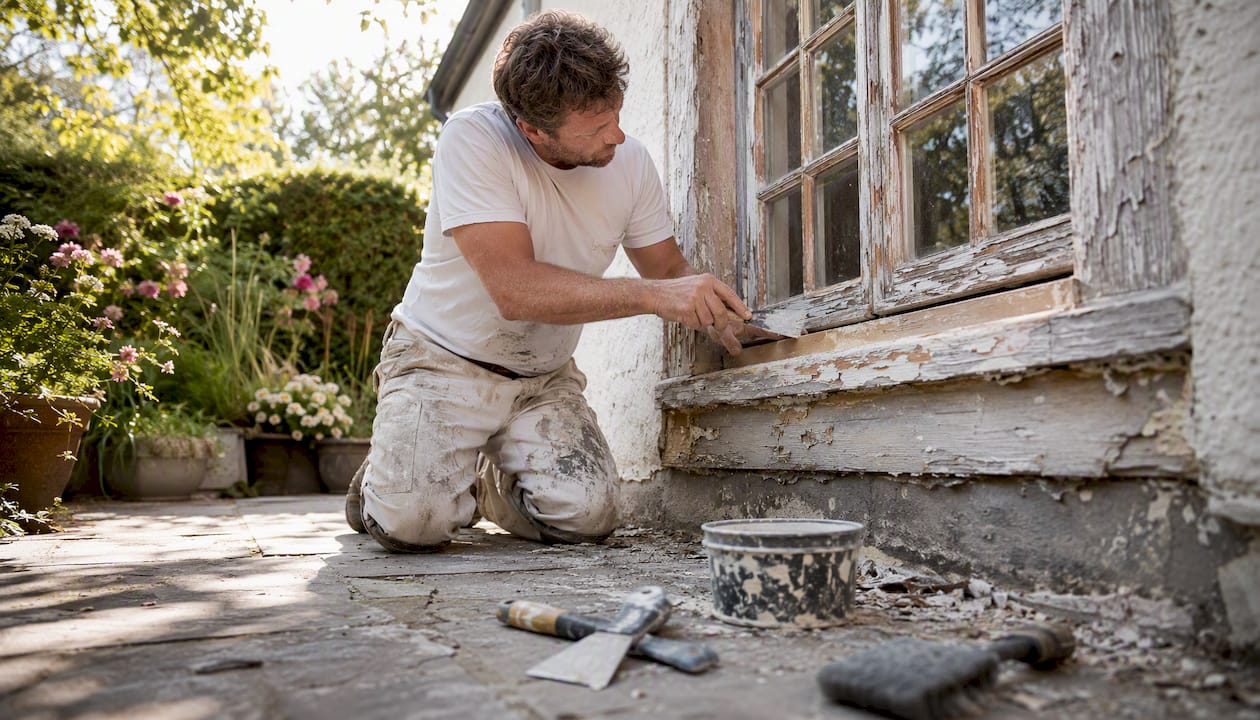
Five factors determine what you’ll pay for a painting job: the area being painted, the condition of the surfaces, access and equipment requirements, the number and quality of coats, and local labour rates. For a typical UK home, that translates to roughly a moderate amount for a small bedroom, a moderate amount for a large living room, and several thousand pounds for a full two-storey exterior repaint. Those ranges are wide because the cost factors in home painting compound quickly: a house with peeling render, high gables, and a tight access lane costs far more than a well-maintained semi with clear scaffolding positions.
The core drivers at a glance:
Surface area — the single biggest multiplier; more paintable surface means more material and more labour hours
Surface condition and prep — filling, plastering, wallpaper removal, and rot repairs can double labour time
Access and equipment — scaffolding, tower scaffolds, and cherry pickers add predictable equipment costs
Paint quality and coat count — premium products cost more per litre but often reduce the number of coats needed
Labour rates and region — day rates vary significantly between London and the South West
Key takeaways
The single most important step when budgeting for a painting job is to request a fully itemised written quote that specifies paintable area, coat count, paint product, primer, prep scope, and access costs separately.
Point | Details |
Surface prep drives cost variation | On deteriorated exteriors, prep can represent 30–50% of total labour; always ask for it itemised. |
Batch jobs to reduce overheads | Combining rooms or interior and exterior work in one booking lowers per-room setup costs. |
Invest in paint quality selectively | Use premium products on exteriors, kitchens, and bathrooms; trade-grade emulsion is adequate elsewhere. |
UK ranges vary widely by region | Painter day rates run from roughly £150–£200 in the North to higher end of day rates in London; South West sits at typical day rates. |
Abrushwithgus for South West quotes | Provides itemised, fixed-price quotes with site visits for interior, exterior, and UPVC work across Cornwall. |
Table of Contents
Typical UK painting costs: room-by-room and whole-house examples
The cost factors in home painting that actually move the needle
From the workshop: how professionals price risk and hidden costs
Questions to ask tradespeople and warning signs to watch for
A painter’s perspective on what homeowners consistently get wrong
Typical UK painting costs: room-by-room and whole-house examples
Before you can judge whether a quote is fair, you need a realistic sense of what the market charges. The figures below reflect typical UK ranges for labour and materials combined.
Job type | Typical UK range |
Small bedroom (up to 10m² floor) | a moderate amount for a small bedroom |
Medium room (10–15m² floor) | a moderate amount for a medium room |
Large living room / open-plan (15m²+) | a moderate amount for a large living room or open-plan space |
Kitchen or bathroom (tiled splashback areas excluded) | a moderate amount for kitchens or bathrooms |
Single-storey exterior repaint | a moderate amount for a single-storey exterior repaint |
Two-storey exterior repaint | several thousand pounds for a two-storey exterior repaint |
Sources: Checkatrade and MyBuilder publish comparable UK price bands for these job types.
Worked example: a 12m² bedroom
A 12m² floor area typically has around 40–44m² of paintable wall and ceiling surface once you subtract doors and windows. At a mid-range labour rate of roughly £15–£20 per m² (two coats, good condition), labour alone comes to £600–£880. Add one tin of ceiling white (5 litre, £20–£30) and two tins of wall emulsion (£30–£60 each for a quality mid-range product), and the material cost adds £80–£150. Total: roughly £680–£1,030 for a well-maintained room in average condition.
That figure drops if the room is freshly plastered and needs only a mist coat plus two finish coats with no prep. It rises sharply if there is wallpaper to strip, cracks to fill, or a dark feature wall requiring three coats to achieve an even finish.
Worked example: a standard two-storey exterior
A typical three-bedroom semi-detached house has around 120–180m² of paintable external surface (walls, soffits, fascias, and window surrounds, excluding UPVC frames). At £12–£20 per m² for labour and materials, the base cost sits at £1,440–£3,600 before scaffolding. Scaffold hire for a standard two-storey property typically adds a moderate cost for a week’s scaffolding hire and related services. On a house with flaking masonry paint and exposed render patches, prep alone can push the total well past £5,000.
Painter day rates
Painter and decorator day rates in the UK typically vary per day depending on region, experience, and job type. A solo painter working a standard eight-hour day on a medium-sized room can usually complete one full coat, meaning a two-coat job on a medium room takes roughly two days of labour, which maps directly to the a moderate labour-only range you’ll see on most quotes.
The cost factors in home painting that actually move the needle
Understanding why quotes vary is more useful than memorising averages. Here are the factors that consistently drive costs up or down, and why each one matters.
1. Size and paintable surface area
Floor area is not what painters price from. They price from paintable surface: total wall area plus ceiling, minus doors and windows. A room with high ceilings (2.7m+) has significantly more wall surface than the floor area suggests. Always ask your painter what total m² figure they have measured, not just the room dimensions.
2. Surface condition and preparation
Prep is where most quotes diverge. A professional painting estimate can vary enormously based on surface condition: on a badly deteriorated exterior, prep can represent 30–50% of total labour, compared with under 20% on a well-maintained house. Internally, wallpaper removal, skim plastering, crack filling, and mould treatment all add time before a brush touches the wall. A quote that skips a detailed prep scope is not a bargain; it is a liability.
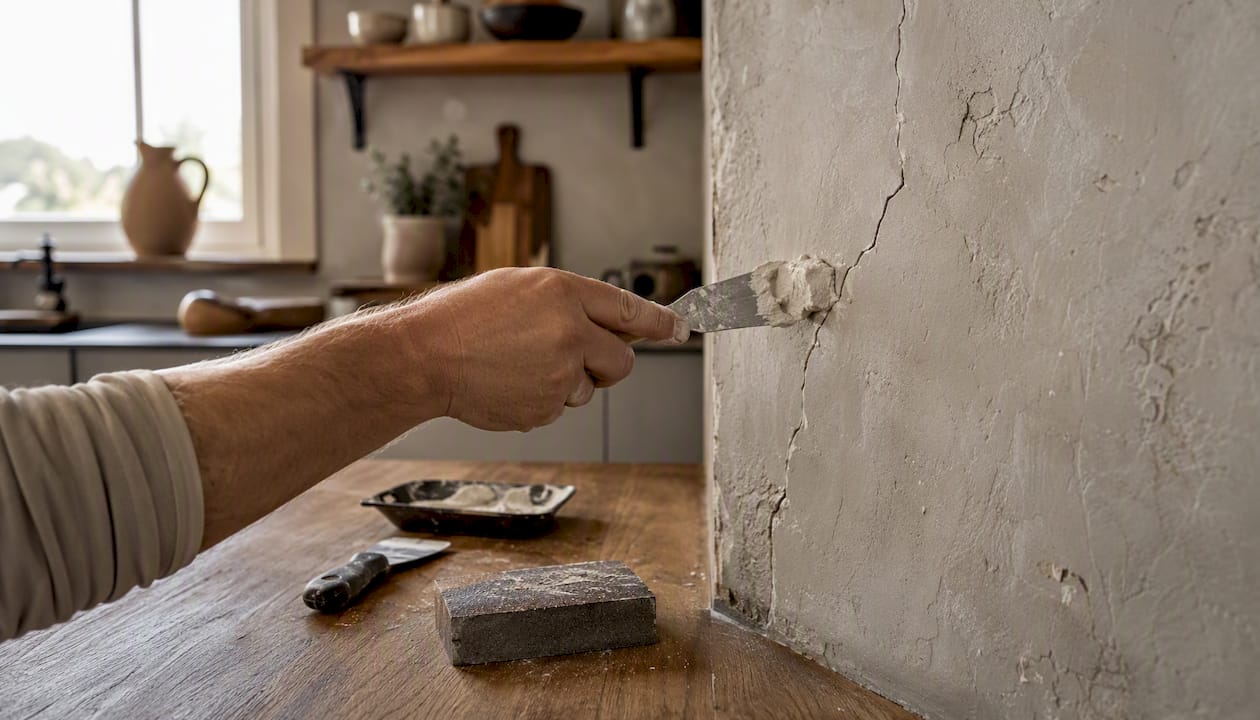
Pro Tip: Ask every painter to list the prep scope separately from the painting scope. If they cannot tell you how many hours or days they have allowed for preparation, the quote is incomplete.
3. Access and height
Ground-floor rooms and single-storey extensions are straightforward. The moment a job requires working above a standard step ladder, costs rise. Scaffold erection and hire, tower scaffolds, and cherry picker hire all carry day rates and minimum hire periods. On exteriors, access logistics are a predictable cost that should appear as a separate line item on any thorough quote. Ask specifically whether access charges are included in the per-m² rate or listed separately.
4. Number of colours and design complexity
Every colour change adds masking time. A room painted in a single colour with a white ceiling is the simplest possible job. Intricate trim work, built-in shelving, radiators, and architrave all require cutting in by hand rather than rolling, which is slower and more skilled work.
5. Paint quality and number of coats
Budget emulsions cover less per litre and often need an extra coat to achieve a solid finish. A premium product like Farrow & Ball or Little Greene costs three to four times as much per litre as a trade-grade emulsion, but it typically covers better and lasts longer. Interior painting costs are directly affected by coat count: a primer coat followed by two finish coats is standard; skipping primer on bare plaster or after wallpaper removal usually means a third finish coat is needed to achieve uniformity, adding both material and labour cost.
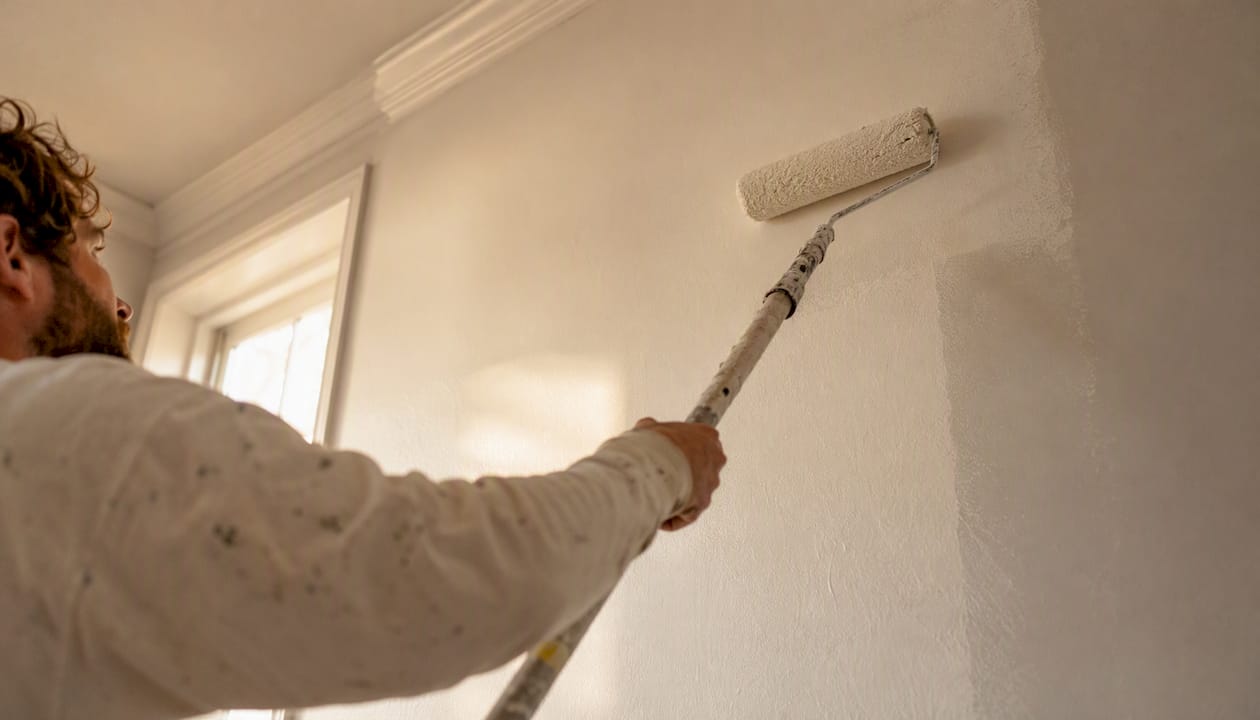
For exteriors and high-traffic areas such as kitchens and bathrooms, premium paints cost more up front but can extend the repaint cycle substantially. That is a genuine lifetime-cost trade-off worth factoring into your budget.
6. Extras and specialist work
Several add-ons sit outside the standard painting scope but frequently appear on residential jobs:
Wallpaper hanging — typically priced per roll or per day; stripping old paper is charged separately
UPVC spraying — specialist coating for window frames, doors, and fascias; priced per unit or per linear metre
Pressure washing — often required before exterior painting; usually a separate day-rate charge
Waste disposal — skip hire or bagged waste removal for stripped wallpaper, old paint tins, and packaging
Specialist coatings — anti-damp treatments, fire-retardant paint, or anti-mould primers carry a material premium
How labour is charged and how rates vary across the UK
Painters charge in one of three ways: a day rate, a per-m² rate, or a fixed price for a defined scope. Each has implications for how you compare quotes.
Day rate suits jobs where the scope is uncertain, such as a house with unknown surface condition. The risk sits with you: if prep takes longer than expected, the bill rises. Per-m² pricing is more transparent for painting-only work but can obscure prep costs if the rate is not broken down. Fixed price is the clearest for the homeowner but only works when the scope is fully defined in writing.
Regional variation is real and significant. The table below shows indicative ranges; actual rates depend on individual trade experience, job complexity, and local demand.
Region | Typical day rate (painter) | Indicative per-m² (two coats, good condition) |
London | higher end of day rates | £15–£20 |
South East | £160–£200 | £15–£20 |
South West | typical day rates | £12–£20 |
Midlands | £150–£200 | £12–£20 |
North of England | £150–£200 | £10–£16 |
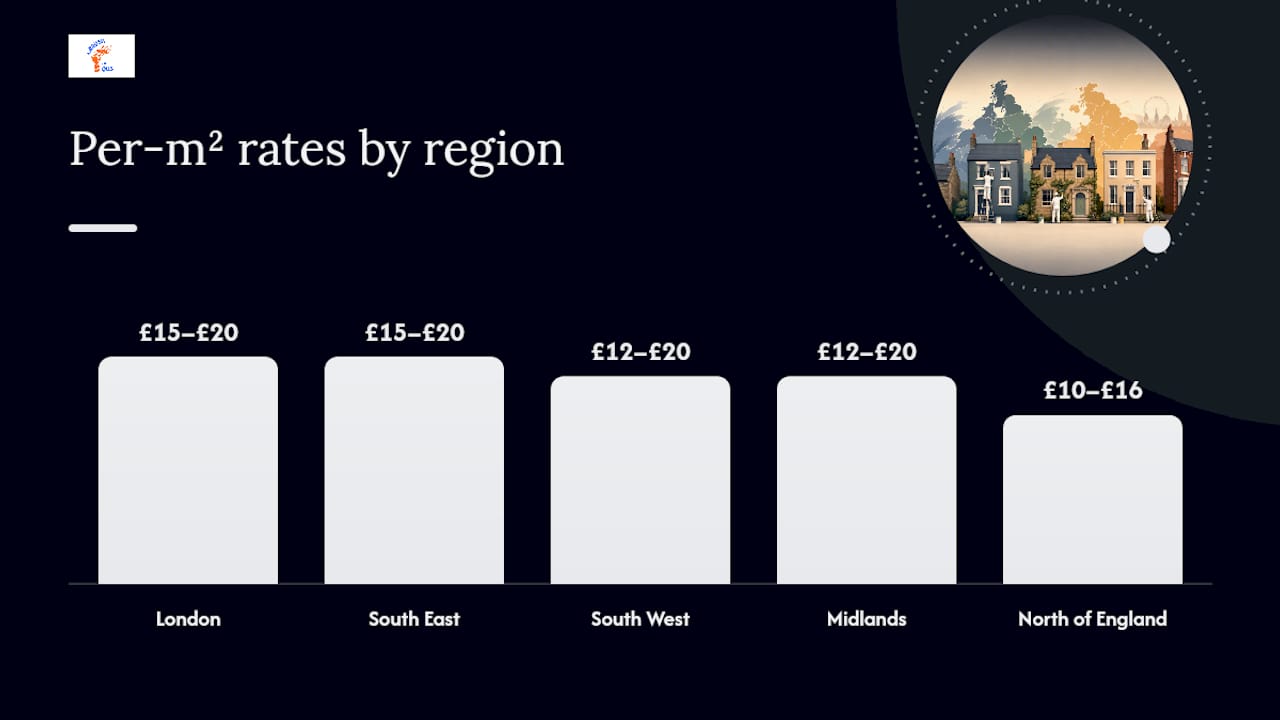
These are indicative figures. Regional labour rates and local demand both affect what individual tradespeople charge, and a highly experienced specialist in any region may price above these bands.
Seasonal demand pushes rates up in spring and early summer, when most homeowners book exterior work. Trades in popular areas can be fully booked from April through August, and some painters charge a small premium for peak-season scheduling. Booking in late autumn or winter for spring work often secures better availability and occasionally a better price.
What a professional painting quote should show you
A thorough written quote is your primary protection against scope creep and unexpected costs. Here is what it should contain:
Measured paintable area in m² (not just room names)
Number of coats specified for each surface
Paint product name, grade, and finish (e.g. Dulux Trade Vinyl Matt, mid-sheen)
Primer specification: full-surface or spot prime, product named
Prep scope: hours or days allocated, tasks listed (filling, sanding, wallpaper removal)
Access and equipment: scaffold or tower included or excluded, with cost if separate
Waste removal: included or excluded
Start and finish dates (or a realistic schedule)
Payment terms and any warranty on workmanship
Pro Tip: Request quotes from at least three painters and ask each to price the same written scope. Comparing quotes against the same specification is the only way to make a valid cost comparison.
Red flags to watch for:
A single lump sum with no line-item breakdown
“Prep as required” with no hours or tasks specified
No primer mentioned at all
No start or finish date
A request for a large cash deposit before work begins
No written warranty on workmanship
For South West homeowners, how painting quotes work locally covers the quoting process in more detail.
Typical project stages and realistic timelines
Knowing what happens in sequence helps you plan around the work and set realistic expectations with your painter.
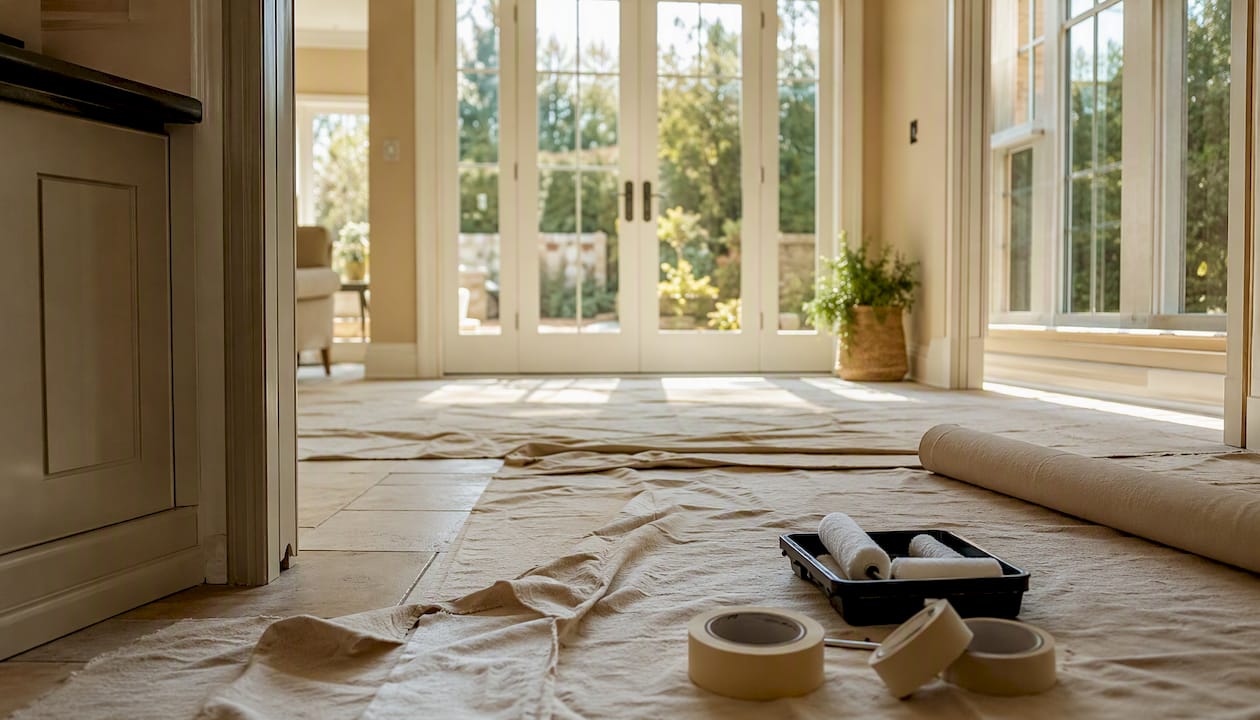
Site preparation — furniture moved, floors protected, masking applied. Half a day for a single room; a full day for a multi-room interior.
Repair and filling — cracks, holes, and surface defects addressed. Can range from an hour on a well-maintained room to several days on a property with significant plaster damage.
Priming — bare plaster, repaired areas, or stripped surfaces receive a primer or mist coat. Drying time is typically 2–4 hours before the next coat.
First finish coat — applied and left to dry. Most quality emulsions need 4–6 hours between coats; oil-based gloss needs 12–16 hours.
Second (and third, if required) finish coat — applied once the previous coat is fully dry, not just touch-dry.
Clean-up and inspection — masking removed, surfaces checked, touch-ups completed.
A single bedroom in good condition typically takes 1–2 days from start to finish. A full interior repaint of a three-bedroom house runs 5–10 days depending on condition and coat count. An exterior repaint, including scaffold erection and strike, typically spans 1–3 weeks, with weather contingencies built in.
Weather is the biggest variable for exterior work. Most exterior masonry paints require dry conditions and temperatures above 5°C during application and for several hours afterwards. A job scheduled for October in Cornwall can be delayed by persistent rain; a painter who does not build weather days into the schedule is either optimistic or inexperienced. Environmental conditions directly affect both the timeline and the quality of the finished result.
Spring and early summer are peak booking periods. If you want exterior work done between May and August, book in February or March at the latest. Late autumn and winter bookings are easier to secure and can sometimes be completed at a lower rate.
Where to save and where to invest in your painting budget
Not every pound spent on a painting job returns equal value. Here is where the trade-offs actually matter.
Batch jobs together. Combining two or three rooms in a single booking reduces the painter’s travel and setup time per room. Bundling rooms lowers per-room overheads and is one of the most reliable ways to reduce the average cost per m². The same logic applies to combining interior and exterior work in a single visit.
Invest in paint quality where it counts. Exterior masonry, kitchen walls, and bathroom surfaces take the most punishment. A premium exterior masonry paint with a 15-year manufacturer guarantee costs more per litre but can push the repaint cycle from 5–7 years to 10–12 years. On a standard semi, that difference in product cost is small compared with the saving on a full repaint. For bedroom walls and low-traffic areas, a good trade-grade emulsion is perfectly adequate.
Limit colour complexity. Standard ceiling white is inexpensive and universally flattering. Reserve bespoke or deep colours for a single feature wall rather than all four walls; dark colours often need three coats to achieve full coverage, which adds both material and labour cost. Choosing paint colours strategically can meaningfully reduce coat count and total spend.
Do your own basic prep where it is safe to do so. Clearing furniture, removing curtains and blinds, taking down picture hooks, and washing down walls with sugar soap are all tasks a homeowner can do before the painter arrives. Each hour of homeowner prep saves roughly one hour of painter time at day-rate cost. What not to attempt: any structural filling, replastering, or work at height.
Pro Tip: Never cut costs on surface preparation. A paint job applied over inadequately prepared surfaces will fail within two to three years, costing more to fix than the saving made. Prep is where the money is best spent.
For a detailed breakdown of what prep involves and what you can safely do yourself, the surface preparation guide covers each stage clearly.
From the workshop: how professionals price risk and hidden costs
Two jobs that look identical on paper can cost very differently once a painter gets on site. Here is why.
An exterior repaint quoted at £3,500 can reach £5,000 if the painter discovers that the render is hollow in patches, the fascia boards have soft rot behind the paint film, and the gutters need clearing before scaffold can be positioned. None of those problems are visible from the pavement. A reputable painter will flag them during a site visit; a less thorough one will quote low and raise extras once the scaffold is up and you have limited options.
Internally, wallpaper removal is the classic hidden cost. Old paper on a plastered wall often comes away cleanly. Old paper on a dry-lined wall frequently takes the paper face of the plasterboard with it, leaving a surface that needs skim plastering before it can be painted. That repair adds both time and material cost that no painter can predict without stripping a test area first.
Surface preparation is the single biggest cause of estimate variation, and it is the area where professionals price in contingency. A thorough painter will either include a contingency allowance in the fixed price or use a day-rate model for prep and switch to a fixed price for the painting phase. Either approach is legitimate; what matters is that the model is explained to you before work starts.
What a reputable painter should measure and note during a site visit:
Total paintable surface in m² (walls, ceilings, woodwork measured separately)
Surface condition: sound, cracked, flaking, damp-stained, or previously wallpapered
Access requirements: internal ceiling height, external scaffold positions, vegetation or obstacles
Existing paint type (water-based or oil-based affects primer choice and adhesion)
Any specialist requirements: fire-retardant coatings, anti-mould treatment, UPVC spraying
Pro Tip: If a painter quotes without visiting the property, treat the figure as a rough estimate only. A binding fixed-price quote requires a physical inspection.
Questions to ask tradespeople and warning signs to watch for
Getting three quotes is standard advice. Getting three comparable quotes requires asking the same questions of each painter.
Questions to ask on a site visit or call:
What total m² have you measured for this job?
How many coats are you pricing, and on which surfaces?
Which paint product and grade are you specifying?
Is a primer included, and on which surfaces?
How have you allowed for prep, and what tasks does that cover?
Is scaffold or access equipment included in your price?
What does your waste removal cover?
What are your proposed start and finish dates?
Do you offer a written warranty on workmanship, and for how long?
Red flags that should make you pause:
A quote delivered by text or email with no site visit
A single total price with no breakdown of labour, materials, or prep
“Prep as required” or “materials as needed” with no quantities
A request for more than 25–30% of the total as an upfront cash deposit
No VAT number on the quote when the job is above the VAT registration threshold
Pressure to sign quickly or accept a verbal agreement only
No mention of primer or coat count
Verifying credentials quickly:
Check whether the business is registered at Companies House, which is a public record of UK trading companies. For sole traders, ask for a UTR (Unique Taxpayer Reference) if the job is large. Review platforms such as Trustpilot and Checkatrade carry independent reviews, though it is worth reading a cross-section rather than relying on the headline score. Ask the painter directly for two or three local references from jobs completed in the past 12 months.
Pro Tip: A painter who welcomes your questions and answers them specifically is demonstrating the same care they will bring to the job. Vague answers to direct questions are a signal, not a coincidence.
A painter’s perspective on what homeowners consistently get wrong
Most homeowners focus on the headline price. The painters who consistently deliver the best results focus on the scope.
The most common mistake is accepting a quote that does not specify coat count, primer, or prep scope, then being surprised when the final bill is higher than expected. Those omissions are not accidents; they are how a low headline price stays low until the job starts. A quote that specifies “two coats of Dulux Trade Vinyl Matt on walls, one coat of Zinsser BIN primer on bare plaster, prep to include filling and sanding all cracks” is a quote you can hold someone to. A quote that says “paint lounge, £450” is not.
The second mistake is underestimating exterior prep. Homeowners often see a house that looks fine from the street and assume the painter will too. But paint film that looks intact from two metres away can be hollow, cracked, or chalking badly when you run a hand across it. A painter who does not scrape, sand, and prime properly is creating a job that will fail in three years rather than ten. That is not a saving; it is a deferred cost with interest.
The third mistake is timing. Booking an exterior job in July, when every painter in the area is fully committed, means accepting whoever is available rather than whoever is best. The homeowners who get the best results and the most competitive prices are the ones who plan six months ahead.
Straight quotes, no surprises: how Abrushwithgus works
Abrushwithgus offers domestic painting and decorating across Cornwall and the South West, covering interior and exterior residential work, UPVC spraying, airless spraying, and exterior home cleaning including pressure washing. Every quote starts with a physical site visit: Gus or Rhys will measure the paintable surface, assess condition, specify the paint product and coat count, and list prep tasks as a separate line item. You receive a written, itemised quote with a proposed schedule and a workmanship warranty before any work begins.

If you are budgeting for a painting project in Cornwall or the wider South West and want a quote you can actually compare, get in touch with Abrushwithgus for a no-obligation site visit and written estimate.
Sources
The figures and guidance in this article draw on the following UK-focused resources. Where possible, request line-item quotes from local painters and cross-reference against these published price guides.
Recommended
Comments