
Defining high-standard finishes in UK homes: 2026 guide
Updated: Sep 11

What actually separates a high-standard finish from a standard one?
High-standard finishes go well beyond what building regulations require. They combine superior materials and craftsmanship with installation precision that standard builder-grade work simply does not attempt. The result is a home that holds its appearance and value for decades rather than years.
Three things define the difference in practice:
Material integrity: natural stone, solid hardwood, and specialist metals chosen for longevity and character, not just appearance
Craftsmanship: grain continuity, book-matched slabs, custom millwork, and recessed joinery that treats every junction as a deliberate design decision
Installation precision: Level 5 drywall finish, exact substrate preparation, and tolerances that leave no margin for error
Long-term benefits follow directly from these qualities. Premium finishes reduce maintenance costs, resist wear in high-traffic areas, and retain resale appeal in ways that cheaper alternatives cannot match. The NHBC’s classification system and the Architectural Woodwork Institute’s Premium grade both provide measurable benchmarks that the sections below explore in detail.
The materials and craftsmanship that make a finish genuinely premium
The gap between a standard finish and a luxury one is most visible in how materials are selected and joined. Book-matched natural stone slabs, where four cuts from a single block mirror each other to create a continuous veining pattern, are a clear example. You cannot fake that with tiles or engineered stone.
Wood presents a similar test. Premium cabinetry and panelling use high-grade veneers or solid timber from a single log run, so the grain flows uninterrupted across every shutter or panel. Pieced-together mismatched panels are the tell of a budget job dressed up to look expensive.
Joinery is where craftsmanship becomes most demanding. Standard construction hides imperfect junctions with silicone beading or bulky skirting. Luxury finishing rejects these cover-ups entirely, replacing them with precise 5–10mm recessed shadow gaps that make wall panels appear to float. There is zero tolerance for error at these junctions.
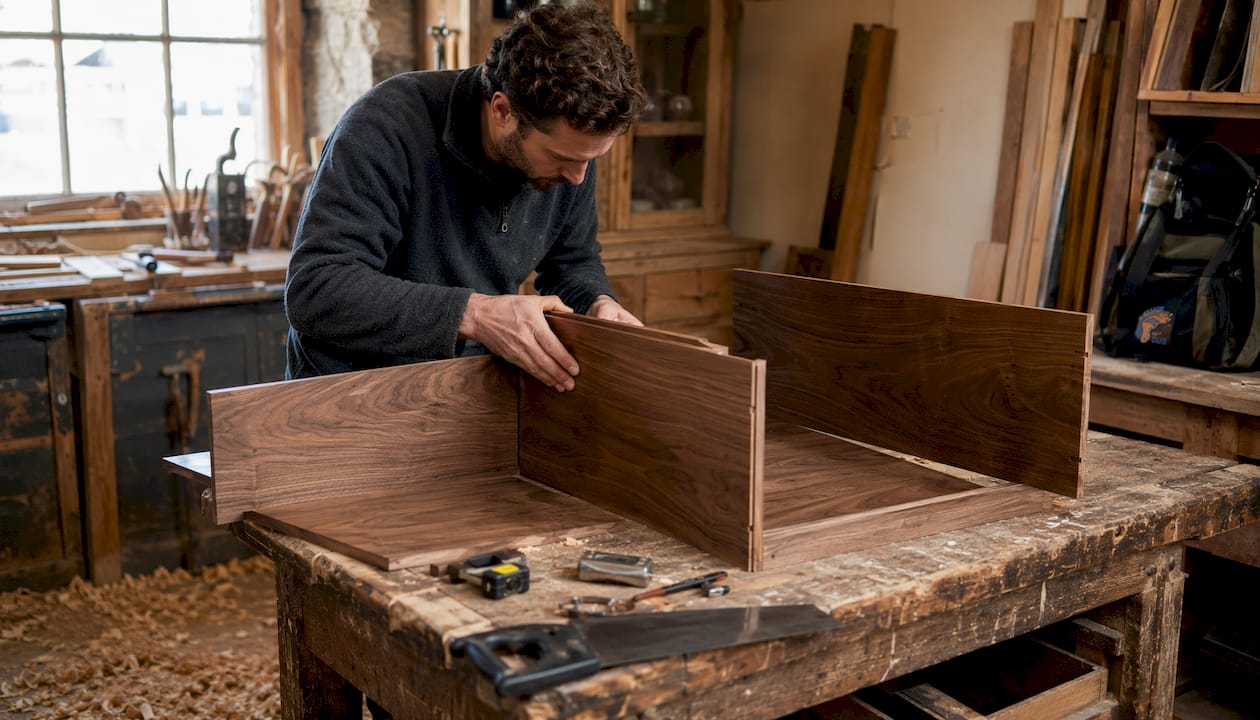
Hardware matters more than most homeowners expect. Concealed hinges and drawer runners from manufacturers such as Blum or Häfele handle the weight of solid-wood doors without sagging over time. Integrated handle profiles carved directly into cabinetry fronts, rather than applied handles, signal the same commitment to clean lines.
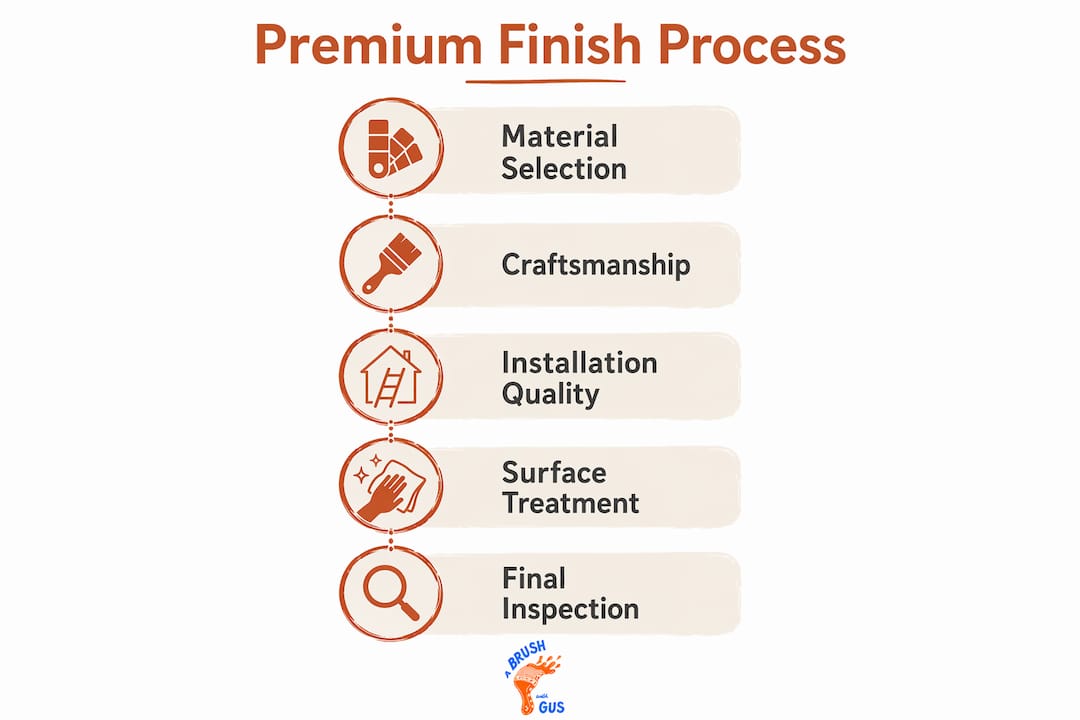
Pro Tip: Ask your installer to show you the substrate preparation before any surface finish goes on. Flawless paint or plaster applied over a poorly prepared surface will telegraph every imperfection within months, particularly under raking natural light.
Surface coatings at the premium end are applied in controlled conditions. Polyurethane (PU) finishes go on in multiple coats inside dust-free chambers, producing either a mirror gloss or a soft-touch matte that feels entirely different from standard paint. Physical Vapour Deposition (PVD) coating on metal accents locks in gold, rose-gold, or brushed finishes permanently, with no risk of peeling or tarnishing even in humid rooms.
Which finishes define luxury in each room?
Kitchens
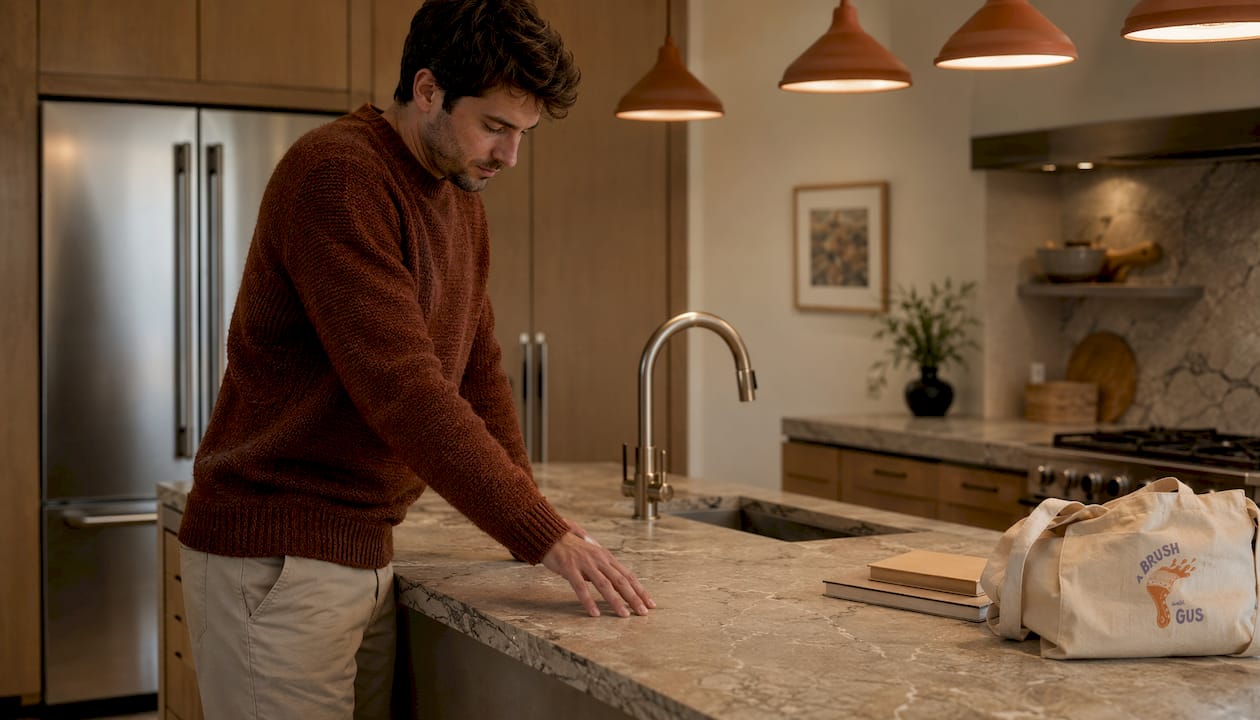
The kitchen is where premium finish standards face the hardest daily test. Natural stone countertops, particularly granite, quartzite, and marble, offer unique character, scratch resistance, and durability that engineered alternatives cannot replicate over a decade of use. Custom cabinetry resolved to the exact dimensions of the room, rather than fitted around standard module sizes, is the other defining feature. For kitchen refurbishment projects, the hardware choice alone, concealed hinges, soft-close mechanisms, and integrated lighting inside cabinets, separates a premium result from a showroom imitation.
Bathrooms
Venetian plaster is increasingly the wall finish of choice in high-specification bathrooms. Hand-trowelled Italian plasters containing crushed marble and lime build up a luminous, stone-like texture that develops a patina over time. Premium tile work demands straight, evenly spaced joints; the NHBC specifies wall tile joints of at least 1.5mm for ceramic and 2mm for smooth natural stone, with surface level variation no greater than ±3mm across a 2m straight edge. Sanitary ware at this level should be free from any scratches or chips at handover, viewed from 0.5m.
Living areas
Custom millwork, coffered ceilings, and integrated lighting recesses define the living spaces of well-finished homes. Hardwood flooring laid with consistent grain direction and tight, flush transitions between rooms signals the same attention to detail as book-matched stone. Paint quality matters here too: walls finished to NHBC Level 5 standard receive a full skim coat over the entire surface, producing a uniformly smooth result that holds up under critical natural light without telegraphing joints or fastener heads.
Exteriors
Premium exterior finishes extend the same logic outward. Specialist cladding, high-build masonry coatings, and airless-sprayed paint systems deliver coverage and adhesion that brush-applied standard paint cannot match. Architectural details, stone quoins, recessed window reveals, and precisely formed render profiles, give a property its visual weight and age gracefully rather than deteriorating within a few years.
Design principles and technical standards behind top-tier finishes
Architectural harmony is not a vague aspiration. It means that every material, profile, and junction in a room has been chosen to support the overall proportions rather than compete with them. The Architectural Woodwork Institute’s ANSI/AWI 0620-2024 Premium grade defines this as the highest degree of control over materials, workmanship, and installation, with repairs required to be inconspicuous and all hardware adjusted for correct, smooth operation.
Surface smoothness can be measured objectively. Roughness Average (Ra) is the standard metric: luxury residential finishes require very low Ra values indicating smoother finishes than typical standard machined surfaces. That difference is perceptible by touch and visible under raking light.
NHBC standards set specific tolerances for floors and tiles to ensure level surfaces with minimal variation, measured using appropriate tools and standards. These are not aspirational targets; they are the baseline for what passes inspection in a new build.
Statistic callout: Level 5 drywall finish is the only drywall standard recommended for spaces with critical natural lighting, dark paint colours, or significant public exposure, because it is the sole level that eliminates the differential paint absorption between taped joints and the field of the board.
Quality control during installation is where most projects either hold or fall apart. Grain alignment, flush joints, and exact tolerances require checking at every stage, not just at the final walkthrough. Inspecting a Level 5 finish, for instance, must take place under the final lighting conditions, including natural light with window treatments in place, because that is the only way to catch imperfections the finish is designed to eliminate.
Why professionals say premium finishes are worth the investment
The most common misconception about luxury finishes is that they are simply the most expensive option in every category. Professionals who work at this level consistently push back on that idea. Material integrity and installation quality matter far more than price tag alone. A poorly installed exotic stone countertop will look worse within five years than a well-executed granite surface installed with proper substrate preparation and correct sealing.
Sustainability is a practical argument for premium finishes, not just an ethical one. Higher initial costs pay off through durability, reduced replacement frequency, and a lower carbon footprint over the life of the home. Natural stone surfaces, for example, can last a lifetime with straightforward maintenance, while cheaper ceramic alternatives often need replacing within a decade in high-traffic areas.
Resale value follows quality. Discerning buyers notice consistent paint sheen, clean wall surfaces under angled light, straight grout lines, and flush floor transitions. These details signal that the whole build was executed with care, and buyers price accordingly. For homeowners in the South West, investing in professional painting and decorating to a high standard is one of the most cost-effective ways to protect and grow property value.
Pro Tip: When specifying stone surfaces, ask to see the honed versus polished finish options side by side. Honed finishes hide everyday wear better in kitchens and bathrooms, while polished surfaces suit lower-traffic feature walls and floors.
Abrushwithgus works to these standards on every domestic project, bringing the same attention to substrate preparation, paint system selection, and finish consistency that defines genuinely premium residential work.
Budgeting honestly for high-standard finishes
Premium finishes cost more than most homeowners initially expect, and the reasons are layered. Material cost is only one component. Fabrication, specialist installation, waste allowance for book-matching stone, and the additional time required for substrate preparation and multi-coat systems all add to the total. Cutting any one of these layers to save money tends to undermine the others.
The practical approach is to prioritise by room and visibility. Kitchens, bathrooms, and principal living spaces reward the highest specification because they face the most scrutiny and the hardest daily use. Secondary rooms and utility spaces can carry a slightly lower specification without compromising the overall impression of the home. Quality decorating contractors will advise on where the specification can flex without visible compromise.
Budget for the full scope from the outset. Retrofitting a premium finish onto a poorly prepared substrate costs more than doing it correctly the first time, and the result is rarely as good.
Common pitfalls when selecting and installing luxury finishes
Rushing the substrate is the single most common mistake. Hidden craftsmanship such as correct substrate preparation and precise transitions is invisible to most people but foundational for longevity. Skipping or abbreviating this stage produces finishes that look acceptable on handover day and deteriorate rapidly thereafter.
Mismatched specifications across trades cause problems that are difficult to fix after the fact. A Level 5 drywall finish paired with a standard paint system wastes the drywall work entirely, because the paint’s sheen and coverage will not do justice to the surface beneath it. Every element of the specification needs to be consistent from substrate to final coat.
Selecting materials from a showroom without seeing them at full scale and under the actual lighting conditions of the room is another frequent error. Stone veining, wood grain, and paint sheen all behave differently under natural light than under showroom spotlights. Always view samples in situ before committing. Expert decorators can help you assess materials under real conditions and flag specification mismatches before they become expensive problems.
Finally, the final walkthrough deserves more time than most homeowners give it. Check paint sheen consistency, grout line alignment, hardware operation, and caulking at every transition. High-standard finishes should look consistent and intentional from room to room, not just impressive in the main spaces.
Key takeaways
High-standard finishes are defined by material integrity, installation precision, and design harmony working together, not by price alone.
Point | Details |
Material integrity over price | Natural stone, solid veneers, and specialist coatings outperform cheaper alternatives through durability and character, not just cost. |
NHBC and AWI benchmarks | Level 5 drywall and AWI Premium grade set measurable standards for surface smoothness, tolerances, and workmanship. |
Substrate preparation is foundational | Flawless surface finishes depend entirely on correct preparation beneath; skipping this stage undermines every layer above it. |
Long-term value justifies upfront cost | Premium finishes reduce replacement frequency, lower maintenance costs, and support resale value over the life of the home. |
Specification consistency across trades | Every element from drywall grade to paint system must align; mismatched specs waste the investment in individual components. |
Abrushwithgus brings this standard of care to homes across the South West, from domestic interior painting to exterior finishing work that holds up through every season. If you are planning a project and want finishes that still look right in ten years, get in touch for a no-obligation quote.
Recommended
Comments