
The best eco paint brands for UK homeowners in 2026
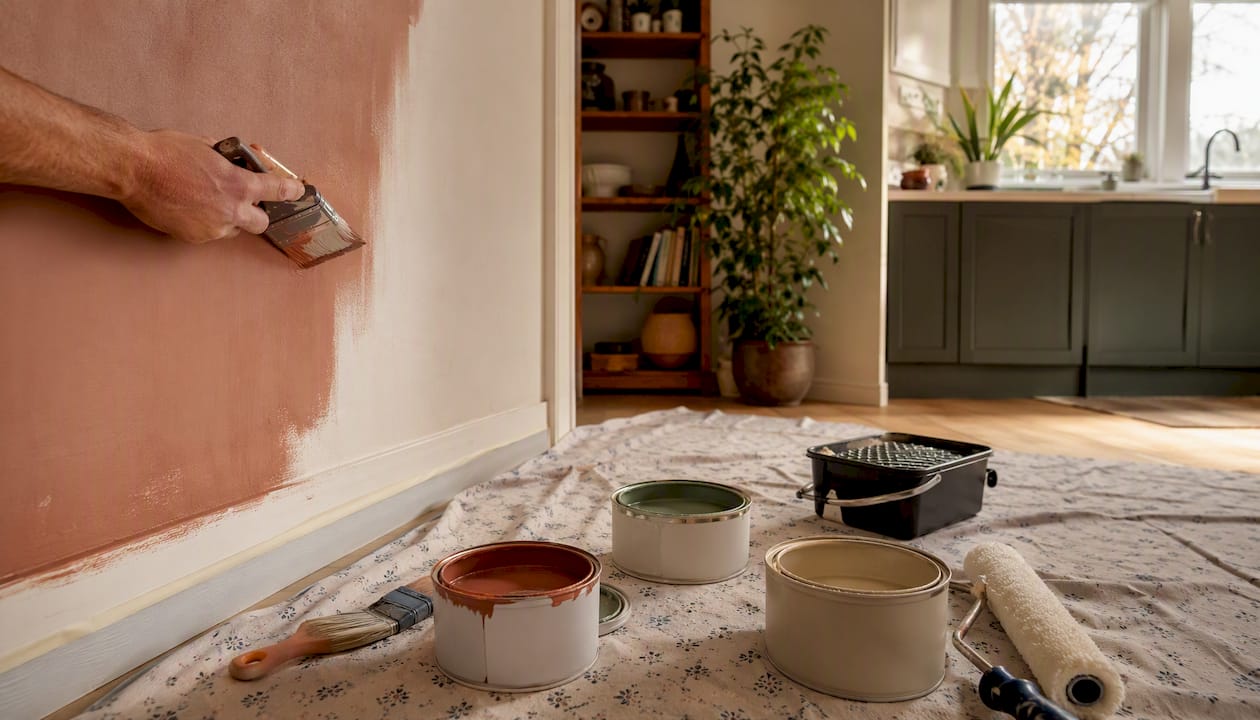
For most UK homeowners, the shortlist comes down to four brands: Earthborn for breathable walls and older properties, Little Greene for very low VOC interiors and nurseries, Graphenstone for lime-based finishes with air-quality claims, and COAT for a low-waste all-rounder with a tin-return scheme. If you want a heritage finish at the premium end, Farrow & Ball’s low-VOC emulsions are a credible choice. For exterior work, read the biocide note below before buying anything labelled “natural.”
Best for nurseries and low-VOC interiors: Little Greene — very low VOC formulations, recycled steel tins
Best for breathable walls and period properties: Earthborn — EU Ecolabel certified, clay-based options, transparent ingredient lists
Best all-round low-waste option: COAT — tin-return recycling scheme, carbon-positive manufacturing claims
Best lime/mineral finish: Graphenstone — lime formula with CO2-absorbing claims, recyclable packaging
Best for exterior eco painting: see the exterior paints and biocides section below — most natural paints are interior-only
NHS guidance on indoor air quality confirms that lower-emission products reduce occupant exposure to airborne chemicals, which is the core health case for choosing eco paint in the first place.
Key takeaways
Earthborn, Little Greene, Auro, and COAT are the most credible eco paint choices for UK homeowners, distinguished by certifications, ingredient transparency, and formulation honesty rather than marketing claims alone.
Point | Details |
Shortlist by use case | Earthborn for breathable walls, Little Greene for nurseries, Graphenstone for lime finishes, COAT for low-waste all-round use. |
Certifications that matter | EU Ecolabel, AgBB A+, and GREENGUARD Gold are the most technically rigorous; B Corp covers the business, not just the product. |
Exterior paint caveat | Most natural zero-biocide paints are interior-only; exterior use requires a product with stated outdoor suitability and low-biocide chemistry. |
Verify before you buy | Check for a published ingredient list and a declared VOC figure in g/l — absence of either is a greenwashing signal. |
Professional application | Abrushwithgus offers eco-capable painting and decorating across Cornwall and the South West, including product selection advice. |
Table of Contents
What does ‘eco-friendly’ paint actually mean?
Eco paint is a spectrum, not a single category. At one end sit low-VOC water-based acrylics that are still petrochemical in origin but emit far fewer volatile organic compounds than conventional gloss or emulsion. At the other end are fully natural formulations — lime, clay, chalk, casein (milk protein), and plant oils — that avoid synthetic resins almost entirely. Most brands sit somewhere in between.
Grand Designs describes the category well: “eco” covers products made from natural ingredients such as chalk, clay, and plant oils, but the label only means something when a brand publishes ingredient transparency and can point to low-carbon manufacturing. Without those, it is marketing language.
What to look for on a genuinely eco formulation:
VOC content declared in grams per litre (g/l), ideally below 10 g/l for interior use
Full or near-full ingredient disclosure on the manufacturer’s website or tin
Absence of heavy metals (lead, cadmium, chromium VI) in pigments
No formaldehyde-releasing preservatives in water-based products
Breathable formulation where the substrate needs it (lime render, old stone, timber)
Recyclable or returnable packaging, or a tin-return scheme
A recognised third-party certification (EU Ecolabel, B Corp, GREENGUARD, AgBB A+)
The main natural formulation types are worth knowing briefly. Lime paint is mineral-based, highly breathable, and naturally alkaline — it inhibits mould without added biocides on interior surfaces. Clay paint absorbs moisture and releases it, regulating humidity in a room. Milk paint (casein-based) is one of the oldest formulations in existence and is genuinely biodegradable when unmixed. Chalk paint is a mineral finish, typically very low in VOCs, though the term is sometimes used loosely.
VOC thresholds to know: The EU Ecolabel for indoor paints sets a maximum VOC limit of 30 g/l for matt wall paints. “Low VOC” in UK retail generally means below 50 g/l; “zero VOC” typically means below 5 g/l, though trace amounts from pigments can push the final mixed colour above that threshold.
Why choose eco paint — health and environmental benefits
Choosing a low-VOC or natural paint is not just an environmental gesture. NHS guidance makes clear that indoor air quality has a direct effect on health, and lower-emission products reduce exposure to airborne chemicals in the home. Conventional paints off-gas VOCs during application and for weeks or months afterwards — a particular concern in bedrooms, nurseries, and poorly ventilated kitchens.
The practical benefits stack up quickly:
Reduced odour during and after application — low-VOC paints are noticeably less pungent, which matters if you are decorating a room you need to use the same day
Lower indoor air pollution — fewer airborne chemicals means less irritation for occupants with asthma, allergies, or chemical sensitivities
Fewer hazardous additives — natural formulations avoid synthetic biocides, plasticisers, and heavy-metal pigments
Lifecycle advantages — recyclable tins, refill schemes, and lower embodied carbon in natural binders reduce the environmental footprint beyond the tin itself
Breathability — lime and clay paints allow moisture to pass through walls, which prevents damp and mould in older properties without the need for chemical fungicides
The environmental case extends to manufacturing. Lime-based paints, for example, actually absorb CO2 as they carbonate and cure — Graphenstone markets this property explicitly. COAT claims carbon-positive manufacturing. These are meaningful distinctions from a standard acrylic, even a low-VOC one.
How to compare eco paints: practical criteria for your choice
Choose by room, surface, and certification — in that order. A paint that is perfect for a living room may be entirely wrong for a bathroom or an exterior wall. Ethical Consumer’s sustainable paint guide recommends checking ingredient transparency and recycling schemes alongside the standard VOC number, because a low VOC figure on a petrochemical acrylic tells only part of the story.
Practical checklist before you buy:
VOC level: aim for below 10 g/l for nurseries and bedrooms; below 50 g/l is acceptable for general rooms
Formulation: water-based acrylic (low VOC but still synthetic), lime, clay, milk paint, or chalk — match to surface and breathability needs
Certifications: EU Ecolabel, B Corp, GREENGUARD Gold, AgBB A+, or ISO 14001 are the ones worth trusting
Interior vs exterior suitability: check the manufacturer’s stated use — most natural paints are interior-only
Coverage and coats: natural paints often cover 8–12 m² per litre and may need three coats on a new surface; acrylics typically cover 12–15 m² per litre in two coats
Finish options: confirm the brand offers the finish you need (matt, eggshell, satin, exterior gloss)
Packaging: look for recyclable tins, refill options, or a take-back scheme
Price and availability: specialist eco paints cost more per litre but often require fewer litres when coverage is good; check whether the brand ships direct or stocks through UK retailers
Paint waste is a significant environmental problem in the UK; schemes like Community RePaint accept leftover paint rather than letting it go to drain.
For a deeper look at how finishes match different rooms and surfaces, the types of interior paints guide covers the practical differences between matt, eggshell, and satin in plain language.
Brand-by-brand comparison of UK eco paint options
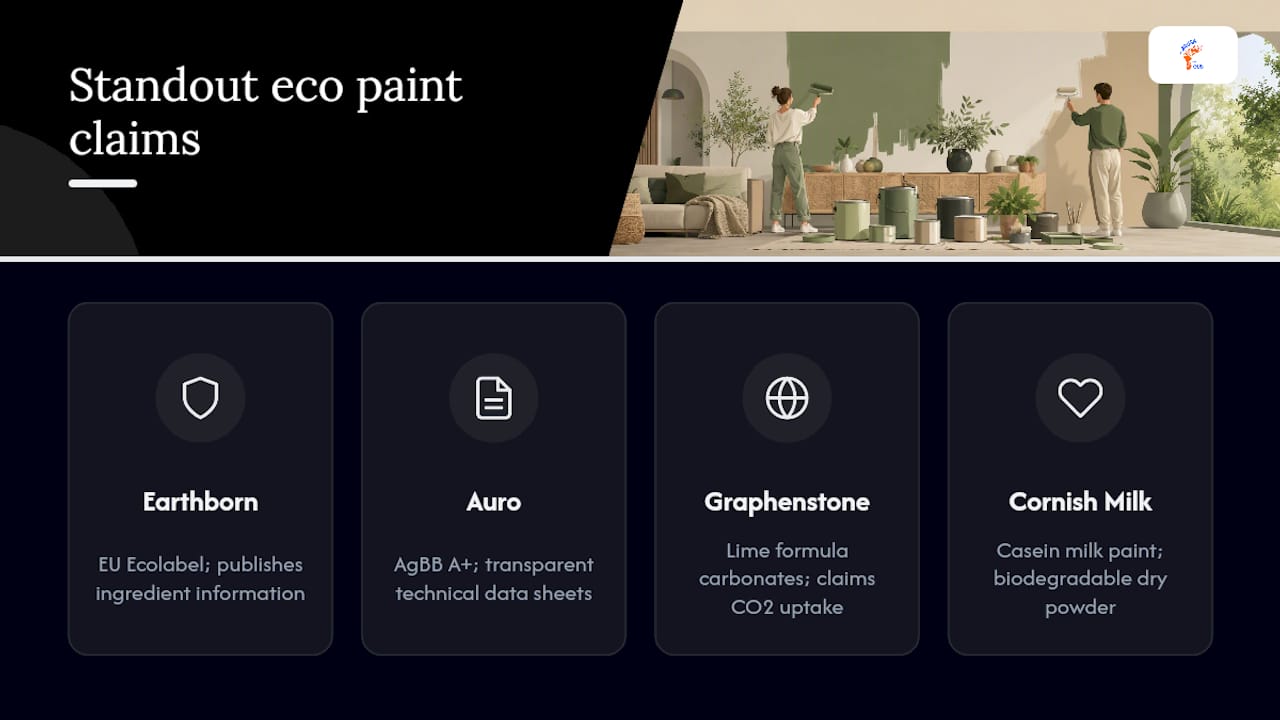
The table below compares all 16 brands on the dimensions that matter most to a UK homeowner. Short notes follow for brands where a caveat or buying detail is worth flagging.
Brand notes worth reading:
Earthborn holds the EU Ecolabel for its indoor paints — one of the few UK brands to do so — and publishes ingredient information openly. Its clay-based Claypaint is particularly well suited to older properties where breathability matters more than washability.
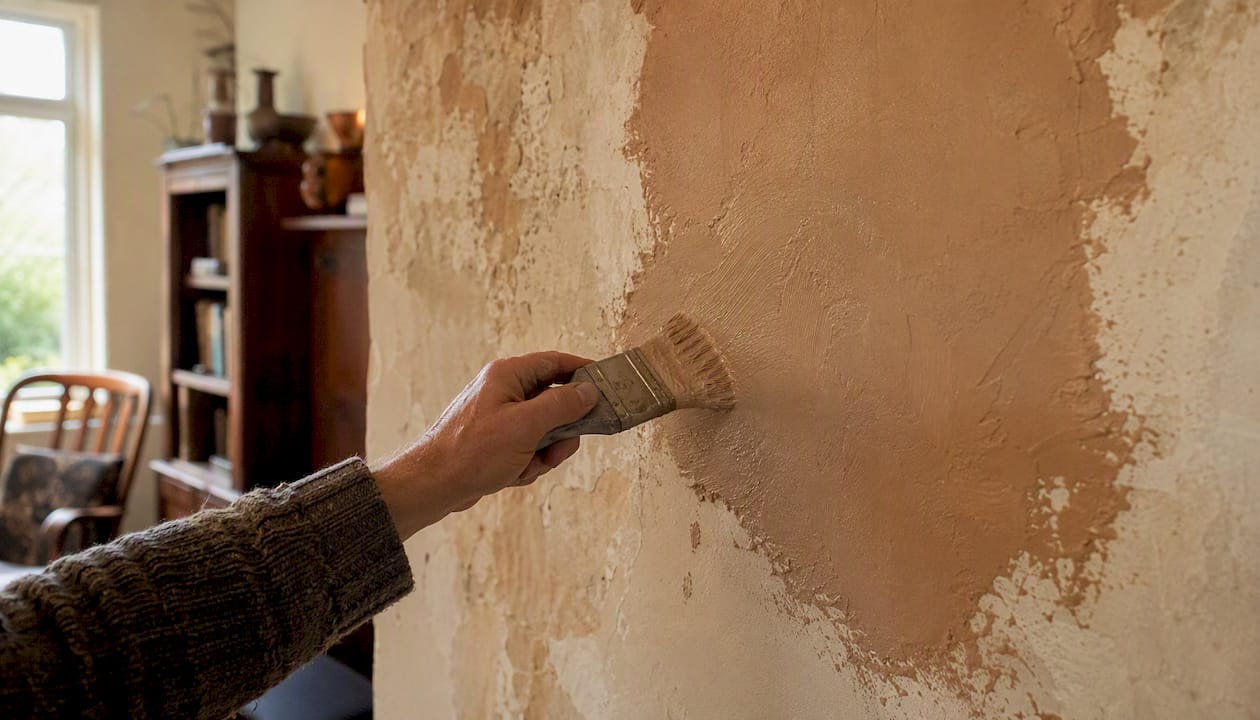
Auro is the brand professionals reach for when a client has a lime-rendered or stone wall and needs documented evidence of performance. Its AgBB A+ rated wall paint comes with transparent technical data sheets — the kind of documentation that makes a meaningful difference when you are specifying for a sensitive occupant.
Graphenstone makes a striking claim: its lime formula absorbs CO2 as it cures. The chemistry is real — lime carbonation does sequester carbon — though the net lifecycle figure depends on manufacturing and transport. Worth investigating if a mineral finish suits your project.
Cornish Milk is a genuinely niche product: casein-based milk paint that is biodegradable in its dry powder form. Coverage is lower than acrylic, and it needs sealing on high-traffic surfaces, but for a period piece of furniture or a feature wall it is hard to beat on natural credentials.
LIVOS specialises in plant-oil finishes for timber and natural surfaces rather than standard emulsion. If you are painting bare wood floors, joinery, or furniture rather than walls, it belongs on your shortlist. For conventional wall painting it is not the right tool.
House of Hackney carries B Corp certification, which covers the whole business rather than just the paint formula — supply chain, governance, and environmental impact are all assessed. The paint itself is a low-VOC water-based acrylic, so the eco credentials rest more on the B Corp framework than on the formulation.
Farrow & Ball deserves a note on greenwashing risk: its paints are low-VOC and the brand has genuine heritage, but the premium price is driven by colour depth and finish quality rather than by exceptional environmental credentials. It is a good choice if colour fidelity is the priority; it is not the most progressive option on this list by certification.
Where can you buy eco paint in the UK?
The main buying routes are manufacturer direct, specialist eco-paint stockists, national DIY chains, and online marketplaces. Each has trade-offs.
Manufacturer direct (DTC): Lick, COAT, Backdrop, and Earthborn all sell online with sample services and direct delivery. Colour cards and tester pots are usually available, and you can often reach the brand’s technical team for advice. Delivery times vary from next-day to a week for specialist natural paints.
Specialist stockists: Auro is stocked through Ecological Building Systems; LIVOS through natural building suppliers. These stockists often carry technical knowledge the brand’s own website does not, and can advise on surface preparation.
National DIY chains: Graham & Brown and Farrow & Ball are available through B&Q, Homebase, and similar. Lakeland Paints ships UK-wide direct. Convenience is high; specialist advice is low.
Online marketplaces: Amazon and similar carry some eco paint lines, but check the seller carefully — counterfeit or out-of-date stock is a real risk for premium brands.
For sample ordering behaviour and how to update a room without committing to a full tin, the ways to update your home with paint guide covers the practical steps.
On recycling: COAT runs a tin-return scheme. Community RePaint accepts leftover paint from any brand and redistributes it to community projects — a far better outcome than landfill or drain disposal. Most local councils also accept empty paint tins in kerbside recycling once dry.

Exterior paints, biocides, and why ‘natural’ does not always mean outdoor-safe
Most natural, zero-biocide interior paints are unsuitable for exterior use. Green America’s guidance on eco-friendly paints is direct on this: exterior paints commonly contain fungicides, and genuinely zero-biocide natural paints lack the preservative chemistry needed to resist mould, algae, and moisture penetration outdoors.
This matters practically. A lime-based interior paint applied to an exterior wall in the UK’s wet climate will fail within a season — not because lime is a poor material, but because exterior lime render systems are a specialist product with different formulation, application, and maintenance requirements. Earthborn does offer an exterior range, but it is a different product from its indoor Claypaint.
What to look for in an exterior eco paint:
Stated exterior suitability on the tin and technical data sheet
Low-biocide rather than zero-biocide — zinc oxide is a lower-impact fungicide than many synthetic alternatives
Microporous formulation to allow moisture vapour to escape without trapping damp
UV resistance and stated durability period (typically 5–10 years for quality exterior coatings)
Manufacturer guidance on primer and preparation — skipping this step is the most common cause of premature failure
Pro Tip: For exterior eco painting, look for low-VOC acrylics with zinc oxide rather than zero-biocide natural paints. Check the long-lasting exterior paint options guide for specific product and preparation advice before committing to a product.
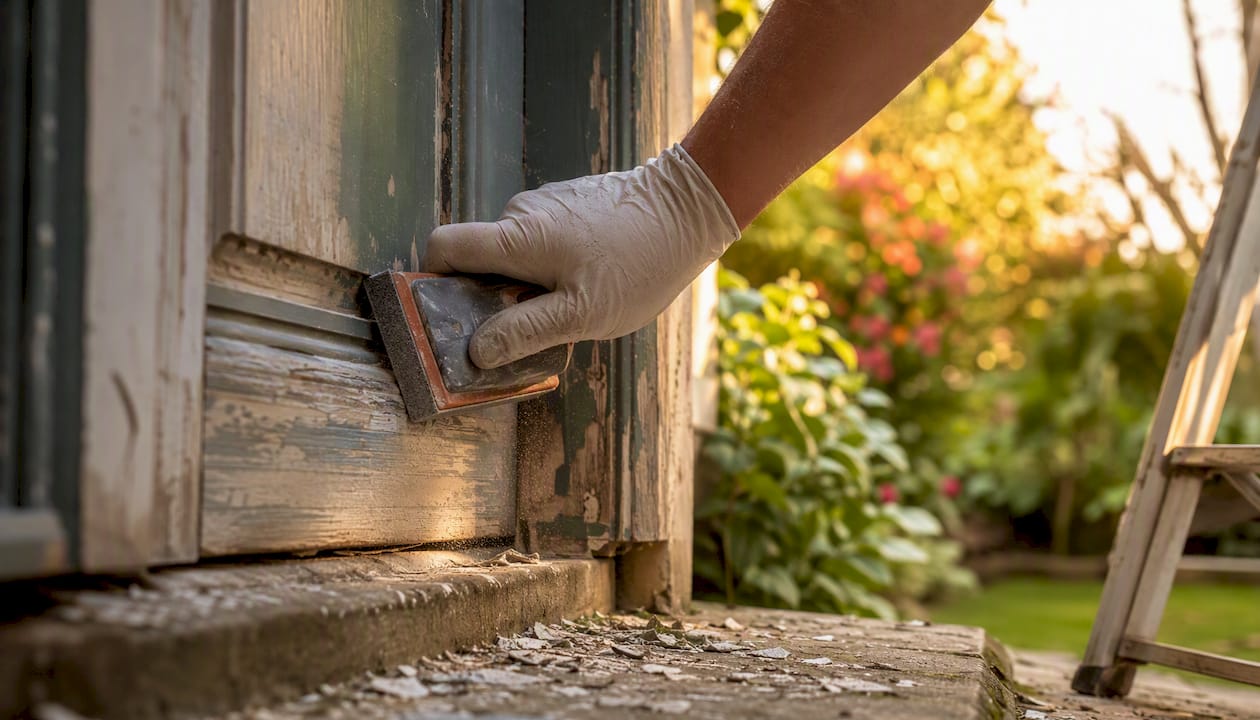
Exterior painting on a UK home is also where professional application makes the most difference. Surface preparation — cleaning, sanding, priming — accounts for most of a paint job’s longevity, and it is harder to get right on a ladder than on an interior wall.
How to verify eco claims before you buy
Check for a published ingredient list and a recognised certification first. A brand that cannot show either of those is asking you to take its word for it. Grand Designs’ buyer’s guide puts it plainly: a published material safety data sheet or full ingredient declaration is a meaningful trust signal; its absence is a common indicator of greenwashing.
Verification checklist:
EU Ecolabel: the most rigorous EU-level standard for indoor paints, covering VOC limits and hazardous substance restrictions — look for the flower logo and check the EU Ecolabel database
B Corp: covers the whole business, not just the product — useful for assessing supply chain and governance, less useful for comparing VOC numbers
GREENGUARD Gold / Green Seal: US-origin certifications that some UK-available brands carry; GREENGUARD Gold has strict chemical emission limits relevant to schools and healthcare settings
AgBB A+: a German indoor air quality rating that Auro carries; technically rigorous and worth trusting
ISO 14001: an environmental management system standard for the manufacturer — it says the factory is managed responsibly, not that the product itself is low-VOC
Declared VOC number in g/l: ask for the tinted/mixed figure, not just the base — pigments can add VOCs
Full ingredient declaration: plant oils, chalk, clay, casein, and lime are what you want to see; “polymer binder” or “acrylic resin” without further detail means synthetic
A note on titanium dioxide: it is the most widely used white pigment in paint, including many eco brands. Industry sources note it is generally considered safe in its finished-paint form, though manufacturing it is energy-intensive. If this matters to you, ask the brand whether it uses rutile or anatase grade and what its sourcing policy is.
An honest perspective on eco paint for UK homes
The eco paint market has matured considerably, but it still rewards scepticism. The brands with the strongest credentials — Earthborn, Auro, Graphenstone, Little Greene — are not necessarily the ones with the loudest sustainability messaging. Some of the most aggressively marketed “natural” paints are water-based acrylics with a plant extract added and a green label attached.
The practical hierarchy I use when advising on a project: certification first, ingredient transparency second, VOC number third. A brand that publishes a full ingredient list and holds an EU Ecolabel or AgBB A+ rating has earned its claim. A brand that says “low VOC” on the tin without a number has not.
For period properties specifically — stone walls, lime render, old timber — the formulation choice is not just environmental, it is structural. Trapping moisture behind a vapour-impermeable paint causes damp, and damp causes far more damage than a slightly higher VOC count. Earthborn and Auro are the two brands I return to most often in those situations, because their technical documentation is honest about what the product does and does not suit.
The exterior question is where I see the most expensive mistakes. Homeowners buy a beautiful natural interior paint, apply it outside, and wonder why it is peeling by spring. The exterior paint guidance is worth reading before any outdoor project, and for most exterior jobs, professional preparation and application will extend the life of even a modest paint by years.
Professional eco paint application in Cornwall and the South West
Choosing the right eco paint is only half the job; understanding how colour palettes work in homes helps match eco paint choices to your interior scheme. Application technique, surface preparation, and primer selection determine whether a low-VOC or natural paint performs as well as a conventional one — and natural formulations in particular can behave differently from standard acrylics, requiring adjusted dilution ratios, longer drying times between coats, and specific primers for porous substrates.

Abrushwithgus undertakes eco-friendly painting and decorating projects across Cornwall and the South West, and can advise on product suitability for your specific surfaces before a brush touches the wall. Services cover domestic interior and exterior painting, airless spraying for larger areas and specialist finishes, and UPVC spraying for windows and doors where a low-impact coating is preferred. The team works with eco paint brands and can help you match the right formulation to your room, substrate, and budget — without the guesswork of ordering blind from a website. Get in touch for a quote on your next project.
Sources
Recommended
Comments