
How to remove old paint safely: UK homeowner's guide
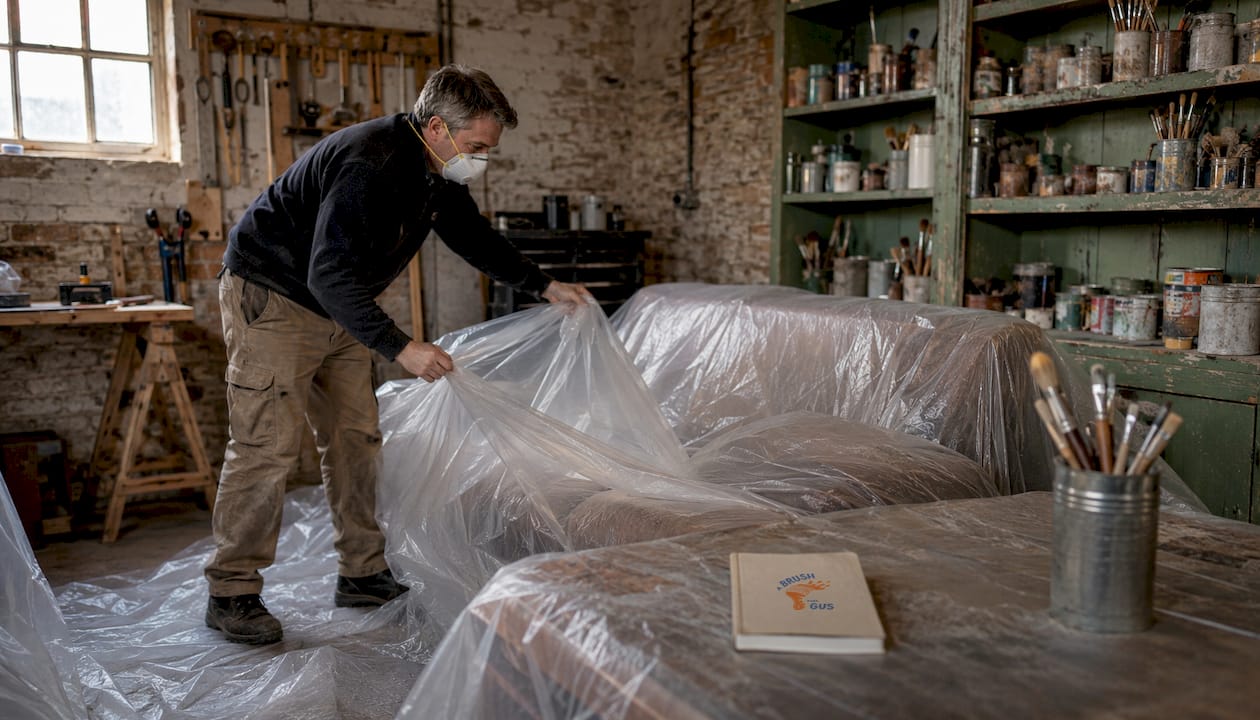
The safest first step is always the same: test for lead before you touch a single flake of old paint, contain any dust that removal creates, and use low-dust methods or bring in a qualified professional. Get those three things right and you have the foundation of safe paint removal.
Test first. Any paint applied before 1970 may contain lead. Disturbing it without testing first is the single most avoidable mistake.
Contain the dust. Lead dust migrates far beyond the immediate work area into soft furnishings and ventilation systems, so containment is not optional.
Remove or verify. Use low-dust methods or hire a professional, then confirm the area is clean before reoccupying.
Pro Tip: Never use an open flame or a high-speed dry sander on old paint without a shroud and HEPA attachment. Both practices are explicitly prohibited under HSE guidance because they generate enormous quantities of airborne lead dust in seconds.
Table of Contents
Do you actually need to strip the paint, or will preparation do?
What removal methods do professionals use, and what should you avoid?
How do you clean up and dispose of paint waste safely in the UK?
When should you hire a professional, and what should you ask them?
Abrushwithgus: professional safe removal in Cornwall and the South West
Do you actually need to strip the paint, or will preparation do?
Strip only when you have to. Coatings industry guidance is clear: removal is recommended when a coating is peeling, bubbling, or structurally unstable, or when you are switching from an oil-based system to a water-based one (the two types will not bond). If the paint is stable and you are simply recoating in the same paint family, thorough cleaning, light abrading, and a quality primer will usually give a better result with far less disruption and risk.
The signals that genuinely demand removal: paint that is flaking or lifting at the edges, surfaces where children may chew or mouth painted areas, or any substrate where an incompatible new coating is planned. Outside those situations, professional surface preparation and overcoating is almost always safer and more cost-effective than full stripping, particularly on period properties where lead paint is likely present in multiple layers.
Safety note: The HSE treats paint removal on older properties as a hazardous-materials task, not a cosmetic one. The fastest removal methods tend to generate the greatest contamination risk.
Should you test for lead before stripping old paint?
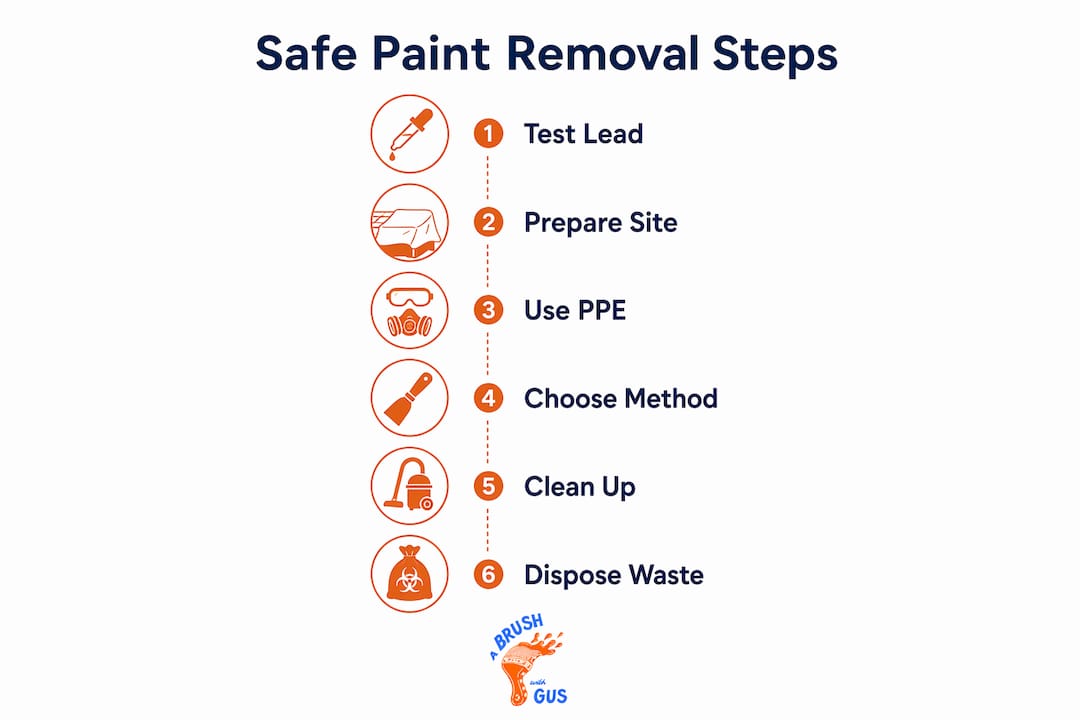
Yes, always, if the property was built or last decorated before 1970. Here is how to approach it:
DIY test kits. Swab-based kits are available from builders’ merchants and online. They give a rapid result but can miss lead in lower layers or return false negatives on certain paint colours. Use them only as a first screen.
Professional XRF testing. A handheld X-ray fluorescence analyser reads lead content through multiple paint layers without disturbing the surface. It is the method professionals prefer because results are immediate and non-destructive.
Laboratory analysis. Scrape a small sample (wearing gloves and a P3 respirator) and send it to an accredited UK laboratory. This is the most definitive method and is worth commissioning when XRF is unavailable or when you need documented results for a landlord compliance file.
Test results change everything. A positive lead result means you need full containment, appropriate respiratory protection, licensed waste disposal, and post-removal clearance testing. A negative result still warrants dust control, but the regulatory burden is lighter.
Pro Tip: Sample every distinct surface type and colour in the property. Lead content can vary between rooms, between coats, and between the woodwork and the walls. Taking only one sample from one room is not a reliable survey.
What removal methods do professionals use, and what should you avoid?
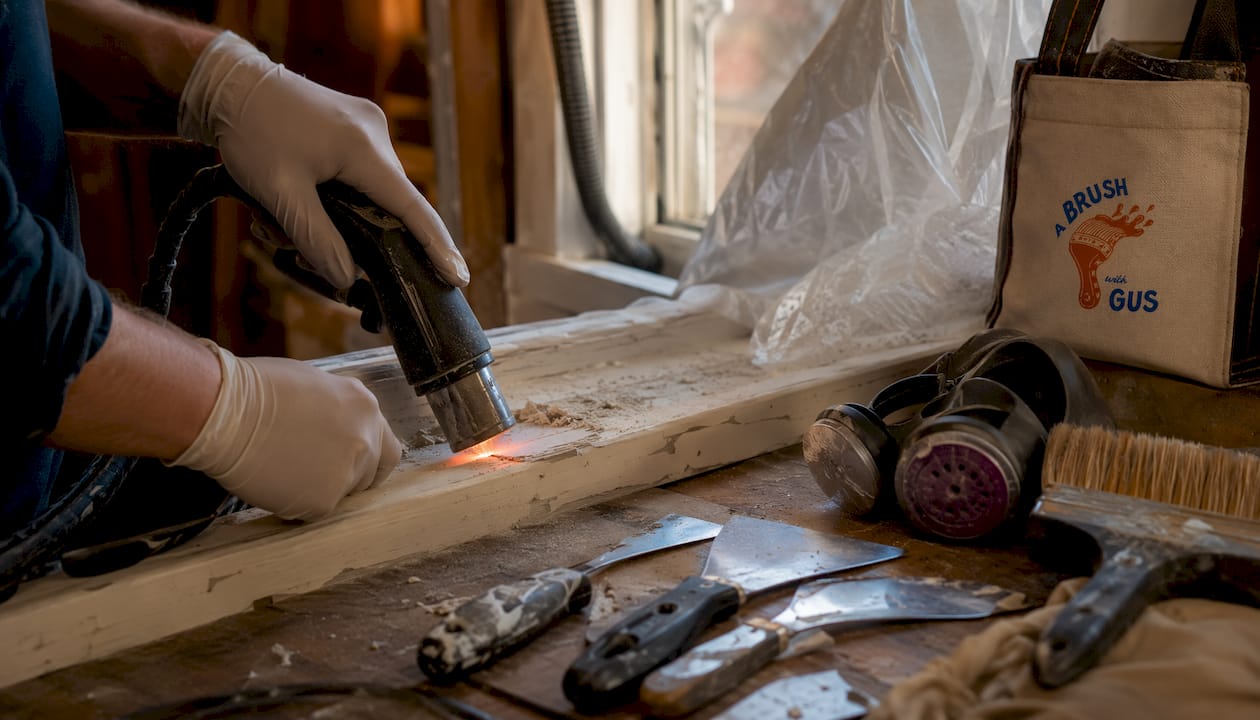
The safest professional methods are those that minimise airborne dust: wet scraping, infrared lamps, controlled heat below 593°C (1,100°F), low-VOC chemical strippers used with ventilation, and power scrapers fitted with shrouds and HEPA vacuum attachments.
Method | Dust risk | Best use |
Manual wet scraping | Low | Flat surfaces, small areas |
Infrared lamp | Low–medium | Timber joinery, multi-layer paint |
Controlled heat gun (below 593°C) | Medium | Mouldings, window frames |
Low-VOC chemical stripper | Low (fumes risk) | Intricate profiles, indoor use with ventilation |
Shrouded power scraper + HEPA | Medium | Large flat areas |
Pressure washing | Low (exterior only) | Decks, rendered walls, exterior timber |
Avoid these practices entirely:
Open-flame torches or burning off paint. Prohibited under HSE and EPA guidance because they vaporise lead instantly.
High-speed dry sanding, grinding, or needle guns without a shroud and HEPA attachment.
Uncontained media or abrasive blasting indoors.
Chemical strippers containing methylene chloride. Avoid these; lower-VOC formulations are available and far safer.
For period properties with stubborn multi-layer oil-based paint, natural or soy-based strippers are gentler but often require repeated applications. Professional-grade methods are more reliable when time and substrate condition matter.
What PPE and site preparation do professionals use?
Proper containment and PPE prevent lead dust from migrating beyond the work area. Invisible lead dust can travel into adjacent rooms, soft furnishings, and ventilation ducts, so the containment setup matters as much as the removal method itself.
Worker PPE checklist:
FFP3 (P3) half-face respirator or powered air-purifying respirator (PAPR) for confirmed lead work
Disposable Tyvek overalls with hood
Nitrile gloves (double-glove for chemical strippers)
Safety goggles or full-face shield
Disposable boot covers or dedicated site footwear
Site preparation for interior work:
Seal doorways with heavy-duty polythene sheeting and tape; use a zip-entry system where possible
Lay double-layer sheeting on floors, extending at least 1.8 metres beyond the work area
Use a negative-pressure extractor or local exhaust ventilation routed outside
Post warning signs and keep all non-workers, children, and pets out of the area
For exterior work, sheeting should extend at least three metres from the work face. If the site is within three metres of a boundary, vertical containment barriers are required to prevent debris reaching neighbouring properties.
When using chemical strippers, ventilation is non-negotiable: fumes must be exhausted outside, not simply dispersed into the room. A respirator rated for organic vapours is required in addition to dust filtration. You can find more on painting safety standards that apply to both contractors and homeowners.
How do you clean up and dispose of paint waste safely in the UK?
Contain everything, double-bag it, and use a licensed carrier for lead-contaminated waste.
Daily cleaning routine during a job:
Pick up paint chips and debris as you go; bag immediately in heavy-duty plastic
HEPA vacuum the work area at the end of each day
Wipe tools with damp cloths before removing them from the containment zone
Wash hands and face before leaving the site
Final clean (mandatory before reoccupying):
Collect all remaining debris and seal in heavy-duty bags
Mist protective sheeting before folding it dirty-side inward, then bag and seal
HEPA vacuum all surfaces from high to low: walls, fixtures, floors
Damp-wipe all hard surfaces; mop uncarpeted floors
For disposal, lead-contaminated waste is classified as hazardous under UK regulations. Contact your local council for guidance on hazardous waste collection points, or use a licensed hazardous waste carrier who will issue a waste-transfer receipt. Keep that receipt: it is your legal proof of correct disposal.
Pro Tip: Treat contaminated overalls and PPE as waste, not laundry. Disposable items go into the sealed waste bags. If you use non-disposable overalls, launder them separately from household clothing and in a dedicated wash cycle.
When should you hire a professional, and what should you ask them?
Hire a professional for any confirmed lead presence, large areas, or when a clearance certificate is required by a landlord compliance file or property sale. The benefits of professional painters go well beyond speed: they provide the containment, testing, and documentation that most DIY jobs simply cannot deliver.
Contractor checklist — ask for all of these before signing:
Written method statement covering containment, PPE, removal method, and waste disposal
Evidence of HEPA-filtered equipment and shrouded power tools
Confirmation of pre-job lead testing or XRF capability
Post-removal clearance testing procedure and who performs it
Public liability insurance and employer’s liability insurance certificates
Waste-transfer receipts from previous jobs (ask to see a sample)
Red flags to avoid: any contractor who quotes without asking about the age of the property, proposes dry sanding or open-flame removal, or cannot produce a method statement on request. A professional decorating contractor should treat these questions as routine, not inconvenient.
How do you confirm the area is safe after removal?
Require clearance testing after any work that disturbed painted surfaces, and keep the written results.
Clearance checks typically include surface wipe samples from floors, window sills, and other horizontal surfaces within and adjacent to the work area, plus a HEPA vacuum verification pass and a visual inspection of all sheeting removal. In the UK, accredited environmental consultants or occupational hygienists can perform clearance testing independently of the contractor.
Paperwork to retain: written clearance report with sample results, chain-of-custody documentation for laboratory samples, and waste-transfer receipts. For rental properties, these documents form part of the landlord’s duty-of-care record.
Key takeaways
Safe paint removal in the UK requires testing for lead before any stripping activity, full dust containment, low-dust removal methods, and documented clearance testing before reoccupying the area.
Point | Details |
Test before you strip | Always test pre-1970s paint for lead using XRF or lab analysis before any removal work begins. |
Containment is mandatory | Double-layer sheeting, HEPA vacuums, and sealed exits prevent lead dust from spreading beyond the work area. |
Avoid high-risk practices | Open-flame torches, high-speed dry sanding without HEPA, and methylene chloride strippers are prohibited for good reason. |
Clearance testing closes the job | Surface wipe tests analysed by an accredited lab are the only reliable proof a site is safe to reoccupy. |
Abrushwithgus handles it end to end | Abrushwithgus coordinates containment, testing, HEPA cleanup, and professional stripping and spraying for properties across Cornwall and the South West. |
Why safe removal is the only removal worth doing
There is a tendency among homeowners to treat old paint as a cosmetic problem. It is not. Once you are dealing with pre-1970s paint, you are managing a hazardous material, and the gap between doing it carefully and doing it quickly is the difference between a clean result and a contaminated property.
The part that most guides underplay is the invisible spread. Lead dust does not stay where you scraped. It settles on soft furnishings, gets drawn into ventilation, and transfers on the soles of shoes to rooms that were never touched. That is why containment and clearance testing are not bureaucratic extras. They are the actual job.
The other thing worth saying plainly: encapsulation and preparation are underused. Stripping to bare substrate when the paint is stable causes unnecessary substrate damage and unnecessary exposure. A professional who knows the difference between stripping and preparing for overcoating will often save you money and risk in the same decision.
Abrushwithgus: professional safe removal in Cornwall and the South West
When old paint removal involves lead, large surface areas, or a property that needs to be handed back clean and documented, the practical answer is a contractor who brings the right equipment and the paperwork to prove it.

Abrushwithgus provides professional interior and exterior paint removal, containment setup, HEPA site cleaning, and airless spraying restoration for residential and commercial properties across Cornwall and the South West. The team coordinates lead testing, works to written method statements, and can arrange post-removal clearance testing so landlords and property managers have the documentation they need. For exterior surfaces and UPVC, the site cleaning and preparation service covers pressure washing, gutter clearing, and pre-paint prep as a single visit. Get in touch for a no-obligation quote and ask specifically for the method statement and clearance testing procedure.
Useful sources and contacts
HSE — lead in construction: hse.gov.uk/construction/healthrisks/hazardous-substances/lead.htm — primary UK guidance on lead paint risks, prohibited practices, and containment requirements.
EPA RRP steps booklet: epa.gov/system/files/documents/2026-05/508-stepsbooklet_2026.pdf — detailed containment dimensions, prohibited practices, and cleaning verification procedures (US regulation, useful as a practical reference).
Lead paint safety field guide: in.gov/ihcda/files/2019-Lead-Paint-Safety-Field-Guide.pdf — practical guidance on controlled heat, wet methods, chemical stripper selection, and ventilation.
Your local council: Search “[your council] hazardous waste disposal” for collection points or licensed carrier referrals. Councils are the first point of contact for domestic lead-paint waste.
Accredited laboratories and XRF testers: Search the UKAS accredited bodies directory for laboratories accredited to test paint samples and environmental consultants offering XRF surveys in your area.
Licensed hazardous waste carriers: The Environment Agency’s public register of waste carriers lets you verify that a contractor or carrier is licensed to handle lead-contaminated waste legally.
This article provides general information about paint removal safety in the UK. It is not a substitute for professional advice. Always confirm current HSE requirements and local regulations with the relevant authority or a qualified professional before starting work.
Recommended
Comments