
K Rend cleaning: the safe way to restore your render
- WM Creative Designs Limited
- 10 minutes ago
- 7 min read
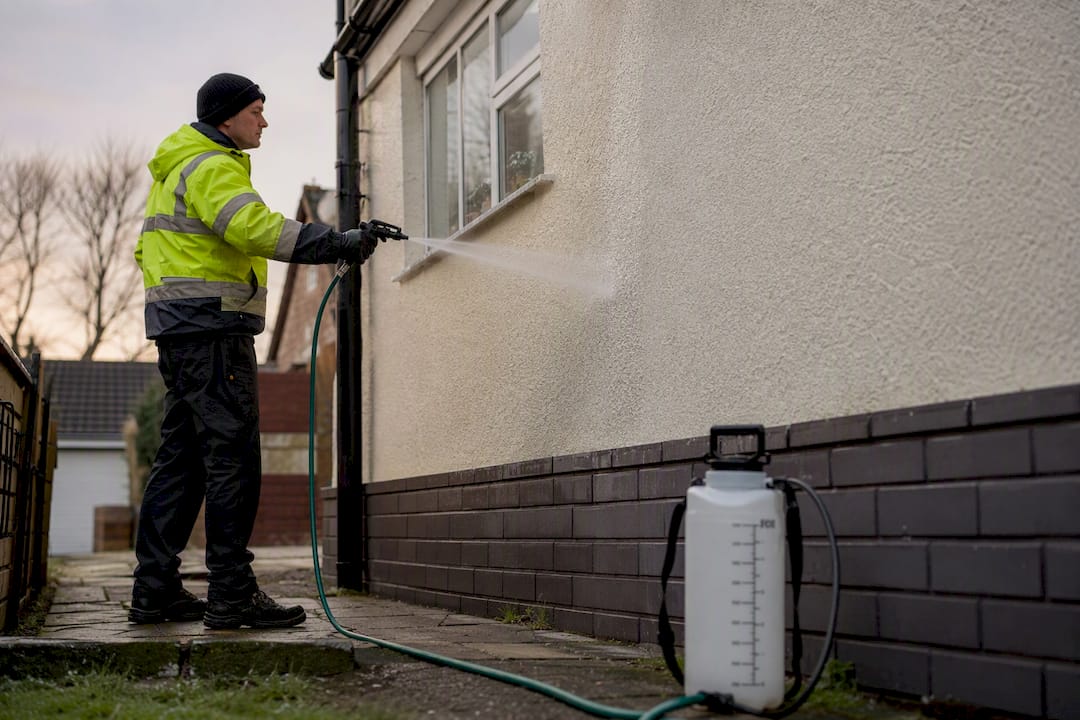
Clean K Rend with a low-pressure soft wash and a controlled biocide mix. Never use high-pressure jetting: it drives water behind the render and can strip the silicone finish. Most homes need this done every few years, though shaded walls and coastal properties often need attention more frequently due to environmental exposure.
Soft wash with a measured biocide, applied cold, low pressure, top to bottom
Avoid pressure washers set above a fan/low setting on K Rend finishes
Watch for manufacturer-recommended products: K Pro, Render Clean, and K Rend Algae Clean
A full soft wash on an average semi-detached home typically runs into the low hundreds of pounds, with price shaped mainly by scaffold access and how bad the algae has got. K Rend itself recommends light cleaning after a few years and specifically advises a low-pressure fan setting if a pressure washer is used at all.
Key Takeaways
A safe K Rend clean means low-pressure soft washing with a manufacturer-approved biocide, applied every two to three years and backed by a porosity test before mixing strength is decided.
Point | Details |
Soft wash, not jet wash | Use low pressure and a measured biocide mix; high pressure risks forcing water behind the render. |
Test porosity first | A quick water-splash test tells you whether the render needs a weaker dilution. |
Follow manufacturer rates | Render Clean dilutes 1:4 and applies at roughly 250 ml per square metre. |
Watch shaded and coastal walls | These need cleaning every 12 to 18 months rather than the standard two to three years. |
Protect with K Pro | A hydrophobic coating slows regrowth but still needs annual checks and gutter clearance. |
Call a specialist for height or damage | Abrushwithgus surveys, tests porosity and quotes before any cleaning begins on higher or cracked render. |
Table of Contents
When to clean K Rend: frequency, stains and what’s actually causing them
Two to three years is the rough rule for most K Rend properties, but exposure changes that math fast. Walls that sit in permanent shade, back onto trees, or face onto salt-laden coastal air can grow algae within 12 to 18 months of a clean, according to professional cleaning guidance. South-facing elevations that dry quickly tend to stay clean far longer.
What you’re actually looking at usually falls into a short list:
Green algae streaking, most common on north-facing or shaded walls
Black fungal staining around window reveals and roof lines
Moss at low level near soil, paving or damp ground contact
Bird fouling on ledges, sills and under eaves
General weathering and dust, especially near busy roads
None of this means the render has failed. K Rend’s own guidance notes these are cosmetic issues, not structural ones. Price scales with height and access (scaffold versus a ladder), and with how long growth has been left to establish.
Why soft wash beats pressure washing on K Rend
Soft washing means low water pressure combined with a measured biocide and surfactant solution that kills algae and fungal growth at the root, rather than just blasting the visible surface off. That distinction matters more on K Rend than on brick or stone, because K Rend’s silicone-based topcoats are engineered to be breathable and water-shedding. Force water in at high pressure and you risk pushing moisture behind that layer, which can cause staining, cracking, or the discoloured “watermark” patches many contractors get called out to fix.
Soft wash — low pressure (roughly equivalent to a garden hose), biocide dwell time, then a gentle rinse. This is the method K Rend itself endorses and the one most soft-wash specialists use as standard.
High-pressure jet washing — strips surface growth quickly but risks forcing water behind the render, damaging dry dash finishes, and stripping the silicone coating that gives K Rend its self-cleaning properties.
Steam cleaning — occasionally used on stubborn organic staining, but it needs an experienced operative who understands dwell time and distance control; used carelessly, it carries similar risks to jet washing.
Pressure washers aren’t banned outright. K Rend’s own guidance allows one on a low-pressure fan setting for general staining, but that’s a narrow tolerance, not an invitation to blast away with a domestic jet washer on full power.
Pro Tip: If a quote mentions “pressure washing” with no reference to biocide, dwell time, or a fan nozzle, ask exactly what pressure setting they intend to use before booking. That single question filters out a lot of risk.
How do you soft wash K Rend step by step?
A safe soft wash follows a fairly fixed sequence, whether you’re doing it yourself or briefing a contractor.
Inspect first. Walk the elevation and check for hairline cracks, loose or hollow-sounding render, and staining along balconies or soil lines. Cover nearby plants, patio furniture and glazing before you start.
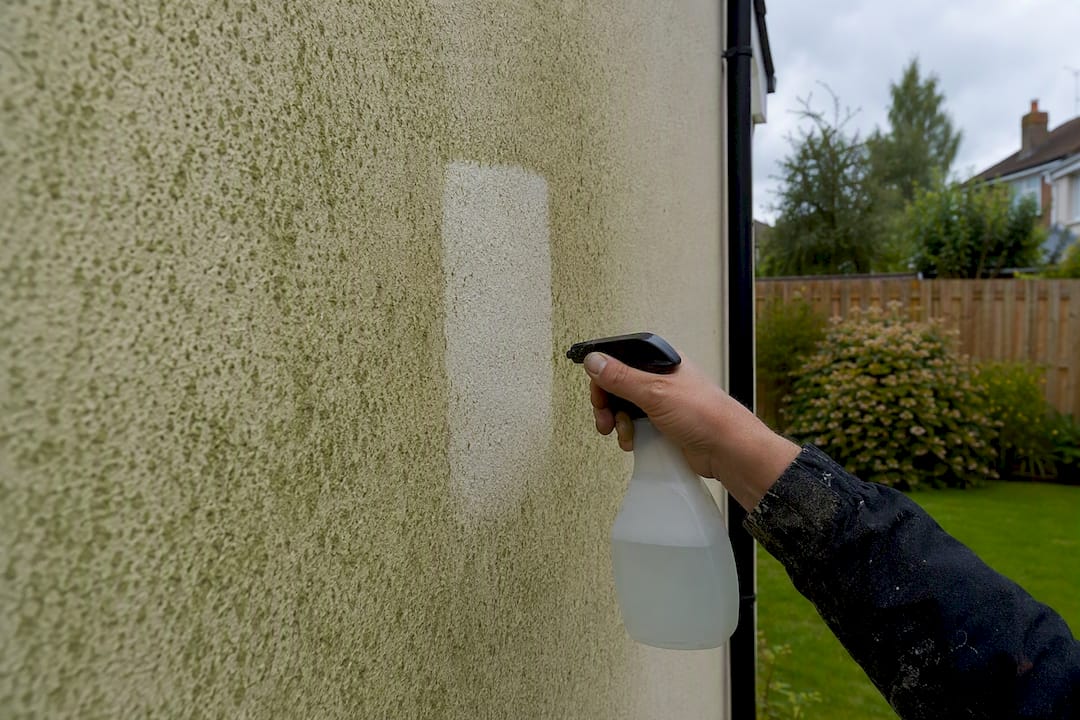
Run a porosity test. Splash a small amount of water on an inconspicuous patch. If it beads and runs off, the render is sealed and can take a standard dilution. If it soaks in quickly, the surface is more porous and needs a weaker mix to avoid oversaturation. This is a genuinely useful heuristic: it tells you how the render will behave before you commit product to the whole wall.
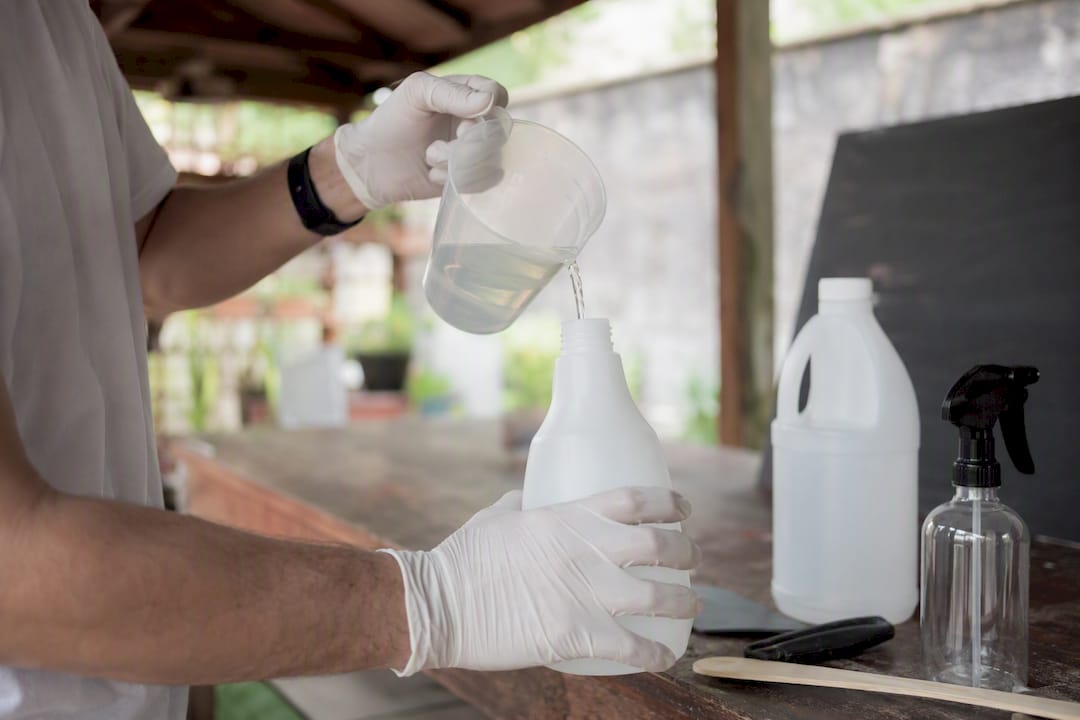
Mix to the manufacturer’s rate. K Rend’s own Render Clean is diluted 1 part product to 4 parts water, applied at around 250 ml of diluted solution per square metre. Professional soft-wash mixes for stubborn algae commonly use a sodium hypochlorite blend around 97% water, 2% sodium hypochlorite and 1% surfactant.
Apply and let it dwell. Work top to bottom in overlapping sections. Most soft-wash professionals leave the solution on for 15 to 20 minutes before rinsing, giving the biocide time to work into the growth rather than just sitting on the surface.
Rinse at low pressure and check for patchiness. Uneven colour usually means either an inconsistent dilution or a section that needed a longer dwell. A second, lighter application on those patches is normal and expected, not a sign of failure.
Skip this whole process and hire a specialist if you’re dealing with render above single-storey height, any cracking or hollow sections, or a warranty that specifies approved cleaning methods. Getting that wrong on a first-floor gable end isn’t a DIY afternoon, it’s a fall risk and a potential warranty voider in one move.
Pro Tip: Never mix sodium hypochlorite with anything other than water and the intended surfactant. Combining it with other cleaning chemicals can release harmful fumes.
Treating algae and stubborn staining without damaging the render
For general algae and grime, K Rend’s own Render Clean at the 1:4 dilution covers most routine jobs. For heavier, established growth, specialist products like K Rend Algae Clean or comparable cleaners such as GK Render Cleaner use stronger ratios, with suppliers suggesting 2:1 for heavy soiling and 3:1 for lighter jobs.
Let the product dwell and evaporate rather than scrubbing it in with a brush
Repeat the application on stubborn patches rather than increasing strength beyond guidance
Never use household bleach or wire brushes: bleach isn’t formulated for render substrates and aggressive scrubbing can burnish or scar the finish
Only apply when rain isn’t forecast for at least six hours, so the product isn’t washed off before it works
You’re also working near soil, drains and often a neighbour’s garden, so cover or wet down nearby plants beforehand and avoid letting runoff pool anywhere it could reach a watercourse.
Pro Tip: Do a small test patch on a hidden section of wall 24 hours before treating the whole elevation, especially with a stronger dilution ratio.
Do protective coatings like K Pro actually reduce cleaning?
K Pro is a breathable hydrophobic coating that sits on top of the render and reduces how much water the surface absorbs, which slows the algae regrowth that feeds on trapped moisture. It’s applied by roller, brush or airless sprayer and sold in 25-litre containers for larger jobs.
Reapply roughly annually on façades that stay damp, in line with K Rend’s own fungicidal wash recommendation
Keep gutters clear and vegetation trimmed back, since overhanging branches and blocked downpipes are the biggest drivers of repeat algae growth
Do a quick annual visual check for hairline cracks or staining before they spread
A coating doesn’t replace maintenance. It buys you time between cleans, but a wall left unchecked for years will still need a proper soft wash eventually, coating or not.
A South West perspective on when to call in help
Cornwall’s coastal salt and shaded valley properties see faster algae regrowth than most inland UK homes, which is exactly the pattern Abrushwithgus deals with on repeat callouts. On site, we check porosity, look for hairline cracking around openings, and flag any hollow-sounding patches before touching a hose. Clients typically get a wall that looks freshly rendered again, without any of the staining risk that comes from a badly judged pressure wash.
— Angus
Get a K Rend soft wash done properly, first time
Abrushwithgus is the alternative to guessing your way through a DIY soft wash: we bring the porosity testing, the correct dilution rates, and the low-pressure equipment that keeps your K Rend’s warranty and finish intact.

Book a survey and you’ll get a proper site check, a porosity test on the actual render, and a written recommendation before any cleaning starts, so there are no surprises on price or method. Costs vary with access (scaffold versus ladder height) and how established the algae or staining has become, but you’ll know that figure before we start. If you’d rather have the team handle the whole job, from soft wash through to a protective K Pro finish, take a look at our exterior home cleaning service or get in touch through our cleaning services page to arrange a quote. We also work regularly alongside Fresh Exteriors on wider driveway and patio treatments where a property needs more than just the render addressed.
Sources
Verify dilution rates and safety notes directly via K Rend’s maintenance guidance and the aftercare technical datasheet.
Recommended
Comments