
Why hiring professional sprayers gets you a better result
- WM Creative Designs Limited
- 6 days ago
- 12 min read
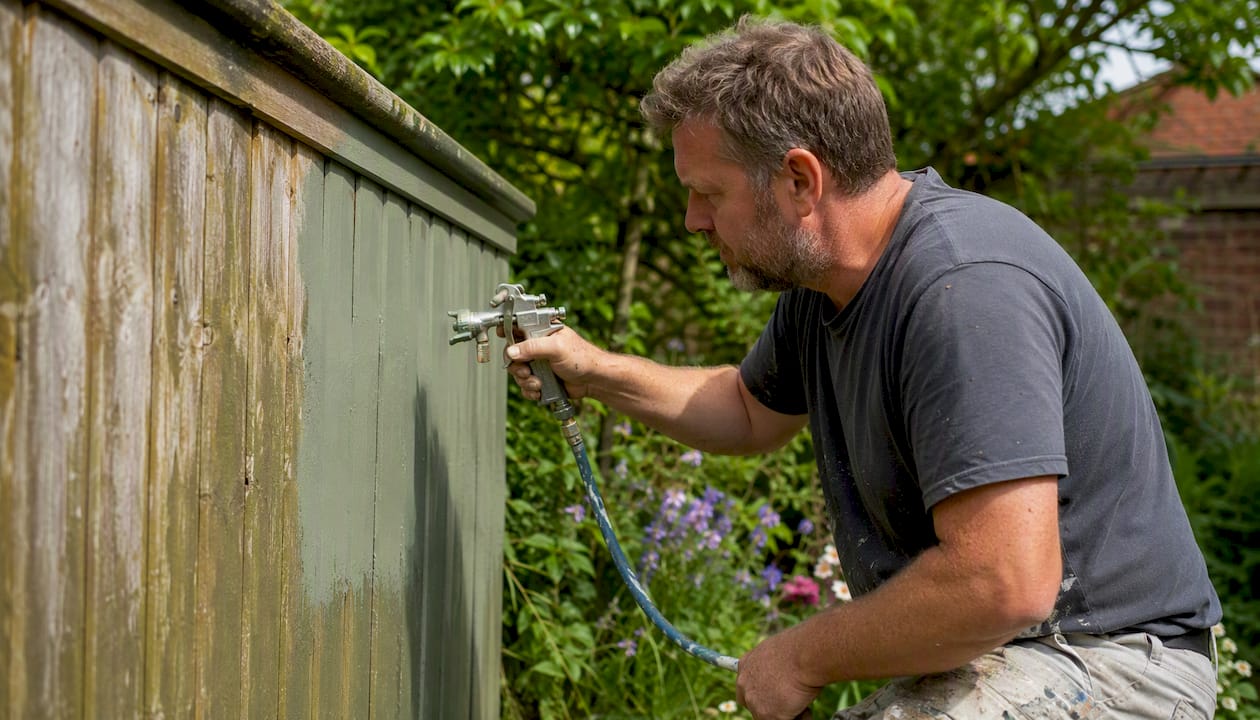
Hiring a professional sprayer typically delivers a superior finish, faster completion and fewer costly mistakes than DIY for any medium-to-large painting project. The core reasons come down to six things:
Finish quality — spray-applied coatings produce an even film with no brush marks or roller texture
Specialist equipment — commercial airless and HVLP machines outperform anything available from a hire shop
Time savings — professional sprayers complete large surfaces in a fraction of the time brushing takes
Durable preparation — correct priming, filling and adhesion work determines how long the finish lasts
Reduced mess and safety — professionals manage overspray, ventilation and working-at-height risks
Warranty and insurance — reputable contractors carry public liability cover and back their work in writing
The sections below unpack each of these in detail, compare spraying with brushing honestly, and explain what to look for when choosing a contractor.
Key takeaways
Hiring a professional sprayer is worth the investment when finish quality, durability and time savings matter more than the lowest possible upfront cost.
Point | Details |
Finish quality is the primary reason | Professionals control tip, pressure and thinning to deliver an even, factory-like film that brushing cannot replicate. |
Prep determines longevity | Correct cleaning, priming and adhesion work is what makes a sprayed finish last; rushed prep causes early failure. |
Spraying saves time on large jobs | Contractors report substantial time savings on residential projects compared with brush and roller methods. |
Ask for documents before you commit | Request public liability insurance, a written estimate, method statement and portfolio before agreeing to any work. |
Abrushwithgus covers Cornwall and the South West | They offer UPVC, kitchen, exterior and domestic spraying with written estimates and a workmanship guarantee. |
Table of Contents
1. Why professional sprayers deliver a noticeably better finish
4. Why preparation determines how long a sprayed finish lasts
7. What to expect: the typical professional spraying process
9. Abrushwithgus: a South West example of spraying done properly
10. When spraying is the right call: a perspective from Abrushwithgus
Abrushwithgus professional spraying services in Cornwall and the South West
1. Why professional sprayers deliver a noticeably better finish
Finish quality is not just about colour. It is about film build, sheen consistency and the absence of any texture that catches raking light. A sprayed surface, applied correctly, looks factory-finished: uniform, smooth and without the stipple left by a roller or the drag marks left by a brush.
Getting there requires more than pointing a gun at a wall. Professionals control thinning ratios, tip size and atomising pressure to suit the specific paint and substrate. Get any of those wrong and you end up with runs from over-thinning, orange-peel texture from incorrect pressure, or mottling from uneven overlap. Correcting those faults means sanding back and respraying, which costs more than getting it right first time.
A sprayed finish applied by a skilled operator is not just faster than brushing — it is structurally more consistent. The wet-edge problem that plagues large brush-applied surfaces simply does not exist when the whole panel is atomised in one pass.
The growth of decorative spraying as a trade practice reflects this: contractors who spray can deliver finishes on kitchens, doors and UPVC that brushing cannot replicate, regardless of how skilled the decorator.
Pro Tip: When reviewing quotes, ask to see photos of sprayed trims or cabinet doors taken in raking light. That angle exposes any texture, runs or uneven sheen that a straight-on photo hides. A confident contractor will have plenty of these.
2. Specialist equipment makes a real difference
Not all spray equipment is equal. The gap between a consumer spray attachment and a professional-grade machine is roughly equivalent to the gap between a domestic food mixer and a commercial bakery mixer: both technically do the job, but only one is built for consistent output over a full working day.
Professional contractors use two main machine classes:
Airless sprayers — high-pressure pumps that atomise paint without air, ideal for large exterior surfaces, cladding, render and full-room interiors. Airless systems maintain consistent coating thickness across large areas in a way rollers simply cannot match.
HVLP (High Volume Low Pressure) sprayers — lower pressure, finer atomisation, preferred for cabinetry, kitchen doors, furniture and any surface where overspray control and a fine finish matter more than raw speed.
Beyond the machine itself, professionals carry a range of tips. Tip size controls fan width and flow rate, and matching the tip to the coating and surface is a skill that takes experience to develop. A hire-shop sprayer typically comes with one or two tips and no guidance on which suits your paint.
Commercial machines also offer pressure stability across a full day’s work. Hire-shop units often fluctuate as the motor heats up, producing inconsistent film thickness across a large job. Professional machines are serviced regularly and backed by spare parts, so a breakdown mid-job is far less likely.
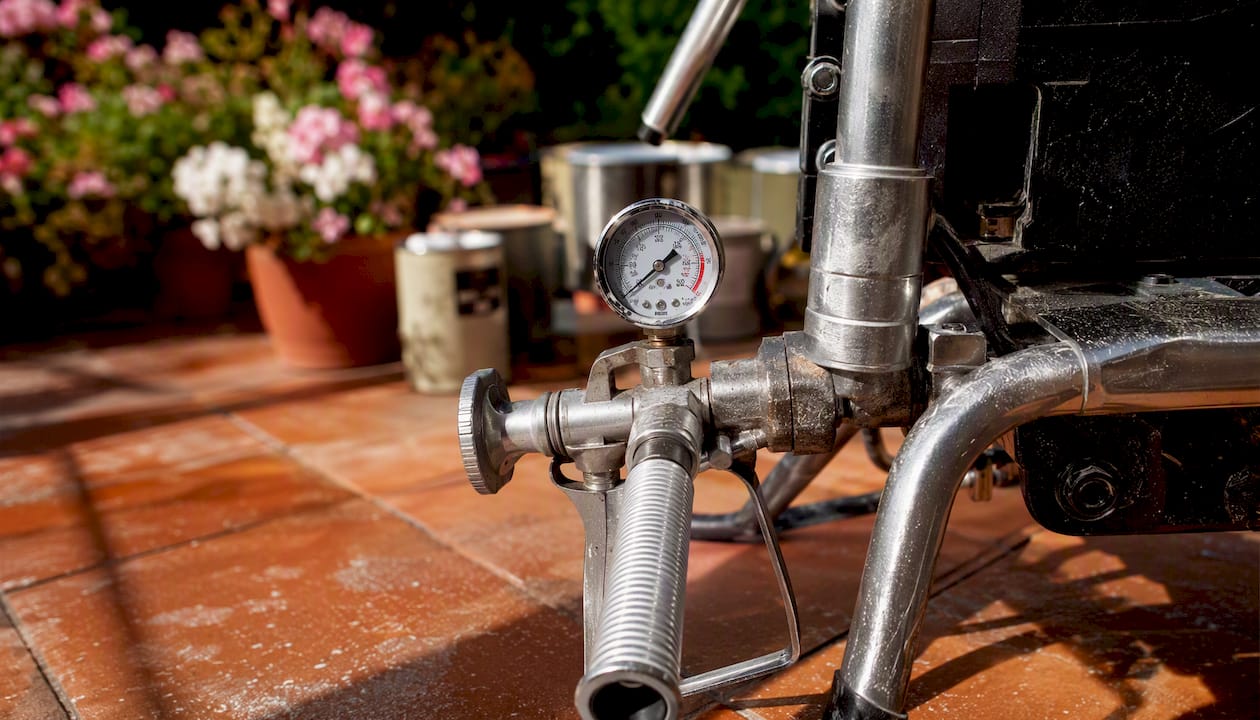
Pro Tip: Ask any contractor which machine model or class they plan to use. Someone who answers with a specific machine type (e.g. a Graco airless or a Wagner HVLP) is set up for spraying. Someone who cannot answer is probably using whatever they have to hand.
3. How spraying saves time and what that means for cost
Speed is one of the clearest advantages of using sprayers. Contractors switching to professional-grade sprayers report substantial time savings on residential projects, with some examples noting significantly faster job completion compared with brush and roller methods. On a full exterior or a kitchen with twenty-plus door fronts, that difference is significant.
When comparing quotes, look beyond the headline price. The real cost equation involves several factors:
Surface area and access — more square metres and difficult access (scaffolding, ladders, tight spaces) add time and cost regardless of method.
Masking and prep time — professional spraying requires thorough masking of windows, fixtures and non-target surfaces. This takes time upfront but is included in a professional quote; a DIYer often underestimates it badly.
Number of coats and paint type — some substrates need a primer coat plus two finish coats. The paint itself (specialist UPVC coatings, exterior masonry paint, kitchen-grade lacquer) costs more than standard emulsion.
Warranty and rework allowance — a written guarantee from a professional contractor means any callback is at their cost, not yours. That is worth pricing into the comparison.
Spraying becomes clearly cost-effective on jobs covering more than roughly 20–30 square metres of continuous surface, or any project involving multiple identical components (kitchen doors, fence panels, window frames). Below that threshold, the setup and masking time can erode the speed advantage. For kitchen spraying cost factors, the number of door fronts and drawer faces is usually the primary driver.
4. Why preparation determines how long a sprayed finish lasts
The finish you see on day one is only as good as what is underneath it. Professional contractors treat preparation as the job, with spraying as the final step. Rushed prep is the single most common cause of early coating failure, peeling and callbacks.
A thorough professional prep sequence typically includes:
Cleaning the substrate (degreasing, pressure washing for exteriors, sugar soap for interiors)
Rust removal or treatment on metal surfaces
Filling cracks, holes and surface defects with appropriate filler
Sanding to the correct profile for adhesion
Primer selection matched to the substrate and finish coat
Adhesion testing before committing to a full coat
Professional onsite spraying for commercial cladding and exteriors delivers better durability and appearance than DIY precisely because correct preparation and coating systems are applied in sequence. The coating system matters: using the wrong primer under a specialist UPVC or exterior coating can cause delamination within months, regardless of how well the topcoat is applied.
Correct paint quality and primer selection also affects resistance to UV, moisture and thermal movement, all of which are particularly relevant for exterior surfaces in the South West’s variable climate. A professionally applied exterior coating, properly prepped and primed, should last considerably longer than a brush-applied DIY equivalent on the same surface.
5. How professionals manage mess, overspray and safety
Spray painting indoors or on a property with neighbours nearby creates risks that professionals are trained to manage and DIYers often underestimate. Overspray travels further than most people expect, and fine paint mist can settle on cars, plants, glazing and neighbouring surfaces within seconds of the trigger being pulled.
Professional contractors use a combination of measures to contain this:
Heavy-duty masking film and tape on all non-target surfaces
Dust sheets and floor protection inside
Extraction and filtration equipment to manage airborne particles
Negative-pressure tenting for particularly sensitive exterior areas or fragile surfaces
Health and safety is a separate consideration. Spray painting generates fine aerosols that require appropriate respiratory protection (P3-rated masks as a minimum for solvent-based coatings), eye protection and skin cover. Working at height adds further requirements: professional contractors working above ground level should hold relevant competency (IPAF for powered access, PASMA for mobile towers) or use scaffolding erected by a qualified firm.
COSHH (Control of Substances Hazardous to Health) regulations apply to any commercial use of paints and coatings in the UK. A professional contractor should be able to provide a method statement and COSHH assessment on request. If they cannot, that is a red flag.
Pro Tip: When requesting a quote, ask specifically for a method statement and COSHH precautions document. A contractor who produces these without hesitation has thought through the job properly. One who looks blank at the question probably has not.
6. Spray versus brush: an honest comparison
Spraying is not always the right answer. The honest comparison depends on the job, the surface and your tolerance for disruption.
Dimension | DIY brush/roller | Professional spray service |
Finish quality | Visible texture; brush marks on gloss | Even film; no texture; factory-like sheen |
Speed | Slow on large areas | Fast on large or repetitive surfaces |
Waste/overspray | Minimal | Requires masking; overspray risk if uncontrolled |
Cost | Low materials cost; high time cost | Higher upfront; lower per m² on large jobs |
Best surfaces | Small repairs; intricate detailing | UPVC, doors, kitchens, exterior cladding, render |
Skill required | Low for basic work | High; technique, pressure and tip selection critical |
Clean-up/disruption | Minimal | Masking setup adds time; professional clean-up included |
Spray painting gives more uniform coverage and improved weather resistance on exterior renders and UPVC than brushing, making it the preferred method for most exterior surfaces. For a detailed comparison of spraying versus brushing, the decision usually comes down to four questions:
Is the project larger than roughly 20–30 square metres of continuous surface?
Does the finish need to be smooth and consistent (kitchens, UPVC, doors)?
Is the surface difficult to brush evenly (textured render, pebbledash, louvred shutters)?
Is the client’s time worth more than the masking overhead?
If the answer to any of these is yes, spraying is almost certainly the better option.
7. What to expect: the typical professional spraying process
Understanding the process helps you compare quotes properly and avoid surprises about access, downtime or duration.
Survey and quote — the contractor visits, assesses the substrate, measures the area and produces a written estimate with scope, materials, coats and timeline.
Prep and access — cleaning, filling, sanding and priming. For exteriors, scaffolding or access equipment is erected at this stage.
Masking — all non-target surfaces are masked. This is time-consuming but critical.
Spray passes — the finish coats are applied in controlled passes, with drying time between coats as specified by the coating manufacturer.
Inspection and touch-ups — the contractor checks for any misses, runs or thin areas and addresses them before removing masking.
Final sign-off — client walkthrough, written completion confirmation and warranty documentation.
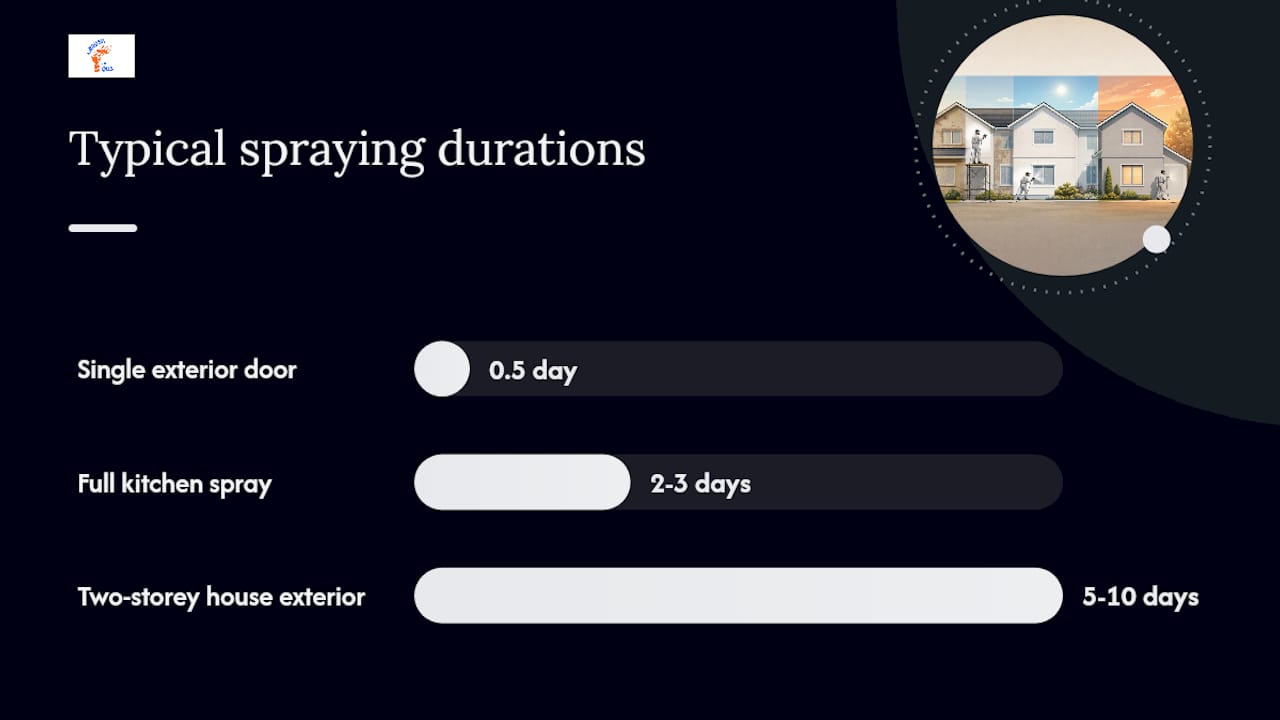
Typical durations vary considerably by job type. A single exterior door takes half a day including prep. A full kitchen spray (20 door fronts, drawer faces, carcasses) typically runs two to three days. A full exterior of a two-storey house, including render or cladding, can take five to ten days depending on access and weather.
Pro Tip: For exterior jobs, ask the contractor what their weather threshold is. Most solvent-based and specialist exterior coatings should not be applied below 5°C or in direct rain. A professional will have a clear policy; a vague answer suggests they may cut corners on application conditions.
Before work starts, your responsibilities as the client are straightforward: clear access to the area, move furniture and valuables away from the work zone, arrange parking for the contractor’s van and equipment, and make sure pets and children are kept clear of the spraying area during application.
8. How to choose the right professional sprayer
Choosing a contractor is where most homeowners make avoidable mistakes, usually by going on price alone. Here is what to look for instead.
Questions to ask before you commit:
Do you carry public liability insurance, and can you provide the certificate?
Are you a member of any trade body (e.g. the Painting & Decorating Association)?
What machine and tip setup will you use for this specific job?
Can you provide a method statement and COSHH assessment?
What does your warranty cover, and for how long?
Can I see a portfolio of similar completed jobs, including close-up photos?
Do you have references from clients with comparable projects?
Red flags to watch for:
A quote with no breakdown of scope, materials or coats
Pressure to accept a verbal agreement rather than a written estimate
No mention of masking, prep or primer in the quote
Inability to name the coating system or machine they will use
Reluctance to provide insurance documentation
Trust signals that matter:
A before-and-after portfolio with photos taken in raking light, not just straight-on glamour shots
Written estimate with itemised scope and timescale
Public liability insurance certificate (minimum £1 million cover is standard; £2 million or more is common for commercial work)
Signed guarantee or warranty on workmanship
Trade membership or certification (Painting & Decorating Association membership is a meaningful signal)
The qualities that distinguish a professional paint job are visible in the portfolio before you spend a penny. If a contractor cannot show you close-up evidence of their finish quality, keep looking.
9. Abrushwithgus: a South West example of spraying done properly
Abrushwithgus is a family-run painting and decorating business operated by brothers Gus and Rhys, serving Cornwall and the wider South West. Their work covers interior and exterior residential projects, UPVC spraying, kitchen spraying and exterior home cleaning, with a consistent focus on preparation quality and finish standard.
A representative example of their work is a UPVC window and door frame spraying project on a residential property in Cornwall. The scope included cleaning and degreasing all frames, light sanding to key the surface, application of a specialist UPVC primer and two topcoats using an HVLP sprayer. The result was a consistent, factory-like finish across all frames, completed without any overspray on the surrounding brickwork or glazing. The client avoided the cost of full frame replacement, which would have run to several times the spraying cost.
Before contacting Abrushwithgus, I assumed the frames would need replacing. The sprayed finish looks completely new and the whole job was done in a day and a half with no mess left behind.
Abrushwithgus carries public liability insurance, provides written estimates with clear scope and timescale, and backs completed work with a workmanship guarantee. Their portfolio covers UPVC, kitchens, exterior render and interior decorating, and is available to view on request.
Pro Tip: Ask any contractor to walk you through their prep steps for your specific substrate before they quote. The answer tells you immediately whether they understand the job or are just pricing by area.
10. When spraying is the right call: a perspective from Abrushwithgus
There is a tendency in the industry to recommend spraying for everything, which does the client a disservice. Spraying is the right method when the surface demands a smooth, consistent finish that brushing cannot deliver, when the area is large enough that the masking overhead is justified, or when the substrate (UPVC, kitchen lacquer, exterior render) genuinely benefits from atomised application.
For small repairs, intricate detailing or areas where masking would take longer than the job itself, brushing is often the more sensible choice. The honest answer is always the one that serves the client’s outcome, not the one that sells the most expensive method.
What matters most is that whoever you hire carries the right insurance, uses the right equipment for the specific job, and treats preparation as seriously as the finish coat. A beautiful spray finish over a poorly prepared substrate will fail within a year. A thorough prep job with a competent spray application should last a decade or more on most surfaces.
Abrushwithgus operates on that basis: survey first, prep properly, spray with the right machine for the job, and back the result in writing.
Abrushwithgus professional spraying services in Cornwall and the South West
If you are weighing up whether to hire a professional sprayer for a domestic or commercial project in Cornwall or the South West, Abrushwithgus offers the full range of services the job is likely to need.

Their services cover domestic interior and exterior painting, specialist UPVC spraying for windows and doors, exterior home spraying for render, cladding and masonry, kitchen spraying for door fronts and carcasses, and exterior cleaning services that often precede a spray project. Every job starts with a site survey and written estimate, includes a method statement on request, and is backed by a workmanship guarantee.
To get a written quote for your project, contact Abrushwithgus directly via the spraying services page. Bring your measurements, a description of the surface and any photos you have, and they will come back with a clear scope and price.
Sources
A short list of reputable sources for anyone who wants to read further on professional spraying, equipment and contractor selection in the UK:
Recommended
Comments