
How to hire a painter and get a great result
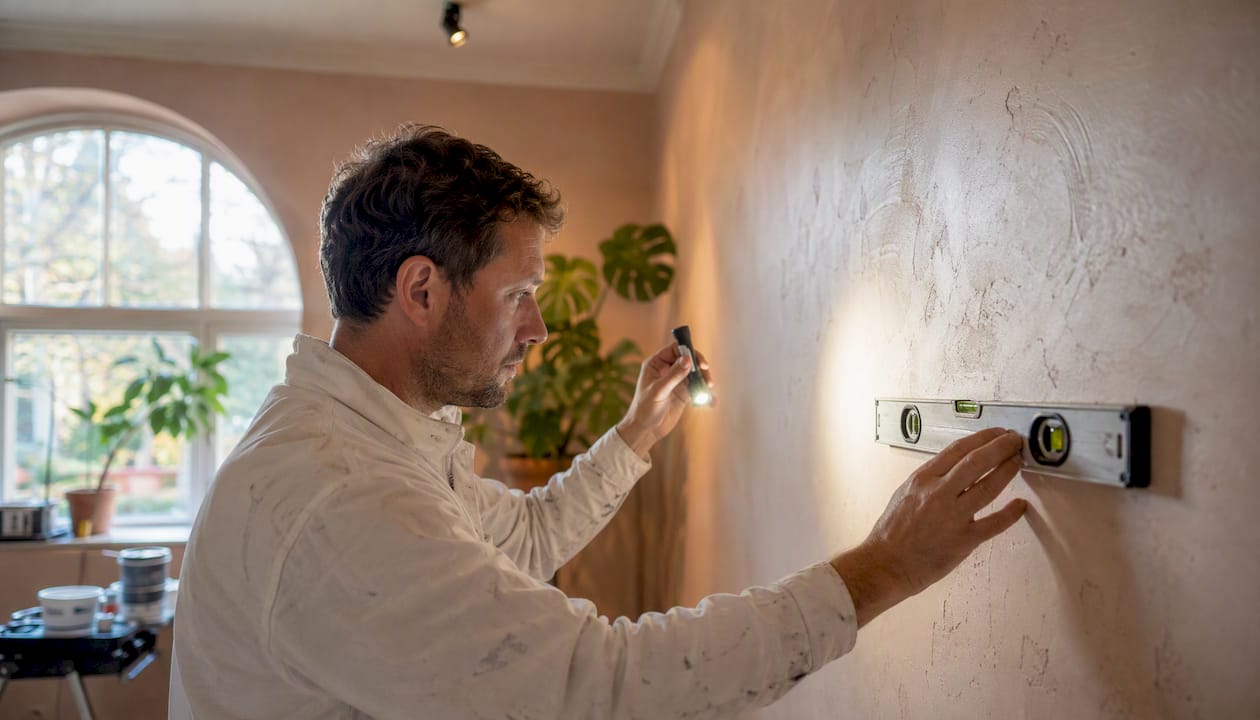
A professional paint job succeeds when six stages are completed in order and written into the quote and contract before work begins: initial survey and detailed quote; signed written contract with consumer protections; thorough surface preparation; new-plaster drying and mist coat where relevant; correct primer, paint selection and professional application; and final inspection with a documented defects liability period.
The brands and standards that anchor this guide are Abrushwithgus (South West UK), British Gypsum for plaster drying guidance, Polyfilla for filling, and the Supply of Goods and Services Act 1982 for implied quality standards.
Survey and itemised quote
Signed written contract
Surface preparation (cleaning, filling, sanding)
New-plaster drying and mist coat
Priming, paint selection and application
Snagging, defects liability and aftercare
Key takeaways
A professional paint job depends on what is written into the contract before work begins, not on what is promised verbally on the day.
Point | Details |
Get three itemised quotes | Compare scope and prep detail, not just price; the cheapest quote usually omits preparation. |
Sign a written contract | Include scope, products, coats, payment schedule, insurance proof and a 12-month defects guarantee. |
Confirm new-plaster drying | Gypsum skim needs 2–4 weeks; insist on a mist coat at 10:1 dilution before topcoats. |
Withhold final payment | Complete a snagging walk-through and hold final payment until agreed defects are resolved. |
Abrushwithgus | Provides itemised quotes, public liability insurance, and a full staged workflow across Cornwall and the South West. |
Table of Contents
What should a proper site survey and quote include?
A trade-standard survey is not a five-minute walk-round. The decorator should measure every surface, photograph problem areas, check substrate condition (flaking paint, damp patches, hairline cracks), note access constraints such as high ceilings or scaffolding needs, and confirm whether materials are supplied by them or by you.
The quote that follows must itemise labour separately from materials, name the specific preparation tasks, state the number of coats per surface, list the products to be used, give start and completion dates, and set out the deposit and payment schedule. Get at least three detailed quotes and compare scope, not just the bottom-line price. A quote that is noticeably cheaper than the others almost always means preparation has been cut or inferior materials assumed.

Red flags on a first quote: no mention of prep work, a same-day start offered without a site visit, no product names, and a single lump-sum price with no breakdown. Any of these should prompt further questions before you proceed.
Before the survey ends, ask the right questions: proof of public liability insurance, workmanship guarantee duration, references or portfolio photos, lead-paint awareness for pre-1980s properties, and who supplies materials. For further guidance on comparing renovation quotes, the House A-Z renovation quotes guide covers evaluation criteria worth reviewing.
What must be in the written contract?
The Supply of Goods and Services Act 1982 implies that any paid service must be carried out with reasonable care and skill, within a reasonable time, and at a reasonable charge where no price is fixed. The Consumer Rights Act 2015 reinforces this for residential clients. Neither Act replaces a written contract; they simply set a floor.
A painting and decorating service contract should include:
Precise scope: surfaces to be decorated, specific preparation tasks, product names and brands, number of coats
Start date, completion date and a process for agreed variations
Full pricing, deposit amount, payment milestones and final payment trigger
Proof of public liability insurance attached or referenced
COSHH and lead-paint risk assessment confirmation where the property pre-dates 1980
Defects liability period (typically 12 months for workmanship)
Remedial process if work falls short
Demand for full payment upfront before work begins is a significant warning sign. If work falls short, raise the issue in writing immediately, refer to the contract’s remedial clause, and if unresolved, the small-claims process (up to £10,000 in England and Wales) is the practical next step.
Pro Tip: Ask for a copy of the insurance certificate before work starts, not after. A reputable decorator will have it to hand.
Surface preparation: what should be included in the spec?
Preparation determines the longevity of any finish. Trade guidance consistently places cleaning, filling and sanding as the foundation of a professional result, and a specification that skips or vaguely describes prep is the single most reliable predictor of a poor outcome.
A proper preparation specification should cover:
Washing down all surfaces with sugar soap to remove grease and contamination
Filling cracks and holes with Polyfilla or equivalent, then sanding flush
Sanding glossy surfaces to provide adhesion for new coats
Removing loose or flaking paint back to a sound substrate
Checking for damp or mould and treating before any decoration begins
Masking and protecting floors, furniture and fittings
When unseen problems appear during prep (a hidden damp patch, deeper damage behind wallpaper), the contract’s variations clause should require the decorator to stop, photograph the issue, provide a written cost for additional work, and obtain your approval before proceeding. Never allow a decorator to proceed with extra work and present a surprise invoice at the end.
Pro Tip: Ask the decorator to sequence room prep so that dust and debris from sanding in one room does not contaminate freshly painted surfaces in an adjacent space. Good site management is a mark of experience.
For a deeper look at surface preparation techniques, Abrushwithgus has a dedicated homeowner guide covering each task in detail.
New plaster: how long must it dry before painting?
Painting over wet plaster is one of the most common causes of paint failure in UK homes. Gypsum skim plaster typically needs 2–4 weeks to dry depending on thickness, ventilation and ambient temperature.
A mist coat is not optional on new plaster. A dilution of approximately 10 parts water to 1 part contract matt emulsion seals the surface and prevents the topcoat from being absorbed unevenly. Vinyl emulsions must not be used as a mist coat; their binders prevent proper penetration.
The contract should specify the number of mist coats and topcoats for any newly plastered surface. One mist coat followed by two topcoats is standard for gypsum skim. Ask the decorator to confirm moisture readings in writing before they begin, or request that a moisture meter reading is recorded on site.
Which primers and paints should a professional use?
Product selection should follow the substrate, not the price list. For standard plaster walls, trade-grade matt emulsions from Dulux Trade, Johnstone’s or Crown offer better coverage and durability than retail equivalents. Smoke-damaged or heavily stained surfaces need a stain-blocking primer (shellac-based for severe staining) before any emulsion goes on. High-porosity surfaces benefit from a diluted first coat or a dedicated primer.

Solvent-based paints remain the trade preference for hardwood and some metalwork; water-based alkyds have improved significantly and carry lower COSHH risk, making them the default for most interior woodwork now. The contract should name the specific products to be used so there is no ambiguity.
The professional application sequence runs: ceiling first, then walls, then woodwork. Within each surface, cutting-in at edges precedes rolling the field. Thin, even coats with a maintained wet edge prevent lap marks. Trade techniques such as working in sections and keeping a wet edge are what separate a trade finish from a DIY one.
For exteriors or large open areas, airless spraying delivers a faster, more uniform result than brush and roller. It requires masking and sheeting of everything nearby, which a professional crew should handle as part of the job.
Pro Tip: If the decorator cannot name the specific products they intend to use, that is a gap in the specification. Ask for it in writing before signing.
Final inspection, snagging and defects liability
Walk every room with the decorator before making final payment. A practical snagging checklist covers: even coverage with no thin patches or roller marks; clean, sharp edges at ceiling lines, architraves and skirting; no drips or runs; woodwork with a consistent sheen; and adhesion on any previously problematic surfaces.
Photograph every snag and send the list in writing. A robust painting contract will specify a return visit within an agreed period to address defects. Withhold the final payment or a small agreed retention until confirmed snags are resolved.
A reasonable workmanship guarantee runs 12 months from completion. It covers adhesion failure, peeling, and finish defects attributable to application. Normal wear, scuffs from furniture, and discolouration from condensation fall outside a defect claim. For indicators of what a professional finish should look like, Abrushwithgus has a reference guide worth bookmarking before your inspection.
What do professional painting jobs cost and how long do they take?
Professional timelines run from 1–2 days for a single room to 6–10 days for a full 3-bedroom semi interior. Exterior repaints add several days plus a weather buffer; never book exterior work without a contingency clause for rain delays.
A full interior repaint of a 3-bed semi typically takes several working days at trade standard, including preparation time.
Cost drivers beyond room count include: extensive prep on neglected surfaces, damp remediation, lead-paint removal or encapsulation, scaffolding for high exteriors, and premium product upgrades.
Single room: 1–2 days
Two-bedroom flat (full interior): 4–6 days
Three-bedroom semi (full interior): 6–10 days
Exterior repaint (weather dependent): add 2–3 days buffer
Spring and early summer are the busiest booking windows for South West decorators. Book 6–8 weeks ahead for exterior work to secure your preferred start date.
Health and safety on site: lead paint, COSHH and ventilation
Properties built before 1980 may contain lead-based paint. Sanding or stripping it without precautions creates a serious inhalation risk. A professional decorator should carry out a lead-paint risk assessment before any preparation work begins on older properties, and the contract should confirm this in writing. The safety protocols guide from Abrushwithgus covers what a compliant assessment involves.
COSHH (Control of Substances Hazardous to Health) regulations require decorators to assess and manage exposure to solvents, strippers and dust. Adequate ventilation during application and drying is not optional; it protects both the crew and the occupants. Ask to see the COSHH assessment for any solvent-based products being used indoors.
How to communicate with your decorator during the project
Agree a single point of contact before work starts and establish a daily check-in, even a brief one. If you spot something that concerns you, raise it the same day rather than waiting until the end of the week. Written messages (text or email) create a record; verbal-only conversations do not.
Agree how variations will be communicated: any change to scope, product or timeline should be confirmed in writing before the work proceeds. A good decorator will welcome this; it protects both parties.
What to do if a dispute arises
If work falls short, document it immediately with photographs and a written note to the decorator referencing the contract specification. Give them a reasonable opportunity to remedy the defect before escalating. If they refuse or the work remains unsatisfactory, the small-claims court (up to £10,000 in England and Wales) is the practical route for residential disputes. Citizens Advice provides free guidance on the process.
For disputes before work begins (a contractor who demands full payment upfront or refuses to provide insurance proof), simply do not proceed. No contract signed means no obligation on your part.
What the trade reality looks like in the South West
South West properties present a specific set of challenges: older stone and cob construction holds damp differently from modern cavity-wall builds, pre-1980s paintwork is common, and coastal exposure accelerates exterior paint degradation. Abrushwithgus, run by brothers Gus and Rhys, works across Cornwall and the wider South West and encounters these conditions regularly.
The team’s staged workflow follows exactly the process described in this guide: survey, written quote, prep confirmation, mist coat where required, and a documented snagging walk-through before final payment. Specialist services including UPVC spraying, airless spraying for larger areas, and exterior cleaning are available alongside standard interior and exterior decoration. Insisting on a signed contract and proof of insurance is not bureaucracy; it is the baseline for any reputable trade relationship.
Abrushwithgus: quality painting for South West homeowners
Skipping the quote comparison and hoping for the best is how most bad paint jobs happen. Abrushwithgus gives South West homeowners a fully itemised written quote, confirmed public liability insurance, and a documented defects guarantee before a single sheet goes down.

Interior repaints, exterior work, UPVC spraying, airless spraying and exterior cleaning are all available across Cornwall and the South West. Every job starts with a proper site survey and ends with a snagging walk-through. Client reviews and portfolio photos are available on request.
For interior projects, visit the domestic painting service page to request a survey. For exterior work, the exterior home service page covers scheduling, weather planning and what to expect. Get in touch with the information from your survey ready (room sizes, substrate condition, any known damp or lead-paint concerns) and Abrushwithgus will provide a detailed, comparable quote within a few days.
Sources
This article is general information, not a substitute for advice from a qualified lawyer. Consult a qualified legal professional about your own circumstances before acting on anything here.
Recommended
Comments