
10–15 Year uPVC Spray Lifespan, Trade 2K Tips for South West Homes
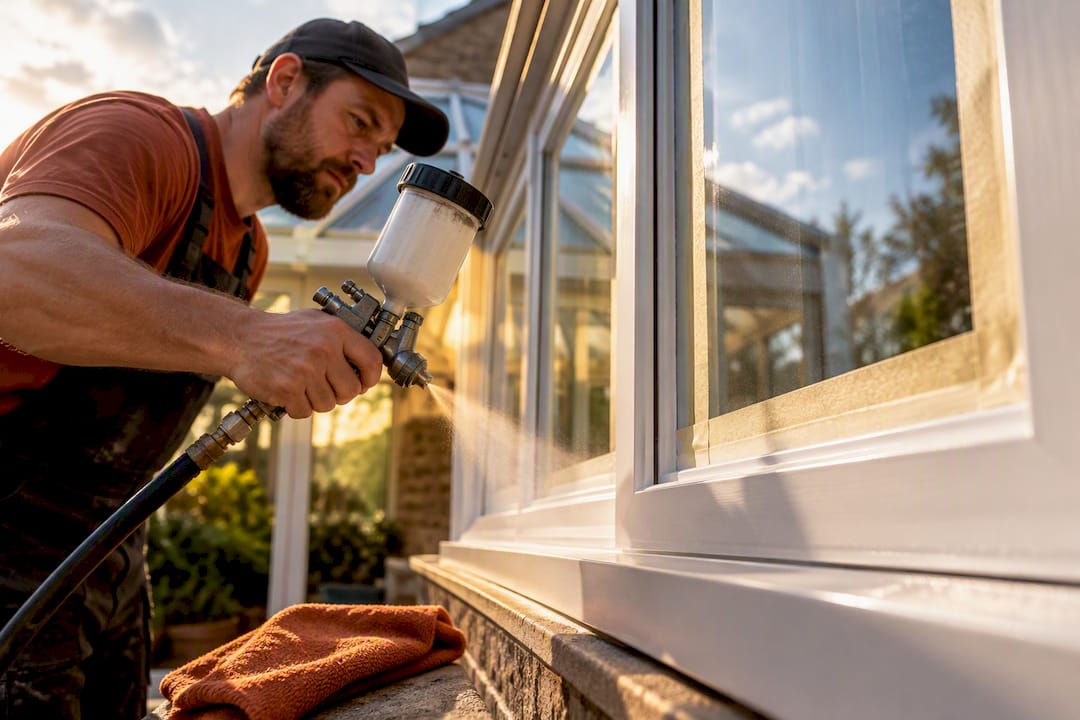
A professionally applied 2K polyurethane system on correctly prepared uPVC typically lasts 10 to 15 years in the UK. That figure holds only when the prep is done properly, the coating is a genuine trade product, and the frames get basic care afterwards. Skip any of those and you can lose years off the finish.
TL;DR:
Properly prepared and correctly coated 2K polyurethane uPVC can last up to 15 years, but poor prep or maintenance can cut this lifespan significantly.
Coastal and sun-facing locations tend to accelerate weathering, reducing the coating’s durability by a few extra years compared to sheltered, inland properties.
Regular gentle cleaning with soap and water, avoiding abrasive or solvent cleaners, can maintain the coating’s hydrophobic and UV-resistant properties longer.
Signs of coating failure include flaking, bubbling, chalking, or uneven color shifts, which can often be repaired with a simple respray rather than full replacement.
Spraying costs around 20-25% of full frame replacement and provides a quick, less disruptive refresh option for sound but tired-looking uPVC frames.
Table of Contents
How long does uPVC spraying last in the real world?
The 10 to 15 year figure isn’t a marketing round number. It’s what trade sprayers and independent reviewers see repeatedly on properly specified jobs, and some accelerated weathering tests on 2K systems point to a 12 to 20 year ceiling when everything’s done right.
Where you land in that range depends on the application. Windows and doors on a typical UK semi, sheltered by soffits and not facing the worst of the weather, tend towards the top end. Conservatories, with their larger glazed surfaces and more direct sun exposure, often sit lower. Garage doors, which take physical knocks as well as weathering, can show wear sooner around the edges even if the main panel holds up well.
Kitchen cabinet doors sprayed indoors follow a shorter clock entirely. Because the wear comes from daily handling rather than UV, sprayed kitchen surfaces typically manage 8 to 12 years before they need attention, even though they never see rain or sun.
What actually determines how long uPVC coating durability holds up?
The coating chemistry is where most of the variation starts. A 2K (two-pack) polyurethane cures through a genuine chemical cross-linking reaction between the base and hardener, forming a hard, flexible film that resists UV breakdown and chalking. Single-pack products, including trade-style aerosols, simply dry as the solvent evaporates. They look fine for a year or two, then start to soften, peel, or fade faster because there’s no cross-linked structure holding the film together.
Chemistry alone doesn’t save a bad prep job. uPVC is a low-energy plastic, meaning ordinary paint struggles to grip it at all. That’s why a proper adhesion promoter or plastic primer goes on before any colour coat. Without it, even a good 2K top-coat can lift within months.
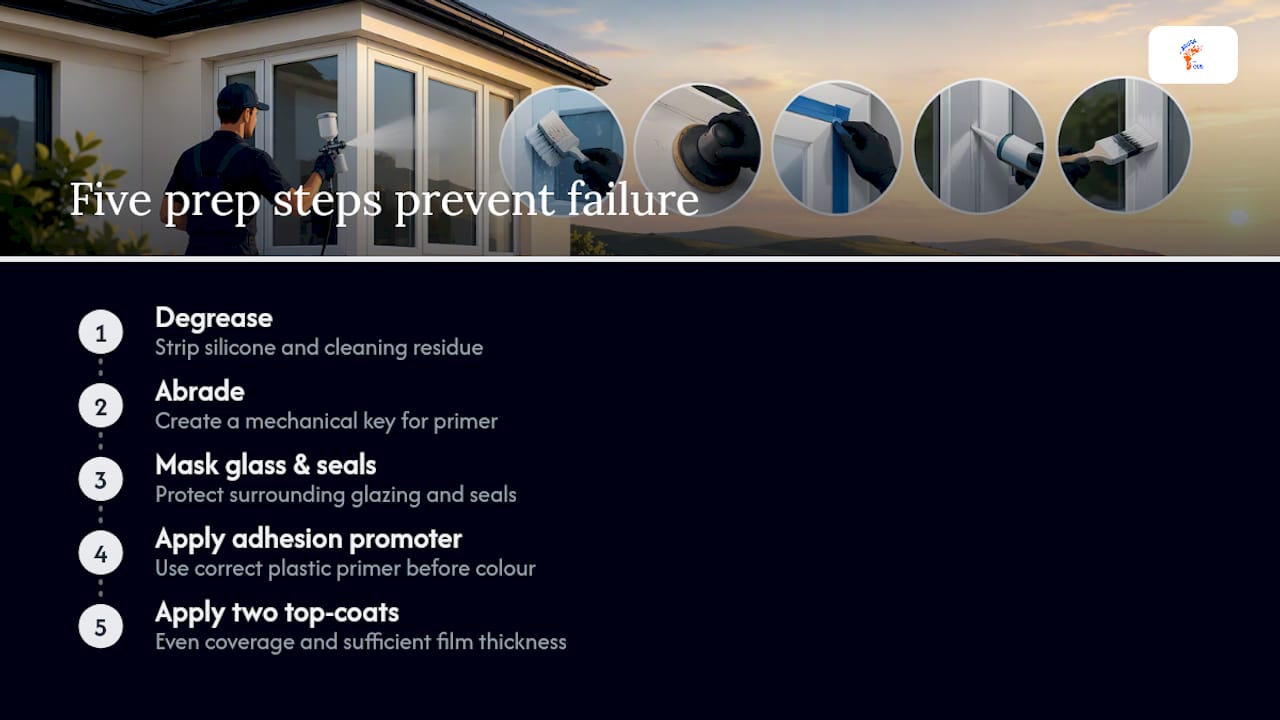
The full prep sequence matters more than most homeowners realise: degrease the surface to strip silicone and old cleaning residue, abrade it to give the primer something to key into, mask off glass and seals, prime with the correct adhesion promoter, then apply two top-coats for even coverage and film thickness. Miss the degreasing step and you’re painting over invisible contamination. Skip the abrasion and the primer has nothing to bite.
Reputable trade brands such as Teknos back this up with hard data. Their HYDROPUR 2K product datasheet sets out mixing ratios, drying times, and application methods for a reason: get those wrong and the weather resistance the product is designed for never materialises. Other established names in the trade coatings space, including Sika, Adler, Tikkurila, and Mipa, produce comparable 2K systems built around the same principle. Ask which one your sprayer is using and check it against the datasheet.
What maintenance actually extends uPVC spray paint lifespan?
The care routine is deliberately simple, and that’s the point. Sprayed uPVC doesn’t need special products. It needs consistency and a light touch.
Wipe frames down with a soft cloth and warm soapy water roughly twice a year.
In coastal parts of the South West, where salt air speeds up grime build-up, clean three or four times a year instead.
Avoid abrasive pads, scourers, or anything that could scratch the film.
Steer clear of solvent-based or heavy-duty chemical cleaners, which can soften or strip the top-coat.
Never pressure wash at close range directly onto the frame; the force can lift edges and force water behind trims.
Gentle cleaning does more than keep frames looking presentable. Modern 2K coatings carry hydrophobic and UV-stable properties baked into the film, and harsh cleaning strips or dulls that surface layer faster than sunlight alone ever would.
Pro Tip: Keep a soft-bristled brush handy for window sills and door thresholds, where grit collects and gets dragged across the surface every time someone wipes it with a cloth instead.
A related factor worth checking is orientation. South and west-facing elevations soften in sheen sooner than north-facing ones, simply from more sun hours. It’s a minor cosmetic shift with a decent 2K system, not a structural problem.
What are the signs a UPVC coating is failing?
Some ageing is normal and expected. A gradual softening of sheen after eight or nine years isn’t a fault, it’s weathering. What you’re actually watching for is different:
Flaking or bubbling, where the film lifts away from the substrate in patches.
Chalking, a powdery residue that comes off on your hand when you wipe the frame.
Sudden or blotchy colour shift, rather than the slow, even fade you’d expect from UV exposure.
Genuine adhesion failure within the guaranteed period is different from normal weathering, and it’s what a proper written guarantee should cover. If you do spot real failure, the fix is a straightforward respray rather than replacement: scuff-sand the surface, reapply the correct primer, then lay down two fresh top-coats to restore the finish.
Is UPVC spraying worth it compared with replacement?
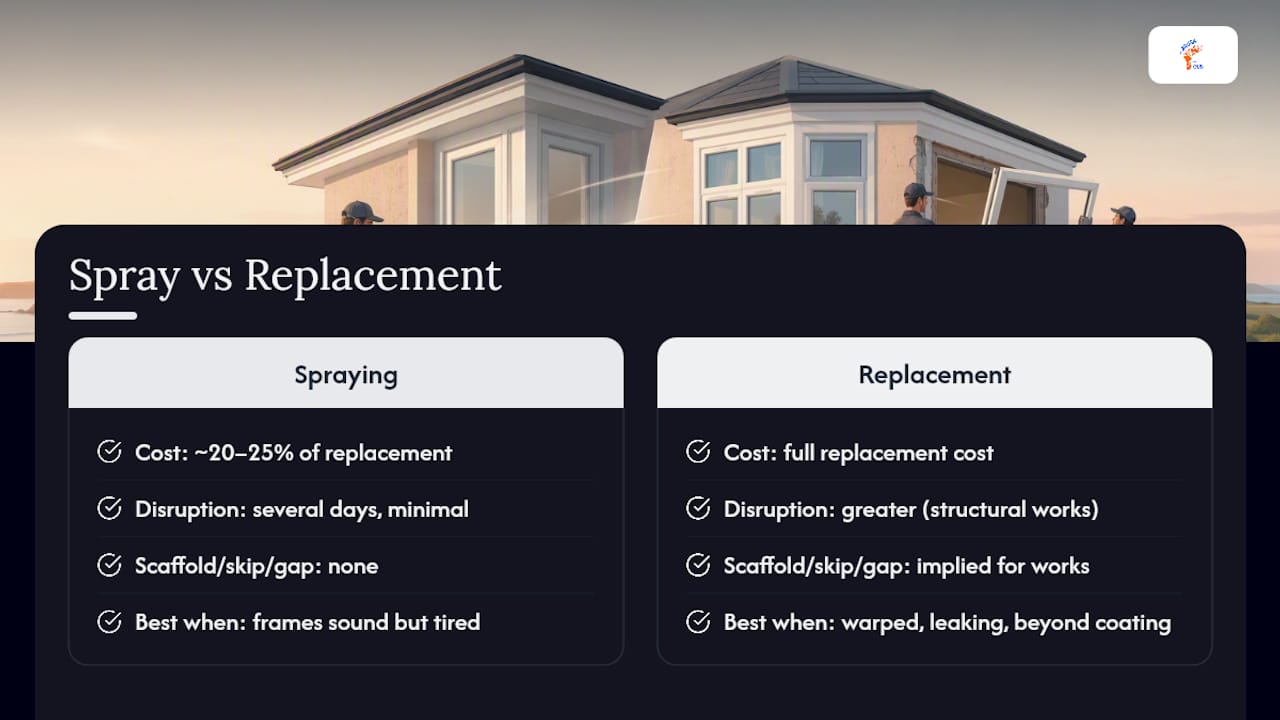
Cost is usually the deciding factor, and it’s a fairly lopsided comparison. Spraying typically runs at around 20 to 25% of full replacement cost, which makes it the obvious first option for frames that are structurally sound but tired-looking or the wrong colour.
Disruption is minimal too. A standard semi-detached property usually takes several days for a full exterior respray, with no scaffolding for structural work, no skip for old frames, and no gap where a window used to be.
The value case gets stronger when you consider that uPVC frames themselves often last 20 years or more structurally. A respray effectively resets the cosmetic clock on a substrate that isn’t going anywhere, rather than replacing something that still has plenty of functional life left. Replacement earns its cost when frames are genuinely failing structurally: warped, leaking, or beyond the reach of any coating. For doors specifically, the same logic tends to apply, and it’s worth weighing against broader guidance on when replacing rather than refreshing actually pays off.
How do you choose a contractor for UPVC spraying?
A quote that’s light on detail is usually a quote that’s light on prep. Before you sign anything, run through this checklist:
Ask which coating system they use. A named 2K trade product, such as those from Teknos, Sika, Adler, Tikkurila, or Mipa, beats a vague answer or a generic “trade paint” claim every time.
Confirm the adhesion promoter. It should be listed on the quote by name, not assumed.
Check the full prep sequence is written down: degrease, abrade, mask, prime, two top-coats. If any step is missing from the paperwork, ask why.
Insist on a written guarantee on the invoice, ideally covering ten years, with clear terms on what’s included and what counts as normal weathering.
Ask for dated local examples, ideally jobs finished a few years ago rather than last week, so you can see how the finish has actually aged.
Red flags worth walking away from: a sprayer who can’t name their coating system, anyone suggesting an aerosol product for a full exterior job, or a guarantee offered “on trust” with nothing on paper.
What South West homeowners get wrong about UPVC spraying
Most disappointment with sprayed uPVC in Cornwall and across the South West comes down to one thing: coastal salt exposure gets underestimated at the quote stage. Frames near the coast weather faster than the same job inland, and a sprayer who doesn’t ask about your property’s exposure before pricing the job is skipping a relevant question.
Ask for the guarantee in writing before work starts, not after. Ask what happens if a section fails early. A trade job done properly is re-sprayable years down the line if it does eventually need refreshing, which keeps the long-term economics firmly in your favour.
— Angus
Book a UPVC spray with A Brush With Gus in the South West
This service can be a practical alternative to full window replacement for homeowners in the region. Every UPVC spraying job runs on trade-grade 2K systems, full surface preparation from degreasing through to two top-coats, and a written guarantee on the invoice, so you know exactly what’s covered before work starts.

The service sits alongside airless spraying for larger or more detailed jobs, and exterior home cleaning if your frames, render, or paths need a proper wash down before or after the respray. The business promotes straightforward communication from quote to finish.
Ask for a dated local example of previous work, request the written guarantee terms upfront, and book a survey to get a firm price for your property.
Sources
FAQ
How long does UPVC spraying last?
A professionally sprayed 2K polyurethane finish on properly prepared uPVC lasts around 10 to 15 years in typical UK weather. Coastal exposure, sun-facing elevations, and poor maintenance can shorten that, while good prep and gentle cleaning can push it towards the upper end.
Is UPVC spraying worth it compared with new frames?
For structurally sound frames that just look tired or the wrong colour, spraying makes sense financially. It typically costs around 20 to 25% of full replacement, with far less disruption and no missing windows during the job.
How do I know if my UPVC coating has failed?
Look for flaking, bubbling, or a powdery chalking residue that comes off on your hand. Gradual, even fading after eight or nine years is normal weathering rather than failure, and a proper respray can restore the finish either way.
What does A Brush With Gus charge for UPVC spraying?
Pricing depends on the property and number of frames, so current costs are available directly from A Brush With Gus’s UPVC spraying page after a quick survey. Every job includes full prep and a written guarantee on the invoice.
Can a failed UPVC spray job be resprayed?
Yes. A scuff-sand, fresh adhesion primer, and two new top-coats will typically restore a sprayed finish that’s started to fail, making it a far cheaper fix than replacing the frames entirely.
Recommended
Comments