
What is eco-friendly paint? A homeowner's guide
TL;DR:
Eco-friendly paint reduces indoor VOC emissions by up to 90% and lasts twice as long as conventional options.
Choosing certified natural or low-VOC paints and matching the type to the surface ensures better health and environmental benefits.
Eco-friendly paint is paint formulated to reduce harm to human health and the environment by minimising volatile organic compound (VOC) emissions, using renewable or natural ingredients, and maintaining safer indoor air quality. The industry term you will see on data sheets and certification labels is “low-VOC” or “zero-VOC” paint, though the broader category also includes natural mineral, clay, lime, and plant-based formulations. Understanding what is eco-friendly paint matters because VOC emissions from conventional paint cause indoor air pollution that can persist for days or weeks after application. Choosing the right product protects your household and reduces your home’s environmental footprint from the moment you open the tin.
What makes a paint eco-friendly?
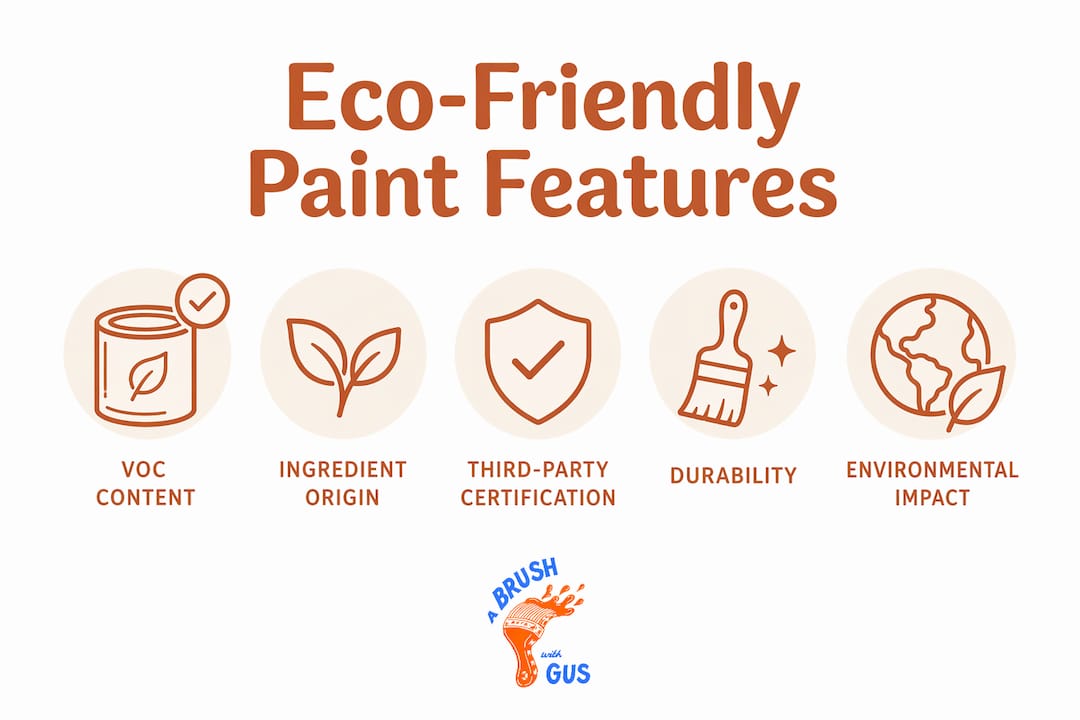
Eco-friendly paint is defined by three measurable qualities: VOC content, ingredient origin, and third-party certification. Each quality tells you something different about the product’s real-world impact.
VOC thresholds explained
VOC content is measured in grams per litre (g/L). Standard paints contain 30–50 g/L, low-VOC paints fall in the 5–30 g/L range, and zero-VOC paints sit below 5 g/L. Zero-VOC formulations reduce indoor VOC emissions by up to 90% compared with standard products. That reduction translates directly into fewer headaches, less respiratory irritation, and a home that smells normal within about one day of painting rather than several weeks.
Natural and renewable ingredients
Many eco-friendly paints replace synthetic binders and pigments with clay, lime, chalk, plant oils, and mineral pigments. These ingredients are renewable, biodegradable, and produce fewer harmful by-products during manufacture. Plant resins and silicates appear frequently in premium natural paint ranges. The presence of these materials does not automatically make a paint safe for everyone. Certain natural ingredients, including casein (a milk protein), lime, and plant-based fragrances, can trigger sensitivities in some people, so reading the full ingredient list before buying is always worth doing.

Certifications that verify the claims
The term “eco-friendly” has no single fixed legal standard in the UK. Third-party certifications like Cradle to Cradle and GreenGuard test for a wide range of emissions and restricted substances beyond VOC content alone. These schemes verify that a product meets defined thresholds for ingredient safety and environmental impact. The British Coatings Federation (BCF) also publishes VOC guidelines that responsible manufacturers follow. A certification logo on the tin is the clearest signal that the eco claims are independently verified rather than self-declared marketing.
Pro Tip: Always check whether a paint’s VOC rating includes the tinting base. Some zero-VOC base paints gain VOCs when pigment is added at the mixing desk. Ask the retailer for the tinted VOC figure before you buy.
What are the health and environmental benefits of eco-friendly paint?
The health case for choosing low-VOC or natural paint is well supported. VOCs in conventional paint cause headaches, eye and throat irritation, dizziness, and aggravated asthma during and after application. Low-VOC alternatives dissipate odours within approximately one day, making rooms habitable far sooner. This matters most for households with children, elderly residents, or anyone with a respiratory condition.
“Zero-VOC paints reduce indoor VOC emissions by up to 90%, making them the most effective single product change a homeowner can make for indoor air quality during a redecoration project.”
The environmental benefits extend beyond the room you are painting. The EU Paints Directive of 2004 drove a shift to water-based formulations that reduced VOC emissions from decorative paints by approximately 60% across the industry. That regulatory push shows how much impact paint chemistry has at scale. Choosing a low-VOC product at home contributes to lower outdoor air pollution and reduced smog formation in your local area.
Durability is another underappreciated benefit. Eco-friendly paints last 10–15 years on interior walls, compared with 5–7 years for standard emulsions. Fewer repaints mean less material waste, lower disposal costs for hazardous paint residue, and less disruption to your home over time.
What types of eco-friendly paint are available?
The eco-friendly painting options on the market divide into several distinct categories. Each suits different surfaces, room types, and performance requirements. Understanding the types of interior paints available helps you match the right product to each room.
Paint type | Key ingredients | Best application | Moisture resistance |
Water-based low-VOC acrylic | Acrylic binders, water | Living rooms, bedrooms | Moderate |
Zero-VOC latex | Water-based latex, mineral pigments | Nurseries, kitchens | Moderate to good |
Mineral/silicate paint | Potassium silicate, mineral pigments | Older homes, solid walls | Excellent |
Limewash | Slaked lime, water | Period properties, feature walls | Good |
Clay paint | Natural clay, chalk, plant pigments | Bedrooms, living areas | Low |
Milk paint (casein) | Casein, lime, natural pigments | Furniture, wood, plaster | Low |
Water-based low-VOC and zero-VOC acrylics are the most practical choice for everyday interior use. They apply like conventional emulsions, clean up with water, and are widely available in thousands of colours. Modern zero-VOC paints now match conventional paints in colour richness and durability, overturning the old assumption that going green meant compromising on finish quality.
Mineral and silicate paints chemically bond with the substrate rather than sitting on top of it. This makes them breathable, which is particularly valuable in older UK homes with solid walls where trapped moisture causes damp and decay. Clay paints offer a distinctive matt texture and excellent breathability, though they are not suited to high-humidity rooms like bathrooms without additional sealing. Limewash suits period properties and creates a soft, layered finish that improves with age.
Pro Tip: Test your chosen colour on a large patch of wall and observe it under morning and evening light before committing to a full room. Natural pigments in eco paints can shift noticeably under different light conditions.
How much does eco-friendly paint cost?
Eco-friendly paints cost 20–40% more upfront than standard equivalents. A premium zero-VOC emulsion that retails at £40–£50 per 2.5 litres compares with a standard emulsion at £25–£35 for the same coverage. That gap feels significant at the point of purchase.
The long-term picture looks different. Consider these factors over a ten-year period:
Lifespan advantage. Eco paints last 10–15 years versus 5–7 years for standard paints. You repaint once instead of twice, saving on both materials and labour.
Savings on repaints. Long-term savings of £150–£300 per decade are achievable by reducing repaint frequency across a typical home.
Scrub resistance. The higher upfront cost is often offset by increased scrub resistance and colour retention, meaning surfaces stay presentable for longer without touch-ups.
Disposal costs. Conventional paint with high solvent content requires specialist disposal. Water-based eco paints with low hazardous content reduce those fees.
The honest calculation is that eco-friendly paint costs more today and less over the life of your home. For long-lasting exterior applications, the durability argument is even stronger given the cost of scaffolding and labour for exterior repaints.
How do you choose and apply eco-friendly paint correctly?
Selecting the right eco paint requires more than picking the lowest VOC number on the shelf. Follow these steps to make a well-informed choice.
Assess the room. Consider moisture levels, wall type, and how the room is used. Bathrooms and kitchens need moisture-resistant formulations. Older solid-wall homes benefit from breathable mineral or silicate options.
Check the certification. Look for Cradle to Cradle, GreenGuard, or BCF VOC compliance on the label. Self-declared “natural” or “eco” claims without independent verification carry less weight.
Verify the tinted VOC level. Ask for the VOC content of the tinted paint, not just the base. Some bases gain significant VOCs once pigment is added.
Prepare the surface properly. Clean walls thoroughly and fill any cracks before painting. Eco paints, particularly clay and lime variants, adhere best to properly prepared surfaces and may require a compatible primer.
Use the right tools. Natural bristle brushes and microfibre rollers suit most eco paints well. Synthetic rollers can cause foaming with some water-based formulations.
Clean up sustainably. Rinse brushes and rollers with water rather than solvent. Dispose of any leftover paint through your local council’s paint recycling scheme rather than pouring it down the drain.
Test before committing. Buy a tester pot and apply a 30cm x 30cm patch. Check the colour under natural and artificial light before purchasing full quantities.
A painting contractor checklist is worth consulting if you plan to hire a professional, as not all decorators have experience with the specific application requirements of natural or mineral paints.
Key takeaways
Eco-friendly paint reduces indoor VOC emissions by up to 90%, lasts up to twice as long as standard emulsions, and costs less over a decade despite a higher upfront price.
Point | Details |
VOC content defines eco status | Zero-VOC paints contain less than 5 g/L and cut indoor emissions by up to 90%. |
Certifications matter more than labels | Look for Cradle to Cradle or GreenGuard certification rather than self-declared “eco” claims. |
Paint type must match the surface | Mineral and silicate paints suit older solid-wall homes; low-VOC acrylics suit modern interiors. |
Long-term cost is lower | A 20–40% higher upfront cost is offset by a lifespan of 10–15 years versus 5–7 years for standard paint. |
Tinted VOC levels can differ | Always confirm the VOC content of the tinted product, not just the base formula. |
Why I think most homeowners are still choosing the wrong eco paint
After years of working in homes across the South West, I have seen the same pattern repeat itself. A homeowner picks up a tin labelled “natural” or “eco” at a DIY superstore, pays a premium, and assumes the job is done. More often than not, that tin has no third-party certification, a VOC level that qualifies only as “low” rather than zero, and a tinting system that pushes the final product back into the standard range.
The real issue is that the word “eco-friendly” is not regulated. Any manufacturer can print it on a label. The homeowners who get the genuine benefit are the ones who look past the front of the tin and check for Cradle to Cradle or GreenGuard certification, read the VOC figure for the tinted product, and match the paint type to the wall rather than just the colour chart.
I have also seen the breathability argument ignored repeatedly in older properties. Applying a plastic-based emulsion to a solid stone or brick wall traps moisture inside. Within a few years, you get bubbling, flaking, and damp patches that cost far more to fix than a breathable mineral paint would have cost in the first place. The sustainable painting practices that work long-term are the ones grounded in understanding the wall, not just the paint.
My honest advice: spend ten minutes reading the data sheet before you spend money on the tin. The best eco paint is the one that is certified, matched to your surface, and applied correctly. Everything else is marketing.
— Angus
Eco-friendly painting with Abrushwithgus
Choosing the right eco-friendly paint is only half the work. Application technique, surface preparation, and the right tools determine whether that paint performs as promised for 10–15 years or starts failing within three.

Abrushwithgus provides domestic painting services across the South West with a focus on quality finishes and lasting results. Gus and Rhys work with homeowners who want sustainable options applied properly, from breathable mineral finishes on period properties to zero-VOC emulsions in family homes. If you are planning a redecoration and want advice on the right eco paint for your walls, get in touch for a no-obligation quote.
FAQ
What is the difference between low-VOC and zero-VOC paint?
Low-VOC paint contains 5–30 g/L of volatile organic compounds, while zero-VOC paint contains less than 5 g/L. Zero-VOC formulations reduce indoor emissions by up to 90% compared with standard paints.
Are eco-friendly paints as durable as conventional paints?
Modern zero-VOC and natural paints match conventional paints in colour richness and durability. Eco-friendly paints typically last 10–15 years on interior walls, compared with 5–7 years for standard emulsions.
Which eco paint is best for older UK homes?
Breathable mineral or silicate-based paints are best for older UK homes with solid walls. They chemically bond with the substrate and allow moisture to escape, preventing the damp and decay that plastic-based paints can cause by trapping moisture inside the wall.
How do I know if an eco paint claim is genuine?
Look for independent certification from schemes such as Cradle to Cradle or GreenGuard rather than relying on self-declared “natural” or “eco” labels. These certifications test for a wide range of emissions and restricted substances beyond VOC content alone.
Is eco-friendly paint more expensive?
Eco-friendly paints cost 20–40% more upfront than standard paints. Over a decade, however, their longer lifespan and reduced repaint frequency can deliver savings of £150–£300, making them more cost-effective overall.
Recommended
Comments