
What is external home cleaning? A homeowner's guide
TL;DR:
External home cleaning involves removing dirt, algae, and pollutants from surfaces to protect property value and integrity. Using appropriate methods like soft washing or pressure washing based on surface type prevents damage and ensures effective maintenance. Regular, seasonal cleaning and inspections help avoid costly repairs and sustain the property’s appearance and structural health.
External home cleaning is the systematic removal of dirt, algae, mould, and environmental pollutants from a building’s exterior surfaces to protect structural integrity and preserve property value. It covers everything from roof tiles and render to driveways, gutters, and UPVC window frames. The industry term for this practice is exterior cleaning, and it sits firmly within the category of preventative property maintenance rather than cosmetic upkeep. Understanding what external house cleaning involves, which methods suit which surfaces, and how often to schedule it will save you money and prevent damage that compounds quietly over years.
What is external home cleaning and why does it matter?
External home cleaning is defined as the comprehensive cleaning of all exterior surfaces of a residential property, targeting pollutants, biological growth such as moss and algae, and accumulated grime. It is not a single task but a collection of targeted treatments applied to different materials. Render, brick, timber cladding, concrete, UPVC, and roof tiles each respond differently to water pressure and cleaning agents, which is why a one-size-fits-all approach causes more harm than good.
The case for treating this as maintenance rather than cosmetics is straightforward. Dirt and organic growth actively degrade materials if left untreated, meaning a neglected exterior is one that is slowly deteriorating. Algae retains moisture against surfaces, accelerating freeze-thaw cracking in British winters. Moss on roof tiles lifts them over time, creating entry points for water. These are structural problems that begin as surface problems.
Exterior cleaning preserves structural integrity and property value simultaneously, making it one of the highest-return maintenance activities available to homeowners. The cost of a professional clean is a fraction of the cost of repointing brickwork, replacing roof tiles, or treating timber rot.
What methods are used in exterior cleaning and how do they differ?
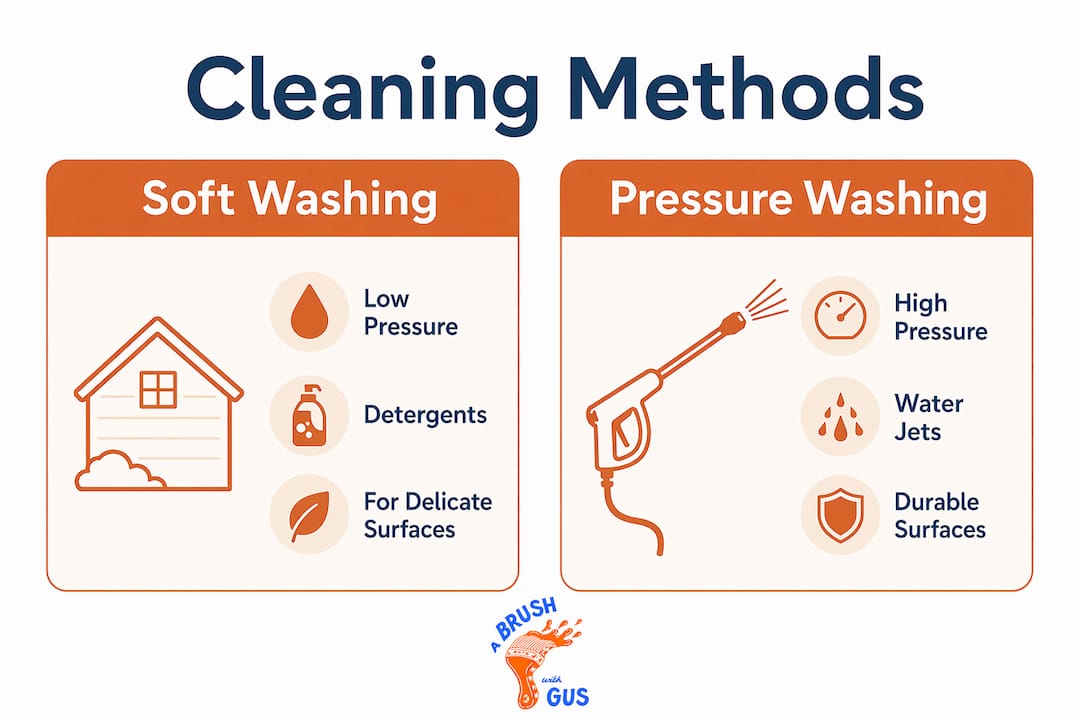
Choosing the correct cleaning method is as important as cleaning at all. The wrong technique on the wrong surface strips paint, etches render, and forces water behind cladding. The two primary methods are soft washing and pressure washing, and they are not interchangeable.
Soft washing
Soft washing uses low-pressure water combined with specialised detergents to break down biological growth and grime at the chemical level rather than the mechanical level. It is the correct method for delicate surfaces such as render, painted masonry, roof tiles, timber cladding, and UPVC. The detergents kill algae and moss at the root, which means the surface stays cleaner for longer compared to blasting it with high pressure alone.
Pressure washing
Pressure washing uses high-pressure water jets, reaching up to 3,000 psi, to remove ingrained dirt from hard, durable surfaces. It is the right tool for concrete driveways, block paving, stone paths, and brick walls in good condition. Applied to render or painted surfaces, that same pressure strips coatings, forces water into the substrate, and can cause damage that costs significantly more to repair than the original cleaning would have.
Other methods
Water-fed poles with purified water are the professional standard for window cleaning, leaving no mineral deposits or streaks. Manual scrubbing with appropriate brushes and diluted cleaning solutions is used for sensitive areas where neither pressure nor chemical saturation is appropriate, such as ornamental stonework or older lime-pointed brickwork.
Surface type | Recommended method | Key consideration |
Render and painted masonry | Soft washing | Low pressure prevents coating damage |
Concrete and block paving | Pressure washing | High pressure removes ingrained grime |
Roof tiles | Soft washing | Preserves tile integrity and pointing |
UPVC frames and fascias | Soft washing or manual clean | Avoids yellowing and surface scratching |
Windows | Water-fed pole system | Purified water prevents streaking |
Timber cladding | Soft washing | Avoids grain damage and water ingress |
Pro Tip: Always clean from the top of the property downwards. Top-down cleaning prevents dirt and runoff from re-soiling surfaces you have already cleaned. Starting at the gutters and working down to the driveway is the correct sequence every time.
What is the recommended schedule for external home cleaning?
Annual comprehensive cleaning is the standard recommendation for most British properties, with more frequent attention required in humid coastal areas, heavily wooded settings, or urban environments with high pollution. The British climate creates specific seasonal pressures that a well-planned maintenance schedule addresses directly.
A practical external home cleaning checklist, organised by season, looks like this:
Spring
Inspect the roof for moss growth and lifted tiles after winter frost cycles.
Clean render and brickwork to remove algae that thrived in winter damp.
Clear gutters and downpipes of debris accumulated over winter.
Wash driveways and paths to remove winter grime and any salt residue.
Clean windows and UPVC frames after months of rain and condensation.
Summer
Treat any moss or algae regrowth on roof tiles before it establishes.
Clean garden walls and fencing before they become heavily stained.
Wash patios and decking ahead of regular outdoor use.
Autumn
Clear gutters again as leaf fall is the primary cause of blockages.
Inspect and clear foundation-level drains and scuppers. Blocked drainage points trap water against the structure and cause damage that is entirely preventable.
Clean fascias and soffits before the wet season begins.
Winter
Monitor gutters for ice build-up and blockages after heavy frost.
Avoid pressure washing in freezing conditions as water driven into surfaces expands and causes cracking.
Check that downpipes are flowing freely after storms.
Gutter inspections should occur at least twice yearly to prevent clogs and the water damage that follows. This single task, overlooked by most homeowners, is responsible for a disproportionate share of damp and fascia rot problems.
What are the real benefits of regular external cleaning?
The benefits of external cleaning extend well beyond a tidy appearance. The functional and financial case for regular maintenance is the stronger argument.
Structural protection. Algae, moss, and lichen retain moisture against surfaces. Over time, this moisture penetration causes render to crack, timber to rot, and mortar joints to erode. Removing biological growth removes the mechanism of damage.
Cost avoidance. Exterior cleaning is cheaper than repairing the damage caused by skipping it. Repointing a chimney stack, replacing fascia boards, or treating timber rot each costs multiples of what a professional clean would have cost annually.
Property value. Curb appeal is a direct input into perceived property value. A clean, well-maintained exterior signals to buyers and valuers that the property has been cared for. Scheduling cleaning before a property sale is a recognised strategy for improving presentation and attracting stronger offers. Professionals recommend planning this two to four weeks ahead of photography or viewings to allow surfaces to dry and look their best.
Hygiene and pest deterrence. Organic growth on exterior surfaces attracts insects and provides nesting material for pests. Damp, moss-covered areas near entry points create conditions that encourage infestations. Regular cleaning removes these conditions before they become problems.
Drainage performance. Clean gutters and clear drainage channels mean rainwater moves away from the structure as designed. Blocked gutters overflow against fascias and walls, and that water finds its way in. Clearing drainage points is as important as cleaning the surfaces themselves.
When should you DIY and when should you call professionals?
Some exterior cleaning tasks are well within reach for a capable homeowner. Others carry real risks of damage that outweigh any saving on labour.
Tasks suitable for DIY:
Light window cleaning with a water-fed pole or squeegee.
Clearing gutters with a ladder and gloves, twice yearly.
Brushing moss from paths and patios with a stiff broom.
Rinsing down garden furniture and fencing with a standard hose.
Tasks that carry risk without professional equipment or knowledge:
Pressure washing render, painted surfaces, or roof tiles.
Applying chemical treatments to large areas without testing first.
Cleaning at height on roofs, upper-floor fascias, or tall gable ends.
Treating heavy biological growth on surfaces that require specific biocide products.
Unskilled pressure washing ruins paint and timber, causing expensive repairs that dwarf the original cleaning cost. The pressure required to shift ingrained dirt from concrete is the same pressure that strips coatings from render. Without knowing the psi threshold for each surface, the risk of collateral damage is high.
Pro Tip: Before applying any cleaning agent to a surface, test on a hidden patch first. Even products labelled as safe for masonry can etch certain renders or strip sealants. A five-minute test prevents an expensive mistake.
Professional external cleaning services bring calibrated equipment, surface-specific detergents, and the experience to read a surface before touching it. For anything above ground-floor height, anything involving chemical treatments, or any surface that is painted, rendered, or tiled, professional input is the lower-risk and often lower-cost choice when you factor in the cost of potential repairs.
Key takeaways
External home cleaning is preventative maintenance, not cosmetic work. Choosing the right method for each surface and following a seasonal schedule prevents structural damage and protects property value.
Point | Details |
Method selection matters | Use soft washing for render and tiles; reserve pressure washing for concrete and hard paving only. |
Clean top to bottom | Always start at the roof and work downwards to avoid re-soiling cleaned surfaces. |
Twice-yearly gutter clears | Inspect and clear gutters in spring and autumn to prevent water damage to fascias and walls. |
Test chemicals first | Apply any cleaning agent to a hidden area before full use to avoid etching or staining. |
Prevention beats repair | Annual professional cleaning costs a fraction of repointing, rot treatment, or fascia replacement. |
What I have learned from years of working on exterior surfaces
People often ask me whether external cleaning is really worth the effort or the cost. My honest answer is that the question itself reveals the misconception. Cleaning is not the cost. Neglect is the cost. The cleaning just makes it visible.
After years of working on properties across the South West with Abrushwithgus, the pattern I see repeatedly is this: a homeowner skips exterior maintenance for three or four years because the property looks fine from the street. Then they call us because they want to repaint the render or refresh the fascias, and we find algae that has worked its way into the substrate, or timber that has softened behind what looked like intact paintwork. The surface looked acceptable. The structure underneath was not.
The other mistake I see constantly is cleaning from the bottom up. Someone pressure washes the driveway, then cleans the walls, then notices the gutters are full of debris and clears those last. The gutter debris washes straight down the freshly cleaned wall. It is a frustrating and entirely avoidable waste of effort.
My practical advice: treat exterior cleaning as a twice-yearly inspection as much as a cleaning exercise. When you are up a ladder clearing gutters, look at the fascia condition. When you are washing the render, check the pointing around windows. The cleaning creates the opportunity to catch problems early, and early is always cheaper than late.
— Angus
How Abrushwithgus can help with your exterior cleaning
If you have read this far and realised your property is overdue a proper clean, you are not alone. Most homes in the South West go longer between exterior cleans than they should, simply because the work is easy to defer.

Abrushwithgus offers professional exterior cleaning services covering soft washing, pressure washing, UPVC treatment, and full exterior surface preparation across the South West. Whether you need a single-surface clean before a home sale or a full property refresh, Gus and Rhys bring the right equipment and the right approach for every surface type. For specialist work on windows and frames, the team also provides UPVC spraying and restoration to bring tired frames back to a clean, uniform finish. Get in touch for a no-obligation quote and find out what a proper exterior clean can do for your property.
FAQ
What does external home cleaning include?
External home cleaning covers all exterior surfaces of a property, including render, brickwork, roof tiles, gutters, fascias, soffits, driveways, paths, windows, and UPVC frames. The specific methods used depend on the surface material and the type of soiling present.
How often should you clean the outside of your house?
Annual comprehensive cleaning is the standard recommendation for most British properties, with gutter inspections carried out at least twice yearly. Properties in humid, coastal, or heavily wooded areas may benefit from more frequent attention due to accelerated biological growth.
Is pressure washing safe for all exterior surfaces?
Pressure washing is not safe for all surfaces. It is appropriate for concrete, block paving, and hard stone, but damages render, painted masonry, roof tiles, and timber. Soft washing with low pressure and appropriate detergents is the correct method for these materials.
When is the best time to book an exterior clean?
Spring is the most effective time for a full exterior clean, as it addresses biological growth that established over winter. If you are preparing a property for sale, plan cleaning two to four weeks before photography or viewings to allow surfaces to dry and present well.
Can you clean the outside of your house yourself?
Light tasks such as gutter clearing, window washing, and brushing paths are manageable for most homeowners. However, DIY pressure washing on painted or rendered surfaces frequently causes damage that costs more to repair than professional cleaning would have cost. For anything above ground level or involving chemical treatments, professional services are the safer choice.
Recommended
Comments