
What is gloss paint? A DIY guide for 2026
TL;DR:
Gloss paint creates a highly reflective, durable surface ideal for doors, trim, and furniture, but amplifies imperfections. Proper surface preparation, including sanding and priming, is essential for a flawless finish that resists wear and moisture. Its high sheen suits small, precise areas rather than large walls, where imperfections become more noticeable.
Gloss paint is defined as a paint that forms a smooth, shiny, and highly reflective surface once fully dried. Measured at 70+ gloss units (GU) at a 60° angle, it sits at the top of the sheen scale, above satin, eggshell, and matte. That reflectivity gives gloss paint its signature mirror-like quality, and it also makes it the most durable and washable of all common paint finishes. If you are planning a home improvement project and wondering whether gloss is right for you, understanding what it is and how it behaves will save you time, money, and frustration.
What is gloss paint and how is it different from other finishes?
Gloss paint sits at the highest point on the sheen scale. The sheen scale runs from flat matte at the bottom through eggshell, satin, and semi-gloss, up to full gloss at the top. Each step up the scale adds reflectivity, durability, and washability, but also increases how clearly surface imperfections show up.
High-gloss and semi-gloss finishes can be up to three times more durable than flat finishes. That gap matters in rooms or on surfaces that take daily wear. A gloss-painted front door handles rain, knocks, and fingerprints far better than the same door painted in matte.
The table below shows how the main finish types compare across the qualities that matter most to DIY decorators.
Finish | Gloss units (GU) | Hides imperfections | Washability | Typical uses |
Matte / flat | Under 10 GU | Excellent | Low | Ceilings, low-traffic walls |
Eggshell | 10–25 GU | Good | Moderate | Living room walls, bedrooms |
Satin | 25–45 GU | Moderate | Good | Hallways, children’s rooms |
Semi-gloss | 45–70 GU | Low | Very good | Bathroom walls, kitchen trim |
High gloss | 70+ GU | Very low | Excellent | Doors, trim, cabinetry, furniture |
The key trade-off is clear. The higher the sheen, the harder the surface and the easier it is to wipe clean. The cost is that every bump, scratch, and filler mark becomes visible under the light. Gloss paint highlights every surface defect because of its reflective finish, which is why surface preparation is non-negotiable before you open the tin.
Matte paint hides flaws by scattering light in all directions. Gloss paint does the opposite. It bounces light back in a single direction, which is what creates that appealing sheen but also exposes anything uneven underneath.
Pro Tip: When choosing between semi-gloss and full gloss for trim, consider the condition of the surface. Semi-gloss is more forgiving on older woodwork that has minor imperfections, while full gloss rewards a perfectly prepared surface with a finish that genuinely turns heads.
What surfaces and projects are best suited for gloss paint?
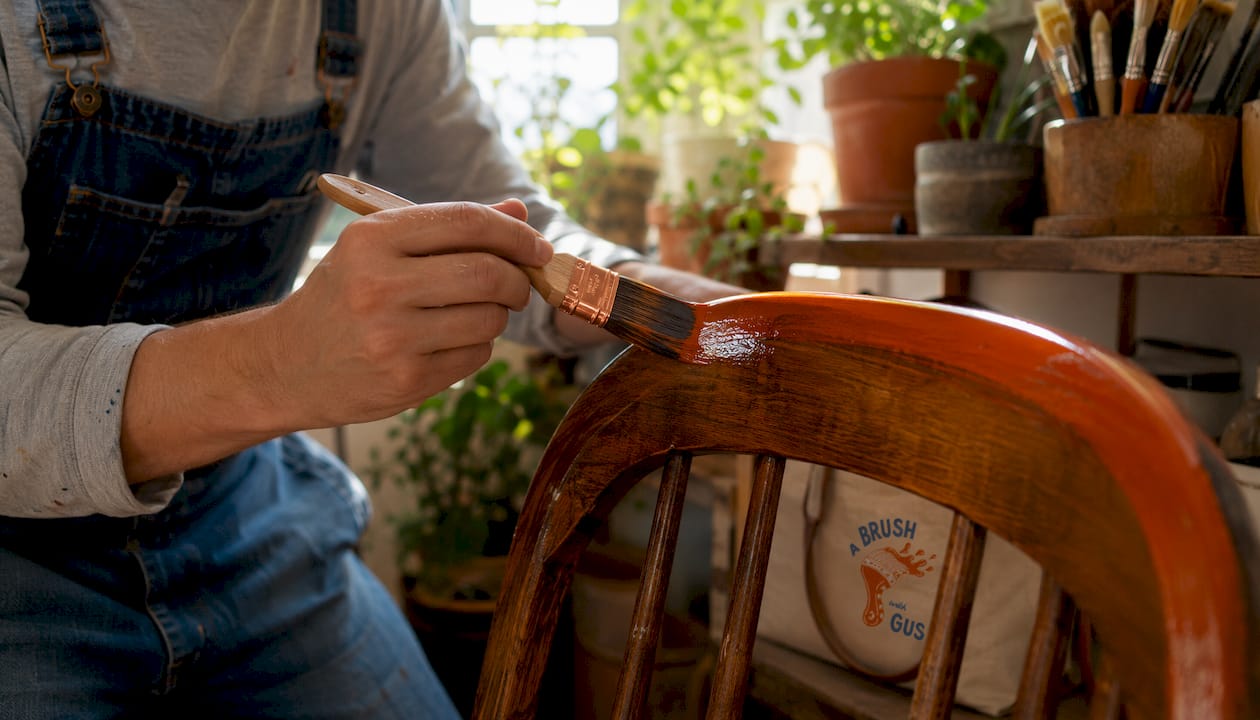
Gloss paint works best on precise areas like front doors, trim, cabinetry, and accent pieces rather than broad wall areas. The reason is straightforward. On a large flat wall, the intense reflectivity picks up every undulation and brush mark. On a door panel or a skirting board, that same reflectivity reads as a crisp, clean finish.
The surfaces and projects where gloss paint genuinely earns its place include:
Front and interior doors. Gloss handles knocks, cleaning products, and daily contact without losing its finish.
Skirting boards and architraves. These take scuffs from shoes, furniture, and vacuum cleaners. Gloss resists all of them.
Kitchen and bathroom cabinetry. Gloss paint has the highest stain resistance of common finishes, making it ideal where grease, steam, and moisture are present.
Furniture and accent pieces. A chest of drawers or a side table painted in gloss becomes a deliberate focal point in a room.
Window frames and external woodwork. Gloss forms a hard shell that resists moisture and UV exposure better than lower sheen options.
Gloss is not the right choice for large wall areas in living rooms or bedrooms. On a full wall, the sheen amplifies every imperfection in the plaster and creates an uneven, distracting effect under natural light. Satin or eggshell finishes serve those surfaces far better.
The moisture resistance of gloss paint makes it particularly valuable in bathrooms and kitchens. Steam and splashes that would stain or lift a matte finish simply wipe off a gloss surface. That practical advantage is why professional decorators reach for gloss on bathroom woodwork as a default, not a luxury.
How to prepare surfaces and apply gloss paint effectively
Surface preparation is the single biggest factor in whether a gloss finish looks professional or amateurish. Because gloss paint magnifies imperfections due to high light reflectivity, professional painters dedicate extensive time to sanding, filling, and priming before applying a single coat.
Follow these steps for a finish that does justice to the paint:
Clean the surface thoroughly. Remove grease, dust, and old flaking paint. Any contamination will show through the final coat.
Fill all holes and cracks. Use a fine surface filler and allow it to dry completely before moving on.
Sand the surface smooth. Start with 120-grit sandpaper and finish with 240-grit for a surface that feels like glass to the touch.
Apply a primer. Primer seals the surface, improves adhesion, and gives the gloss paint a uniform base to sit on. Skip this step and the finish will be patchy.
Apply the first coat of gloss. Use a high-quality synthetic brush or a short-nap roller for flat panels. Work in long, even strokes and avoid overworking the paint.
Sand lightly between coats. Use 320-grit sandpaper to knock back any dust nibs or brush marks. Wipe away dust with a tack cloth before the next coat.
Apply the second coat. Two coats of gloss over a primed surface deliver the depth and durability the finish is known for.
Temperature and moisture conditions affect the result. Apply gloss paint in a dry environment between 10°C and 25°C. Cold slows drying and can cause the paint to sag. High humidity traps moisture under the film and leads to a cloudy or uneven finish.
Pro Tip: Thin the first coat very slightly with the manufacturer’s recommended thinner. A thinner first coat penetrates the primer better and creates a stronger bond for the topcoat.
Choosing the right brush matters more with gloss than with any other finish. A cheap brush leaves bristle marks that are impossible to hide once the paint dries. A good quality synthetic brush with fine, tapered bristles lays the paint down smoothly and leaves a surface that needs minimal sanding between coats. For a truly flawless gloss finish, airless spraying removes brush marks entirely.
What are the benefits and limitations of gloss paint?
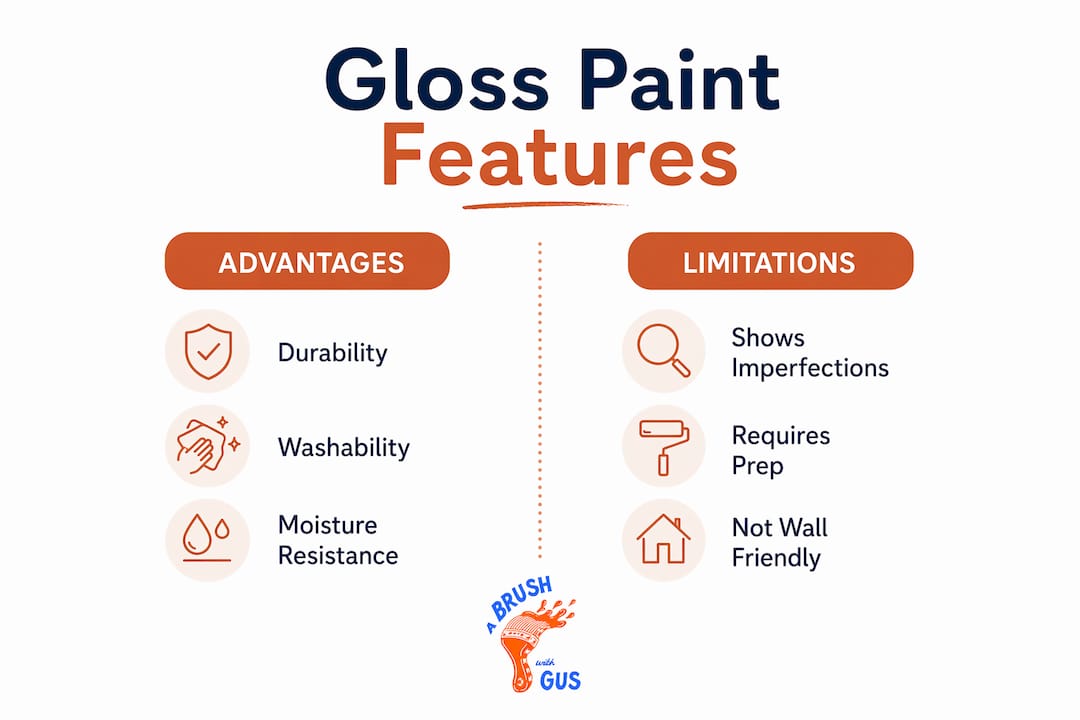
Gloss paint offers a set of advantages that no other finish matches, but it also comes with real limitations that are worth understanding before you commit to it.
The benefits are substantial:
Durability. High gloss paint contains higher resin and less pigment, creating a hard, durable shell that resists chips and scratches far better than matte or eggshell.
Cleanability. You can scrub a gloss surface with a damp cloth and cleaning products without damaging the finish. This is a genuine practical advantage in family homes.
Colour depth. Gloss paint delivers richer, more vibrant colour than the same pigment in a matte base. The reflective surface intensifies the hue.
Moisture resistance. The hard film repels water, making gloss the right choice for any surface exposed to steam or splashes.
Longevity. A well-applied gloss finish on a door or skirting board will outlast several rounds of matte wall paint in the same room.
The limitations are equally real:
Gloss shows every surface imperfection. Bumps, brush marks, and filler patches all become visible under the finished coat.
Application requires patience and skill. Rushing the prep or applying too thick a coat leads to runs, sags, and an uneven sheen.
Gloss is not suitable for large wall areas. The reflectivity creates glare and makes rooms feel cold and clinical rather than warm and inviting.
Touch-ups are difficult. A patch repair on a gloss surface rarely blends invisibly. The repaired area often shows a different sheen level to the surrounding paint.
Selecting paint based on intended use rather than marketing sheen labels is the most reliable approach. High gloss is reserved for statement pieces and hardworking surfaces; semi-gloss handles practical trim where a little forgiveness is welcome.
Understanding these trade-offs helps you place gloss paint where it genuinely adds value. Used on the right surfaces, it is one of the most rewarding finishes in home decoration. Used on the wrong ones, it creates more problems than it solves.
Key takeaways
Gloss paint delivers its best results on hard-wearing surfaces with perfect preparation, and choosing it for the right project makes the difference between a finish that impresses and one that frustrates.
Point | Details |
Gloss paint definition | Gloss paint forms a smooth, shiny, reflective surface measuring 70+ GU at 60°. |
Best surfaces for gloss | Use gloss on doors, skirting boards, cabinetry, and trim, not large wall areas. |
Prep is non-negotiable | Sand, fill, prime, and sand between coats for a finish that hides nothing. |
Durability advantage | Gloss finishes can be up to three times more durable than flat finishes. |
Know the trade-offs | Gloss magnifies imperfections, so surface condition determines the final result. |
Gloss paint: what I have learned from years on the tools
Gloss paint is the finish that separates a careful decorator from a rushed one. I have seen it transform a tired hallway into something genuinely impressive, and I have seen it expose every shortcut taken during prep. The finish does not lie.
The most common mistake I see from DIY decorators is underestimating how much sanding is needed. People fill a hole, let it dry, and paint straight over it. Under gloss, that patch stands out like a sore thumb. You need to sand the filler flush, prime it, sand again, and then apply your coats. That process feels slow, but it is the only way to get a result you will still be proud of in five years.
My honest advice is to use gloss selectively. Pick your front door, your skirting boards, and one or two pieces of furniture where you want real impact. Prepare those surfaces properly, use a quality brush or consider airless spraying, and take your time between coats. The result will be worth every minute.
Gloss paint also needs realistic maintenance expectations. It is durable, but it is not indestructible. High-traffic surfaces will eventually need a light sand and a fresh topcoat. Plan for that and it becomes a minor task rather than a disappointment.
— Angus
Abrushwithgus: professional gloss finishes in the South West
Gloss paint rewards patience and skill. When the prep is right and the application is controlled, the result is a finish that genuinely elevates a home. When it goes wrong, no amount of extra coats will fix it.

Abrushwithgus provides professional painting and decorating services across the South West, with particular expertise in high-sheen finishes for doors, trim, cabinetry, and external woodwork. The team uses airless spraying and traditional brush techniques to deliver exterior gloss finishes that last. If you have a gloss project that needs a professional hand, or you simply want a quote before deciding whether to tackle it yourself, get in touch with Abrushwithgus for a straightforward conversation about what the job needs.
FAQ
What is gloss paint used for?
Gloss paint is best used on doors, skirting boards, architraves, cabinetry, and furniture. Its moisture resistance and durability make it the standard choice for surfaces that take daily wear or exposure to steam and splashes.
Is gloss paint washable?
Yes. Gloss paint has the highest washability of common paint finishes. You can clean it with a damp cloth and mild detergent without damaging the surface.
Why does gloss paint show imperfections?
Gloss paint reflects light directly back to the viewer, which makes bumps, brush marks, and filler patches clearly visible. Matte paint scatters light and hides the same flaws. Thorough surface preparation before applying gloss is the only reliable solution.
What is the difference between gloss and satin paint?
Gloss paint measures 70+ GU and delivers a mirror-like finish with maximum durability. Satin paint measures 25–45 GU, offers a softer sheen, and is more forgiving on imperfect surfaces. Satin suits walls and hallways; gloss suits trim and doors.
How many coats of gloss paint do I need?
Two coats of gloss paint over a primed surface is the standard approach. Light sanding between coats with 320-grit sandpaper removes dust nibs and creates the smooth base the second coat needs to look its best.
Recommended
Comments