
Why paint fades over time: causes and prevention
TL;DR:
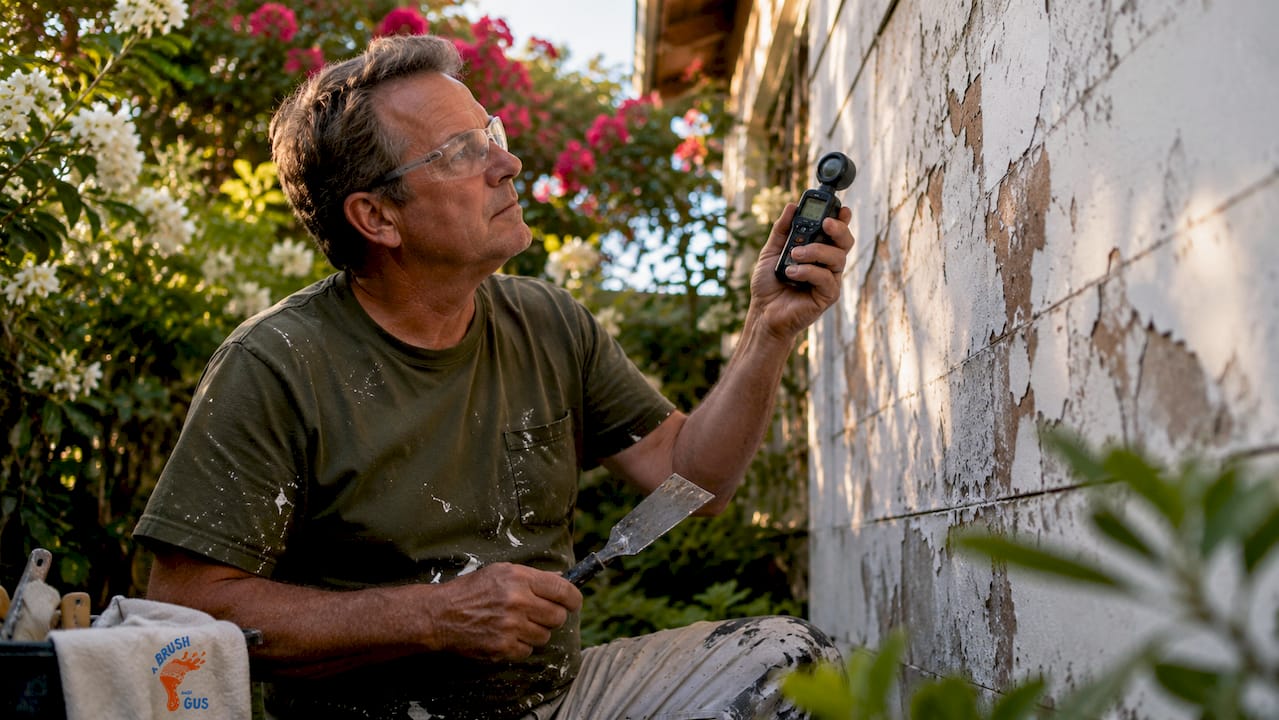
Paint fades over time mainly due to ultraviolet radiation breaking down pigment and binder molecules. Proper surface preparation, choosing high lightfastness pigments, and selecting quality acrylic paints can extend a surface’s lifespan. Regular maintenance, especially on south and west-facing walls, helps prevent premature failure and fading.
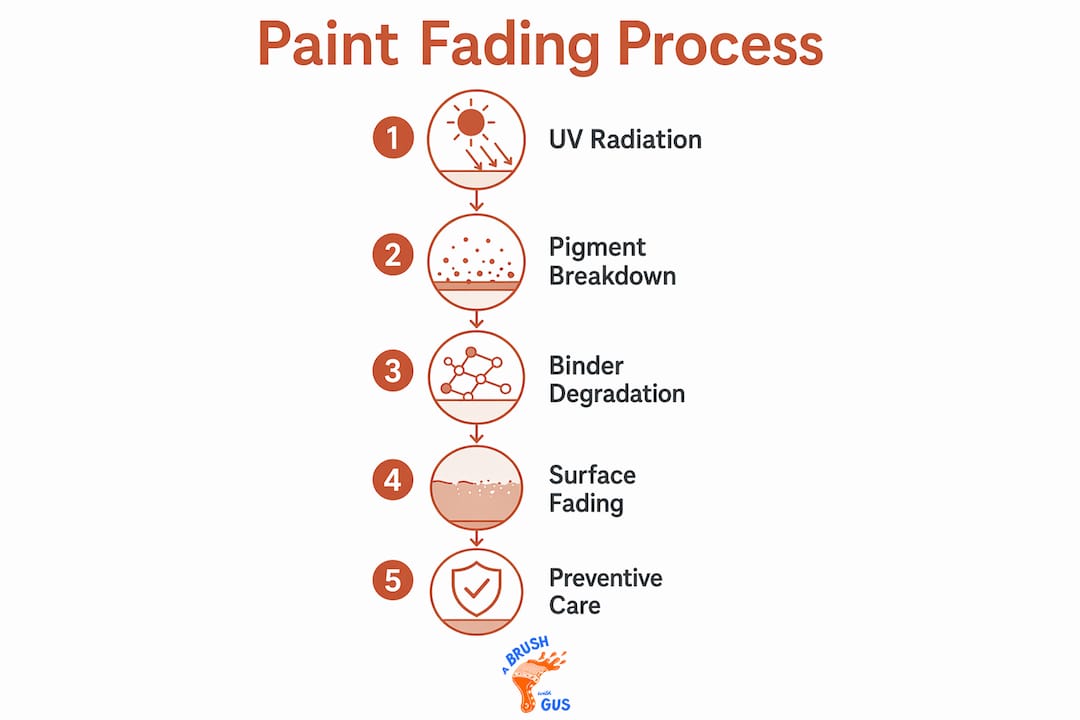
Paint fades over time because ultraviolet radiation breaks the chemical bonds in pigment and binder molecules, a process known as photodegradation. This is not a manufacturing defect. It is a predictable chemical reaction that every exterior surface undergoes. The rate of fading depends on wall orientation, climate, pigment chemistry, and the quality of the coating applied. Understanding these factors gives homeowners the knowledge to choose better paints, maintain surfaces correctly, and plan realistic repainting schedules before costly damage sets in.
Why paint fades over time: the science behind colour loss
Photodegradation is the correct industry term for what most homeowners call fading. UV photons carry enough energy to break chemical bonds in both the pigment molecules that give paint its colour and the binder that holds the film together. Once those bonds break, the pigment loses its ability to absorb and reflect light at the original wavelength. The colour you see shifts, dulls, or disappears entirely.
Paint is a mixture of two main components: pigments and binders. Pigments provide colour. Binders, typically resins, hold pigment particles in place and bond the film to the surface. UV radiation attacks both simultaneously. When the binder degrades, it releases pigment particles to the surface as a chalky powder. When the pigment itself degrades, colour simply vanishes. Both processes happen together on any sun-exposed wall.
The ASTM lightfastness rating system classifies pigments from I to VI based on their resistance to fading. A rating of I indicates excellent lightfastness. A rating of VI indicates very poor resistance. Organic pigments sit at the lower end of this scale and can fade significantly within 5 to 20 years under moderate light exposure. Inorganic pigments, such as iron oxides, sit at the higher end and hold their colour far longer. Knowing where a paint’s pigments sit on this scale is the single most useful piece of information a homeowner can have before buying.
How does sunlight accelerate exterior paint degradation?
Wall orientation is one of the strongest predictors of how quickly exterior paint degrades. South and west-facing walls receive significantly higher UV and heat stress than shaded or north-facing elevations. Surface temperatures on south-facing walls can reach extreme levels even on moderately warm days, accelerating the chemical breakdown of both resin and pigment at a rate far beyond what the paint manufacturer’s lifespan estimate assumes.
Heat plays a supporting role alongside UV radiation. UV radiation remains the dominant cause of resin and pigment breakdown, but heat accelerates the underlying chemical reactions. Extended periods of high ambient temperature compound the damage UV has already begun. This is why south-facing walls in the South West of England often show visible fading years before north-facing walls painted at the same time with the same product.
Thermal cycling is another underappreciated factor. Large swings between daytime and night-time temperatures cause the paint film to expand and contract repeatedly. Over time, this makes the film brittle and prone to cracking. Once the film cracks, moisture enters. Moisture penetration then worsens paint film integrity and speeds up discolouration from within.
Key environmental factors that accelerate fading include:
Wall orientation. South and west-facing walls receive the highest UV and heat load.
Thermal cycling. Repeated expansion and contraction makes the film brittle and prone to cracking.
Moisture ingress. Water entering through cracks accelerates binder breakdown and discolouration.
Coastal exposure. Salt air in regions like Cornwall and Devon adds a corrosive element that compounds UV damage.
Pollution. Airborne particulates deposit on the surface and react with the paint film, dulling colour faster.
Pro Tip: If your home has a south or west-facing elevation, plan to repaint that side on a shorter cycle than the rest of the house. Treating all four walls as identical leads to preventable failure on the most exposed side.
Does pigment chemistry determine how long colour lasts?
Pigment selection determines colour retention more than any other single formulation decision. High-performance pigments engineered for UV stability outperform standard pigments regardless of how good the binder is. A premium resin cannot compensate for a fugitive pigment that breaks down within a few years of UV exposure.

The distinction between organic and inorganic pigments matters enormously in practice. Organic pigments produce vivid, saturated colours but carry lower ASTM lightfastness ratings. Inorganic pigments, such as iron oxides and titanium dioxide, produce more muted tones but resist UV degradation far more effectively. This is why a bright red or deep blue exterior paint fades noticeably faster than a cream or stone colour on the same wall.
Darker, deeper colours absorb more UV energy than lighter shades. That absorption accelerates pigment molecule breakdown and speeds colour loss. Lighter colours with higher light reflectance values (LRV) reflect more UV energy away from the surface. Choosing a lighter shade is not just an aesthetic decision. It is a practical one that directly reduces the rate of photodegradation.
The binder quality matters too. 100% acrylic binders offer flexibility and moisture resistance that older oil-based alternatives cannot match. Acrylic films flex with thermal cycling rather than cracking. They also resist moisture penetration more effectively, which protects the pigment layer from the secondary damage that water ingress causes. Properly applied acrylic paint lasts 10–15 years on well-prepared surfaces. Lower-quality blends may fail in 3–5 years in high-stress areas.
Pigment type | Lightfastness | Typical use | Fading risk |
Inorganic (iron oxide, titanium dioxide) | High (ASTM I–II) | Neutral and earth tones | Low |
Organic (azo, phthalocyanine) | Variable (ASTM III–VI) | Vivid, saturated colours | Moderate to high |
Carbon black | Very high (ASTM I) | Dark greys and blacks | Low |
Synthetic organic (fugitive) | Low (ASTM V–VI) | Bright reds, yellows | Very high |
How do you tell fading from paint failure?
Fading and paint failure are different conditions that require different responses. Fading is a gradual loss of colour caused by photodegradation. Paint failure includes chalking, cracking, and peeling, which signal that the film itself is breaking down and can no longer protect the surface beneath.
The chalk test is the most reliable at-home diagnostic method. Rubbing a sun-exposed wall surface and finding a powdery white residue on your hand confirms that the binder has broken down and is releasing pigment particles. Chalking is the first visible sign that UV protection is decreasing. It precedes peeling and cracking, which means catching it early gives you time to act before the damage becomes structural.
Paint film thickness provides a more precise measure of condition. Film thickness dropping below 2 mils signals a critical point beyond which rapid failure is expected. A fresh coat typically starts at 3–4 mils. Once UV and thermal cycling reduce that to below 2 mils, another summer of exposure can cause the coating to collapse entirely. A professional can measure this with a simple gauge during a site visit.
A practical assessment follows these steps:
Run the chalk test. Rub your hand firmly across the wall. A powdery residue means binder breakdown is underway.
Check for cracking. Fine hairline cracks indicate thermal cycling damage. Wider cracks suggest moisture has already entered.
Look for peeling. Peeling means adhesion has failed. This requires full surface preparation before any new coat will hold.
Assess colour uniformity. Patchy, uneven colour loss points to localised UV damage, often worst on south and west-facing sections.
Call in a professional assessment. If you find cracking or peeling alongside chalking, the surface needs more than a fresh coat.
Pro Tip: Do the chalk test on a dry day, not after rain. Moisture temporarily binds loose pigment particles to the surface and can mask chalking that would otherwise be obvious.
How can homeowners prevent or slow paint fading?
The most effective approach to slowing colour loss combines the right paint selection with proper surface preparation and a realistic maintenance plan. No single product eliminates fading. The goal is to extend the interval between repaints and protect the surface beneath.
Paint selection priorities for fade resistance include:
Choose 100% acrylic exterior paint. Acrylic binders flex with temperature changes and resist moisture far better than alkyd or oil-based alternatives. Look for products marketed specifically for exterior use with UV-stable pigments.
Prioritise high LRV colours on exposed walls. Lighter shades reflect more UV energy and extend repaint intervals naturally. If you want a deeper colour, apply it to less exposed elevations.
Check ASTM lightfastness ratings. Ask your supplier for the pigment rating on any colour you are considering. Ratings of I or II are the target for exterior use.
Use a quality primer. A primer designed for exterior use improves adhesion and adds a protective layer between the substrate and the topcoat.
Surface preparation is where most DIY paint jobs fail. Repainting over chalky surfaces without removing loose pigment leads to poor adhesion and early peeling. The new coat bonds to the chalk rather than the wall, and it lifts within months. De-chalking with a stiff brush and a wash-down before painting is not optional. It is the step that determines whether the new coat lasts 10 years or 2.
Maintenance between repaints also extends paint life. Washing exterior walls annually removes chalk deposits, salt residue, and biological growth before they degrade the film further. For homes in the South West, where coastal salt air and damp conditions are common, weather-related paint damage accumulates faster than in inland areas. A simple annual wash-down costs very little and adds measurable life to any exterior coating.
What I have learned about fading after years on the tools
The most common conversation I have with homeowners is the one where they blame the paint. The colour has gone patchy, the surface looks tired, and the assumption is that the product was poor quality. In most cases, the paint did exactly what it was designed to do. The problem was either the wrong product for the exposure level, or the surface was not prepared properly before the last coat went on.
Fading is a natural part of a paint film’s lifecycle. Accepting that is the first step toward managing it well. A south-facing wall in Cornwall is not going to hold a deep navy for 15 years. That is not a reasonable expectation given the UV load and coastal conditions. What is reasonable is 7–10 years from a quality acrylic with the right pigment selection, applied over a properly prepared surface.
The other misconception I encounter regularly is that heat is the main enemy. Homeowners point to hot summers and assume that is what stripped the colour. Heat matters, but UV radiation does the real damage. You can have a cool, bright summer and still see significant fading on a south-facing wall. The UV index, not the thermometer, is what drives photodegradation. Once you understand that, you start making better decisions about paint selection and maintenance timing.
Prep is also undervalued. I have seen premium paint fail within two years because it went over a chalky surface that was never properly cleaned. The paint itself was excellent. The preparation was not. Spending time on de-chalking, washing, and priming before you open the first tin is the single highest-return activity in any exterior repaint project.
— Angus
Exterior painting done properly by Abrushwithgus
Fading is manageable when the right products meet the right preparation and the right expertise. Abrushwithgus provides exterior home painting across the South West, with a focus on surface preparation, correct paint selection for local conditions, and finishes that hold their colour for as long as the product allows.
Gus and Rhys bring years of hands-on experience to every project, from full exterior repaints on exposed coastal properties to targeted maintenance on south-facing walls showing early signs of chalking. The team also offers domestic painting services covering interior and exterior work, with honest advice on what your surface actually needs rather than what costs the most. Get in touch for a no-obligation quote and a straight assessment of your home’s condition.
FAQ
What is the main cause of paint fading?
UV radiation is the primary cause of paint fading. It breaks the chemical bonds in pigment and binder molecules through a process called photodegradation, causing colour loss and surface chalking.
How long does exterior paint last before fading?
High-quality acrylic exterior paint lasts 10–15 years on well-prepared surfaces. Lower-quality paints may require repainting every 3–5 years in high-UV or coastal environments.
Why do darker colours fade faster than lighter ones?
Darker colours absorb more UV energy, which accelerates pigment molecule breakdown. Lighter colours with higher light reflectance values reflect UV away from the surface, slowing the rate of fading.
What does chalking on exterior paint mean?
Chalking means the paint binder has broken down and is releasing pigment particles as a powdery residue. It is the first sign of UV-driven film failure and indicates the surface needs cleaning and repainting before peeling begins.
Does surface preparation affect how quickly paint fades?
Poor preparation accelerates failure significantly. Painting over a chalky or dirty surface causes poor adhesion, meaning the new coat lifts early regardless of its quality. Proper de-chalking, washing, and priming are the foundation of any lasting exterior paint job.
Key takeaways
Paint fades primarily because UV radiation breaks down pigment and binder molecules, and slowing that process requires the right pigment chemistry, quality acrylic binders, thorough surface preparation, and a maintenance plan matched to your home’s exposure level.
Point | Details |
UV is the primary cause | Photodegradation breaks chemical bonds in pigment and binder, causing colour loss and chalking. |
Wall orientation matters | South and west-facing walls degrade faster and need shorter repainting cycles than shaded elevations. |
Pigment chemistry determines longevity | Choose paints with ASTM lightfastness ratings of I or II for exterior use on exposed walls. |
Preparation prevents early failure | De-chalking and priming before repainting is the step that determines whether a coat lasts 2 years or 10. |
Lighter colours last longer | Higher LRV shades reflect more UV energy and naturally extend the interval between repaints. |
Recommended
Comments