
Painting warranties explained: what every homeowner should know

TL;DR:
Painting warranties specify the responsibilities of contractors or manufacturers for fixing defects within a set period. They distinguish between workmanship and material coverage, with each having different scope, responsible parties, and claim processes. Homeowners should obtain written warranties, document maintenance, and act promptly to ensure valid claims.
Most homeowners assume that once a fresh coat of paint goes up, anything that goes wrong afterwards is automatically the painter’s problem. That assumption leads to real disappointment. A painting warranty is a formal promise to fix specific defects that appear after completion, within a defined period and under particular conditions. Understanding what those conditions actually are, before you sign a quote or pick up the phone to make a claim, is what separates a stress-free result from a frustrating dispute.
Table of Contents
Key Takeaways
Point | Details |
Warranty types | Know the difference between workmanship and material warranties for painting work. |
Common exclusions | Many issues, such as water damage or cracking, are not covered by standard painting warranties. |
Documentation is crucial | A detailed written quote and records help protect your warranty rights. |
Action for claims | Act fast, provide evidence, and maintain your home to keep your claim valid. |
New-builds have special rules | NHBC and similar cover require quick reporting of cosmetic defects for new homes. |
What is a painting warranty?
Let’s clear this up from the start. A painting warranty is not a blanket guarantee that your walls will look perfect forever. It is a structured agreement, usually provided in writing, that outlines exactly what the painter or paint manufacturer will put right if specific problems emerge within a set timeframe.
There are two distinct types you need to know about.
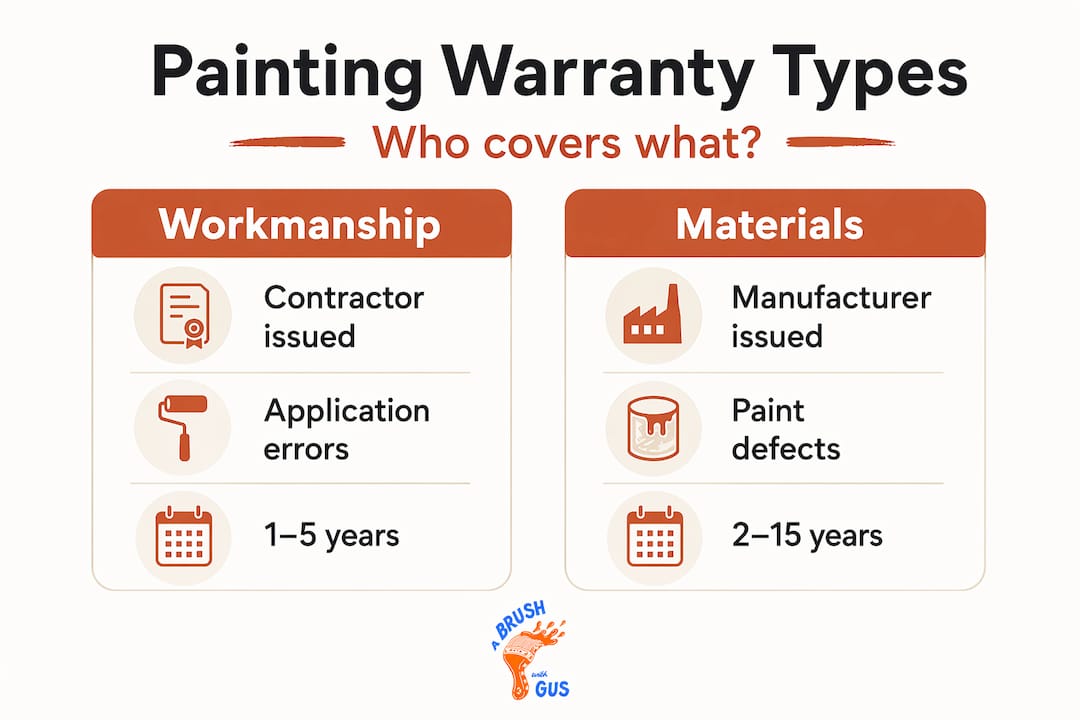
Workmanship warranties are offered by the contractor. If a wall starts peeling because the painter skipped proper surface preparation, or bubbling appears because a coat was applied too thick, that falls under workmanship. The decorator is responsible.
Material warranties are issued by the paint manufacturer. If the paint itself turns out to be faulty regardless of how well it was applied, the claim goes to the manufacturer, not your decorator.
Feature | Workmanship warranty | Material warranty |
Issued by | Your painting contractor | The paint manufacturer |
What it covers | Poor prep, incorrect application, missed coats | Defective paint products |
Who pays for remediation | The contractor | The paint company |
Typical duration | 1 to 5 years | Varies by brand and product |
How to claim | Contact your decorator directly | Contact the manufacturer |
Typical workmanship warranty periods for residential painting range from 12 months up to five years, though the specific terms vary between contractors. The length and scope should always be set out clearly in the written quote. If it is not there in black and white, it effectively does not exist.
Common elements that a workmanship warranty typically covers include:
Peeling or flaking paint caused by insufficient surface preparation
Bubbling or blistering resulting from moisture trapped during application
Chalking on exterior surfaces due to incorrect product selection
Uneven finish or missed areas attributable to the application method
“A painting warranty is a promise, usually written by the contractor and/or the paint manufacturer, to put right certain defects that appear after a painting job is completed, for a defined period and under specific conditions.” Source: Rated People
Understanding this distinction matters enormously. It means that if your paint starts peeling two years after a job and the root cause is that the painter skimped on primer, you have a legitimate workmanship claim. If the paint colour faded unusually fast because of a batch issue from the manufacturer, that is a completely separate conversation with a completely different party.
What do painting warranties cover and what don’t they?
With the basics of painting warranties established, let us get specific about what you can and cannot depend on them to fix.
Many homeowners are surprised to discover that a long list of common paint problems simply fall outside any standard warranty. This is not contractors being evasive. It reflects a genuine division of responsibility between what a painter can control and what they cannot.
Typical warranty coverage includes:
Peeling caused by skipping primer or inadequate sanding before painting
Flaking on exterior surfaces from insufficient coats being applied
Adhesion failure on areas the painter was contracted to prepare
Visible brush marks or roller lines from poor technique on freshly painted surfaces
Common exclusions:
Water ingress from blocked gutters, failing roof sections, or cracked render
Cracking caused by building movement or subsidence
Physical damage such as scuffs, scratches, or accidental marks
Fading from direct sunlight, particularly if no UV-resistant product was specified
Problems arising from a homeowner repainting over the contractor’s work without guidance
It is worth being very direct about this point. Water ingress is one of the most frequent reasons for paint failure in the South West, yet it is almost never a painter’s responsibility. If a leaking gutter has saturated your external wall, no coating in existence will hold. That is a building maintenance issue, full stop.
Defect example | Likely warranty status | Responsible party |
Paint peeling within 12 months of application | Covered | Painter |
Bubbling on exterior after heavy rain (blocked gutter) | Not covered | Homeowner/building maintenance |
Chalking on a south-facing wall | Covered if wrong product selected | Painter |
Crack in painted plaster from structural movement | Not covered | Structural issue |
Fade on interior wall from UV exposure | Depends on product specified | Manufacturer or discussed at quote stage |
Chipped paint from furniture contact | Not covered | Normal wear and tear |
Manufacturer defects are a particularly important edge case. Even when your painter has done everything correctly, manufacturer paint defects are not covered by the workmanship warranty. The paint company’s own product guarantee is a separate document entirely. Always ask your decorator which paint brand they are using and look up that brand’s warranty terms before work begins.
To stay on top of your painting maintenance best practices is not just good housekeeping; it is also the foundation of any valid warranty claim you might need to make later.

Pro Tip: Clear your gutters every autumn and inspect your exterior walls before winter sets in. A well-maintained surface is not just better for the paint; it also keeps your warranty intact. If a claim arises and there is evidence of neglected maintenance, the contractor has legitimate grounds to decline it.
If you spot a minor issue early, check out these paint touch-up tips before contacting your decorator, as some small problems can be resolved without triggering a formal claim at all.
How to get and keep a valid painting warranty
Knowing what warranties cover is one thing. Actually securing enforceable protection is another. Here is how to keep your home’s coverage bulletproof from the moment you hire a decorator.
Step 1: Get everything in writing before work begins.
A verbal agreement is worth very little if a dispute arises. Your written quote should specify the surfaces to be painted, the preparation method, the products being used (including brand and product line), the number of coats, and the warranty duration with its specific conditions. If any of these are missing, ask for them before signing. The scope of your warranty is directly tied to those agreed preparation and application methods.
Step 2: Follow all aftercare and maintenance instructions.
Good painters will tell you how to care for your newly painted surfaces. Wipe down woodwork with a damp cloth rather than abrasive cleaners. Avoid hanging items on freshly painted walls for a defined period. Follow these instructions to the letter. Your warranty may depend on it.
Step 3: Keep records from day one.
Photograph surfaces before, during, and immediately after the job is completed. Store your quote, any correspondence, and all receipts somewhere accessible. If a problem appears later, you will need evidence that the defect is new and related to the original work, not something that existed beforehand or developed from another cause.
Step 4: Act quickly if something goes wrong.
Warranty claims require you to act within the stated period, provide evidence (typically photographs), and demonstrate that you followed maintenance requirements. Waiting too long, even by a few weeks past the warranty expiry, can forfeit your rights entirely. Do not assume a polite email counts as an official claim; check what the contract says about the correct notification method.
Step 5: Contact the right party for the right issue.
Remember the distinction from earlier. Workmanship issues go to your decorator. Product failures go to the manufacturer. Contacting the wrong party wastes time and may cause you to miss a deadline.
Understanding the quality painting process used by your decorator from the start helps you recognise whether a defect stems from the application or from an external cause. Likewise, knowing the professional techniques that should have been applied means you can have an informed conversation if something looks wrong.
Pro Tip: Take a dated video walkthrough of the completed job on the day the painter finishes. A short clip on your phone showing the finish across all surfaces is some of the best evidence you could have if a claim arises six months later.
Staying proactive about maintaining eligibility under your warranty is far less effort than chasing a declined claim. Most failed warranty claims are not the result of dishonest contractors. They result from homeowners who did not keep records or did not follow the agreed aftercare advice.
Painting warranties in new builds: NHBC and cosmetic defect cover
Having explored existing homes, it is worth highlighting how the rules and protections change if your paintwork is part of a new build.
New-build homes operate under a separate framework. The NHBC Buildmark warranty is the most widely used scheme in England and Wales, and it has its own standards for painting and decorating workmanship. Under NHBC Buildmark cover, cosmetic defects in painted surfaces are assessed against defined finish standards and must be reported within specified timeframes from the date of legal completion.
This is not the same as a contractor warranty. The NHBC scheme is underwritten and governed independently, which means the process for reporting and resolving issues is more structured.
Typical new-build painting issues that homeowners report under this cover include:
Visible brush marks or roller stipple on ceilings and walls
Inadequate coverage leaving underlying surfaces visible through the topcoat
Poor paint edges and cut-in lines at coving or skirting boards
Paint applied over contaminants causing poor adhesion
Inconsistent sheen levels across large wall areas
The key phrase here is “cosmetic defects.” The NHBC draws a firm line between minor cosmetic imperfections and more serious defects. Not every mark or slight variation in sheen qualifies for a claim. NHBC Standards Chapter 9.5 sets out what constitutes an acceptable finish, and inspections are carried out against those criteria.
For most new-build owners, the critical action is to report any concerns about painted surfaces within the initial warranty period, typically the first two years, before the scheme moves into the structural-only phase of coverage. Delaying a report beyond this window means cosmetic claims will no longer be considered.
If you are unsure whether your decorator holds appropriate accreditation for new-build work, it pays to understand painter accreditation for new builds before commissioning any remedial work. You can also find additional support and relevant articles through the A Brush With Gus blog.
A realistic take: why painting warranties matter if you read the fine print
Here is an honest perspective from years of working on homes across the South West. Painting warranties are valuable, but not in the way most people think.
The biggest benefit is not having a safety net for disputes. The real value is that a properly worded warranty forces both the homeowner and the painter to be precise before the job starts. It demands a detailed quote, agreed materials, and documented preparation methods. That process, more than the warranty document itself, is what drives quality outcomes.
In our experience, most frustrations do not come from rogue painters trying to avoid responsibility. They come from vague contracts where neither party was clear about what was included. A homeowner assumes exterior joinery was part of the job. The painter quoted for render only. Neither checked. No warranty in the world fixes a miscommunication like that.
The uncomfortable truth is that many homeowners also sign quotes without reading them properly. They see a price and a start date and feel reassured. Then something goes wrong and they discover the warranty only covered two coats on interior walls, not the exterior work they cared about most.
If you are serious about protecting your investment, focus first on choosing the right painter who is transparent, experienced, and willing to answer questions about their warranty terms clearly. A good decorator will walk you through every clause without hesitation. If a contractor becomes evasive when you ask about warranty specifics, that tells you something important before you have spent a penny.
Warranties are not a substitute for doing your homework upfront. They are confirmation that the homework was done properly.
Painting with peace of mind: work with warranty-aware professionals
If this guide has given you clarity on how painting warranties actually work, the practical next step is finding a team who applies that knowledge to every job they take on.

At A Brush With Gus, we are a family-run painting and decorating business serving homeowners across the South West. Our brothers Gus and Rhys approach every project with full documentation of preparation methods, materials, and aftercare guidance, so your warranty terms are clear from the first conversation. Whether you are looking for reliable domestic painting services or a high-quality exterior home painting finish that stands up to South West weather, we detail every step and stand behind our work. Get in touch for a no-obligation quote and ask us anything about our warranty terms upfront.
Frequently asked questions
How long does a typical painting warranty last?
Most painting warranties for homes last between 1 and 5 years, depending on the contractor and the materials used. The exact period should always be stated in your written quote, as warranty timescales vary significantly between decorators.
What are the most common reasons a warranty claim is declined?
Claims are most often declined due to water ingress, neglected building maintenance, or claims submitted outside the warranty period. Water and building movement are treated as the homeowner’s responsibility, not the painter’s.
Does a painting warranty cover peeling from a paint manufacturer’s defect?
No. Manufacturer paint defects are handled separately by the paint company’s own warranty and are not the decorator’s responsibility, even if the painter applied the product correctly.
How can I make a strong warranty claim if I spot an issue?
Report the problem quickly with photographic evidence and proof that you followed care instructions. Timely action and evidence are the two most important factors in a successful claim.
Are painting warranties different for new-build homes?
Yes. New-build homes often have NHBC Buildmark cover handling cosmetic paint defects, with different assessment standards and separate reporting timelines from standard contractor warranties.
Recommended
Comments