
What is durable paint? A homeowner's guide

TL;DR:
Durable paint resists wear, stains, and environmental stress, with performance measured by standards like ASTM D2486 and EN 13300.
Choosing high-quality acrylic binders, appropriate sheen levels, and proper surface preparation ensures the longest-lasting finish.
Exterior and interior paints are formulated differently, with outdoor options including additives for UV and moisture resistance.
Durable paint is defined as a coating formulated to resist abrasion, repeated cleaning, and environmental stress while maintaining its appearance and protective qualities over time. In the industry, paint durability refers to a product’s ability to withstand scrubbing, moisture, UV exposure, and temperature change without peeling, fading, or wearing thin. The key standard measuring this is ASTM D2486, which tests scrub resistance through wet abrasion cycles. A high-quality washable wall paint typically endures 400 or more scrub cycles before film failure. Two components drive this performance above all others: the binder, which holds the film together, and the pigment concentration, which affects how much filler dilutes the coating.
What scientific standards and tests define paint durability?
Paint durability is measured objectively, not estimated. The ASTM D2486 scrub resistance test works by applying a wet abrasive brush to a dried paint film and counting how many cycles the coating survives before wearing through. The result is expressed in scrub cycles, giving you a direct, comparable number across products.
Two other standards matter for homeowners buying paint in the UK and Europe. ISO 11998 measures wet scrub resistance and film thickness loss after a set number of cycles. EN 13300 classifies interior wall paints into five categories based on that loss, from Class 1 (least than 5 microns lost after 200 cycles) down to Class 5 (more than 200 microns lost). A paint labelled Class 1 or Class 2 under EN 13300 is genuinely scrubbable. Anything below that is washable at best.
These classifications matter because marketing language on tins is not regulated the same way. A tin labelled “washable” may only survive light wiping. A tin that meets EN 13300 Class 1 has passed a lab test. When you are choosing paint for a hallway, kitchen, or children’s bedroom, the classification tells you far more than the brand’s own description.
Standard | What it measures | Why it matters |
ASTM D2486 | Scrub cycles before film failure | Compares abrasion resistance across products |
ISO 11998 | Film thickness loss under wet scrubbing | Quantifies how much paint wears away |
EN 13300 | Classifies paints Class 1–5 by scrub loss | Gives a regulated durability rating for EU/UK products |
Pro Tip: When buying paint in the UK, look for EN 13300 Class 1 or Class 2 on the product datasheet, not just “washable” on the tin. The datasheet is usually available on the manufacturer’s website.
How do paint composition and finish affect durability?
The binder-to-pigment ratio is the single most important factor in paint film toughness. The binder is the polymer that holds everything together once the paint dries. Budget paints often replace a portion of the binder with cheap fillers such as calcium carbonate, which reduces cost but also reduces hardness and stain resistance. Higher-grade acrylic binders form tougher, more flexible films that grip the surface and resist wear far longer.
Acrylic paints outperform latex in durability because acrylic polymers allow greater flexibility. This matters most in humid rooms and exterior environments where surfaces expand and contract with temperature. Oil-based paints produce a very hard film but become brittle over time and are less practical for most residential use today. For the majority of interior walls, a 100% acrylic formulation gives the best balance of toughness and ease of application.
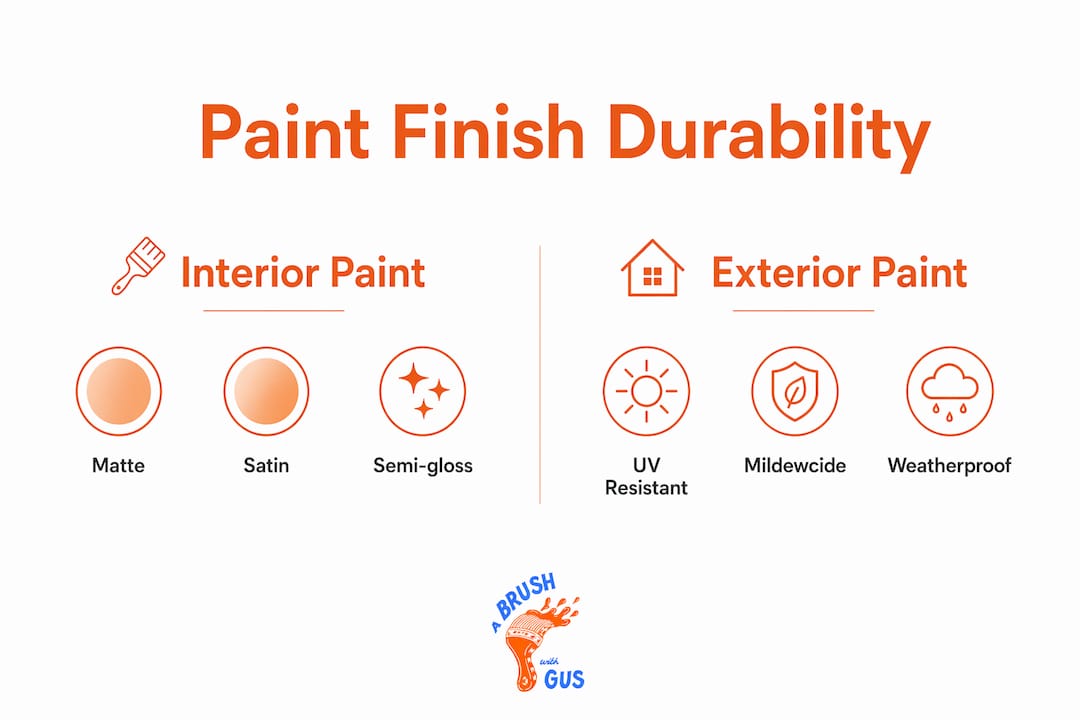
Sheen level also plays a direct role. Semi-gloss finishes contain more binder relative to pigment, which produces a harder, denser film. That is why semi-gloss and satin are standard choices for kitchens, bathrooms, and woodwork. Matte finishes contain more pigment and less binder, making them softer and more prone to marking. They look excellent on ceilings and low-traffic walls, but they will not survive repeated scrubbing in a busy hallway.
Finish | Sheen level | Durability | Best use |
Matte | Flat | Low | Ceilings, low-traffic rooms |
Eggshell | Very low | Moderate | Living rooms, bedrooms |
Satin | Medium | Good | Hallways, children’s rooms |
Semi-gloss | High | Very good | Kitchens, bathrooms, woodwork |
Gloss | Very high | Excellent | Doors, skirting boards, trim |
Pro Tip: Match the finish to the room’s traffic level, not just its look. A satin finish in a hallway will outlast a matte finish by years and still look clean between repaints. You can read more about types of interior paints to compare options before you buy.
What are the differences between interior and exterior durable paints?
Interior and exterior durable paints solve different problems. Getting this distinction wrong is one of the most common and costly mistakes homeowners make.
Interior durable paints are formulated to handle:
Abrasion from furniture, hands, and everyday contact
Repeated cleaning with detergents and damp cloths
Stain resistance against pen marks, oily food splashes, and scuff marks
Moisture resistance in bathrooms and kitchens, where humidity cycles daily
Low VOC emissions, since the paint is in an enclosed living space
Scrubbable paint surfaces resist degradation from stains like pen marks and oily foods through repeated scrubbing. This is the defining benefit for busy family homes, and it is why choosing the right interior formulation matters so much in rooms with children or heavy use.
Exterior durable paints face a completely different set of stresses. UV radiation breaks down pigment and binder over time, causing fading and chalking. Temperature swings cause the substrate to expand and contract, which cracks a rigid film. Rain, frost, and mildew all attack the surface continuously. Acrylic-based exterior paints are preferred precisely because their flexible binder moves with the substrate rather than cracking against it.
Exterior durable paints also include additives that interior paints do not. Mildewcides prevent fungal growth on north-facing or shaded walls. UV stabilisers slow pigment breakdown. Elastomeric formulations bridge hairline cracks in render and masonry. None of these are needed indoors, but outdoors they are the difference between a finish that lasts a decade and one that fails in three years.
Premium interior paints typically last 7–12 years. Budget interior paints last 3–5 years. Exterior paint lifespans vary more widely depending on exposure, substrate, and preparation, but a well-applied premium exterior coating on a properly prepared surface should last at least 8–10 years in the UK climate.
How to choose and apply durable paint for the best home results
Choosing the best durable paint for your home comes down to four decisions: formulation type, sheen level, product line performance, and surface preparation. Get all four right and the finish will last. Miss one and even an expensive paint will underperform.
Choose formulation based on location. Use 100% acrylic for exterior surfaces and humid interior rooms. Use a high-quality acrylic or vinyl-acrylic for dry interior walls. Avoid oil-based paints on walls unless you are refinishing a surface already coated in oil-based paint.
Select sheen based on traffic. High-traffic areas need satin or semi-gloss. Low-traffic rooms can use eggshell or matte. Never use matte in a kitchen or bathroom if you expect to clean the walls regularly.
Prioritise product line performance over brand name. Consumers often overestimate brand equity. A mid-tier brand’s premium product line will outperform a premium brand’s entry-level product. Check the EN 13300 classification and the volume solids percentage on the datasheet. Premium paints contain 35–48% volume solids, which means more actual coating material per litre after drying.
Invest in surface preparation. Paint applied over poorly prepared surfaces can fail within 3 years even if it is premium quality. Clean the surface thoroughly, fill cracks and holes, sand back any loose or flaking paint, and apply a suitable primer before the topcoat. Preparation is not optional. It is the foundation the paint relies on.
Apply correctly. Two thin coats outperform one thick coat every time. A thick coat traps solvent, dries unevenly, and is more prone to cracking. Use a quality roller or brush suited to the paint type, and allow full drying time between coats as stated on the tin.
Labour costs for repainting every 3–4 years with cheap paint quickly surpass the initial saving. Spending more on a proven product line, applied correctly over a prepared surface, is the most cost-effective decision for any homeowner. You can find detailed guidance on painting walls professionally to get the most from whichever product you choose.
Pro Tip: Ask for the technical datasheet before you buy, not just the marketing leaflet. The datasheet lists volume solids, scrub cycle results, and EN 13300 classification. If a manufacturer does not publish one, treat that as a red flag.
Key takeaways
Durable paint is defined by its binder quality, sheen level, and surface preparation, not by brand name alone.
Point | Details |
ASTM D2486 and EN 13300 | These standards give objective scrub resistance ratings; look for EN 13300 Class 1 or 2 on the datasheet. |
Binder quality drives durability | Higher-grade acrylic binders produce harder, more stain-resistant films than budget fillers. |
Sheen level signals toughness | Semi-gloss and satin contain more binder and outperform matte in high-traffic areas. |
Interior vs exterior formulations | Exterior paints need UV stabilisers and flexible binders; interior paints prioritise scrub resistance and low VOCs. |
Surface prep determines lifespan | Even premium paint fails within 3 years on an unprepared surface; preparation is non-negotiable. |
Why I always tell homeowners to read the datasheet first
Most homeowners walk into a paint shop and choose based on the tin design or the brand they recognise. I understand why. The marketing is polished and the colour cards are beautiful. But after years of painting homes across the South West, I have seen expensive paint fail in two years and mid-priced paint still looking fresh after a decade. The difference was never the brand. It was always the product line and the preparation underneath it.
The thing that surprises people most is how little the brand name predicts performance. A manufacturer’s premium line and their budget line can share the same tin design but contain completely different binder concentrations. The premium product might carry 45% volume solids. The budget version might carry 28%. That gap shows up on your walls within a few years.
I also think homeowners underestimate how much surface preparation matters. I have seen beautifully chosen paint bubble and peel within 18 months because the wall underneath was not properly cleaned or primed. No coating, regardless of price, can compensate for a poor foundation. The preparation is where durability is actually built.
My practical advice: spend 20 minutes reading the technical datasheet before you spend money on paint. Check the EN 13300 class, the volume solids, and the recommended primer. Then spend as much time on preparation as you do on application. That combination will outlast any shortcut.
— Angus
Professional durable finishes from Abrushwithgus
Getting the right paint is only part of the result. The application and preparation underneath it determine how long that finish actually lasts.
Abrushwithgus provides professional interior and exterior painting for homes across the South West, with a focus on surface preparation, correct product selection, and finish quality that holds up over time. Whether you need a fresh coat on interior walls or a weather-resistant finish on your home’s exterior, Gus and Rhys bring the experience to get it right first time. Abrushwithgus also offers professional spraying services for an even, durable finish on a range of surfaces. Get in touch for a free quote and straightforward advice on the best approach for your home.
FAQ
What is durable paint in simple terms?
Durable paint is a coating formulated to resist scrubbing, staining, and environmental wear without breaking down. It uses high-quality acrylic binders and is tested to standards such as ASTM D2486 and EN 13300.
How long does durable paint last on interior walls?
Premium interior paints last 7–12 years on properly prepared surfaces. Budget paints typically last 3–5 years before requiring repainting.
What makes paint more durable?
A higher binder-to-pigment ratio, 100% acrylic formulation, and a higher sheen level all increase durability. Surface preparation before application is equally critical to long-term performance.
Is semi-gloss paint more durable than matte?
Yes. Semi-gloss finishes contain more binder and produce a harder, denser film that resists moisture, staining, and repeated scrubbing far better than matte finishes.
Do I need different paint for outdoors?
Exterior paints include UV stabilisers, mildewcides, and flexible binders that interior paints do not contain. Using interior paint outdoors will cause it to fade, crack, and peel significantly faster than a purpose-made exterior formulation.
Recommended
Comments