
What is weatherproof painting? A guide for homeowners
TL;DR:
Weatherproof paint forms a durable, water-resistant barrier on exterior surfaces to resist moisture, UV rays, and temperature changes.
Proper surface preparation and application are essential for effective protection and long-lasting results.
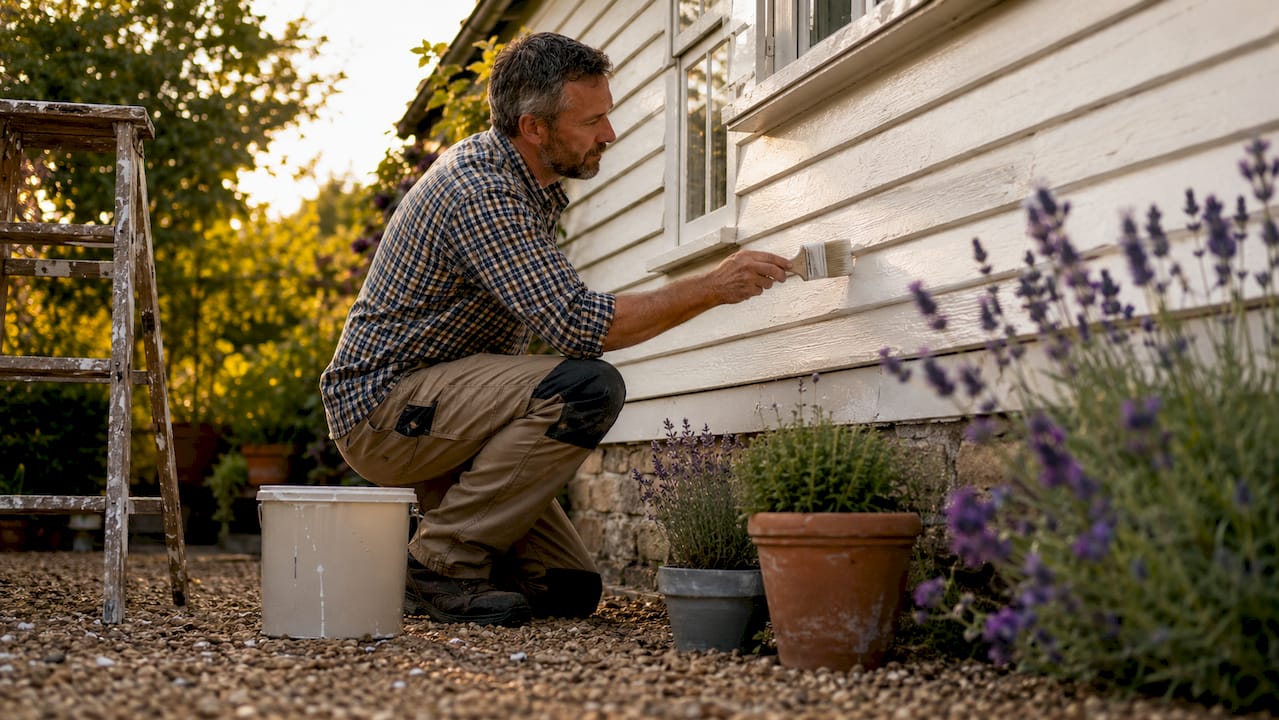
Weatherproof painting is the application of a protective coating system formulated to resist water, UV rays, and temperature changes by forming a durable membrane over exterior surfaces. Unlike standard wall paint, which primarily delivers colour, weatherproof coatings are engineered to shield masonry, timber, render, and metal from the full force of British weather. Products like ZINSSER® WATERTITE represent the specialist end of this category, capable of withstanding water pressure up to 2.5 bar on wet or dry masonry. Understanding what weatherproof painting involves helps you choose the right product, apply it correctly, and avoid costly mistakes that leave your home exposed.
What is weatherproof painting and how does it work?
Weatherproof painting works by forming a tough, continuous film across a surface rather than simply sitting on top as a decorative layer. The coating bonds to the substrate and creates a barrier that blocks liquid water, resists UV degradation, and flexes with temperature movement. Standard exterior paint provides some weather resistance, but a dedicated weatherproof system goes further by using specialist resins, additives, and pigments chosen specifically for outdoor exposure.
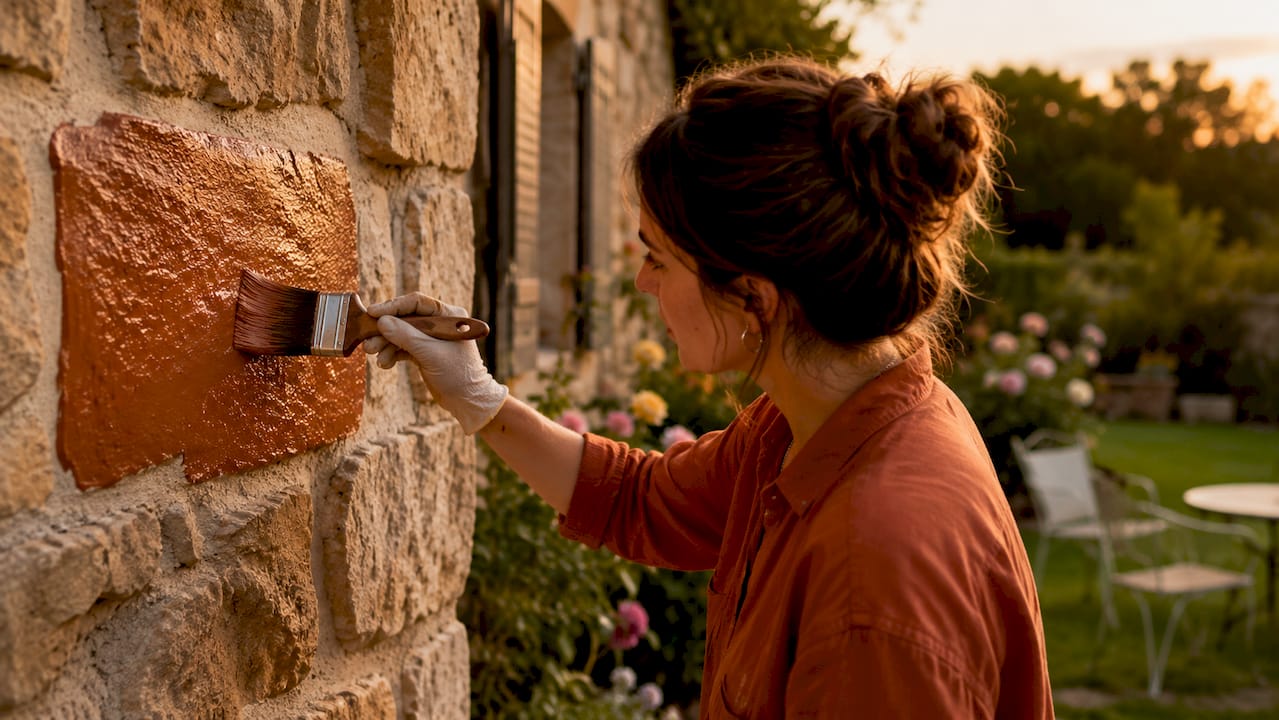
The key distinction is in the film itself. A standard emulsion dries to a thin, relatively brittle layer. A weatherproof coating, particularly an elastomeric or masonry waterproofing product, dries to a thicker, more flexible membrane. That membrane is what stops driven rain from penetrating a rendered wall or a timber fascia board.
It is worth being clear about one limitation from the outset. Weatherproof paint creates a moisture barrier but does not solve underlying damp or active leak problems. If water is entering through a cracked lintel or a failed flashing, paint alone will not fix it. The coating buys time and reduces surface ingress, but the root cause still needs addressing.
What are the main properties of weather-resistant paints?
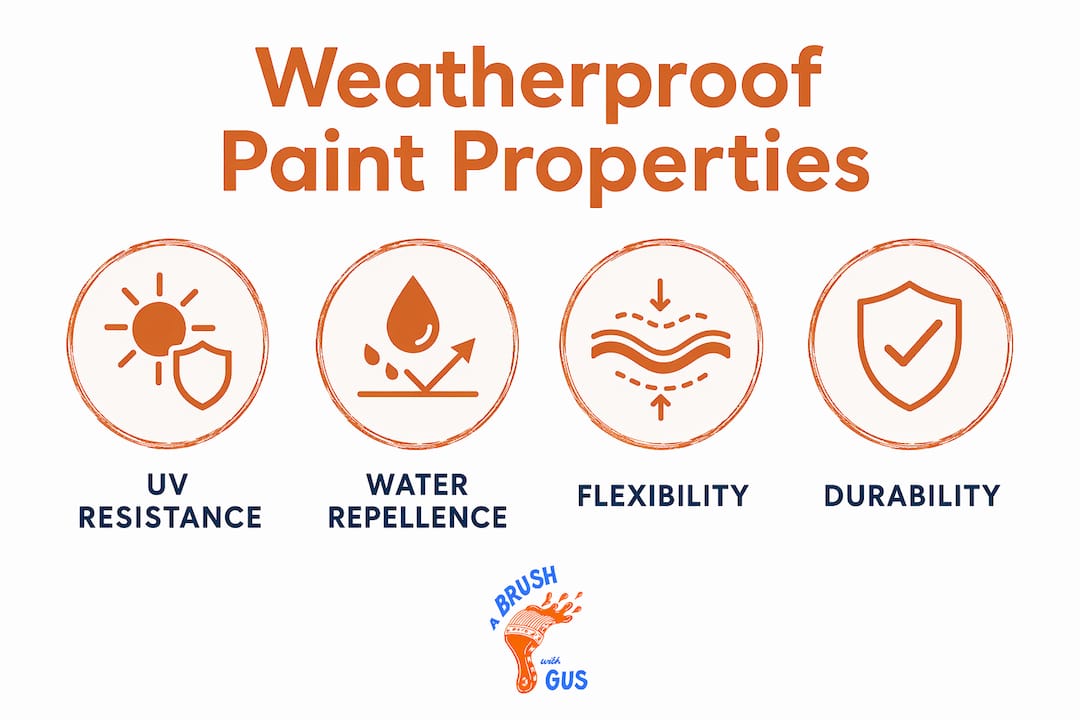
Weather-resistant paints share several core properties that set them apart from decorative coatings. The most important are:
Water repellency. Specialist resins cause water to bead and run off rather than soak in.
UV stability. Pigments and additives resist fading and chalking caused by sunlight.
Thermal flexibility. The dried film expands and contracts with temperature without cracking.
Mould and algae resistance. Biocidal additives inhibit organic growth on damp surfaces.
Adhesion strength. Primers and bonding agents help the coating grip porous or uneven substrates.
The composition behind these properties typically includes acrylic or polyurethane resins as the binder, titanium dioxide as the primary pigment for opacity and UV reflection, and various additives such as fungicides, plasticisers, and thickeners. The resin is the most critical component. It determines how well the film bonds, how flexible it remains, and how long it lasts before chalking or peeling.
Pro Tip: Check the dry film thickness (DFT) listed on the product data sheet before buying. A higher DFT generally means better crack-bridging and water resistance, particularly on textured masonry.
One property that surprises many property owners is that no single paint is universally “most waterproof”. The best result always comes from matching the product to the substrate and the type of water exposure. A product excellent for below-ground masonry may perform poorly on a timber window frame exposed to direct sunlight.
Which types of weatherproof paint suit different exterior surfaces?
Choosing the right product is the single biggest factor in how long your coating lasts. The four main types used on residential exteriors are acrylic, masonry, elastomeric, and epoxy paints.
Paint type | Best surface | Key strength | Limitation |
Acrylic latex | Timber, fibre cement, metal | UV resistance, fast drying, flexible | Not for below-ground or high hydrostatic pressure |
Masonry / waterproofing | Brick, render, concrete | Blocks water ingress, fungal protection | Requires dry or stable substrate |
Elastomeric | Cracked stucco, masonry | Bridges hairline cracks, thick membrane | Higher cost, requires careful prep |
Epoxy | Concrete floors, below-ground walls | Extremely hard, chemical resistant | Brittle on moving substrates, complex application |
Elastomeric coatings deserve particular attention. Elastomeric paint stretches 300–600% and dries to a film roughly 10 mils thick, compared to 1–1.5 mils for standard acrylic. That thickness and flexibility allow it to bridge hairline cracks up to approximately 1/16 inch in masonry or stucco. It acts more like a waterproof membrane than paint, which makes it the strongest choice for older rendered walls that show fine cracking.
Acrylic latex is the most widely used weatherproof paint for exterior timber and fibre cement. Acrylic paint maintains colour well and stays flexible enough to reduce cracking as wood expands and contracts seasonally. It cleans up with water and dries quickly, which suits the unpredictable British climate.
Elastomeric: choose for rendered walls, stucco, or any surface with visible hairline cracking.
Masonry waterproofing (such as ZINSSER® WATERTITE): choose for brick, block, or concrete where water pressure is a concern.
Acrylic latex: choose for timber cladding, fascias, soffits, and metal guttering.
Epoxy: reserve for garage floors, basement walls, or surfaces below the damp-proof course.
Pro Tip: For exterior coatings on UK homes, always check whether the product is rated for the specific substrate. Using a floor epoxy on a rendered wall, or a standard masonry paint on a cracked surface, will lead to premature failure regardless of how well you apply it.
How should weatherproof paint be applied for the best results?
Application quality determines longevity as much as product choice. Properly applied quality exterior paint on a clean, prepared surface can protect siding for around 15 years. The same product on a poorly prepared surface may fail within two or three years.
Follow these steps for a durable finish:
Clean the surface thoroughly. Remove all dirt, algae, loose paint, and chalking with a pressure washer or stiff brush. Any contamination under the coating will cause adhesion failure.
Repair cracks and defects. Fill cracks with an appropriate exterior filler or flexible sealant before painting. Elastomeric paint bridges hairline cracks but is not a substitute for filling larger gaps.
Apply a suitable primer. Most weatherproof systems require a primer matched to the substrate. Skipping the primer reduces adhesion and shortens the coating’s life.
Check weather conditions. The recommended painting temperature is 10°C–29°C with humidity between 40% and 70% and no rain forecast. Painting outside these conditions causes poor adhesion, slow drying, and surface defects.
Apply two full coats. One coat is rarely sufficient for weatherproof systems. Two coats at the correct spread rate build the film thickness needed for genuine protection.
Protect during curing. Drying time and curing time are different things. ZINSSER® WATERTITE, for example, dries to recoat in 4 hours but takes 7–14 days to fully cure. Rain or moisture during that curing window can compromise the finished coating.
Pro Tip: In the South West UK, weather conditions for exterior painting can change rapidly. Always check a 48-hour forecast, not just the morning sky, before committing to a full coat.
Maintenance matters too. Inspect coated surfaces annually, particularly after winter. Clean off any algae or moss growth promptly. Touch up any areas where the film has cracked or lifted before water gets underneath.
What are the benefits and limitations of weatherproof paint?
Weatherproof paint delivers real, measurable protection when chosen and applied correctly. The main benefits for property owners are:
Rain and moisture resistance. The coating stops liquid water penetrating porous masonry or timber, reducing the risk of damp inside the property.
UV protection. Specialist pigments slow the breakdown of the surface beneath, preventing fading, chalking, and surface erosion.
Mould and mildew resistance. Biocidal additives inhibit the growth of black mould and green algae, which are common on north-facing walls in the UK.
Extended surface lifespan. A well-maintained weatherproof coating significantly delays the need for expensive repairs to render, timber, or brickwork.
Aesthetic improvement. A fresh, clean exterior finish adds kerb appeal and can support property value.
The limitations are equally worth understanding. Weatherproof paint is a barrier, not a cure. If a wall has active rising damp, a leaking gutter, or a failed roof junction, painting over it will not stop the moisture. The coating may slow surface ingress temporarily, but the underlying problem will eventually push through. Experts are clear that paint should not replace professional damp treatment where structural moisture is present.
Cost is another consideration. Quality elastomeric and masonry waterproofing products cost more per litre than standard exterior emulsions. The trade-off is a longer service life and fewer repaints over time, which makes them cost-effective over a 10-year horizon. For a straightforward guide to why exterior painting protects your home, the logic is simple: prevention is cheaper than repair.
Key takeaways
Weatherproof painting protects exterior surfaces by forming a flexible, water-resistant membrane that resists rain, UV, and temperature change far beyond what standard paint achieves.
Point | Details |
Definition | Weatherproof painting applies a specialist coating system, not just colour, to shield exterior surfaces from weather damage. |
Product matching | Choose paint type by substrate: elastomeric for cracked masonry, acrylic for timber, epoxy for below-ground concrete. |
Surface preparation | Thorough cleaning, crack repair, and priming determine how long any weatherproof coating lasts. |
Curing conditions | Apply between 10°C and 29°C with low humidity; protect the surface for 7–14 days during full curing. |
Limitations | Weatherproof paint reduces surface ingress but does not fix active damp, leaks, or structural moisture problems. |
What I have learned from years of exterior painting in the South West
The biggest mistake I see property owners make is treating weatherproof paint as a shortcut. They spot a damp patch on a wall, buy a tin of waterproofing paint, and roll it on without cleaning the surface or checking what is causing the moisture. Six months later the paint is bubbling and the damp is worse. The paint did not fail. The preparation failed.
The second mistake is ignoring the curing window. People paint on a dry day in october, get rain two days later, and wonder why the finish looks patchy. The surface may feel dry to the touch, but the coating has not fully cured. That early moisture exposure weakens the film at a molecular level, and no amount of additional coats will fix it.
My honest recommendation for most UK homes is acrylic masonry paint for general exterior walls, with elastomeric coating reserved for any wall showing fine cracking. For anything below the damp-proof course or in a basement, a dedicated waterproofing product like ZINSSER® WATERTITE is the right call. Do not use a standard exterior emulsion and expect waterproofing performance. The chemistry is simply not there.
If you are unsure about the condition of your substrate or the right product for your specific situation, get a professional opinion before spending money on materials. A good painter will spot issues you might miss, such as failed pointing, hidden rot, or inadequate drainage, that will undermine any coating you apply.
— Angus
Professional weatherproof painting for your home
Choosing the right weatherproof coating is one thing. Applying it correctly across a full exterior is another.

Abrushwithgus provides specialist exterior home painting services across the South West, covering surface preparation, primer application, and full weatherproof coating systems for masonry, timber, and render. The team uses professional-grade products and applies them under the right conditions to deliver a finish that lasts. For property owners who want the protection without the risk of a DIY shortcut, Abrushwithgus also offers domestic painting services tailored to residential properties of all sizes. Get in touch for a no-obligation quote.
FAQ
What is the difference between weatherproof paint and regular exterior paint?
Regular exterior paint provides basic weather resistance through its resin and pigment composition. Weatherproof paint goes further by forming a thicker, more flexible membrane specifically engineered to block water ingress, resist UV degradation, and bridge minor surface movement.
Is weatherproof paint the same as waterproof paint?
The terms are often used interchangeably, but waterproof paint typically refers to products designed to resist hydrostatic water pressure, such as ZINSSER® WATERTITE for masonry. Weatherproof paint is a broader term covering any coating formulated to withstand outdoor weather exposure including rain, UV, and temperature change.
How long does weatherproof paint last on exterior walls?
Properly applied quality exterior paint on a clean, prepared surface can protect exterior walls for around 15 years. Longevity depends heavily on surface preparation, the number of coats applied, and annual maintenance to address any early signs of wear.
Can I apply weatherproof paint myself?
Yes, most weatherproof paints are suitable for DIY application. The critical factors are thorough surface preparation, correct environmental conditions (10°C–29°C, low humidity, no rain forecast), and allowing the full 7–14 day curing period before the surface is exposed to moisture.
Does weatherproof paint stop damp inside a property?
Weatherproof paint reduces surface water ingress on exterior walls but does not cure active damp caused by structural issues, rising damp, or failed waterproofing elsewhere. If internal damp persists after exterior painting, a professional damp survey is the correct next step.
Recommended
Comments