
What is masonry paint? a homeowner's guide
TL;DR:
Masonry paint is designed for porous mineral surfaces, balancing water resistance with vapor permeability to prevent damage. Proper preparation, product selection, and application in suitable weather conditions are crucial for long-lasting results, typically lasting 7 to 15 years. Regular maintenance and early detection of failure signs ensure ongoing protection and preserve the home’s exterior integrity.
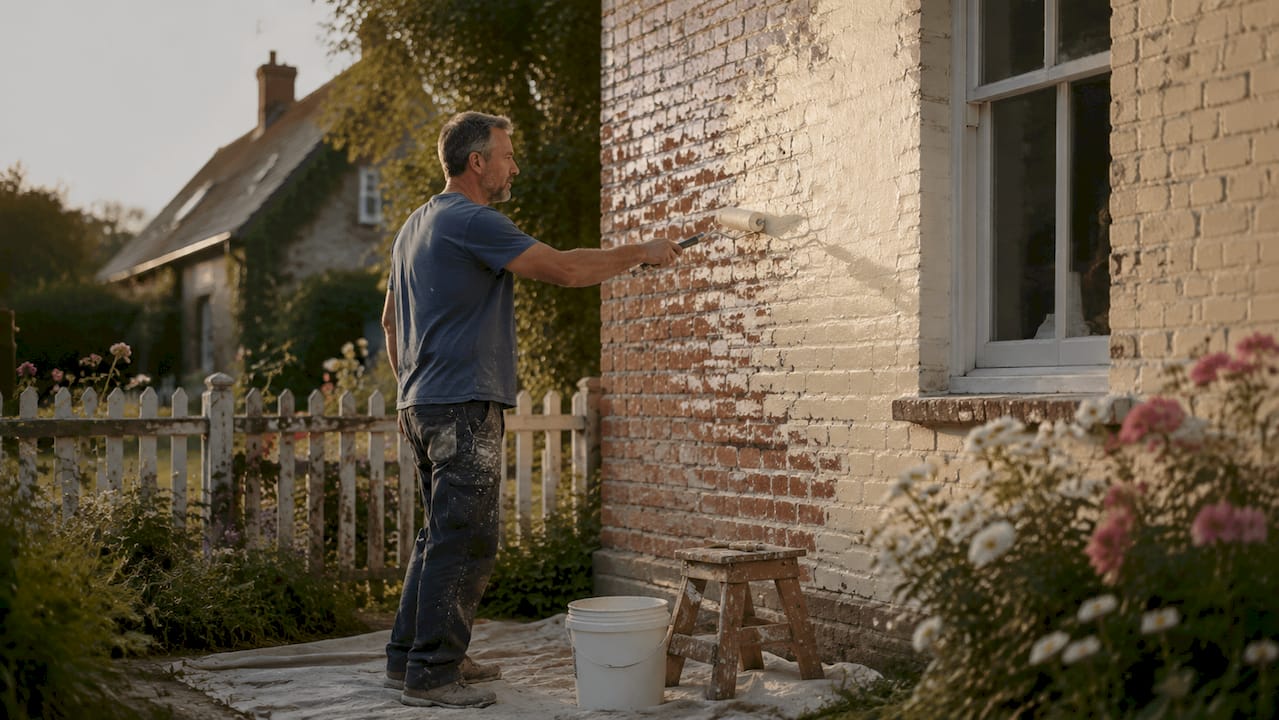
Masonry paint is a specialised exterior coating formulated for porous mineral surfaces such as brick, render, concrete, and stone. Unlike standard wall paint, it balances water resistance with vapour permeability, meaning it repels rain while allowing moisture trapped inside your walls to escape. That combination is what protects your home from structural damage like spalling and blistering, particularly in the wet UK climate. Brands such as Sandtex, Dulux Weathershield, and Johnstone’s Stormshield are among the most widely used formulations on the market, and each is built around this same core principle.
What is masonry paint and how does it differ from regular paint?
Masonry paint is defined by its formulation, not just its label. Modern masonry paints are water-based acrylic or silicone-modified emulsions containing thicker pigments, added fungicides, and fillers that standard interior or exterior emulsions simply do not include. Those additives give masonry paint its resistance to UV exposure, biological growth, and the physical stress of expanding and contracting masonry.
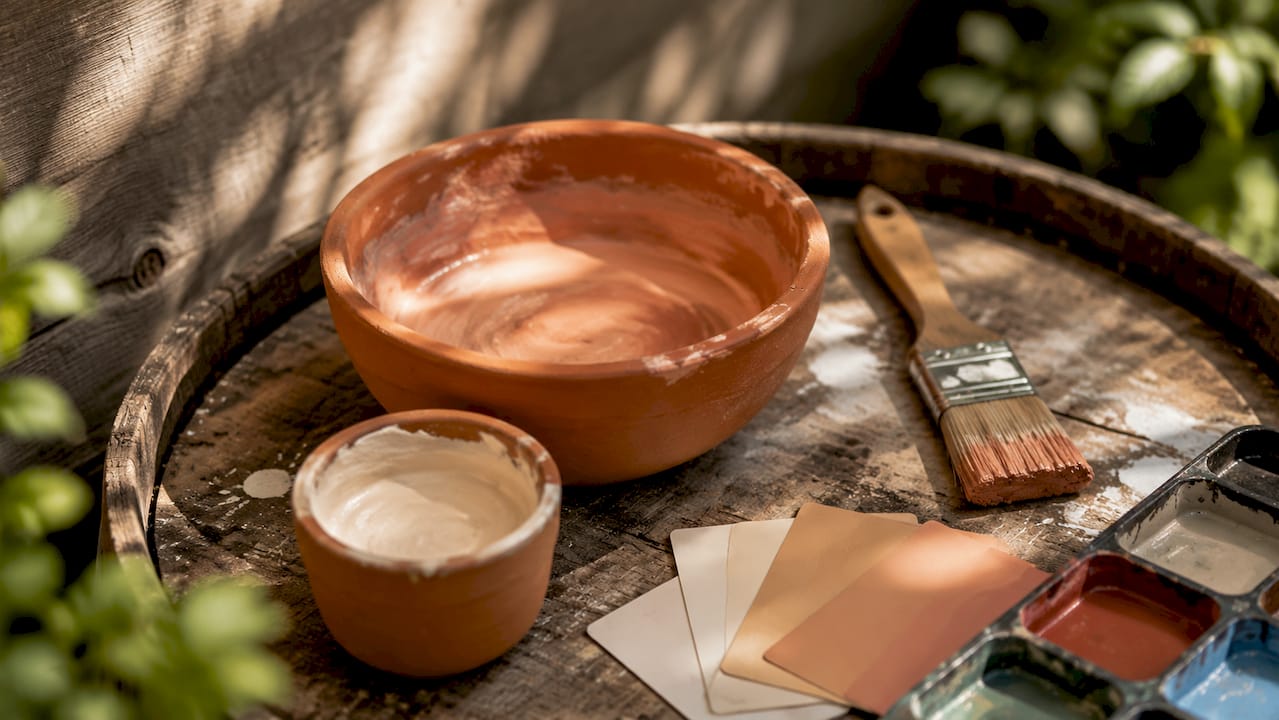
The most important property is breathability, known technically as vapour permeability. Masonry paint balances water resistance with vapour permeability, enabling moisture within walls to escape rather than building up behind the paint film. When moisture cannot escape, it forces the coating off the surface from the inside out, causing the blistering and peeling you see on poorly painted walls.
Standard exterior emulsions and interior paints form a denser film that traps moisture. Using them on brick or render is one of the most common mistakes homeowners make. The surface may look fine for a season, then fail spectacularly the following winter.
There are two broad categories worth knowing:
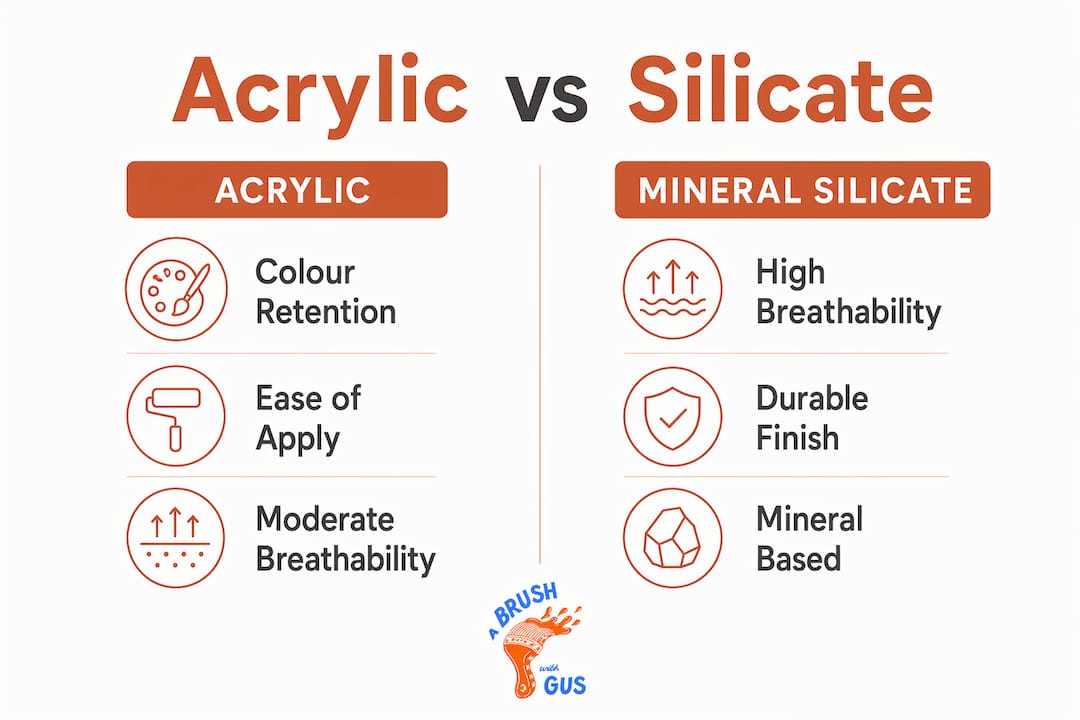
Acrylic latex masonry paints (Sandtex, Dulux Weathershield, Johnstone’s Stormshield): water-based, flexible, easy to apply, and widely available. They offer good colour retention but form a surface film that restricts vapour movement to some degree.
Mineral silicate paints (such as Keim Mineral Paints): chemically bond with masonry rather than sitting on top of it. They offer superior breathability and are the preferred choice for older buildings, lime-rendered walls, and listed properties.
Pro Tip: If your home was built before 1920 or has lime mortar joints, choose a mineral silicate product. Acrylic coatings can trap moisture in older solid-wall construction and cause long-term damage.
How do you choose the best masonry paint for your project?
Choosing the right exterior masonry paint depends on three factors: your substrate, your climate, and your finish preference. Getting this wrong costs you time, money, and potentially structural damage.
Acrylic vs mineral silicate: which is right for you?
Acrylic-based paints offer good colour retention and ease of application but restrict vapour movement compared to mineral silicates. Mineral silicates allow superior breathability and are preferred for older or lime-rendered walls. The table below summarises the key differences.
Feature | Acrylic Masonry Paint | Mineral Silicate Paint |
Breathability | Moderate | High |
Best substrate | Cement render, modern brick | Lime render, historic stone, old brick |
Application ease | High | Moderate (requires care) |
Colour range | Wide | More limited |
Typical lifespan | 7–12 years | 10–15 years |
Example brands | Sandtex, Dulux Weathershield | Keim Mineral Paints |
Smooth vs textured finish
Smooth masonry paint suits modern rendered walls and gives a clean, contemporary look. Textured or masonry coating products contain fine aggregate particles that fill minor cracks and give a rougher finish. Textured coatings are heavier and harder to remove, so they suit walls with surface imperfections rather than decorative brickwork you want to preserve.
Lifespan and performance
Product lifespans are typically 7–15 years depending on preparation quality and local climate. High-end silicone-modified products from Sandtex or Dulux can reach the upper end of that range when applied correctly. Cheaper own-brand products often fall short of their stated coverage rates, meaning you use more product and spend more time on the job. Check long-lasting exterior paint options suited to UK conditions before committing to a brand.
Pro Tip: Always buy 10–15% more paint than your calculated coverage requires. Porous surfaces like bare render absorb significantly more on the first coat, and running short mid-job means colour-matching headaches.
How to prepare and apply masonry paint properly
Preparation is where most DIY masonry paint projects succeed or fail. The paint itself is rarely the problem. Poor preparation is.
Follow these steps to give your coating the best possible chance of lasting a decade or more:
Clean the surface thoroughly. Remove algae, moss, dirt, and loose material using a stiff brush or pressure washer. Biological growth must be treated with a fungicidal wash and left to dry fully before painting. Abrushwithgus includes professional external home cleaning as part of their exterior painting process for exactly this reason.
Identify and fix moisture problems first. Painting without addressing efflorescence or moisture causes leads to paint blistering within 12 months, regardless of paint quality. Check gutters, downpipes, flashing, and weep holes before you open a tin. No paint can fix a leaking gutter.
Apply an alkali-resistant masonry primer. Using an alkali-resistant primer is mandatory to prevent adhesion failure caused by reactions with high-pH fresh mortar. Standard latex primers saponify and fail on fresh or aged high-alkali masonry. Products like Dulux Weathershield Stabilising Primer are formulated specifically for this purpose.
Check the weather forecast. Successful application requires surface temperatures above 5°C and rising, with no rain forecast for at least four hours after application. Professional guidelines specify ideal conditions between 10–25°C and relative humidity below 85%. Painting in cold or damp conditions is the single most common cause of film failure.
Apply two full coats. Most masonry paints require two coats for adequate coverage and protection. Allow the first coat to dry fully before applying the second. Rushing this step leads to uneven colour and reduced durability.
Pro Tip: Paint in the shade where possible. Direct sunlight causes the paint to dry too quickly, reducing adhesion and leaving lap marks. Follow the shade around the building if you need to.
Most paint failures are caused by environmental and preparation factors, not product defects. Applying paint on a wet surface or outside suitable temperature and humidity windows accounts for the majority of premature coating failures. Read up on professional painting techniques before you start if this is your first exterior project.
How long does masonry paint last and when should you repaint?
Masonry paint is not a one-and-done solution. It is a protective coating that degrades over time and needs monitoring. Maintenance typically requires repainting every 7–10 years to sustain the protective coating and appearance. High-end products in sheltered locations can stretch to 15 years, but exposed north-facing walls in the South West of England often need attention sooner.
Watch for these signs that your masonry paint is failing:
Blistering or bubbling: moisture is trapped behind the film and forcing it away from the surface.
Flaking or peeling: the coating has lost adhesion, often due to poor preparation or an incompatible primer.
Efflorescence (white salt deposits): soluble salts are migrating through the wall, a sign of active moisture movement.
Cracks or crazing: the paint film has become brittle, usually from UV degradation or thermal movement.
Biological growth returning: algae and moss indicate the fungicidal additives have exhausted their effectiveness.
Spotting these signs early matters. Leaving a failing coating in place traps moisture and accelerates the underlying damage it was meant to prevent. Check the signs you need exterior painting for a full breakdown of what to look for during an annual inspection.
One consideration many homeowners overlook: painting brick permanently changes the wall’s breathability, and removal is costly, difficult, and often damages the surface. Once you paint masonry, you are committing to a maintenance cycle. That is not a reason to avoid it, but it is a reason to do it properly from the start.
Key takeaways
Masonry paint protects exterior walls by repelling water while allowing vapour to escape, and its lifespan depends almost entirely on preparation quality and correct product choice.
Point | Details |
Breathability is non-negotiable | Choose a vapour-permeable product to prevent moisture build-up and blistering behind the film. |
Match paint type to substrate | Use mineral silicate paints on lime render or pre-1920 buildings; acrylic suits modern cement render. |
Preparation determines lifespan | Fix moisture sources, clean thoroughly, and use an alkali-resistant primer before applying any paint. |
Weather windows matter | Apply only above 5°C with no rain forecast for four hours to avoid film failure. |
Painting masonry is a long-term commitment | Removal is difficult and damaging; plan for repainting every 7–10 years as part of ongoing maintenance. |
Why preparation is the only thing that actually matters
I have seen hundreds of exterior walls across the South West, and the pattern is always the same. The jobs that fail are not the ones where someone chose the wrong shade of grey. They are the ones where someone skipped the prep.
The most common mistake I see on DIY attempts is painting over a damp wall because the surface looks dry to the touch. Masonry holds moisture deep in its structure long after the face dries out. If you paint too soon after rain, or without checking for underlying leaks, you are sealing that moisture in. The paint will blister within a season, and you will be back to square one.
The second mistake is using the wrong primer, or no primer at all. Fresh render and repointed mortar are highly alkaline. Without an alkali-resistant primer, the coating breaks down from the substrate up, a process called saponification. It looks like the paint is melting off the wall. I have seen it happen to expensive products applied by well-meaning homeowners who simply did not know.
My honest advice: if your walls have any history of damp, if they are older solid-wall construction, or if you are covering a large surface area, get a professional assessment before you start. The cost of getting it right first time is always less than the cost of stripping a failed coating and starting again. For complex or extensive surfaces, choosing a reputable painting company is worth every penny.
Masonry paint is genuinely one of the best things you can do for your home’s long-term health. But it rewards patience and preparation, not speed.
— Angus
Get a professional finish on your exterior walls
Masonry paint applied correctly can transform the look and protection of your home for over a decade. Applied incorrectly, it creates problems that are expensive to fix.

Abrushwithgus provides professional exterior masonry painting across the South West, covering everything from surface preparation and primer selection to final coats in your chosen finish. Gus and Rhys bring years of hands-on experience with UK weather conditions, substrate types, and the products that actually perform. Whether you have a rendered cottage, a brick terrace, or a rendered new-build, Abrushwithgus will assess your walls, recommend the right product, and deliver a finish built to last. Get in touch for a no-obligation quote.
FAQ
What surfaces can masonry paint be used on?
Masonry paint is suitable for brick, render, concrete, stone, and pebbledash. It is formulated for porous mineral substrates and should not be used on wood, metal, or UPVC surfaces.
Is masonry paint waterproof?
Masonry paint is water-resistant, not fully waterproof. It repels rain and surface water while remaining vapour-permeable, allowing moisture within the wall to escape and preventing damage from trapped moisture.
How many coats of masonry paint do you need?
Most masonry paints require two coats for adequate coverage and protection. The first coat is often absorbed heavily by porous surfaces, so a second coat is needed to achieve the full protective film.
Can you use masonry paint on interior walls?
Masonry paint is formulated for exterior use and is not recommended for interior walls. It contains fungicides and UV-resistant additives suited to outdoor conditions, and its thick texture is not designed for interior finishes.
How do you know when masonry paint needs replacing?
Signs that masonry paint needs replacing include blistering, flaking, efflorescence (white salt deposits), surface cracks, and the return of biological growth such as algae or moss. Annual inspections help catch these early before moisture causes structural damage.
Recommended
Comments