
Spraying vs brushing paint: which method is right for you?
TL;DR:
Spraying offers a faster, smoother finish for large surfaces, but brushing provides better control for detailed areas. Professionals often blend both methods to achieve optimal results, using spraying for large areas and brushing for edges and intricate work.
The difference between spraying and brushing paint lies in three things: application speed, finish quality, and how much control you need. Spraying atomises paint into fine droplets and deposits them in thin, even layers across a surface. Brushing applies paint manually with bristles, giving you direct control over every stroke. Both methods produce a finished result, but the route each takes is completely different. Understanding which suits your project can save you time, money, and a great deal of frustration.
What is the difference between spraying and brushing paint?
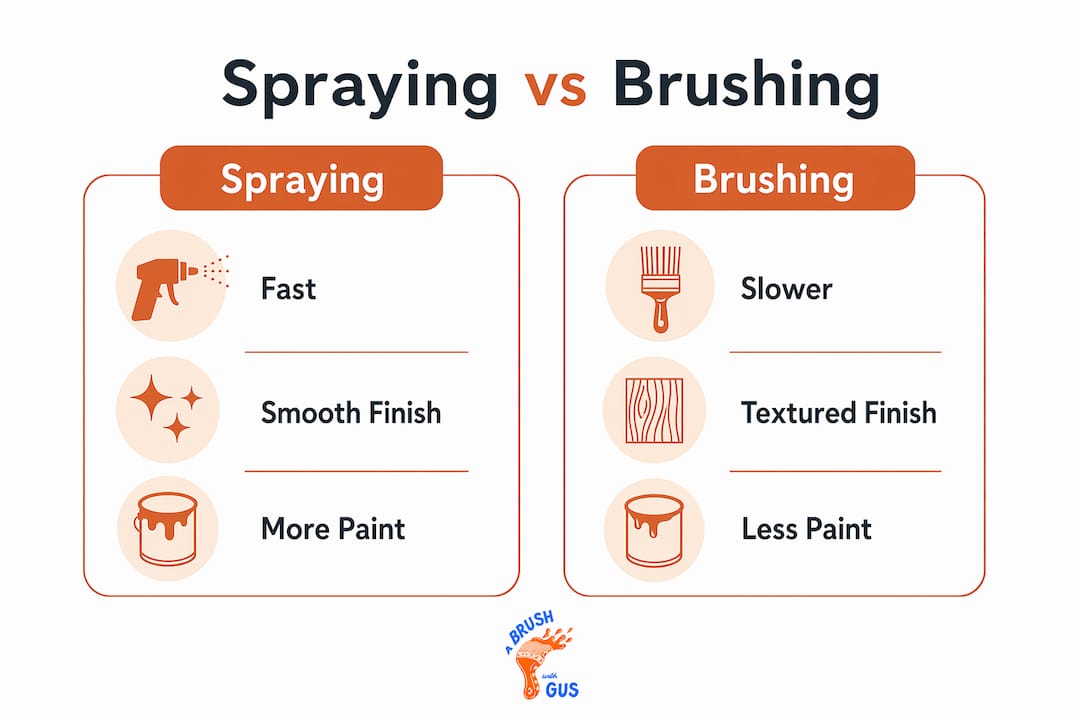
Spraying delivers a factory-like smooth finish with zero visible texture. A spray gun atomises the paint and lays it in thin, consistent coats that cure harder and faster than brushed layers. Brushing, by contrast, leaves a hand-painted appearance with subtle texture that shows under raking light. Neither finish is wrong. They serve different purposes and different surfaces.
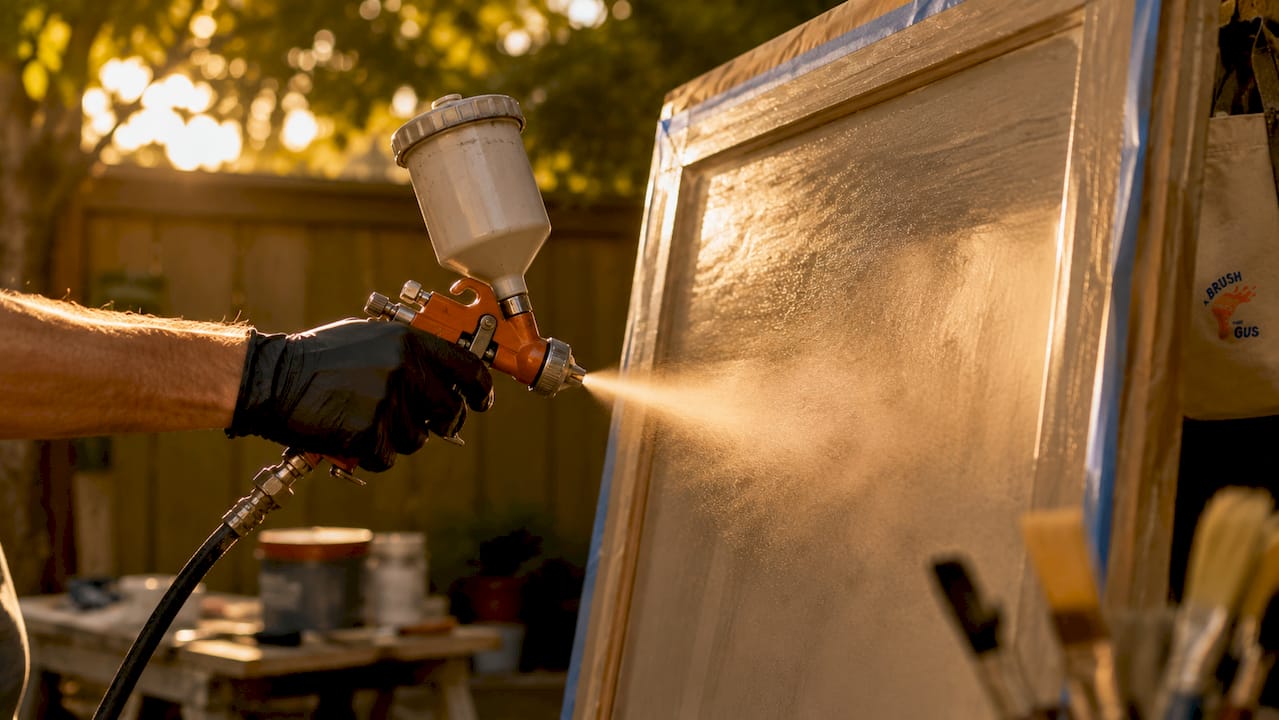
Speed is where the gap becomes obvious. Brushing four panels takes roughly 8 hours; spraying the same panels takes around 2 hours. That is a fourfold difference in labour time. For large projects, that gap compounds quickly.
The trade-off is preparation. Spraying requires masking every surface you do not want painted. Brushing requires almost none. That prep time shifts the balance on smaller jobs, which is why the best method depends entirely on the scale and type of work you are doing.
What are the benefits and drawbacks of spraying paint?
Spraying excels on large, open surfaces where speed and a flawless finish matter most. Kitchens, exterior cladding, UPVC windows, and garden gates are all strong candidates. The finish quality is the main draw.
The key advantages of spray painting
Speed. Spray painting cabinets reduces labour time from roughly 70 hours by hand to a few hours with a spray gun. That is not a marginal gain.
Finish quality. Paint sprayers deliver superior colour coverage compared to brushes. The coats are thinner, more even, and cure harder.
Drying time. Sprayed coats dry to touch within 30–60 minutes and can be recoated in 4–6 hours. Brushed coats need 6–8 hours between coats and 24 hours before handling.
Curing speed. Sprayed premium enamel cures fully in 14 days versus 21–30 days for brushed coats. That matters for surfaces that take daily wear.
The real challenges of spraying for DIYers
Spraying is not beginner-friendly. DIY spraying often fails because homeowners underestimate containment. Overspray travels up to 50 feet. Professional masking for a single elevation can take 1–2 hours. Miss a section and you will find paint on your windows, your car, or your neighbour’s fence.
Paint consumption is another cost. Spray applications use about 30% more paint than brushing due to overspray. On a large project, labour savings offset that waste. On a small one, they may not.
Professionals rarely spray interior walls in occupied homes. The masking required to protect furnishings and flooring makes it inefficient. Brushing and rolling remain the standard for interior walls in lived-in spaces.
Pro Tip: If you are spraying outdoors, check wind speed before you start. Even a light breeze redirects overspray onto surfaces you did not intend to paint. Calm mornings are the best time to spray.
What are the benefits and drawbacks of brushing paint?
Brushing is the default method for most homeowners, and with good reason. It requires no specialist equipment, no masking beyond basic edge protection, and almost no learning curve for basic work.
Where brushing genuinely wins
Precision. Brushing gives you direct control at edges, corners, and trim. Tight spaces around window frames, skirting boards, and architraves all suit a brush far better than a spray gun.
Pore filling. Brush painting fills wood pores more effectively than spraying. On bare timber, this produces better adhesion and a more durable base coat.
Low setup cost. Brushing requires only a brush, paint, and primer. There is no compressor to hire, no spray gun to clean, and no masking film to buy in bulk.
Cleanup. Washing a brush takes minutes. Cleaning a spray gun properly takes considerably longer and requires the right solvents for the paint type used.
The limitations you need to know
Brush marks are the main drawback. Even a skilled painter leaves some texture when brushing, and that texture shows under direct or raking light. On flat cabinet doors or smooth exterior panels, this is the difference between a professional result and a hand-painted one.
Application is also slower. For a full kitchen repaint or an exterior wall, brushing takes significantly more time than spraying. Fatigue becomes a real factor on large jobs. Brush strokes also require a consistent technique to avoid lap marks where wet paint meets a drying edge.
Pro Tip: Load your brush only one-third of the bristle length with paint and tap off the excess rather than wiping it on the tin rim. This prevents air bubbles and gives you a noticeably smoother finish.
How do spraying and brushing compare in finish, drying time, and paint use?
The practical differences between spray and brush finishes become clear when you put them side by side. This comparison covers the factors that most affect a homeowner’s decision.
Factor | Spraying | Brushing |
Finish texture | Glass-smooth, zero visible marks | Hand-painted, subtle texture visible under light |
Drying time (touch) | 30–60 minutes | 6–8 hours between coats |
Full cure time | 14 days (premium enamel) | 21–30 days (brushed coats) |
Paint consumption | Around 30% more due to overspray | Lower waste, more controlled application |
Labour speed | Approximately 4x faster on large areas | Slower, but faster on small detailed work |
Setup time | High (masking, equipment prep) | Minimal |
Best surface type | Large flat areas, cabinets, UPVC, exteriors | Trim, edges, small areas, bare wood |
The finish quality difference is the deciding factor for most homeowners. A spray finish is visibly smoother with zero texture, while brush finishes show subtle marks that some homeowners read as defects. On kitchen cabinets or UPVC frames, that distinction matters enormously. On a garden shed or a fence panel, it matters far less.
For a detailed breakdown of kitchen spraying costs, including how labour and material expenses compare between methods, the numbers shift depending on project scale.
When should homeowners choose spraying versus brushing?
The right method depends on four things: surface size, required finish quality, available time, and your skill level. Here is a practical framework for making that call.
Large flat surfaces. Spraying wins on any surface bigger than a door. Kitchen cabinet fronts, exterior render, UPVC window frames, and garden gates all benefit from the speed and smoothness of a spray gun.
Detailed or intricate work. Brushing wins on skirting boards, architraves, window glazing bars, and any surface where overspray would cause damage. The control a brush gives you is unmatched in tight spaces.
Tight budget with basic tools. Brushing costs less to start. If you do not own a spray gun and the job is small, buying or hiring equipment rarely makes financial sense.
High-quality finish on visible surfaces. If the surface is prominent and the finish will be scrutinised, spraying produces a result that brushing simply cannot match on smooth substrates.
Occupied interiors. Brushing and rolling are the professional standard for interior walls in lived-in homes. Masking an entire room for spraying is rarely worth the effort unless the space is empty.
Speed is the priority. If you need a large area finished quickly, spraying is the only realistic option. The fourfold speed advantage on large surfaces is not something brushing can close.
For homeowners weighing up professional painting techniques before starting a project, understanding this decision framework saves both time and money.
How do professionals combine spraying and brushing for the best results?
The debate of spraying versus brushing is, in professional practice, a false choice. Professionals use both methods where each is most effective. The goal is quality and efficiency, not loyalty to one tool.
A typical professional workflow on a kitchen repaint looks like this:
Spray the cabinet doors and drawer fronts off-site or in a controlled environment. This produces the glass-smooth finish that clients expect.
Brush the cabinet frames and internal edges where a spray gun cannot reach cleanly without extensive masking.
Brush all cut-in lines around ceilings, skirting boards, and window reveals before any rolling or spraying of adjacent surfaces.
Touch up with a brush after spraying to fill any pores, corners, or areas where the spray coat was thin.
This hybrid approach is why sprayers provide a superior finish but still require brush touch-ups to fill wood pores and tight spots effectively. Neither tool replaces the other. They work together.
For DIYers, understanding this workflow changes how you approach a project. You do not have to choose one method for the entire job. Spray the large panels, brush the edges, and you get the best of both. The paint spraying technique used by professionals follows exactly this logic.
Key takeaways
Spraying is faster and produces a smoother finish, but brushing offers greater control, lower setup costs, and better results on detailed or small-scale work.
Point | Details |
Finish quality | Spraying delivers a glass-smooth finish; brushing leaves subtle texture visible under light. |
Speed difference | Spraying is approximately four times faster than brushing on large surfaces. |
Paint consumption | Spraying uses around 30% more paint due to overspray; brushing wastes less. |
Best use cases | Spray large flat areas and cabinets; brush edges, trim, and intricate details. |
Professional approach | Skilled painters combine both methods to balance speed, quality, and precision. |
What I have learned from years of spraying and brushing
The biggest mistake I see homeowners make is treating this as an either/or decision. They either hire a spray gun for everything and spend two days masking, or they brush the entire kitchen and wonder why the finish looks hand-painted. Neither extreme serves you well.
My honest view is that spraying is underused by DIYers on exterior work and overused on interior walls. A freshly sprayed exterior, whether it is UPVC frames, render, or timber cladding, looks genuinely transformed. The finish is tight, the colour is even, and it lasts. Brushing the same surface takes three times as long and rarely achieves the same result.
Interior walls in occupied rooms are a different matter. I would not spray them unless the room was completely cleared and sealed. The masking time alone makes it impractical. Brush and roll those surfaces. Save the spray gun for the cabinets, the doors, and the exterior.
For beginners, my advice is simple. Start with brushing to understand how paint behaves. Learn how it flows, how it dries, and where it wants to pull away from edges. Once you understand that, picking up a spray gun makes far more sense. You will know what a good coat looks like and you will spot problems before they dry.
— Angus
Professional spraying and brushing services from Abrushwithgus
Knowing the difference between methods is one thing. Getting the result right is another.
Abrushwithgus is a family-run painting and decorating service covering the South West of the UK, run by brothers Gus and Rhys. The team handles both spraying and brushing across interior and exterior residential projects, from UPVC window frames and garden gates to full kitchen cabinet resprays. Every job uses the right method for the surface, not a one-size-fits-all approach. If you want a flawless finish without the prep headache, take a look at the professional spraying services available, or get in touch for a no-obligation quote.
FAQ
Is spraying or brushing better for kitchen cabinets?
Spraying produces a far smoother finish on kitchen cabinets and cures harder in less time. Brushing is better suited to filling wood pores on bare timber frames and touching up tight corners after spraying.
Does spraying use more paint than brushing?
Spraying uses around 30% more paint than brushing due to overspray. On large projects, the labour savings offset this cost, but on small jobs the extra paint consumption can outweigh the speed benefit.
Can a beginner use a spray gun at home?
A beginner can use a spray gun, but the learning curve is steep. Controlling overspray, maintaining consistent distance, and managing mil thickness all require practice. Starting with brushing builds the paint knowledge that makes spraying easier to learn.
Why do professionals use both spraying and brushing?
Professionals combine methods because each excels in different situations. Spraying covers large flat areas quickly with a smooth finish; brushing handles edges, trim, and tight spaces where a spray gun cannot reach cleanly.
How much faster is spraying than brushing?
Spraying is approximately four times faster than brushing on equivalent surfaces. Painting four panels by brush takes around 8 hours; the same panels by spray gun take around 2 hours.
Recommended
Comments