
What is premium paint? A homeowner's guide

TL;DR:
Premium paint features higher pigment concentrations, acrylic binders, solids content, and low VOC formulations for longer-lasting durability and richer colors. It is particularly valuable in high-traffic areas like kitchens and hallways that require washability and stain resistance, providing a longer lifespan than standard paints. Proper surface preparation, sheen selection, and applying two coats are essential for achieving a professional, durable finish.
Premium paint is defined as a higher-grade coating formulated with superior pigment concentration, advanced binder systems, and higher solids content to deliver richer colour, better coverage, and longer-lasting durability than standard alternatives. Brands like Sherwin-Williams and Benjamin Moore sit at the top of this category, with premium paint costing between £55 and £110 per gallon. That price gap is real, but so is the payoff. Premium paint typically lasts 10–15 years compared to just 3–5 years for economy grades. For homeowners planning a quality finish that holds up to daily life, understanding what separates premium from standard is the most useful place to start.
What is premium paint and what makes it different?
Premium paint is a coating that uses higher-quality raw materials throughout its formulation, not just in one area. The result is a product that covers better, adheres more firmly, and resists wear for far longer than budget alternatives.
The four features that define premium paint are:
Pigment concentration. Premium paints carry a higher load of titanium dioxide and colour pigments. That means richer colours and hiding power in fewer coats, which matters when you are covering a dark wall or a bold previous colour.
100% acrylic binders. Budget paints use vinyl-acrylic blends, which are cheaper but less durable. Premium paints use 100% acrylic binders that bond more firmly to surfaces and flex with temperature changes without cracking. That flexibility is what keeps a finish looking sharp through British winters and warm summers alike.
Higher solids content. More solids in the tin means a thicker dry film on your wall. That film is what protects the substrate beneath and resists scuffs, stains, and moisture.
Lower VOC formulations. Many premium products now carry low or zero VOC ratings. Sherwin-Williams, for example, recently launched Emerald Symmetry with over 22% plant-based carbon content and a zero-VOC formulation. That matters for indoor air quality, particularly in bedrooms and children’s rooms.
Pro Tip: When comparing tins on a shelf, check the solids content listed on the technical datasheet rather than relying on the label. A higher percentage of solids by volume is one of the clearest indicators of a genuinely premium product.
The binder system is arguably the most important of these features. Premium binder systems allow the dried film to expand and contract with temperature swings without cracking or peeling. Budget paints with vinyl-acrylic blends cannot match this, which is why you often see flaking on cheaper jobs after just a couple of winters.
Is premium paint worth it? Cost and value compared
The honest answer is: it depends on where you are painting. Premium paint is not always the right choice for every room, but in the right places it pays for itself clearly.
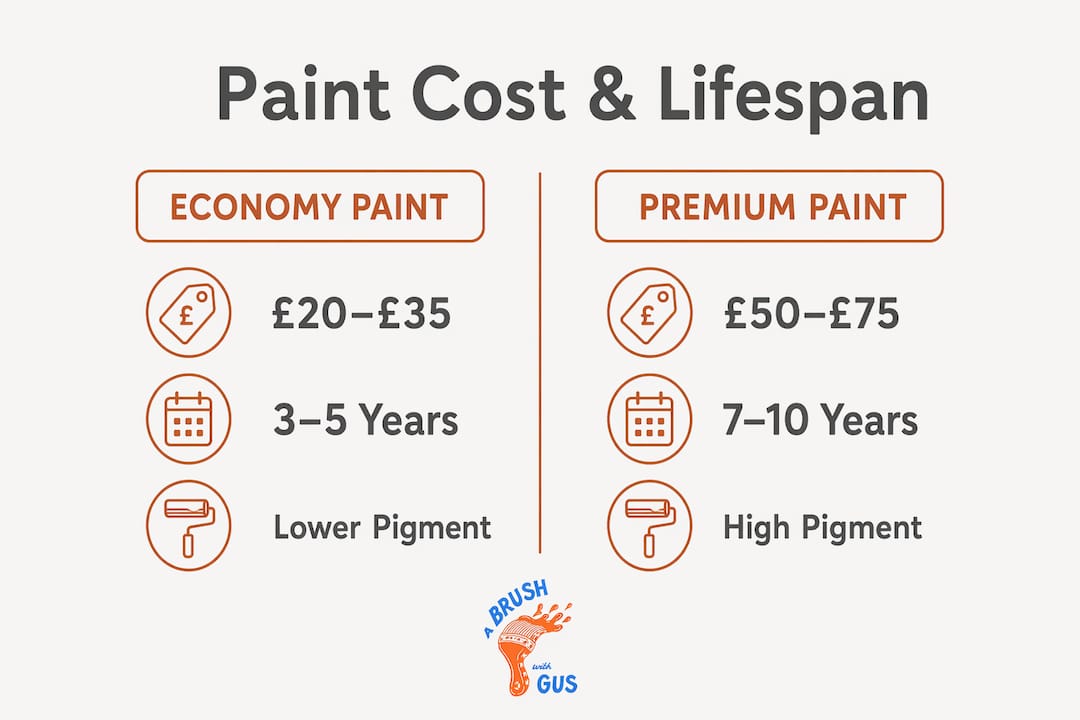
Here is how the grades stack up on price and longevity:
Paint grade | Approximate cost per gallon | Expected lifespan |
Economy | £20–£35 | 3–5 years |
Mid-grade | £35–£55 | 5–8 years |
Premium | £55–£80 | 10–15 years |
Premium+ | Up to £110 | 15+ years |
Source: Paint Cost Per Gallon 2026
The lifespan difference is where the maths shifts in premium paint’s favour. Economy paint lasting 3–5 years means you repaint two or three times in the same period a premium coat holds. Each repaint carries not just material costs but labour costs too. An extra £150 per 400 sq ft room spent on premium paint is minor compared to the cost of hiring a decorator twice over in a decade.
Premium paint delivers the clearest value in high-traffic areas like kitchens, hallways, and children’s rooms. These spaces take daily punishment from hands, bags, shoes, and spills. A premium coat with strong stain resistance and washability handles that punishment without showing it. A spare bedroom or a ceiling in a low-use room, on the other hand, is a reasonable place to save money with a mid-grade product.
The calculation also changes when you factor in paint quality’s long-term impact on maintenance. A surface that wipes clean without marking means fewer touch-ups and a finish that looks fresh for years rather than months.
How to choose and use premium paint effectively
Choosing the right premium paint is not just about picking the most expensive tin. Sheen, surface preparation, and the number of coats you apply all determine whether you get the finish you paid for.
Choosing the right sheen
Sheen choice can be as important as paint quality in balancing durability, washability, and how a room looks. A flat or matt finish hides surface imperfections well but was historically harder to clean. Modern premium matt paints have changed that. High-quality matt formulations now achieve Class 1 or Class 2 scrub resistance ratings under EN 13300 and ISO 11998, making them washable enough for most living spaces without the clinical shine of a semigloss. For kitchens and bathrooms, a satin or eggshell finish still offers the most practical balance of sheen and wipe-down ease.
Getting the surface right before you open the tin
Fill and sand. Any cracks, dents, or rough patches will show through even the best premium paint. Fill with a fine surface filler, allow it to dry fully, and sand smooth before you start.
Clean the surface. Grease, dust, and old residue prevent adhesion. Wipe walls down with a sugar soap solution and allow them to dry completely.
Prime where needed. New plaster, bare wood, and stain-prone surfaces all benefit from a dedicated primer. Surface preparation is often more critical than paint brand in determining how long a finish lasts.
Apply two coats. Despite marketing claims about one-coat coverage, two coats of premium paint are needed to achieve the full dry film thickness required for burnish resistance and long-term durability. Allow each coat to dry fully before applying the next.
Match the paint to the room. Kitchens and hallways need a washable finish. Bedrooms and living rooms suit a premium matt. Children’s rooms benefit from a scrubbable, low-VOC formula.
Pro Tip: Always buy a test pot and apply it to a section of wall in the actual room before committing to a full tin. Colour reads differently under artificial light, natural light, and at different times of day. Premium paints carry richer pigments, so the difference between a shade looking warm or cold can be significant.
For guidance on matching finish types to different rooms, the types of house paint guide from Abrushwithgus covers the full range of finishes and when to use each one.
Which premium paint brands are worth buying?
The premium paint market has a handful of brands that consistently outperform the rest. Knowing what each does well helps you choose the right product for your project rather than just the most recognised name.
Sherwin-Williams. Recognised as a strong overall value brand for professional use. Sherwin-Williams products offer consistent coverage and durability across a wide range of surfaces. Their Emerald range sits at the top of their premium tier and is widely used by professional decorators for interior and exterior work.
Benjamin Moore. The standout choice for colour accuracy and self-levelling. Benjamin Moore’s Aura range is particularly well regarded for its ability to lay down smoothly without brush marks, which makes it a favourite for feature walls and woodwork where finish quality is visible up close.
Behr. A more accessible option for DIY projects. Behr sits below Sherwin-Williams and Benjamin Moore on performance but above economy grades, making it a practical choice for homeowners who want better-than-budget results without the professional-grade price.
When comparing brands, look beyond the name and check four things: colour accuracy (does the mixed colour match the chip?), coverage per litre, self-levelling performance (does it leave brush marks?), and availability of the specific sheen you need. For exterior projects in the UK climate, also check the product’s resistance to mould and damp, as these are the conditions that shorten paint life fastest. The exterior paint options guide from Abrushwithgus covers which products hold up best in British conditions.
If you are concerned about indoor air quality, low VOC paint options are now available across all major premium brands and deliver professional-grade performance without the chemical off-gassing associated with older formulations.
Key takeaways
Premium paint delivers the best long-term value in high-traffic rooms, where its superior binder system, higher pigment load, and washability outperform economy grades over a 10–15 year lifespan.
Point | Details |
Premium paint definition | A higher-grade coating with 100% acrylic binders, higher pigment load, and greater solids content than standard paint. |
Cost vs lifespan | Premium paint costs £55–£110 per gallon but lasts 10–15 years, versus 3–5 years for economy grades. |
Best rooms for premium paint | Kitchens, hallways, and children’s rooms benefit most due to heavy daily wear and the need for washability. |
Two coats are non-negotiable | Applying two coats achieves the full dry film thickness needed for burnish resistance and lasting durability. |
Surface prep matters most | Filling, sanding, cleaning, and priming before painting determines finish quality more than paint brand alone. |
Why I always match the paint grade to the room
People often ask me whether they should use premium paint throughout the whole house. My honest answer is no, not always. Spending top-tier money on a ceiling in a spare room that nobody touches is not good value. Spending it on a hallway that gets bashed by bags, coats, and muddy hands every single day is one of the smartest decisions you can make.
What I have seen time and again is that homeowners focus on the tin and forget about the wall. A premium paint applied over a poorly prepared surface will fail faster than a mid-grade paint applied over a properly primed, sanded, and cleaned wall. The prep is where the real work happens, and it is where most DIY jobs fall short.
Sheen is the other thing people underestimate. I have watched homeowners choose a flat matt for a kitchen because they liked the look, then spend the next two years frustrated that it marks every time someone brushes past it. Modern premium matts with Class 1 scrub resistance have closed that gap significantly, but you still need to check the technical datasheet rather than trust the label.
My advice is straightforward. Invest in premium paint for the rooms that earn it. Prepare every surface properly regardless of what you are painting. And choose your sheen based on how the room is actually used, not just how it looks in the tin.
— Angus
Get a professional finish with Abrushwithgus
Choosing the right premium paint is only half the job. The other half is applying it correctly, and that is where professional preparation and technique make the difference between a finish that lasts a decade and one that starts showing wear within two years. Abrushwithgus offers interior and exterior painting services across the South West, including surface preparation, priming, and application using professional-grade techniques. Whether you are refreshing a hallway, transforming a kitchen, or repainting your home’s exterior, Gus and Rhys bring the experience to get the most from every tin of premium paint. Get in touch for a no-obligation quote.
FAQ
What is the difference between premium and standard paint?
Premium paint uses 100% acrylic binders, higher pigment concentration, and greater solids content compared to standard or economy grades. These differences produce better coverage, stronger adhesion, and a finish that lasts 10–15 years rather than 3–5.
When should you use premium paint?
Premium paint delivers the best return in high-traffic areas like kitchens, hallways, and children’s rooms, where washability and durability are tested daily. Low-use rooms like spare bedrooms are reasonable candidates for mid-grade alternatives.
Does premium paint really cover in one coat?
Most premium paints are marketed with one-coat coverage claims, but technical datasheets recommend two coats to achieve the full dry film thickness needed for burnish resistance and long-term durability.
Is premium paint low VOC?
Many premium paints now carry low or zero VOC formulations. Sherwin-Williams Emerald Symmetry, for example, combines professional-grade performance with over 22% plant-based carbon content and a zero-VOC formula.
How do I choose between premium paint brands?
Compare colour accuracy, coverage per litre, self-levelling performance, and sheen availability. Sherwin-Williams suits professional-grade durability, Benjamin Moore excels in colour accuracy and smooth application, and Behr offers a solid mid-to-premium option for DIY projects.
Recommended
Comments