
What is two-pack paint and why does it matter?
- WM Creative Designs Limited
- 11 minutes ago
- 6 min read
TL;DR:
Two-pack paint cures through a chemical reaction, creating a harder and more durable coating than single-pack paint. It requires precise mixing, professional handling, and strict safety precautions due to health risks like occupational asthma. Overall, it offers long-term benefits for high-traffic and demanding surfaces despite higher initial costs.
What is two-pack paint?
Two-pack paint, also called two-component or 2K paint, is a high-performance coating system supplied in two separate containers: a base resin and a hardener. You mix them together immediately before use, which triggers a chemical reaction called cross-linking. The result is not just dried paint. It is a hard, dense shell that bonds to the surface at a molecular level.
This is fundamentally different from how standard paints work. Single-pack paints cure by air drying or solvent evaporation, leaving a film on top of the surface. Two-pack paint actually cures through chemistry, producing a coating that is harder, tougher, and far more resistant to damage.
Key facts about two-component paint:
Supplied as two separate components: base resin (Part A) and hardener (Part B)
Mixing triggers an irreversible chemical cross-linking reaction
Cures to a harder, denser film than any single-pack equivalent
Resists abrasion, chemicals, and weathering far better than standard paint
Requires mixing immediately before application, not in advance
Table of Contents
How does two-pack paint differ from single-pack paint?
The core difference is the curing mechanism, and it changes everything downstream. Single-pack paints cure passively: the solvent or water evaporates, leaving a film. Two-pack paints cure actively through a chemical reaction that cannot be reversed or paused once started.
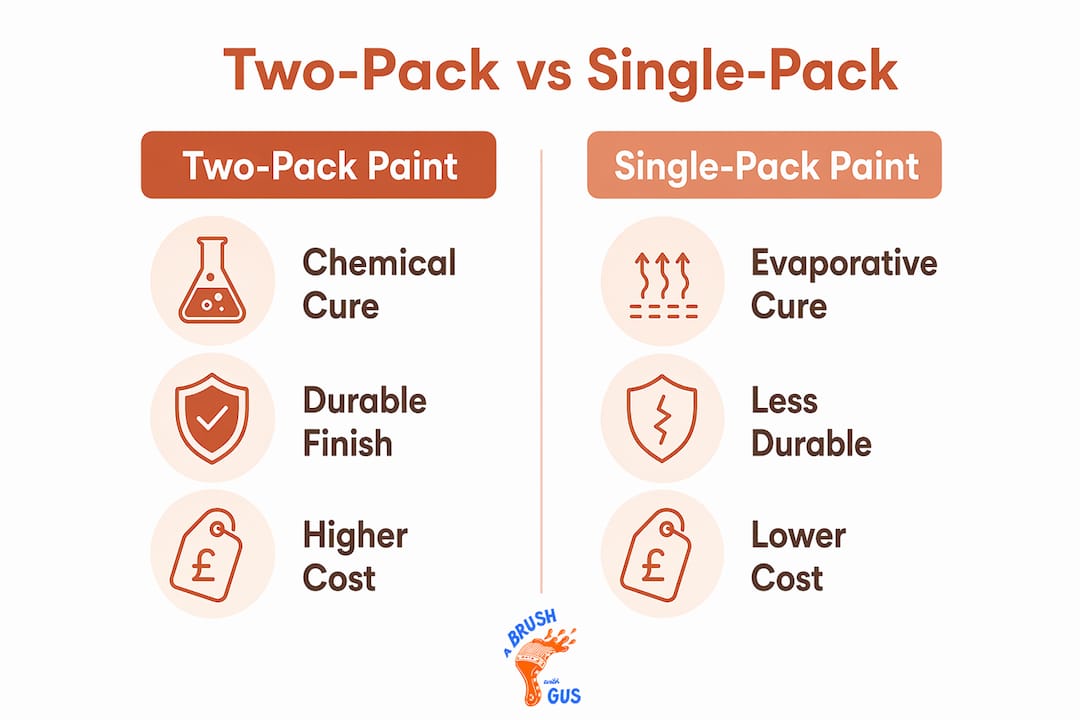
Single-pack paints are easier to use, cheaper to buy, and perfectly adequate for most interior walls and low-traffic surfaces. Two-pack systems are chosen where long-term protection genuinely matters, such as factory floors, exterior metalwork, or kitchen cabinetry. The trade-off is real: two-pack paint requires more skill, more safety precautions, and stricter application discipline.
Key differences at a glance:
Curing method: Single-pack dries by evaporation; two-pack cures by chemical reaction
Durability: Two-pack produces a harder, more scratch-resistant film
Chemical resistance: Two-pack withstands solvents, oils, and cleaning agents far better
Application: Single-pack suits DIY; two-pack requires professional handling
Cost: Two-pack costs more upfront but lasts considerably longer
Pro Tip: If you are choosing between paint types for a high-traffic surface, ask yourself how long you want the finish to last before it needs redoing. That question usually settles the debate.
Benefits and common applications for homeowners and businesses
Two-pack paint outperforms single-pack systems on hardness, adhesion, and gloss retention, particularly in demanding conditions. For homeowners, that means exterior doors, garage floors, and kitchen cabinets that stay looking sharp for years rather than needing a refresh every season. For commercial clients, it means surfaces that withstand daily punishment without flaking or fading.
The long-term cost argument is straightforward. Two-pack coatings reduce the frequency of repainting in commercial and harsh environments, which offsets the higher initial spend over time. A well-applied two-pack finish on a shopfront or industrial unit can outlast several rounds of single-pack repainting.
Common applications and benefits:
Exterior doors, window frames, and UPVC surfaces
Kitchen and bathroom cabinetry, where moisture and cleaning products are constant
Garage and workshop floors subject to heavy foot traffic or vehicle use
Commercial premises: retail counters, corridors, and high-contact surfaces
Metal structures, railings, and industrial equipment
Pro Tip: Mix only what you need for each coat. Once mixed, the clock is running and you cannot save leftover material for later.
Why professional application of two-pack paint matters
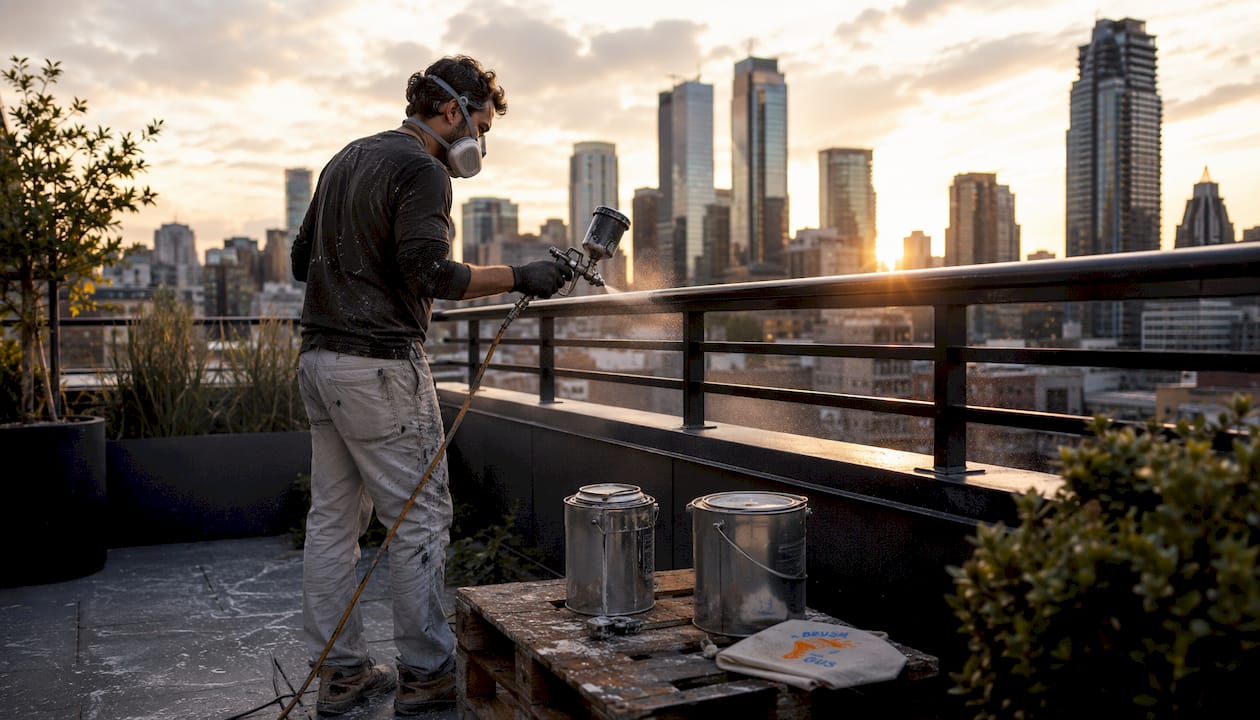
Most two-pack formulations contain isocyanates, which are a leading cause of occupational asthma and require full respiratory protection, appropriate PPE, and well-ventilated or controlled environments. This is not a paint you roll on in a poorly ventilated kitchen without consequences. Professional decorators understand these risks and work within Health and Safety Executive guidelines as standard.
Beyond safety, the quality of the finish depends entirely on correct technique. Ratios must be exact, induction times must be respected, and application conditions must be right. Abrushwithgus brings that expertise to every job, whether it is a residential kitchen cabinet refresh or a commercial exterior in the South West.
Factors that require professional handling:
Correct mixing ratios measured precisely by volume or weight
Induction time observed after mixing, before application begins
Appropriate PPE: respirator, gloves, and eye protection as a minimum
Adequate ventilation or controlled spray environment
Surface preparation to manufacturer specification for proper adhesion
For guidance on safe painting practices, Abrushwithgus covers the full picture.
Mixing process and correct ratios
Getting the ratio right is non-negotiable. Two-component products typically require the base and hardener to be combined in a specific proportion, often 4:1 or 5:1 by volume, depending on the manufacturer. Deviating from this ratio produces a coating that either fails to cure fully or cures unevenly, leaving soft spots or poor adhesion.
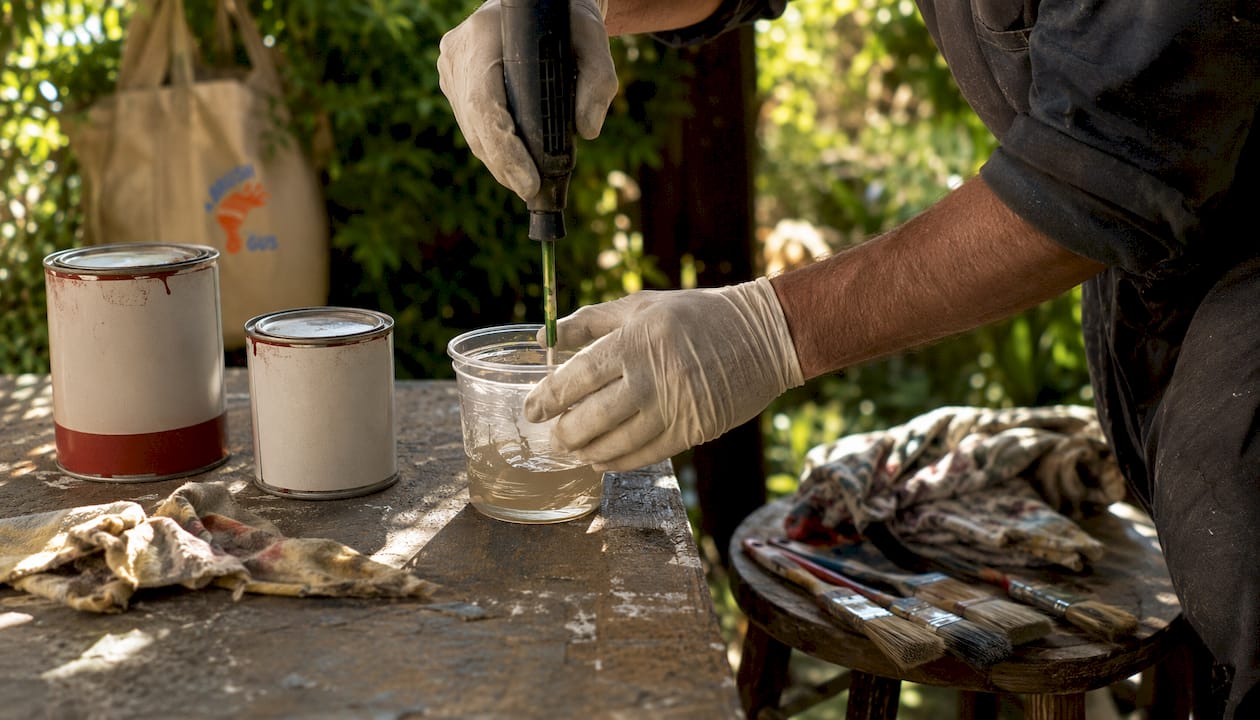
After mixing, most systems require an induction period, a short wait of several minutes before application begins. This allows the initial chemical reaction to stabilise, giving you a more consistent working viscosity and better final hardness. Skipping it is one of the most common mistakes on site.
Curing times and how they affect application
Two-pack paint cures more slowly than it dries. The surface may feel touch-dry within an hour or two, but full chemical cure, where the coating reaches its maximum hardness and chemical resistance, can take 24 hours or longer depending on temperature and humidity. Applying a second coat too soon traps solvents and compromises the final film.
Temperature matters more than most people expect. Cold conditions slow the cross-linking reaction significantly, extending both pot life and cure time. Warm conditions accelerate it, which can shorten your working window to as little as 20 minutes in some formulations.
Storage and shelf life after mixing
Once mixed, two-pack paint cannot be stored. The chemical reaction begins immediately and progresses whether you use the paint or not. Pot life varies from short to several hours depending on conditions, but adding solvent to extend it does not work. It only dilutes the coating and destroys the properties you paid for.
Unmixed components, stored correctly in sealed containers away from heat and direct sunlight, have a much longer shelf life. Always check the manufacturer’s data sheet for specific storage temperatures and expiry dates.
Cost comparison: two-pack vs single-pack paint
Two-pack paint costs more to buy and more to apply. The materials are pricier, the application takes longer, and professional labour is required. For a straightforward interior wall, that cost is rarely justified. For a kitchen cabinet repaint or an exterior surface that takes a battering from weather and cleaning, the maths shifts considerably.
Single-pack paints are cheaper upfront and easier to apply, but they may need repainting far sooner. A two-pack finish that lasts a decade on a commercial surface versus a single-pack finish needing attention every few years represents a genuine saving over time, particularly when you factor in labour costs for each repaint.
Common mistakes when using two-pack paint
The most frequent error is an incorrect mixing ratio, either guessed rather than measured, or mixed in the wrong order. The second is ignoring the induction time and applying immediately after mixing. Both produce a finish that looks acceptable initially but fails prematurely.
Other common problems include applying in cold or damp conditions, which prevents proper curing; applying coats too thickly, which traps solvents and causes wrinkling; and attempting to thin or revive mixed paint that has started to harden. Once the pot life has passed, the material is waste. Protecting painted surfaces long-term also requires the right aftercare, and surface protection advice is worth reading before any two-pack project.
Is two-pack paint the right choice for your project?
Two-pack paint earns its place when durability genuinely matters: high-traffic surfaces, exterior woodwork and metalwork, commercial premises, and anywhere that standard paint simply will not last. For general interior decorating, single-pack paint is usually the better call.
If your project falls into the demanding category, professional application is not optional. The safety requirements alone put it beyond straightforward DIY, and the quality of the finish depends on technique that takes experience to develop. Abrushwithgus handles specialist spraying services and domestic painting projects across the South West, bringing the right equipment, the right knowledge, and a finish that lasts.

Get in touch with Abrushwithgus for a no-obligation quote on your next painting project.
Key takeaways
Two-pack paint is a two-component system that cures chemically to produce a harder, longer-lasting finish than any single-pack alternative, making professional application the only reliable route to the best result.
Point | Details |
Chemical curing sets it apart | Two-pack paint cross-links chemically on mixing, producing a far harder film than air-dried single-pack paint. |
Pot life is a hard limit | Mixed paint has a usable window of 20 minutes to 6 hours; it cannot be stored or revived once it starts to harden. |
Ratios must be exact | Mixing at the wrong ratio (typically 4:1 or 5:1 by volume) causes uneven curing, soft spots, or adhesion failure. |
Safety requires professional handling | Isocyanates in most two-pack formulations are a leading cause of occupational asthma and demand full PPE and ventilation. |
Long-term cost is lower | Despite higher upfront cost, two-pack finishes reduce repainting frequency in demanding environments, saving money over time. |
Recommended
Comments