
Why repaint kitchen cabinets: save money, look great
TL;DR:
Repainting kitchen cabinets is a cost-effective way to refresh or transform a kitchen without structural replacement. Proper surface preparation and professional spray finishing ensure a durable, long-lasting result, saving time and money. Repainting can modernize space, boost home value, and support sustainable renovation efforts.
Repainting kitchen cabinets is defined as refinishing existing cabinet surfaces with specialist primers and topcoats to restore or transform their appearance without structural replacement. For most homeowners, it is the single most cost-effective kitchen upgrade available. Professional cabinet repainting costs between £300 and £1,000 in most cases, compared to thousands for new cabinetry. That gap alone explains why so many South West homeowners are choosing to repaint rather than replace. When the cabinet boxes are structurally sound, repainting delivers a fresh, durable finish in a fraction of the time and cost. Abrushwithgus has completed dozens of these transformations across Cornwall and the wider region, and the results consistently surprise clients who assumed replacement was their only option.
Why repaint kitchen cabinets instead of replacing them?
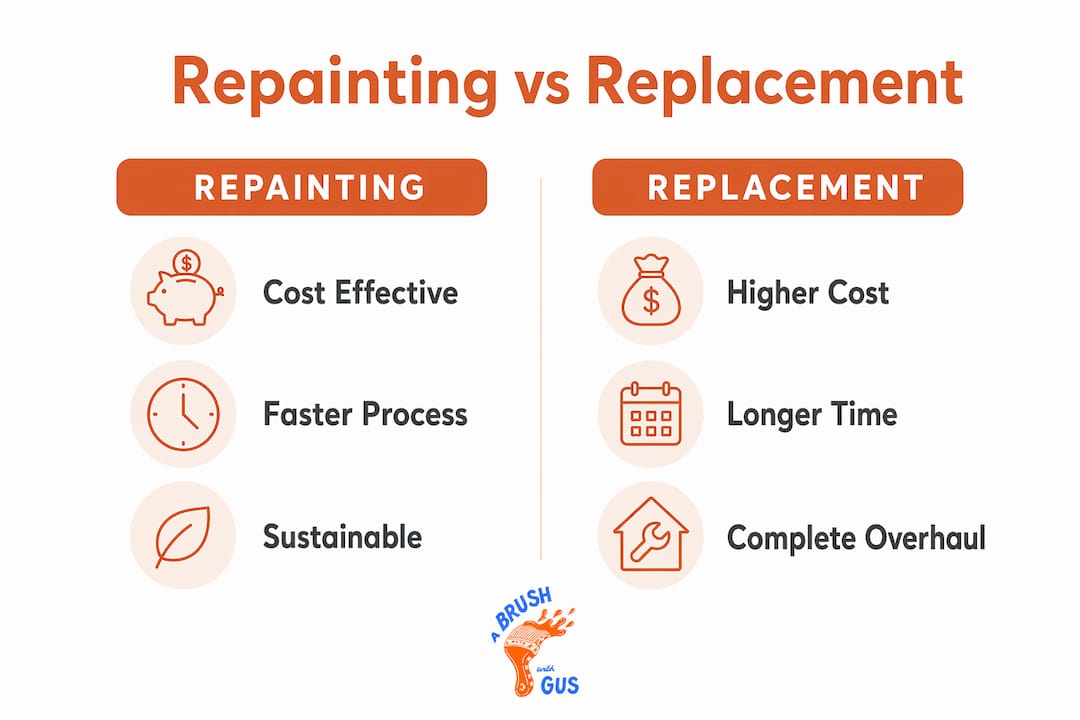
The financial case for repainting is straightforward. Professional repainting costs between £300 and £1,000 for a typical kitchen, while a full cabinet replacement routinely runs into several thousand pounds once you factor in units, fitting, and disposal. That is a significant saving for a result that can look just as good, sometimes better, than brand new cabinetry.
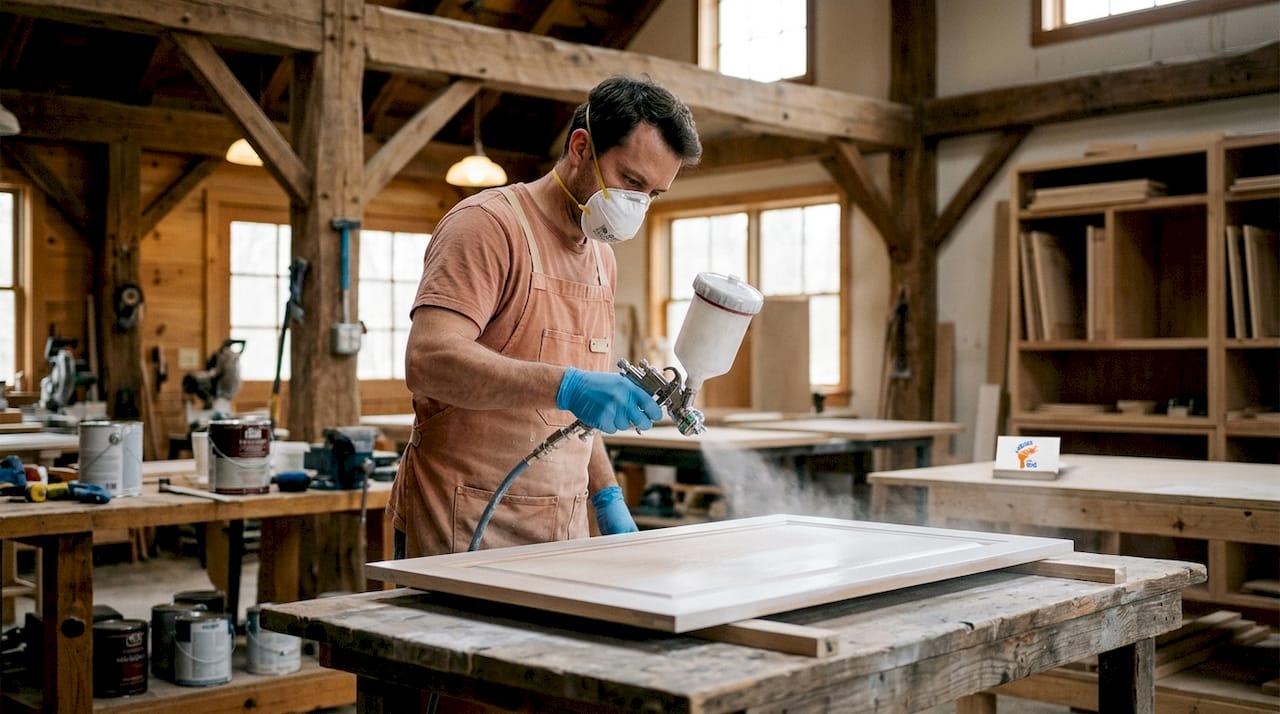
Time is the other major factor. Professional repainting finishes within several working days, with doors removed, spray finished off-site or in a controlled area, and rehung with minimal disruption. Full replacement involves demolition, skip hire, delivery delays, and a kitchen that is out of action for weeks. Most families cannot afford that level of disruption.
Here is a direct comparison to make the decision clearer:
Factor | Repainting | Full Replacement |
Typical cost | £300–£1,000 | £3,000–£10,000+ |
Project duration | 2–5 working days | 2–6 weeks |
Kitchen downtime | Partial use possible | Full kitchen out of use |
Waste generated | Minimal | Significant demolition waste |
Structural changes | None required | Often involves plumbing/electrics |
The smarter upgrade for sound cabinets is almost always repainting, not replacement. Homeowners frequently replace cabinets that have perfectly good boxes and functional layouts, simply because the colour or finish has dated. That is an expensive mistake when a repaint would achieve the same visual result.
Pro Tip: Before booking anything, open every cabinet door and check the hinges, drawer runners, and box corners. If the structure is solid, repainting is almost certainly the right call.
What preparation does a long-lasting cabinet repaint require?
Surface preparation is the single most important factor in cabinet repainting. Surface science governs longevity far more than colour choice or paint brand. A beautiful topcoat applied over a poorly prepared surface will peel within months. Get the prep right, and a repaint will last a decade or more.
A professional preparation process follows these steps:
Remove all doors, drawers, and hardware. Label each door and hinge location with painter’s tape and a number. Labelling every door prevents misaligned reinstallation and saves hours of frustrating adjustment later.
Degrease thoroughly. Kitchen surfaces accumulate cooking grease that standard cleaning does not remove. Use a dedicated degreaser on all surfaces, paying close attention to areas around hinge cups and handles where residue builds up.
Scuff sand all surfaces. Light sanding with 180–220 grit paper creates a mechanical “tooth” for the primer to grip. Without this step, even the best primer will not bond correctly.
Apply a bonding primer. Products like Sherwin-Williams Extreme Bond Primer or a shellac-based primer seal the surface and prevent tannin bleed from wood. This layer is non-negotiable on previously painted or stained cabinets.
Apply a durable enamel topcoat. The best paint for cabinets is a hard-wearing enamel with good levelling properties, meaning it flows out to hide brush or roller marks. Sherwin-Williams Emerald Urethane Trim Enamel is widely regarded as one of the best options for this reason.
Allow full cure time before reinstallation. Paint may feel dry to the touch within hours, but full hardness takes 7–14 days. Rehinging doors too early causes scuffs and marks.
Pro Tip: Spray finishing in a controlled environment produces a factory-smooth result that brushing simply cannot match. If you want a finish that looks like new cabinetry, spraying is the method to request from your painter.
What mistakes do homeowners make when repainting cabinets?
The most common reason a cabinet repaint fails is skipping preparation steps. Skipping deep degreasing or insufficient sanding causes peeling within 12–24 months, particularly in high-use areas around handles and near the hob. This is the mistake that gives DIY repaints a bad reputation.
The other frequent errors are:
Painting over damaged boxes. Particleboard with water damage or swelling is not suitable for repainting. Paint traps moisture against damaged material, accelerating deterioration. Fix structural problems before any paint goes on.
Rushing the curing process. Hanging doors before the enamel has cured fully causes the paint to stick to itself and tear when opened. This is irreversible without sanding back and recoating.
Using the wrong primer. Standard wall primer does not bond well to the smooth, often glossy surfaces of kitchen cabinets. A dedicated bonding or shellac primer is required.
Skipping the labelling step. Without numbered labels on doors and hinges, reinstallation becomes guesswork. Doors end up misaligned, and the whole job looks unprofessional regardless of how good the finish is.
Brushing instead of spraying. Brush marks in a topcoat are nearly impossible to sand out without cutting through to the primer. Professional spray finishing techniques eliminate this problem entirely.
The difference between a repaint that lasts two years and one that lasts ten years is almost entirely down to preparation and method. Colour choice is secondary.
How does a kitchen cabinet makeover improve design and home value?
A cabinet makeover does more than refresh the look of a kitchen. It repositions the room in the eyes of potential buyers and makes the space more enjoyable to use every day. Buyers favour updated colours and brighter spaces, and a freshly painted kitchen signals that a home has been well maintained.
The design benefits are substantial:
Colour transforms perceived space. Soft whites and light greys make a kitchen feel larger and more open. Deep greens and moody blues add character and depth without making a room feel smaller when used on lower cabinets only.
Contemporary colours replace dated finishes. Honey oak and dark mahogany stains that dominated kitchens in the 1990s and 2000s can be transformed with a single coat of a modern neutral. The design trends favouring painted cabinets in light or bold tones are well established among today’s buyers.
Hardware upgrades compound the effect. Replacing brass or chrome handles with brushed nickel or matte black hardware at the same time as repainting creates a fully updated look for a fraction of the cost of new units.
Repainting supports sustainable renovation. Keeping existing cabinet boxes out of landfill is a genuine environmental benefit. The environmental case for renovation over replacement is strong, particularly when the underlying structure is perfectly serviceable.
No risk of over-improving. Full kitchen replacement in a mid-range property can cost more than the value it adds at resale. Repainting delivers a modern aesthetic without that financial risk.
The role of painting in home value is consistently underestimated. A well-executed cabinet repaint in a current colour can make a kitchen feel five years newer without a single structural change.
Key takeaways
Repainting kitchen cabinets is the most cost-effective way to modernise a kitchen, provided the cabinet structure is sound and preparation is done correctly.
Point | Details |
Cost advantage is significant | Professional repainting costs £300–£1,000 versus thousands for full cabinet replacement. |
Preparation determines longevity | Degreasing, sanding, and bonding primer are non-negotiable for a finish that lasts. |
Labelling prevents reinstallation errors | Number every door and hinge before removal to avoid misalignment and wasted time. |
Colour choice modernises and adds value | Soft whites, deep greens, and moody blues are the finishes buyers respond to most positively. |
Spray finishing outperforms brushwork | A controlled spray environment produces a smooth, factory-quality result that brushing cannot replicate. |
Why i think most homeowners underestimate this job
I have seen both sides of this decision more times than I can count. Clients come to us convinced they need a new kitchen, and after a proper conversation about what they actually want, it becomes clear that a repaint would give them 90% of the result for 20% of the cost. That is not a sales pitch. It is just an honest assessment of what the job involves.
What surprises people most is how much preparation matters. The paint itself is almost the last thing to think about. I have seen expensive topcoats fail within a year because the surface was not degreased properly, and I have seen budget paint last a decade because the prep was done right. Surface science really does govern everything, and most DIY guides bury that fact under colour advice and product recommendations.
The other thing I would say is this: be realistic about your cabinet condition. If the boxes are swelling, the drawer runners are broken, or there is water damage behind the sink unit, a repaint will not fix those problems. It will hide them temporarily and make them worse. Check the structure first, fix what needs fixing, and then repaint. Done in that order, a cabinet makeover is one of the best-value renovations you can do to a home.
If you are weighing up the options, the comparison of respraying versus replacement is worth reading before you commit to anything.
— Angus
Get a professional cabinet finish from Abrushwithgus
Abrushwithgus provides professional cabinet repainting across Cornwall and the South West, using spray finishing techniques that deliver a smooth, durable result you cannot achieve with a brush and roller.

Every project starts with a thorough assessment of your cabinet condition, followed by full preparation including degreasing, sanding, and bonding primer before a single drop of topcoat is applied. The result is a finish that looks factory-made and lasts. If you want your kitchen transformed without the cost and disruption of replacement, explore the domestic painting services Abrushwithgus offers, or take a look at the dedicated cabinet spraying service for a closer look at the process and finish quality.
FAQ
How much does it cost to repaint kitchen cabinets professionally?
Professional cabinet repainting typically costs between £300 and £1,000 depending on kitchen size and condition. This is significantly less than the cost of full cabinet replacement.
How long does a professional cabinet repaint take?
Most professional repaints complete within several working days, with partial kitchen use possible during the process. Full replacement takes two to six weeks and leaves the kitchen entirely out of use.
What is the best paint for kitchen cabinets?
A hard-wearing enamel with strong levelling properties is the best choice for kitchen cabinets. Sherwin-Williams Emerald Urethane Trim Enamel is widely used by professionals for its durability and smooth finish.
Can all kitchen cabinets be repainted?
Cabinets with solid, structurally sound boxes are excellent candidates for repainting. Particleboard with water damage or swelling should be repaired or replaced before any paint is applied, as painting over damage traps moisture and accelerates deterioration.
Does repainting kitchen cabinets add value to a home?
Yes. Updated cabinet colours in contemporary tones make kitchens more appealing to buyers and signal a well-maintained home. Repainting avoids the risk of over-improving, which can occur with full kitchen replacement in mid-range properties.
Recommended
Comments