
Cost factors in kitchen spraying: a homeowner's guide
TL;DR:
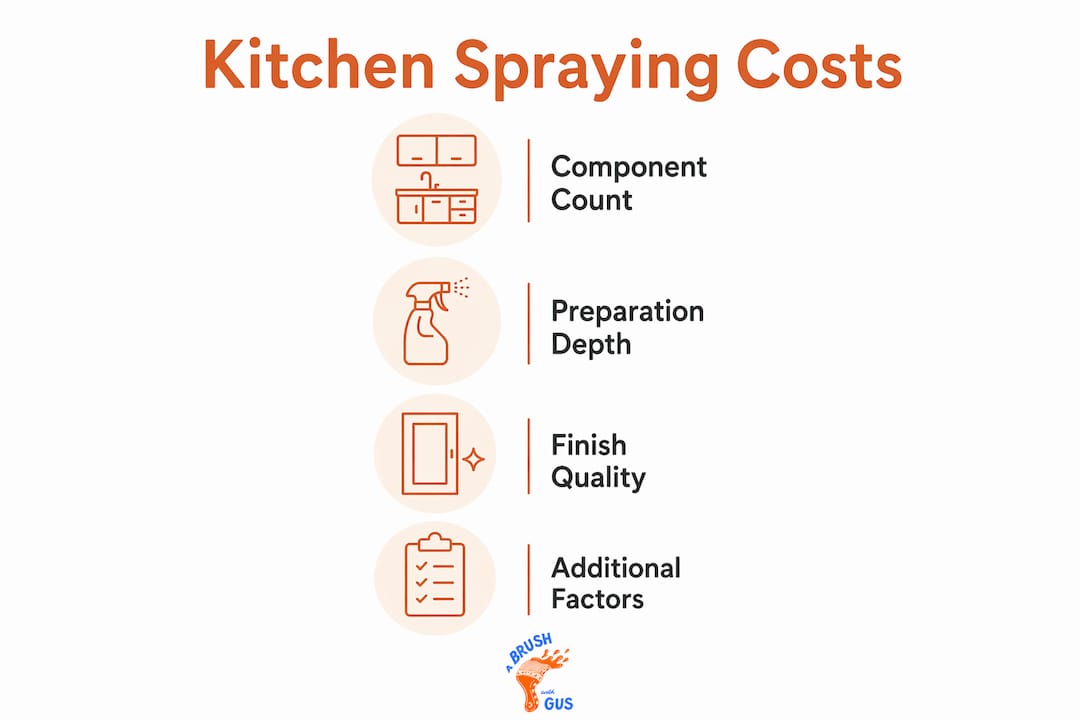
Kitchen spraying costs depend mainly on component count, preparation depth, and finish quality, not kitchen size.
Thorough surface prep and detailed component-specific quotes are essential for durable, high-quality results.
Kitchen spraying, known in the trade as cabinet respraying or kitchen cabinet spray painting, is priced primarily on the number of components being treated, the preparation required, and the finish standard specified. Most homeowners assume the cost tracks kitchen size or litres of paint used. It does not. Understanding the real cost factors in kitchen spraying means looking at labour intensity, material quality, and the condition of your existing cabinetry before a single coat is applied.
What are the main cost factors in kitchen spraying?
The three primary drivers of kitchen spraying prices are component count, preparation depth, and finish specification. Each one compounds the others. A kitchen with forty doors and drawers in a shaker style, painted dark grey and requiring a high-gloss finish, will cost significantly more than a twenty-door flat-fronted kitchen being refreshed in a similar colour. The gap is not arbitrary. It reflects real hours of skilled labour and specialist materials.
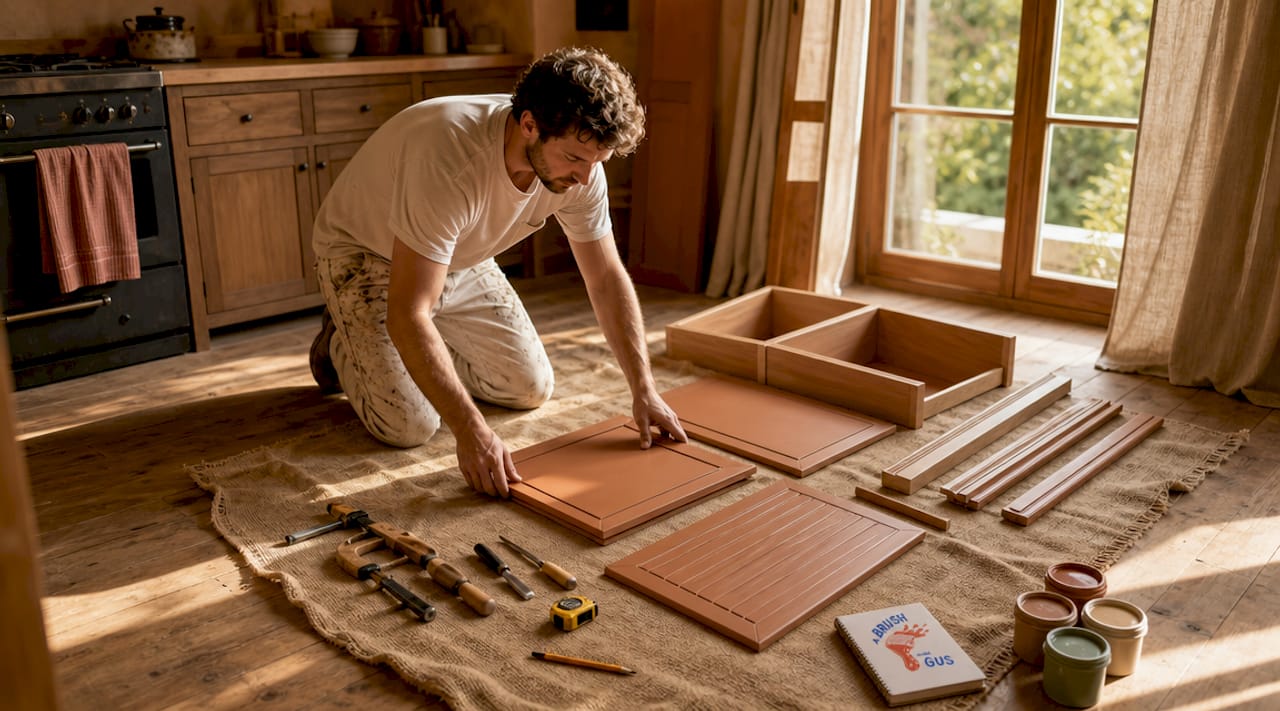
Cost is driven by the volume of removable components rather than room square footage, with high-end shaker and inset cabinetry pushing projects towards premium quotes due to complexity. That means two kitchens of identical floor area can carry very different price tags depending on cabinet style alone. Knowing this upfront prevents sticker shock when quotes arrive.
Professional kitchen respraying also involves a sequence of controlled steps: door removal, deep cleaning and degreasing, sanding, priming, multiple finish coats, and structured drying and curing times. Each step adds labour and materials to the final figure. Skipping any of them compromises the finish and shortens its lifespan.
How does the number and type of components affect spraying costs?
Component count is the most direct variable in any cost breakdown for kitchen spraying. Every door, drawer front, end panel, plinth, and cornice represents a discrete item to be removed, prepared, sprayed on one or both sides, and reinstalled. The maths accumulates quickly.
Per-item pricing typically ranges from around £30 for single-sided door spraying to £45 for both sides, with side panels and plinths carrying higher costs. A kitchen with thirty doors and ten drawer fronts, all sprayed on both sides, reaches a substantial figure before any prep work is factored in. Excluding trim elements like cornices and plinths from a quote may reduce the headline number, but it leaves the kitchen looking visually incomplete.
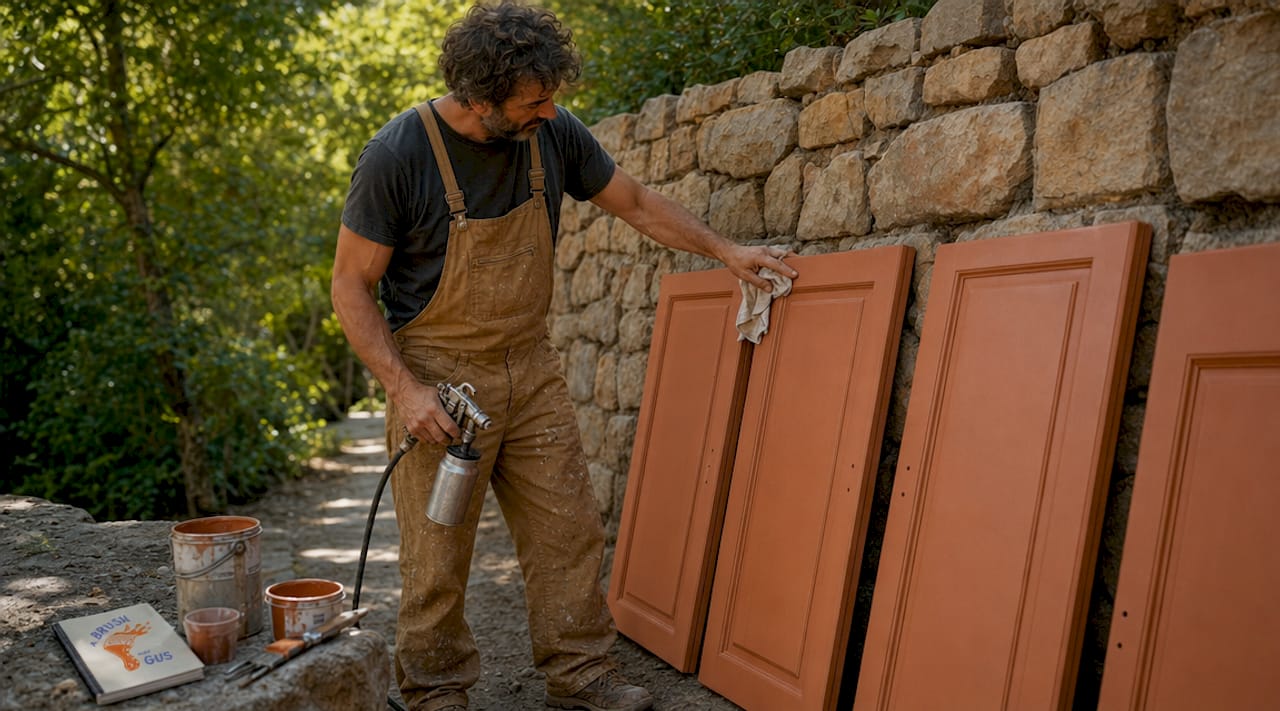
Cabinet style adds another layer of complexity. Shaker doors with their recessed centre panels require careful hand sanding in corners and edges that flat-slab doors simply do not. Spraying complex cabinetry styles demands more detailed manual sanding, multiple primer layers, and longer controlled curing, which raises costs significantly compared to simple flat doors. Inset cabinetry, where doors sit flush within the frame, adds yet another level of precision.
Hardware removal and reinstallation also contribute to the total. Removing hinges, handles, and soft-close mechanisms takes time, and any holes left by old hardware need filling and sanding before spraying begins. These hours are legitimate labour costs, not padding.
Doors and drawer fronts: priced per item, per side sprayed
End panels and side panels: larger surface area, higher per-unit cost
Plinths and cornices: often excluded from basic quotes, causing finish inconsistencies
Hardware removal and reinstallation: adds skilled labour hours to the project
Hole filling and surface repairs: necessary prep that affects both time and materials
Pro Tip: Ask every contractor to itemise their quote by component type. If plinths, cornices, and end panels are missing from the list, the finished result will show it.
Why does cabinet preparation affect kitchen spraying prices?
Preparation is the single largest labour cost in any professional kitchen respray. It is also the step most commonly cut by contractors offering unusually low quotes. Labour-intensive preparation including degreasing and sanding is the main factor ensuring a finish lasts 10 to 15 years. Shortcuts cause premature paint failure, meaning peeling or cracking within months rather than years.
The condition of your existing cabinets determines how much prep is needed. Cabinets with swollen edges, delaminating surfaces, or previous coatings require filling, repair, and specialist bonding primers before any finish coat can be applied. Laminate and foil-wrapped doors present particular challenges because standard primers will not adhere without specific surface treatment. Skipping this step produces a finish that looks perfect on day one and fails by month six.
Here is what thorough preparation involves on a professional kitchen respray:
Full degreasing of all cabinet surfaces to remove cooking oils and cleaning product residue
Sanding to create a mechanical key for the primer to bond to
Filling any chips, dents, or swollen edges with appropriate filler
Applying a bonding or stain-blocking primer suited to the substrate
Light sanding between primer and finish coats to achieve a smooth base
“Cheap quotes often miss crucial preparation steps, leading to peeling or cracking finishes within months. The final quote should reflect the extent of prep, not just the painting itself.” — SprayMasters UK
Poor preparation is the leading cause of early finish failure in kitchen respraying. Homeowners who choose the lowest quote without scrutinising the prep scope often pay twice: once for the original job and again for remedial work. Reviewing the surface preparation process in detail before accepting any quote is time well spent.
What role do paint materials and finish quality play in total costs?
The materials used in professional kitchen respraying bear no resemblance to standard wall paint in either composition or price. Professional-grade kitchen coatings are formulated for adhesion, hardness, and resistance to heat, moisture, and cleaning chemicals. Professional-grade kitchen coatings cost significantly more than wall paints, and extensive colour changes require multiple primer coats, increasing both labour and materials costs.
Finish level matters too. Matt, satin, and high-gloss finishes each carry different application requirements. High-gloss amplifies every surface imperfection, so it demands more preparation passes and more coats to achieve a factory-smooth result. Extra sanding between coats is standard practice for premium finishes, and that time is reflected in the quote.
Finish type | Prep intensity | Coats required | Relative cost |
Matt | Moderate | 2 to 3 | Lower |
Satin | Moderate to high | 2 to 3 | Mid-range |
High gloss | High | 3 to 4 | Higher |
Colour changes from dark to light are a specific cost driver. Stain-blocking primers are required to prevent dark pigment bleeding through lighter finish coats, adding base coats and sanding steps to the process. A kitchen moving from charcoal grey to cream will cost more than one being refreshed in a similar shade.
HVLP spray guns operate at around 65% transfer efficiency, meaning a meaningful proportion of material is lost as overspray. Professionals account for this in their materials estimates, and it contributes to why paint costs in a professional respray are higher than a homeowner might expect from a tin price alone.
Factory-quality spray finishes require controlled environments, including masking, ventilation, and dust control. Off-site spraying, where doors are removed and sprayed in a controlled workshop, reduces dust contamination and produces more consistent results, but it adds logistics to the project.
Pro Tip: If a contractor quotes for on-site spraying without discussing dust control and masking, ask specifically how they manage overspray and airborne particles. The answer tells you a great deal about their process.
How does kitchen spraying compare to full cabinet replacement?
Cabinet replacement is the obvious alternative to respraying, and the cost difference is substantial. Kitchen spraying costs 70 to 90% less than full cabinet replacement and can often allow the kitchen to remain functional during the 3 to 5 day project window. Full replacement involves removal, disposal, new unit supply, fitting, tiling repairs, and potentially plumbing and electrical adjustments. The disruption runs to weeks, not days.
Factor | Kitchen spraying | Full cabinet replacement |
Typical cost | 70 to 90% less | Full renovation budget |
Project duration | 3 to 5 working days | 2 to 4 weeks |
Kitchen usability | Often maintained | Fully out of use |
Structural disruption | Minimal | Significant |
Suitable condition | Good underlying structure | Any condition |
Respraying modernises existing cabinetry without touching the carcasses, worktops, or appliances. For kitchens where the layout works well and the units are structurally sound, it delivers a near-new appearance at a fraction of the replacement cost. The benefits of respraying over replacement are well documented for kitchens in good underlying condition.
The limitation is condition. If cabinet carcasses are water-damaged, structurally weak, or the doors are beyond repair, spraying is not a viable solution. A professional assessment before committing to either route is the sensible first step.
Respraying suits kitchens with sound carcasses and functional layouts
Replacement is necessary when structural damage is present
Spraying avoids the cost of new units, fitting, and associated trades
Avoiding common renovation mistakes saves both money and frustration on either route
What additional factors influence the final kitchen spraying quote?
Beyond components, preparation, and finish, several other variables shift the final figure. Location plays a role: contractors in London and the South East typically charge more than those in the South West or Midlands, reflecting local labour rates and overheads. Availability and scheduling also matter. Urgency, location, and hardware upgrades such as soft-close hinges all impact final quotes, alongside logistics like off-site door spraying.
Hardware upgrades are a common addition. Many homeowners choose to replace standard hinges with soft-close mechanisms at the same time as respraying, since the doors are already off. This adds materials and labour but represents good value given the access already created.
Comparing quotes accurately requires discipline. Excluding components like side panels or incomplete prep leads to inferior results and additional costs later. A quote that appears £400 cheaper may simply exclude the plinths, cornices, and end panels that make the finish look complete. Always request a written scope of work alongside the price.
Location and regional labour rates affect contractor pricing
Off-site versus on-site spraying changes logistics and cost
Hardware upgrades add materials and labour but offer good timing value
Urgency premiums apply when scheduling is tight
Written scope of work is non-negotiable for accurate budget comparison
Key takeaways
The cost of kitchen spraying is determined by preparation depth, component count, and finish specification, not by kitchen size or paint volume alone.
Point | Details |
Preparation drives durability | Thorough degreasing, sanding, and priming determine whether a finish lasts 10 to 15 years. |
Component count sets the base price | Every door, drawer, panel, and plinth adds to labour and materials; always request an itemised quote. |
Finish level affects materials and labour | High-gloss finishes require more coats and preparation passes than matt or satin options. |
Spraying costs far less than replacement | Kitchen respraying typically costs 70 to 90% less than full cabinet replacement with far less disruption. |
Like-for-like comparison is critical | Quotes excluding trim elements or preparation steps will underdeliver on finish quality and longevity. |
What I’ve learnt from quoting kitchen spraying projects
The question I hear most often is some version of: “Why does it cost that much? It’s just paint.” It is not just paint, and after years of working on domestic spraying projects across the South West, I can tell you that the prep is where the real work lives.
The homeowners who get the best results are the ones who understand that a £600 quote and a £1,400 quote for the same kitchen are not offering the same thing. The lower figure almost always excludes something: the end panels, the plinths, or three of the five preparation steps that determine whether the finish holds for a decade or starts lifting within a year.
My honest advice is to treat the preparation scope as the most important line in any quote. Ask what primers are being used and why. Ask whether doors are being removed for off-site spraying or sprayed in situ. Ask what happens if a surface needs additional repair work once the doors are off. A contractor who answers those questions clearly and specifically is one worth trusting with your kitchen.
The balance between cost, quality, and disruption is real, but it is not a mystery. Understand what you are paying for, compare quotes on the same scope, and prioritise the finish that will still look good in five years. That is the only budgeting advice that actually matters.
— Angus
Get a professional kitchen spraying quote from Abrushwithgus

Abrushwithgus provides professional kitchen cabinet respraying across the South West, with detailed quotes based on photos or in-person assessments. As a family-run business, Gus and Rhys take the time to assess your specific cabinetry, colour requirements, and finish preferences before providing a fixed price that covers the full scope of work. No hidden extras, no components quietly left off the list. Explore the full range of domestic spraying services or get in touch directly to discuss your kitchen project and receive a tailored estimate.
FAQ
How much does kitchen cabinet spraying cost in the UK?
Kitchen cabinet spraying costs vary based on component count, preparation requirements, and finish specification. Per-item pricing typically ranges from around £30 for single-sided door spraying to £45 for both sides, with additional costs for panels, plinths, and cornices.
What is included in a professional kitchen spraying quote?
A thorough quote covers door removal, degreasing, sanding, priming, multiple finish coats, and reinstallation. Quotes that exclude trim elements like end panels or plinths will produce an incomplete finish and should be compared carefully against more comprehensive alternatives.
How long does a kitchen respray take?
Professional kitchen spraying projects typically take 3 to 5 working days, with doors often removed for off-site spraying to allow the kitchen to remain in partial use during the process.
Is kitchen spraying worth it compared to replacement?
Kitchen spraying costs 70 to 90% less than full cabinet replacement and causes far less disruption. It is the right choice when the underlying carcasses are structurally sound and the layout meets your needs.
Why do kitchen spraying quotes vary so much?
Quote variation reflects differences in scope, preparation depth, and materials used. Comparing like-for-like quotes is the only reliable way to assess value, since lower prices frequently exclude key components or preparation steps.
Recommended
Comments