
Decorating trends 2026: what Cornwall homeowners should use now
- WM Creative Designs Limited
- Aug 3
- 10 min read
TL;DR:
Lived-in luxury is the dominant trend for 2026, emphasizing warm, earthy tones and professional surface preparation. Exterior schemes favor high-contrast finishes and breathable, durable paints suited for Cornwall’s coastal climate. Interior designs highlight layered textures and handcrafted finishes, with bold accents and sustainable materials gaining popularity.
The dominant story of 2026 is lived-in luxury: warm, earthy interiors paired with high-contrast exteriors that hold up against the South West weather. If you own or manage property in Cornwall, two moves matter most right now.
Interiors: test a warm neutral (mushroom, sandy taupe, or terracotta) on your largest wall, then add one moody accent in chocolate brown or burgundy on a ceiling, alcove, or run of joinery.
Exteriors: consider a high-contrast trim colour or a bold front door, and check your substrate first — UPVC, render, and timber all need different preparation before any coating goes on.
FrogTape research found nearly 50% of homeowners now name stark white rooms as their biggest design “ick.” A 1stDibs survey reported on Nasdaq found 33% of design professionals picked chocolate brown as a top colour for 2026, with burgundy rising to 21%. Angi’s trend coverage confirms black-and-white exterior combinations as the standout curb-appeal direction.
Table of Contents
What are the top interior decorating trends for 2026?
Cool grey and stark white are out. The palettes taking over are warmer, earthier, and far more characterful.
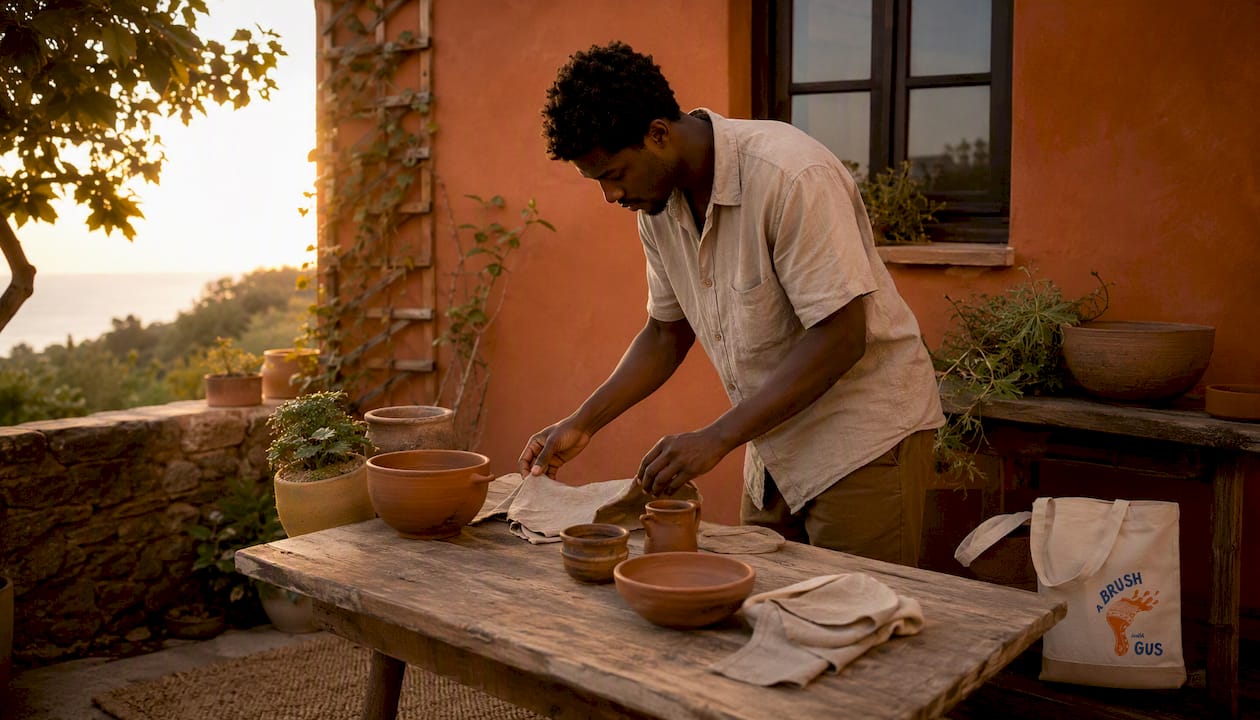
The families worth knowing: terracotta suits living rooms and hallways where you want immediate warmth; mushroom and sandy taupes work as whole-room neutrals that read differently morning and evening; olive green is the cabinet colour of the moment; chocolate brown and burgundy are best reserved for feature alcoves, ceilings, or a single run of joinery rather than four walls. The Spruce also flags soft yellows and muted off-whites as accessible choices for landlords who want warmth without commitment.
The mindset behind all of this is what designers are calling “lived-in luxury”: layered textures, visible craftsmanship, and finishes that feel collected rather than staged. Think limewashed plaster alongside unlacquered brass, or a suede-effect wall next to rough linen curtains. Colour-drenching — painting walls, ceiling, and joinery in the same tone — works well in small rooms like hallways and studies, but use it selectively.
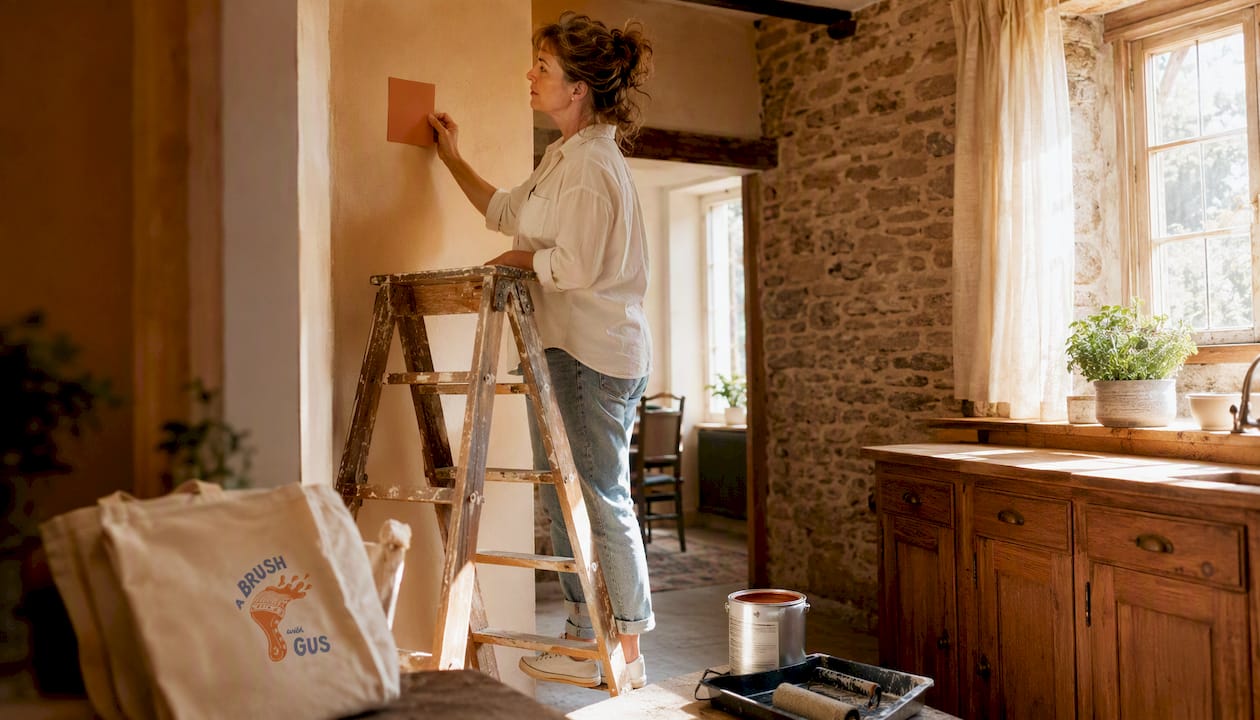
Pro Tip: Pin a large paint sample (at least A4) to the wall and check it at 8am, midday, and 6pm before committing. Cornwall’s coastal light shifts dramatically through the day, and a mushroom that reads warm at noon can look grey by evening.
For kitchens specifically, olive green or warm off-white cabinetry with mixed metal hardware (brass alongside aged bronze) is the kitchen decorating trend gaining the most traction. Pair with stone-effect or natural oak surfaces and you have a scheme that photographs well and ages better. You can explore how warm palettes translate to a full update on the Abrushwithgus blog.
How should you approach exterior decorating in 2026?
High-contrast schemes are the clear exterior direction: deep navy, charcoal, or black on window frames and fascias against a lighter render or stone body. A bold front door in burgundy, forest green, or near-black adds instant kerb appeal without touching the whole facade.
For Cornwall homes specifically, the substrate matters enormously. Stone and render behave differently from UPVC and timber, and the wrong coating on the wrong surface fails within a season. Long-lasting exterior paint options for UK coastal conditions require microporous masonry paints on render, breathable finishes on stone, and specialist adhesion primers on UPVC before any colour coat.
Proper substrate preparation — cleaning, priming, and using compatible primers for UPVC and timber — is the single biggest factor in how long an exterior finish lasts. Skipping prep is the most common cause of early failure, and no amount of premium topcoat compensates for it.
Pro Tip: Schedule exterior work between April and October where possible. Cornwall’s Atlantic weather means moisture in the substrate during winter months can cause even good coatings to blister within a year.
Check UPVC frames for chalking and UV degradation before spraying.
Clean masonry with a low-pressure wash and allow full drying time (48–72 hours minimum).
Use a flexible, anti-crack primer on render that shows hairline movement cracks.
Specify a breathable finish on granite or natural stone to prevent trapped moisture.
Which finishes and techniques actually deliver the 2026 look?
Colour choice is only half the job. Textured and dimensional finishes — limewash, mineral paints, suede effects, and plaster washes — are what separate a professional result from a DIY one, because they add the tactile depth that defines lived-in luxury.
Limewash and plaster effects — ideal for living rooms and bedrooms; create soft, aged depth that flat emulsion cannot replicate.
Airless spraying — delivers a flawless, factory-smooth finish on kitchen cabinets, joinery, and doors; far faster than brush-and-roller on large surfaces.
UPVC spraying — restores and recolours window frames, fascias, and soffits without replacement; specialist adhesion primers are non-negotiable.
Textured topcoats — add grip and visual interest to feature walls; particularly effective in hallways.
Microporous masonry paint — the correct choice for Cornwall render and stone; allows moisture vapour to escape while keeping rain out.
Finish type | Best application | Durability note |
Limewash / plaster effect | Feature walls, living rooms | Requires sealing in high-traffic areas |
Airless spray (cabinet) | Kitchen units, joinery | 5–10 year finish with correct prep |
UPVC spray | Frames, fascias, soffits | 10+ years with adhesion primer |
Microporous masonry | Exterior render, stone | Recoat every 8 years |
Pro Tip: For rental properties, prioritise washable mid-sheen finishes over flat emulsion. They clean without marking and survive tenant turnover far better.
How do you apply 2026 trends room by room without wasting money?
Start with the highest-impact areas: front door, hallway, kitchen cabinetry, and one living room feature wall. These four touch-points change how a property feels without requiring a full repaint.
Kitchen: spray cabinetry in olive or warm off-white; replace hardware with mixed metals.
Living room: one wall in terracotta or mushroom; ceiling in a slightly deeper tone of the same family.
Bedroom: colour-drench in a muted sage or warm taupe; keep textiles in contrasting textures.
Bathroom: dark grout with off-white tiles; a painted vanity unit in deep navy or charcoal.
Exterior: bold front door first, then fascias and frames if budget allows.
Red flags to avoid: cheap exterior coatings on coastal-facing walls (they chalk within two years), skipping substrate cleaning before any repaint, and applying very dark colours to north-facing rooms without balancing them with warm lighting and pale textiles.
Why hire a professional painter in Cornwall for 2026 trends?
Professionals deliver three things a DIY approach rarely matches: correct substrate preparation, design-aware colour sequencing, and finishes that carry a warranty. FrogTape research found nearly 60% of homeowners plan interior paint projects in 2026, yet the gap between a DIY result and a professional one is widest precisely with the textured, layered finishes that define this year’s trends.
Typical timelines and ballpark costs (South West, 2026):
Single room repaint with feature wall: 1–2 days; £300–£600 depending on prep and finish.
Kitchen cabinet spray (10–15 doors): 2–3 days; £600–£1,200 including primer and topcoat.
Full exterior repaint (semi-detached): 3–5 days; £1,500–£3,500 depending on substrate condition.
Pro Tip: Always ask for a written scope of works before any job starts. A professional who itemises substrate prep, primer coats, and topcoat specification is protecting both their work and your property.
Trust signals to check: a portfolio with before-and-after photos, verifiable client reviews, public liability insurance, and a written guarantee on the finished work. Professional decorating covers far more than paint — it includes prep, priming, and post-work protection.
What do real Cornwall projects tell us about 2026 trends?
The projects that best illustrate this year’s direction share a pattern: a bold colour choice executed with correct prep and a professional finish that holds up to coastal conditions.
Terracotta hallway, Truro: full colour-drench including ceiling and joinery; airless spray on skirting and architrave; client noted the hallway now feels twice the size despite the dark tone.
UPVC restoration, Falmouth: chalked white frames resprayed in anthracite grey; adhesion primer applied throughout; result matched new-window appearance at roughly a quarter of the replacement cost.
Exterior repaint, Penzance: microporous masonry paint on granite render; deep navy fascias for contrast; substrate cleaned and crack-filled before any coating.
A well-prepared surface with the right primer is invisible once the job is done — but it is the entire reason the finish still looks good five years later.
Project type | Technique | Outcome |
Hallway colour-drench | Airless spray on joinery | Cohesive, high-end finish in one day |
UPVC restoration | Specialist spray with adhesion primer | 10+ year colour retention |
Exterior masonry | Microporous paint, crack-fill prep | Weather-resistant; no peeling after two winters |
What furniture styles are emerging in 2026?
Curved forms are replacing sharp lines across sofas, coffee tables, and accent chairs. The materials driving this are warm oak, reclaimed timber, hand-trowelled plaster surfaces, and unlacquered metals that develop a patina over time. Redfin’s interior design round-up describes the shift as homes that “feel collected over time rather than perfectly staged.” Handcrafted and small-batch pieces are gaining ground over fast furniture, with buyers prioritising longevity and visible craftsmanship.
How do you incorporate sustainable décor in a UK home?
Low-VOC paints, recycled-glass tiles, bio-based fabrics, and reclaimed wood are the practical choices gaining traction. For UK homeowners, low-VOC interior paints are now widely available from most major suppliers and suit the lived-in luxury palette perfectly — warm, earthy tones in low-VOC formulations perform as well as conventional alternatives. Buying fewer, higher-quality pieces rather than replacing furniture seasonally is both the sustainable and the financially sensible approach.
How does lighting complement 2026 decorating schemes?
Warm-toned bulbs (2700K–3000K) are the right match for earthy palettes — cool daylight bulbs make terracotta and mushroom look flat and grey. Layered lighting (ambient, task, and accent) suits the lived-in luxury aesthetic far better than a single overhead fitting. Sculptural pendants in aged brass or hand-blown glass add the handcrafted quality that 2026 interiors are built around, and dimmer switches let you shift the mood of a warm-toned room from daytime practical to evening retreat.
Which textiles and fabrics work best for 2026 interiors?
Velvet, bouclé, linen, and wool are the four fabrics doing the most work this year. Layer them rather than matching: a linen sofa with a wool throw and a bouclé cushion creates the tactile depth that defines lived-in luxury. Pattern-wise, BHG’s designer round-up highlights patterned upholstery and dramatic drapery as the bolder move, with fabric used as space dividers or ceiling canopies in more adventurous schemes. For Cornwall homes, heavier textiles also provide practical insulation in older, draughtier properties.
How do you blend 2026 trends with existing UK architecture?
Period features — cornicing, sash windows, panel doors, and stone fireplaces — are assets, not obstacles. Painting panel doors in a trending joinery colour (deep navy, olive, or near-black) while keeping walls in a warm neutral lets the architecture read clearly without looking untouched. In granite or stone-built Cornish homes, earthy palettes feel entirely at home; the stone itself provides the natural texture that urban interiors are trying to recreate artificially. Avoid fighting the building: a Victorian terrace suits colour-drenching in warm tones far better than it suits stark minimalism.
What are realistic budgets for a 2026 room makeover?
A single room repaint using a warm neutral with one feature wall costs £300–£600 professionally done, including prep. A kitchen cabinet spray adds £600–£1,200. Full exterior work on a semi-detached property runs £1,500–£3,500. The biggest budget mistake is spending on premium topcoats while skimping on prep — a £50 saving on primer can cost £500 in early failure. Investing in quality paint and correct substrate preparation is where the long-term value sits, particularly for rental properties where durability directly affects maintenance costs.
Key takeaways
The defining direction for 2026 is lived-in luxury: warm, earthy palettes indoors, high-contrast finishes outside, and professional preparation that makes both last.
Point | Details |
Warm palettes are dominant | Terracotta, mushroom, sandy taupe, and olive green are replacing cool grey and stark white. |
Moody accents add depth | Chocolate brown (33% of designers’ top pick) and burgundy (21%) work best on ceilings, alcoves, and joinery. |
Exterior prep is non-negotiable | Substrate cleaning and compatible primers determine how long any exterior finish lasts in Cornwall’s climate. |
Budget for prep, not just paint | Professional substrate preparation prevents early failure; skimping on it costs more long-term. |
Abrushwithgus for Cornwall | Abrushwithgus delivers interior, exterior, UPVC spraying, and airless spraying with full substrate preparation across Cornwall and the South West. |
A decorator’s view on 2026 trends in Cornwall
The “lived-in luxury” label is accurate, but it understates what makes 2026 genuinely different from the last five years. Clients are not just choosing bolder colours — they are asking for finishes that age well, that feel right in a period Cornish cottage or a coastal rental flat, and that do not need repainting every three years because the substrate was never properly prepared.
Cornwall’s conditions make this more than an aesthetic conversation. Atlantic salt air, high humidity, and stone or render substrates that move with temperature changes mean the finish and the prep method matter as much as the colour. A limewash effect on a north-facing bedroom wall looks beautiful; the same product on an exterior granite wall without a breathable primer will fail by the second winter.
The other shift worth noting: homeowners are increasingly asking for colour advice as part of the decorating job, not separately. That is a good development. A painter who understands how terracotta reads in morning light versus afternoon shade, or how a colour-drenched hallway needs to transition into an adjoining room, will save you from an expensive repaint six months later. The role of professional painting has quietly expanded from execution to consultation, and the best results in 2026 come from treating it that way.
Ready to bring 2026 trends to your Cornwall property?
Abrushwithgus is the Cornwall-based, family-run alternative to a generic national decorator — brothers Gus and Rhys bring hands-on expertise in period properties, coastal exteriors, and rental portfolios, with no subcontractors and no shortcuts on prep.
Services cover domestic interior painting, full exterior repaints, UPVC spraying, airless spraying for cabinets and joinery, and exterior cleaning to prepare surfaces properly before any coating. Every job includes a written scope, correct substrate preparation, and a finish you can see in the portfolio before you book. Get in touch to request a site visit or quote — and ask to see before-and-after photos from projects near you.
Useful sources and further reading
Abrushwithgus portfolio — local Cornwall project examples, client reviews, and before-and-after photos; request a site visit directly from the site.
Recommended
Comments