
3–6 Days vs 1–2 Weeks: Exterior Painting Duration for UK Homeowners
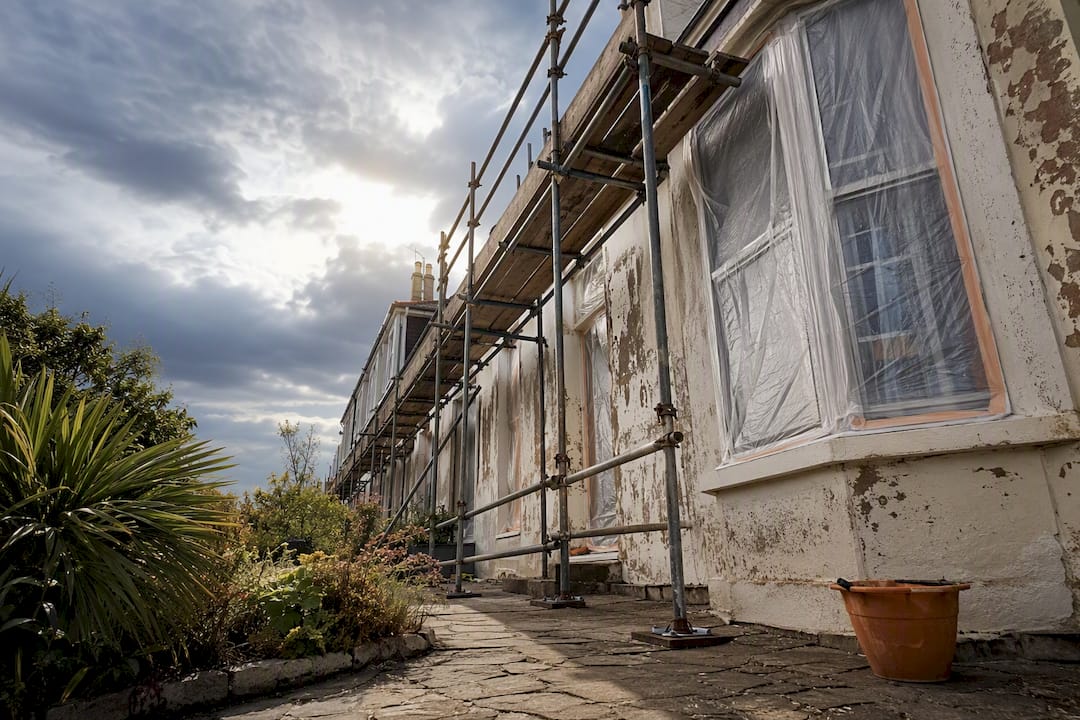
A professional crew typically finishes a house exterior in 3 to 6 working days; a DIYer should budget 1 to 2 weekends or more. Surface preparation, not painting itself, drives that range. Weather adds further slack, so always pad your calendar with buffer days rather than assuming back-to-back sunshine.
TL;DR:
Most exterior painting projects for a single-family house range from three to six days for pros and two weeks or more for DIYers, mainly due to prep work and weather delays.
Surface preparation tasks such as washing, scraping, sanding, and repairs often consume over half of the total schedule, especially on older, weathered buildings.
Weather conditions and seasonality can add extra days or weeks, with rain and low temperatures significantly extending drying and recoat times.
Proper planning involves detailed site surveys, early material ordering, and accounting for buffer days to manage unpredictable delays effectively.
Hiring a professional crew reduces total timeline by enabling parallel task work, faster equipment use, and better weather contingency management.
Table of Contents
Exterior painting duration: quick timeline summary
Timelines split cleanly between working days (what a pro crew books in) and calendar days (what a DIYer actually spends, weekends included).
Small terraced or semi: pro crew, 2 to 3 days; DIY, 4 to 6 days spread over weekends
Average detached, single storey: pro crew, 3 to 5 days; DIY, 1 to 2 weeks
Two-storey house: pro crew, 4 to 6 days; DIY, 2 to 3 weeks
Large or detailed property: pro crew, 6 days or more; DIY, 3 weeks plus
A professional crew usually completes a typical single-family house exterior in 3 to 6 days, while a DIY homeowner should plan for 1 to 2 weeks or longer, according to a detailed timeline breakdown. A separate UK-focused estimate puts the average repaint at roughly 3 to 5 days for a typical house, which lines up closely.
The gap between pro and DIY numbers isn’t really about painting speed. It’s about hours per day, equipment, and the ability to run prep and paint tasks side by side. Weather is the multiplier that turns any of these ranges into something longer.
Which tasks actually drive the schedule?
Painting the walls is the quick part. Everything that happens before the first coat goes on is where days disappear.
Inspection and quoting — usually an hour or two, though it sets the whole plan.
Power washing — commonly 3 to 5 hours, followed by 24 to 48 hours of drying before any other work starts.
Scraping and sanding — typically 4 to 10 hours, more on older render or peeling weatherboard.
Repairs — filling, replacing rotten timber, resealing gaps: often 2 to 6 hours, sometimes longer if rot is found mid-job.
Priming — bare or patched areas need a primer coat, adding a further half-day on most homes.
Body coats — the main event, but usually the fastest phase per square metre once the surface is sound.
Trim, fascias and touch-ups — fiddly, slow, and easy to underestimate on Victorian or period joinery.
On older properties, prep alone can eat up around half the total labour time, a pattern confirmed by the same timeline analysis. Skip it, and the paint job looks fine for a season, then fails early.
Pro Tip: Ask your painter how much of the quoted time is prep versus painting. If the answer is vague, the quote probably hasn’t accounted for what’s actually under that old coat of masonry paint.
How does house size change the painting timeframe?
Size and complexity set the baseline before weather or paint type even enter the equation.
Home type | Pro crew (working days) | DIY (calendar time) | Common caveats |
Small single storey (terrace, bungalow) | 2 to 3 days | 1 to 2 weekends | Faster if rendered surface is sound |
Average single storey detached | 3 to 5 days | 1.5 to 2.5 weeks | Add a day for heavy moss or algae growth |
Two-storey house | 4 to 6 days | 2 to 3 weeks | Scaffolding or tower hire adds setup time |
Large or highly detailed property | 6+ days | 3 to 5 weeks | Multi-colour trim schemes and bay windows slow trim work significantly |
These figures assume reasonably sound substrate. Rotten timber, extensive render cracking, or a house that’s never been properly prepped before can add several days regardless of size, since repairs and re-prep don’t scale neatly with square metreage. A small house with serious rot can easily outrun a large, well-maintained one.
How long does exterior paint take to dry and recoat?
Paint chemistry sets a hard floor under any schedule, no matter how efficient the crew.
Latex (water-based) exterior paint: dry to touch in 1 to 2 hours, recoat after roughly 4 hours in good conditions, full cure in 2 to 4 weeks
Oil-based paint: dry to touch in 6 to 8 hours, recoat typically needs a full 24 hours, cure around 7 days
These windows come from a paint drying timeline guide, and they shift fast with weather. Cooler, damper air can double recoat times because drying isn’t a straight countdown; it responds to temperature and humidity together, not separately. As a working rule, avoid applying a fresh coat if rain is forecast within 4 hours for latex or within 24 hours for oil, and add extra hours to any recoat estimate once temperatures drop below about 10°C.
Weather, season and access: turning working days into calendar days
A 4 day job on paper rarely finishes in 4 calendar days.
Spring: dew and overnight damp can delay morning starts by a couple of hours
Summer: the most reliable stretch, though heatwaves can dry paint too fast and cause lap marks
Autumn: unpredictable rain windows; jobs often stretch by several extra days
Winter: best avoided for most exterior work; low temperatures stall curing regardless of product
Wall surface temperature matters as much as air temperature, and the client’s own temperature guidance for UK exteriors sets a practical working band to plan around. Scaffolding or tower scaffold setup on two-storey homes typically adds half a day to a full day before painting even begins, and street access restrictions in tighter South West towns can add further delay. Seasonal patterns specific to the region are covered in the best times of year to paint exteriors guide.
Professional crew or DIY: where does the time actually go?
The real difference isn’t skill, it’s parallel working. A three-person crew can have one person priming while another scrapes trim and a third mixes and loads a sprayer. A solo DIYer does all three in sequence.
Daily hours: pros typically work full 8 hour days; DIYers often manage 3 to 4 hours on weekday evenings and longer stretches at weekends.
Equipment: commercial pressure washers and airless sprayers finish prep and coating faster than hired or hand tools.
Task overlap: crews can prep one elevation while painting another; solo work is almost always linear.
DIY suits smaller, single-storey jobs with sound existing paintwork and a realistic multi-weekend timeline — for advice on when to replace or renovate cabinet doors during renovations, see Cabinet door replacement vs renovation: your guide. Hire a pro once scaffolding, height, or heavy rot enters the picture. When getting quotes, ask for a written schedule, a weather contingency clause, and how the scaffold plan affects the timeline, since vetting a contractor properly means checking more than just the price.
Pro Tip: If a quote doesn’t mention what happens when it rains for three days straight, ask before you book. That gap in the plan becomes your problem, not theirs.
A simple planning checklist for your exterior paint job
Before any brush touches the wall, tick off the groundwork.
Get a site survey to spot rot, damp, or render damage before quoting.
Book the job with a buffer week either side, especially in autumn.
Order materials early, particularly specialist masonry paint or UPVC-safe products.
Tell neighbours if scaffolding or access will affect shared driveways or paths.
Check whether permits apply for scaffold on public pavements in your area.
A sample 5 day professional schedule: day 1 wash and dry, day 2 to 3 prep and repairs, day 4 primer and first coat, day 5 second coat and trim. A DIY equivalent typically spans 2 to 3 weekends, with prep alone often filling the first one. Once underway, watch drying weather daily. If rain arrives mid-recoat, stop and reassess rather than pushing on.
What Angus has learned from South West jobs
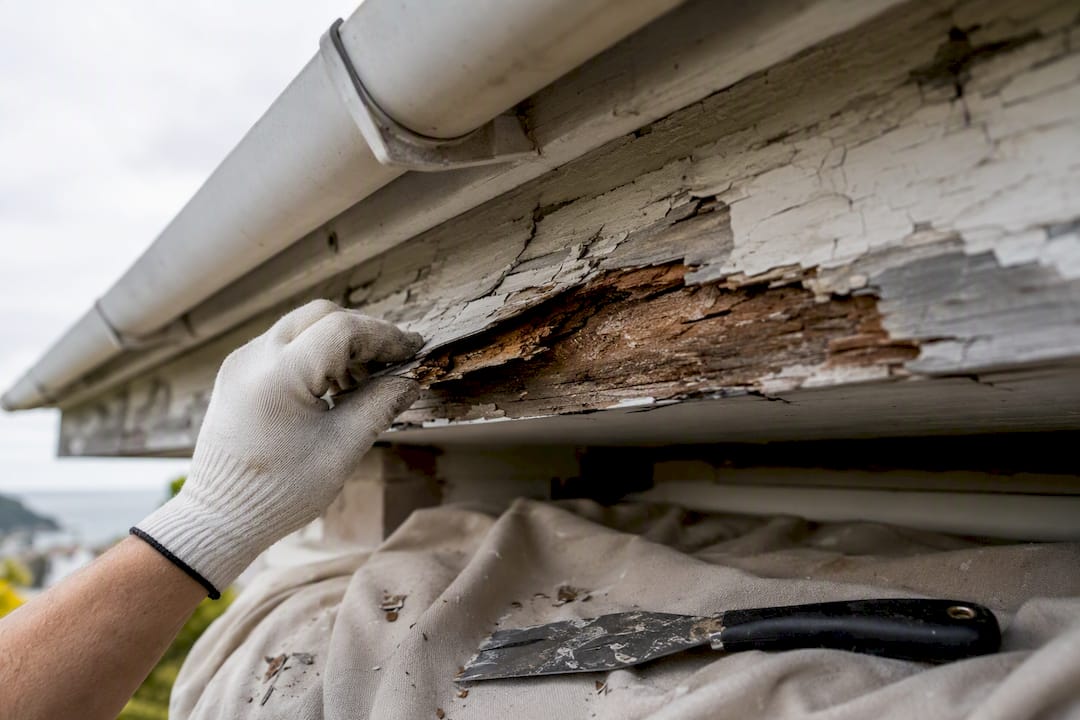
Delays rarely come from painting itself; they come from what scraping uncovers. On one South West job, expected two-day prep turned into four once rotten fascia boards appeared under old paint, roughly doubling that phase before a coat went on. Building a repair contingency into every quote has become standard practice, not an afterthought.
Why homeowners underestimate exterior painting duration
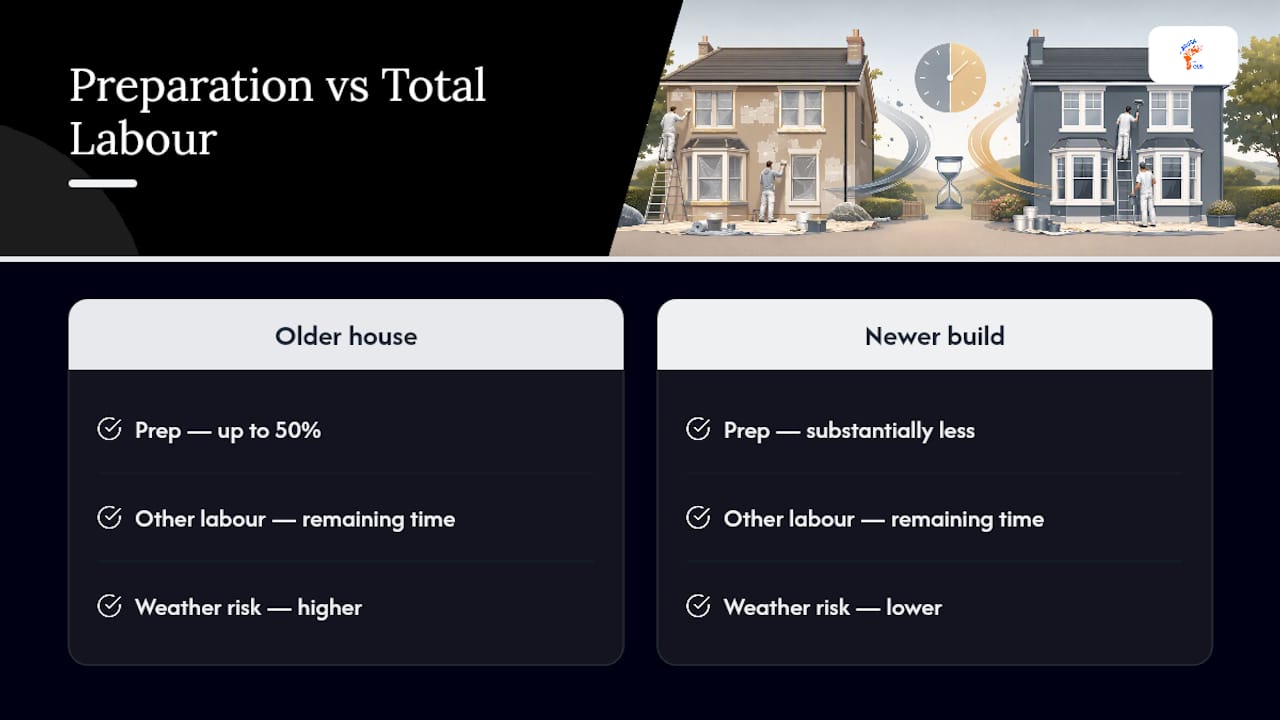
Most advice treats painting duration as a straight line from surface size to finish date. That’s the wrong model. Prep is the true schedule variable, not square metreage, and the research backs this up: it can eat half the labour time on an older house, while an identically sized newer build sails through in far less.
Conventional advice also underrates weather’s compounding effect. A single rained-off day doesn’t just cost a day; it can push a recoat outside its ideal window, forcing a redo of prep work already done. That’s the hidden cost DIYers rarely budget for and even some quotes gloss over.
My advice: prioritise the survey before the quote. Ask what’s under the existing paint, not just how many litres the job needs. A homeowner who understands their own substrate condition can sanity-check any timeline handed to them, pro or DIY, and won’t be blindsided when a “quick repaint” turns into a fortnight because of hidden timber rot.
The reader who plans for the worst realistic weather window, rather than the best case, is the one who actually hits their finish date.
— Angus
Get a faster, more reliable exterior repaint
A professional painting crew cuts calendar time compared with a DIY weekend project by running prep, priming and coating with a full crew rather than solo evenings and weekends. That means the scaffold goes up once, prep and repairs happen in parallel rather than in sequence, and the weather-watching is someone else’s job, not yours.

Our exterior home painting service covers the full job: surface prep, repairs, priming, and body coats, with UPVC spraying available as a faster finish option for windows and doors through our UPVC spraying service. We also handle the pressure washing and gutter clearing that normally adds days to a DIY schedule via our exterior cleaning service. Hiring a crew that plans around South West weather patterns, rather than hoping for the best, is usually the difference between a job finished on schedule and one that drags into a third weekend.
If you’re planning a repaint this year, request a site survey and quote and get a realistic schedule before you commit a single weekend to it.
Sources
Recommended
Comments