
Two Annual Gutter Cleans Cover Most UK Homes; When You Need 3–4

Many UK homes are recommended to have their gutters cleaned twice a year, typically once in spring and once in late autumn. Properties surrounded by trees, conifers, or with a moss problem on the roof generally need their gutters cleaned more frequently, sometimes three or four times a year. Whatever your schedule, walk round and check the gutters after any major storm, and call a professional if the roof is high or the access is awkward.
TL;DR:
Homes near heavy or overhanging trees typically need gutter cleaning three to four times annually, especially if oak and maple leaves frequently clog the system.
Moss buildup on roofs can cause blockages faster than fallen leaves and requires close monitoring, particularly after winter or storm events.
Older gutter systems made of cast iron or aged plastic are more prone to damage and may need more frequent inspections and repairs.
Spring and late autumn are the most critical months for gutter cleaning, with extra checks after storms and for conifer needle fall throughout the year.
DIY cleaning suffices for single-storey homes with easy access, but multi-storey or damaged systems should be handled by professionals to prevent structural issues.
Table of Contents
Gutter cleaning frequency UK: the right schedule for your property
Not every home needs the same treatment. A terraced house on an open street with no overhanging branches is a different proposition to a detached property tucked under a canopy of oaks, and your cleaning schedule should reflect that difference rather than a one-size-fits-all rule.
Low risk properties, meaning open plots with few trees nearby, generally do fine with one to two cleans a year. Late autumn is non-negotiable; a spring top-up is a bonus rather than a necessity.
Moderate risk covers most suburban homes with some trees within reach of the roofline. This is where the standard advice sits: two cleans a year, timed for spring and autumn. Several UK trade guidance sources converge on this exact pattern, and it’s the sensible default if you’re not sure where your property falls.

High risk properties sit under or near overhanging branches, particularly oak or maple, which drop heavy, wet leaves that clog gutters fast. Here, three to four cleans a year makes more sense than waiting for a problem to show up as a stain on the fascia board.
Conifer and pine-heavy areas are their own category. Needles don’t fall in one big autumn dump like broadleaf trees. They drop steadily through the year, and because they’re small and dense, they pack down into a mat that’s harder to shift than loose leaves. Quarterly checks, even if not every visit needs a full clean, are worth the effort.
Risk tier | Typical trigger | Recommended cleans/year | Key months |
Low | Open plot, few trees | 1–2 | November |
Moderate | Some nearby trees | 2 | March–April, October–November |
High | Overhanging oak/maple | 3–4 | Quarterly |
Conifer/pine | Constant needle drop | 3–4 | Quarterly inspections |
Landlords have an added layer to consider. NRLA-aligned guidance points to six-monthly maintenance as a practical baseline for rental properties, which lines up neatly with the moderate-risk schedule above. If you manage a let property, treat that six-month interval as a floor rather than a target to stretch.
What actually drives the need for more frequent cleaning?
Tree species and proximity are the biggest factors. Oak and sycamore both shed heavy, broad leaves that mat together, and if branches overhang the roofline, debris lands directly in the gutter rather than blowing past it.
Roof moss is the quieter culprit. It sheds in clumps rather than single leaves, and once it’s wet it compacts into a dense sludge that blocks downpipes far faster than dry leaf litter. Moss-heavy roofs often need closer monitoring than the calendar alone would suggest, because the blockage builds gradually and isn’t always visible from ground level until water starts overflowing.
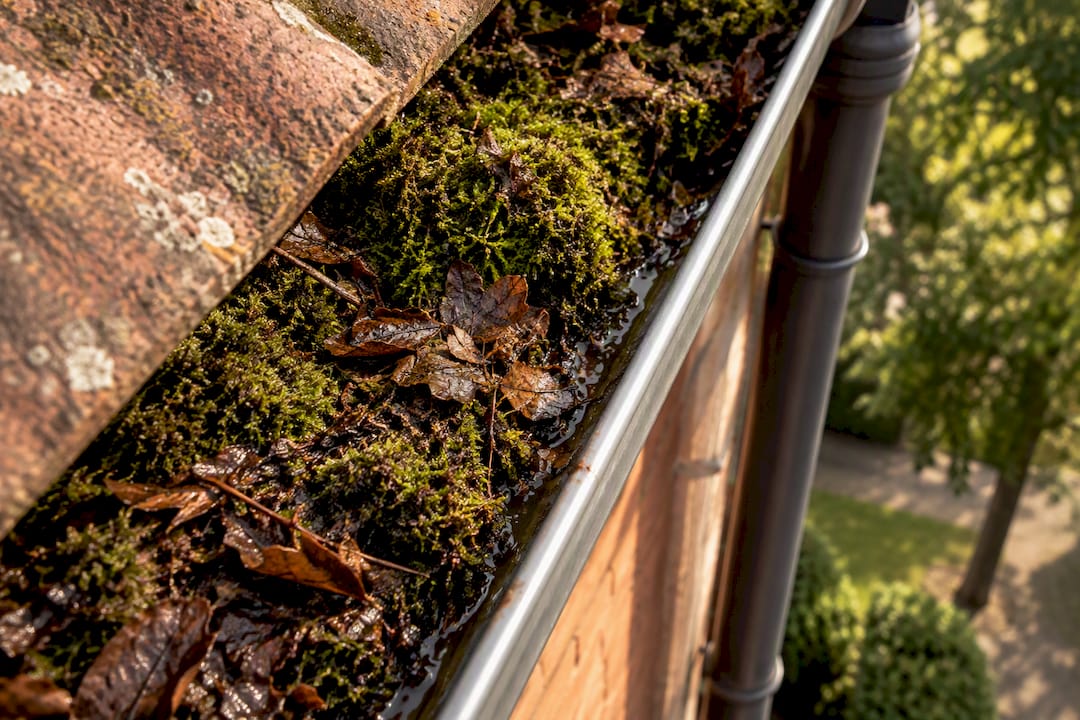
Gutter material and age matter too. Older cast iron or ageing plastic sections are more prone to sagging brackets and corrosion, which means blockages cause damage faster than they would on a newer system.
Watch for these signs that your schedule needs tightening:
Water overflowing the gutter edge during rain, rather than running through the downpipe
Dark staining or streaking down brickwork or render below the gutter line
Sagging sections or brackets pulling away from the fascia
Pooling water at the base of walls or around foundations after rain
Leaving a blocked gutter through winter raises the risk of freeze-thaw damage, where trapped water expands as it freezes and can warp brackets or pull gutter sections loose entirely, so it’s crucial to know how to winterize your doors to protect your home from water ingress. A five-minute ground-level look after any named Atlantic storm catches most of these problems before they become a repair bill.
Best months for gutter cleaning UK: the seasonal calendar
Timing matters as much as frequency. Two windows do most of the heavy lifting, with a couple of optional extras depending on your garden.
Late October to November is the single most important slot in the year. This comes after the main leaf fall and clears debris before winter rain and frost set in. Skip every other clean if you must, but not this one.
March to April clears the winter wash-down: grit, moss fragments, and the first seed and blossom debris of spring. It also gives you a chance to spot any damage winter weather caused.
Early December top-up, if oak trees dominate your garden. Oak tends to drop later than other broadleaf trees, so an additional check catches leaves the November clean missed.
Post-storm summer checks after any named Atlantic storm, even outside the main season, since summer downpours can overwhelm a gutter that’s partially blocked from spring growth.
DIY or call a professional: how to decide
Single-storey homes with straightforward, safe ladder access and only light leaf debris are usually fine for a DIY clean. If you can reach the gutter comfortably with a stable ladder and the mess is loose leaves rather than compacted sludge, there’s no need to pay someone else to do it.
Hire a professional once you’re dealing with a multi-storey property, awkward access, hardened sludge, or any sign of structural damage such as sagging brackets or corrosion. Which? Trusted Trader advice is blunt about this: DIY is fine for low-risk homes, but professionals earn their fee on the jobs that are genuinely unsafe or impractical to do yourself.
A professional visit typically covers more than just scooping out leaves. Expect them to:
Clear and check downpipes for blockages further down the system
Inspect brackets, seams, and joints for early signs of failure
Remove compacted moss that a standard scoop or vacuum can’t shift
Flag any corrosion or repair needs before they become a bigger job
Gutter vacuums handle routine debris well, but they struggle with hardened sludge in corners and downpipe swan necks, which is often where professionals switch to manual scooping or pressure washing to finish the job properly.
Pro Tip: Never lean a ladder against a plastic gutter to climb higher. It’s a common cause of cracked guttering, and standoff ladder stabilisers cost far less than a replacement section.
Your gutter maintenance checklist between scheduled cleans
A full clean twice a year doesn’t mean ignoring your gutters the rest of the time. A few quick checks keep small issues from turning into expensive ones.
Do a monthly ground-level walkaround, looking for overflow marks, staining, bird nests, or downpipes that have come loose from the wall.
If you’ve got leaf guards fitted, check the top of them for a build-up of debris; guards catch large leaves but still let smaller grit and moss through.
Look for corrosion spots and sagging brackets, particularly on older cast iron systems.
Confirm downpipe outlets at ground level are clear and draining freely, not just the gutter itself.
Keep a simple record of clean dates, a few photos, and any invoices, so you’ve got a maintenance history if you ever need to make an insurance claim or sell the property.
Guards genuinely cut down on how often you need a full clean, but they’re not a “fit and forget” fix. Even with guards installed, an annual sweep across the top is still needed, and older foam-style guards can compact and degrade within three to five years, at which point they need replacing rather than just clearing.
Pro Tip: Take a photo of your gutters from the same spot each autumn. Comparing them year on year makes sagging or moss build-up obvious long before it becomes visible from the ground on an ordinary day.
What years of jobs across the South West have taught us
Cornwall and the wider South West throw up their own gutter problems. Oak trees are everywhere, coastal salt air speeds up corrosion on metal brackets, and damp conditions mean moss grows on roofs almost year-round rather than in a short seasonal burst.
We’ve seen the pattern play out more than once: a homeowner skips the autumn clean, thinking spring will do, and by January the gutter is sagging under the weight of waterlogged leaves and moss. What could have been a fifteen-minute clear becomes a bracket replacement, sometimes a fascia repair too, all because the problem sat through a wet winter instead of getting caught early.
Guards help. They don’t replace the need for a proper look twice a year, especially in a region where the weather rarely gives your gutters a quiet season.
— Angus
Book a professional exterior clean with A Brush With Gus
If ladder work, hardened sludge, or a hard-to-reach roofline aren’t things you fancy tackling yourself, Exterior Home Cleaning from Abrushwithgus covers gutter clearing as part of a full external clean, so your downpipes, fascias, and render get sorted in the same visit rather than three separate call-outs.

Booking ahead of the two key windows, October to November and again in March, means you’re not competing for a slot once everyone else remembers their gutters at the same time. When you arrange a cleaning, expect a straightforward quote based on your property’s height, access, and how much debris is likely up there. If you want a sense of what typical jobs cost before you ask, our piece on gutter cleaning quotes breaks down what to check for in a fair price. Get in touch with Abrushwithgus to book your seasonal slot and keep your gutters doing their job through the wet months.
Sources
FAQ
How often should gutters be cleaned in the UK?
Most homes need a clean twice a year, once in spring and once in late autumn. Properties near trees, conifers, or with moss on the roof often need three to four cleans a year, as trade guidance confirms.
What is the best time of year for gutter cleaning?
Late October to November is the priority slot, clearing debris before winter rain and frost set in. March to April is the second key window, clearing winter wash-down and early moss growth.
Can I clean my own gutters, or should I hire a professional?
Single-storey homes with safe ladder access and light debris are usually fine for DIY. Multi-storey properties, awkward access, or hardened sludge are better left to a professional, and Which? advice backs that split.
Do gutter guards mean I can skip cleaning altogether?
No. Guards reduce how often a full clean is needed but still require an annual sweep across the top, and older foam guards can degrade within three to five years.
How much does professional gutter cleaning cost in the UK?
Costs vary by property size and access, so it’s worth checking a full breakdown before booking, such as our guide on gutter cleaning costs. Abrushwithgus quotes based on the specific job rather than a flat rate, so current pricing is best confirmed directly through the Exterior Home Cleaning page.
Recommended
Comments