
How painters add real value to your home
TL;DR:
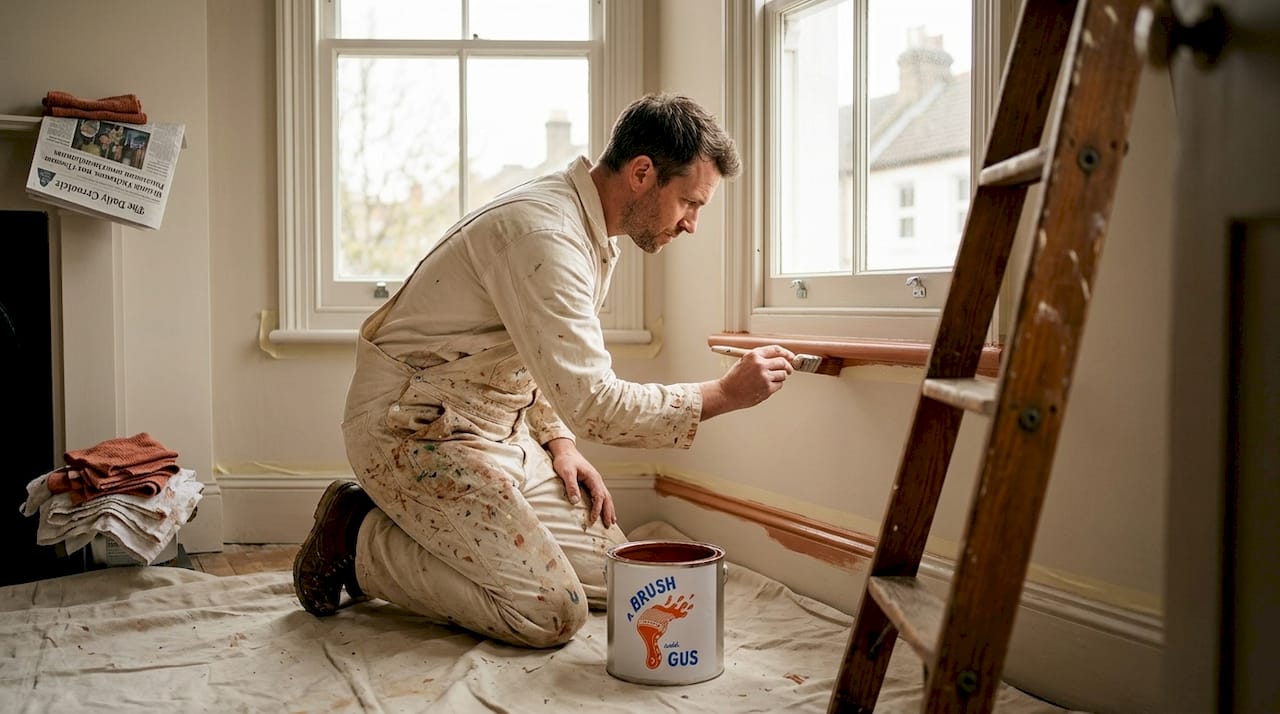
Professional exterior and interior painting significantly boost property value, curb appeal, and protection, especially in the South West. Experts emphasize proper surface preparation, appropriate colour choices, and quality materials to maximize return on investment. Hiring skilled painters ensures a durable, high-quality finish that appeals to buyers and safeguards your home’s long-term condition.
Professional painting is one of the most underestimated tools in a homeowner’s arsenal. Many people treat it as a cosmetic afterthought, something you do once the serious renovations are finished. In reality, exterior painting alone can increase property value by 2 to 5%, equivalent to £6,000 to £15,000 on a £300,000 home in the South West. This guide walks you through exactly how painting adds measurable value, which areas to focus on, what common mistakes to avoid, and why the right professionals make all the difference.
Table of Contents
Key Takeaways
Point | Details |
Paint directly adds value | Both interior and exterior painting can raise your home’s selling price by thousands. |
Neutral colours boost appeal | Choosing light, neutral shades maximises space and market appeal for most buyers. |
Quality outperforms DIY | Professional workmanship and premium paint achieve higher, more lasting value impact. |
Avoid bold or low-quality finishes | Unpopular colours and poor prep can lower your perceived property value and market offers. |
Invest strategically for top ROI | Target high-impact rooms and surfaces to maximise your return on painting investment. |
How exterior painting boosts your property’s curb appeal and value
First impressions in property are formed within seconds. Before a buyer has even stepped through your front door, they have already made an emotional judgement about your home. That judgement is shaped almost entirely by what they see from the street: the condition of your walls, the freshness of your paintwork, and how well-maintained the whole property looks.
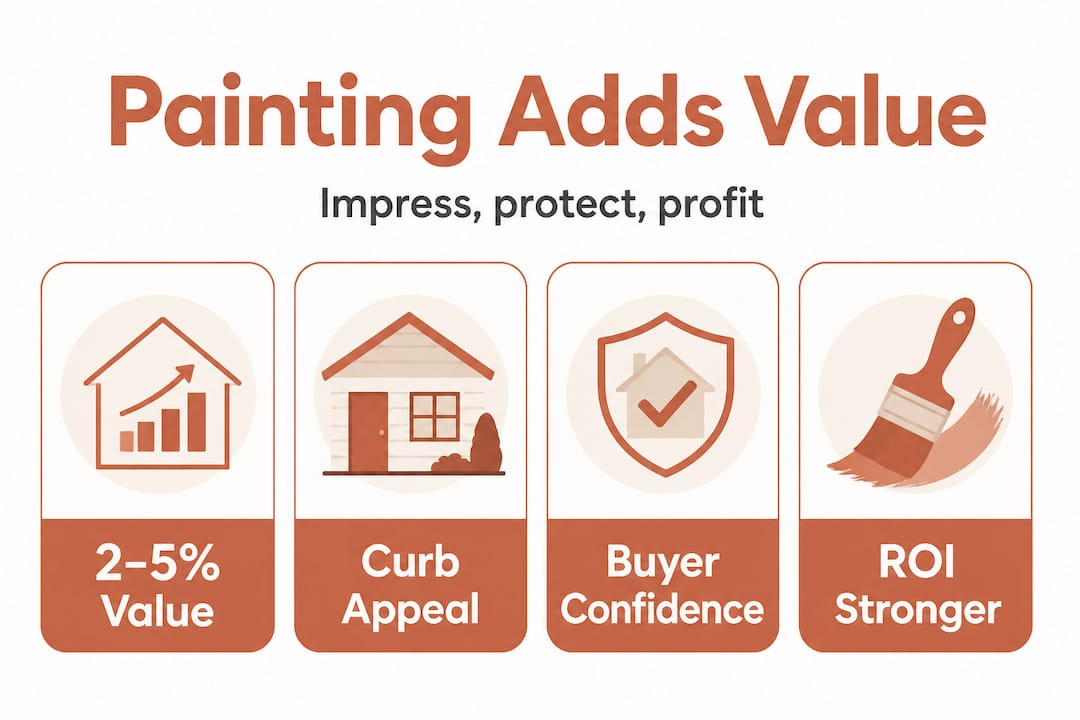
Exterior painting can increase value by 2 to 5% on a typical home, which translates to real money in any South West market. On a £300,000 property in Bristol, Exeter, or Bath, that is between £6,000 and £15,000 added for what is, comparatively, a modest outlay. That is a return that most structural renovations simply cannot match in terms of cost efficiency.
What makes exterior painting so powerful is that it communicates far more than colour. A well-painted home signals regular upkeep. It suggests the owner has attended to maintenance consistently, which gives buyers confidence that the structure underneath is sound. A flaking, discoloured exterior does the opposite. It raises questions about rot, damp, and neglect, even if the property is structurally perfect.
Here are the key ways a quality exterior repaint boosts value and appeal for South West homeowners:
Curb appeal directly influences how quickly a property sells and at what price
Protection against the South West’s notably wet and windy weather prevents costly structural damage
Modernisation of older colour schemes updates the property’s look without expensive alterations
Highlight of architectural features such as window surrounds, lintels, and cornicing on period properties
Increased perceived size through the clever use of lighter tones on smaller or terraced homes
Paint also serves a protective, practical function beyond aesthetics. In the South West, where coastal salt air and persistent rainfall are facts of life, untreated or ageing render and masonry deteriorates quickly. Quality exterior paint acts as a weatherproof barrier. Without it, moisture penetrates surfaces, causing damp, cracking, and eventually expensive repairs.
There are also strong reasons to repaint exterior walls before any sale rather than after moving in, as fresh paintwork at the point of valuation ensures surveyors and buyers see the property at its absolute best.
Pro Tip: Always fix cracks, repoint brickwork, and treat any damp before painting. Paint applied over a damaged surface will fail quickly and could mask problems that later come to light during a survey, potentially costing you far more than a proper repair would have.
Interior painting: the ROI of renewing your living spaces
While the outside creates the first impression, interior painting powerfully influences how buyers feel once inside your home. And the financial returns from interior redecorating are, frankly, remarkable compared to most other home improvements.
Research on what adds value before selling shows that a neutral redecoration project costing between £200 and £600 can add £1,000 to £3,000 to a property’s perceived value, representing a return on investment of 300 to 500%. At the higher end, a more thorough decorating project costing around £3,000 can deliver a 5% increase on a £250,000 home, which is roughly £12,500 added value, a ROI of 317%.
Project type | Typical cost | Estimated value added | Approximate ROI |
Single room neutral redecoration | £200 to £400 | £1,000 to £2,000 | 300 to 500% |
Full interior redecoration | £600 to £1,500 | £2,000 to £4,000 | 200 to 350% |
Comprehensive redecoration | £3,000 | £12,500 (5% uplift) | 317% |
Exterior repaint | £1,500 to £3,500 | £6,000 to £15,000 | 200 to 400% |
The role of painting in home renovation is consistently undervalued by homeowners who focus instead on kitchens and bathrooms. Whilst those renovations have their place, a newly fitted kitchen in a property with stained, marked walls and dated paint schemes still leaves buyers feeling the home needs work. Fresh, neutral paintwork across the entire interior ties everything together and creates that all-important move-in-ready feel.
Here is a practical order of priority for interior repainting before a sale:
Entrance hall and landing: This is the first space buyers enter and sets the tone for their entire viewing experience. Clean, bright, and neutral is the goal.
Living room: Buyers spend the most time imagining their life in this room. Make it feel spacious, warm, and current.
Kitchen and dining area: Even if the units are older, fresh paintwork on walls and ceilings makes the space feel cleaner and more modern.
Master bedroom: This room sells the lifestyle. Calm, neutral tones with quality finishes project comfort.
Bathrooms: Bright white or soft grey tones here suggest cleanliness and modernity.
The benefits of hiring professional painters are most visible in interior spaces where finish quality is scrutinised at close range. Roller lines, uneven edges, or missed spots on ceilings are all immediately obvious to buyers and suggest a lack of care.
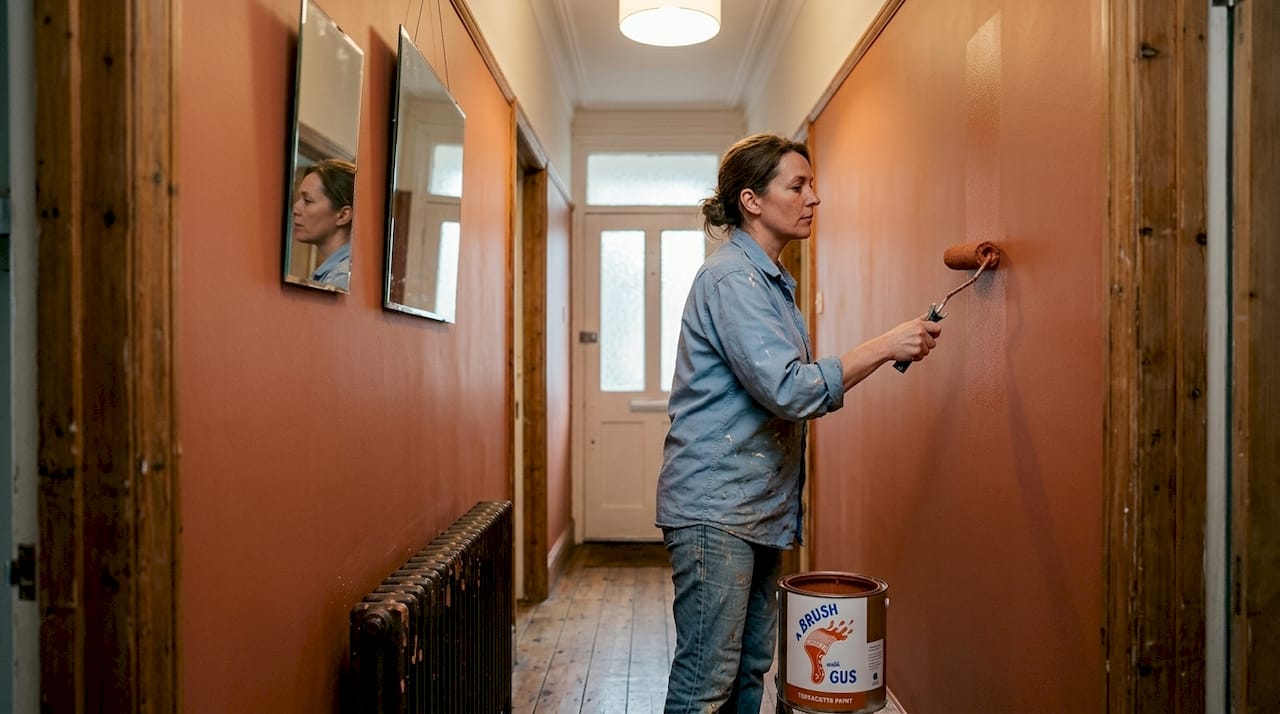
Pro Tip: Prioritise the entrance hall above all other rooms if your budget is tight. Estate agents consistently report that buyers form their strongest impressions in the first room they enter, and that impression colours how they perceive every space thereafter.
The risks and rewards: colour choices and paint quality explained
Choosing the right colours and finishes is just as important as investing in high-quality products and workmanship. Get this wrong and even expensive paint applied by experienced hands can work against you.
Bold, dark, or highly personalised colour choices are among the most common mistakes homeowners make. Poor colour choices can decrease perceived value, making rooms feel smaller, darker, and less inviting. Muddy pinks, deep reds, and strong feature walls may reflect your personal taste perfectly, but they actively distract buyers, who begin calculating redecoration costs rather than imagining their own life in the space.
The following comparison illustrates how colour and quality affect buyer perception:
Choice | Effect on buyer perception | Impact on value |
Warm neutral tones (soft white, pale grey, greige) | Spacious, move-in ready, versatile | Positive: adds perceived value |
Bold feature walls or dark accent colours | Divisive, feels like personal project | Neutral to negative |
Period-appropriate colours on Victorian or Edwardian homes | Authentic, desirable, well-considered | Strongly positive |
Low-quality emulsion on poorly prepared surfaces | Patchy, uneven, raises maintenance concerns | Negative: reduces offers |
Premium paint on well-prepared surfaces | Rich, durable, high-specification feel | Positive: increases perceived quality |
“The wrong paint colour is not just an aesthetic misstep. It is a financial one. Buyers deduct far more than the cost of repainting from their offers when they see a room they cannot immediately picture themselves in.”
Quality of paint matters enormously, particularly for older properties. Many homes in the South West are Georgian, Victorian, or Edwardian, and these period properties have specific characteristics: ornate cornicing, deep skirting boards, original fireplaces, and complex architectural details. Premium paints with excellent coverage and depth bring these features to life. Cheap emulsions flatten and obscure them.
The role of painting in renovation projects for period homes deserves particular attention because the wrong finish (say, a flat matt emulsion on ornate woodwork rather than an eggshell or satin) can make a character property feel cheap and poorly thought-through. Matching finish to surface and architectural period is a skill that experienced painters bring instinctively to every project.
Is hiring professional painters worth it? Costs, value, and peace of mind
Let’s address a big question: is it worth the investment to hire professionals, or can you achieve the same outcomes on your own?
The short answer is that for the purpose of adding and preserving property value, professionals deliver consistently better results. But the reasons go beyond simply getting a neater finish.
Factor | DIY approach | Professional approach |
Surface preparation | Often rushed, key step skipped | Thorough preparation is standard practice |
Paint knowledge | Limited product familiarity | Expert matching of paint to surface and purpose |
Finish quality | Visible brush marks, roller lines | Smooth, consistent, high-specification finish |
Time investment | Several weekends of disruption | Efficient, managed timeline with minimal disruption |
Safety | Risk with lead paint, heights | Trained professionals follow health and safety standards |
Longevity | Frequently requires repainting within 2 to 3 years | Premium results lasting 5 to 10 years with correct products |
Resale perception | Buyers often spot DIY work and reduce offers | Professional work commands higher and quicker offers |
Research consistently shows that cosmetic improvements like professional painting deliver a stronger return than most structural upgrades, provided the work is done correctly. Bold or trendy colour choices can still undermine this, which is one reason having professional advice on both execution and colour selection is so valuable.
A professional painter also brings peace of mind around issues that DIY decorators rarely consider. Understanding the correct preparation for surfaces that may contain lead-based paint is a safety matter as much as a practical one, particularly in older South West properties. Professionals understand how to handle this safely and within current guidelines.
Here is what to consider when choosing a professional painting service:
Ask for references and review their portfolio: Reputable painters will have photographic evidence of completed projects and verifiable client reviews.
Discuss colour and finish options before work begins: A good painter will advise on what works best for your specific home, not just apply whatever you request.
Confirm products being used: Premium paints from trusted brands cost more but last significantly longer and produce a noticeably superior finish.
Check for insurance and guarantees: Professional painters carry public liability insurance and often guarantee their work for a defined period.
Get an itemised quote: This helps you understand exactly what preparation, priming, and finishing is included so there are no surprises.
A professional painting guide covers these points in detail and is a useful read before commissioning any significant painting work.
Pro Tip: Always request references and ask specifically about projects on homes similar in age and style to yours. A painter experienced with modern new-builds may not have the specialist knowledge needed for a South West farmhouse or Victorian terrace.
Our view: what most homeowners miss about painters’ true impact
Having looked at all the evidence, here is our honest, experience-based perspective.
Most homeowners dramatically underestimate how much market perception is shaped by paintwork. They focus on kitchens, bathrooms, and extensions because those feel like substantial, serious investments. Paint feels like something they could do themselves on a Saturday. That thinking costs real money.
We have seen homes in Bristol and Exeter where a £4,000 professional interior and exterior paint job generated offers that were £15,000 to £20,000 higher than the pre-painting valuation. We have also seen the opposite: a well-maintained property with dated, chipped, or garish paintwork that sat on the market for months because buyers could not see past it.
The lesson we have learnt, working on properties across the South West, is that painting does not just add value. It preserves value through every passing season. Untreated exterior surfaces degrade faster in the South West’s climate than almost anywhere else in England. Moisture, salt air, and temperature swings all attack paint films and the surfaces beneath. Staying on top of exterior repainting every seven to ten years prevents expensive structural interventions down the line.
We are also candid that chasing trends is a trap. The colours that appear in interiors magazines this year may feel dated within three years. The homes that hold their value, and sell quickly, are the ones finished in timeless, neutral tones that allow buyers to imagine their own lives rather than yours.
Investing smartly in home painting is not about spending the most money. It is about spending it wisely, on the right surfaces, with the right products, in the right colours. That is what professional painters who know South West homes deliver, and that is what consistently separates properties that achieve their asking price from those that do not.
Transform your home’s value with expert painting services
If this article has clarified something important, it is that professional painting is not a luxury. It is one of the most financially sound investments you can make in your property.
At A Brush With Gus, Gus and Rhys bring years of hands-on experience across South West homes of every age and style. Whether you are preparing to sell, renovating, or simply protecting your most valuable asset, the right painting service makes a measurable difference. Explore our domestic painting services for interior transformations, our exterior home painting for kerb appeal that converts, or our specialist spray painting solutions for premium, flawless results. Get in touch today for a no-obligation quote and discover exactly what a professional finish can do for your home’s value.
Frequently asked questions
How much value can painting really add to my house in the South West?
Professional exterior painting can add 2 to 5% to average property values, equivalent to £6,000 to £15,000 on a £300,000 home in the South West region.
What colours are safest to use if I want to sell?
Light, neutral tones are the safest choice because they maximise perceived space and appeal to the broadest range of buyers. Bold or unusual colours can actively reduce perceived value and the size of offers received.
Is it better to do DIY painting or hire professionals?
Hiring professionals nearly always produces a stronger return on investment because they avoid common preparation mistakes and use better-quality materials. Cosmetic improvements done correctly consistently outperform structural upgrades for resale ROI.
Does paint quality really matter for property value?
Absolutely. Premium paints last longer, provide richer coverage, and make period features in older South West homes look genuinely impressive rather than flat and unremarkable.
How much should I budget for a professional paint job?
Budgets range from £200 to £600 for a single room through to around £3,000 for a comprehensive interior redecoration. Evidence shows that even modest spends at the lower end of this range can return 300 to 500% in added perceived value.
Recommended
Comments