
How painting quotes work for South West UK homeowners
TL;DR:
Homeowners often see large price differences in painting quotes due to variation in scope, materials, and professionalism. A detailed, itemised quote that includes preparation, materials, and clear terms ensures a fair and lasting finish. Comparing multiple in-person, thorough quotes helps avoid costly shortcuts and guarantees the best value for your investment.
Two quotes for the same room, same town, same week — and one is £180 while the other is £520. This is not unusual. Homeowners across the South West UK regularly encounter dramatic price differences when requesting painting services, and without knowing what drives those numbers, it is almost impossible to make a confident decision. Understanding how quotes are structured, what they must include, and how to spot a fair offer protects your budget, your walls, and your peace of mind before a single tin of paint is opened.
Table of Contents
Key Takeaways
Point | Details |
Always request itemised quotes | Ask for clear breakdowns to avoid hidden costs and understand exactly what is covered. |
Compare at least three offers | Getting multiple quotes helps you spot fair pricing and reputable service providers. |
Trade paints save money | Trade paints provide quality results at lower prices and are usually best for most homes. |
Off-peak painting can cut costs | Painting in winter months is often cheaper, though weather may limit exterior work. |
Professional reviews matter | Check reviews and insurance for every contractor before booking to protect your property. |
What is a painting quote and why does it matter?
A painting quote is a formal written offer from a contractor that outlines the total price, scope of work, materials to be used, and the timeline for completing the job. Think of it as a contract in its early stages. It is not just a number scribbled on a business card — it should describe exactly what you are getting and what you are not.
Why does this matter so much? Because vague quotes leave the door wide open for unexpected charges. A quote that simply reads “paint two bedrooms, £350” tells you almost nothing. Does that include preparation work such as filling holes and sanding? Does it cover primer? What about moving furniture or protecting your flooring? Itemised quotes answer all of these questions up front and protect both you and the contractor from disagreements later.
Here is what a well-prepared painting quote should typically cover:
Preparation work: filling, sanding, priming, masking
Number of coats to be applied
Materials: paint brand, type, and quantity
Labour costs broken down by task or day rate
Exclusions: anything the contractor will not cover, such as specialist finishes or moving heavy furniture
Payment terms and deposit requirements
Start date and estimated completion
“Homeowners should request 3+ itemised quotes after an in-person site visit, specifying inclusions and exclusions and checking that the contractor holds valid insurance and positive customer reviews.”
The reviewing painting contractors process should also involve checking a contractor’s insurance and track record. A painter without public liability insurance is a serious risk — if damage occurs on your property, you could be left covering the cost. Choosing reliable contractors means verifying their credentials before any work begins, not just comparing prices on paper.
How painting quotes are calculated: Key factors and typical costs
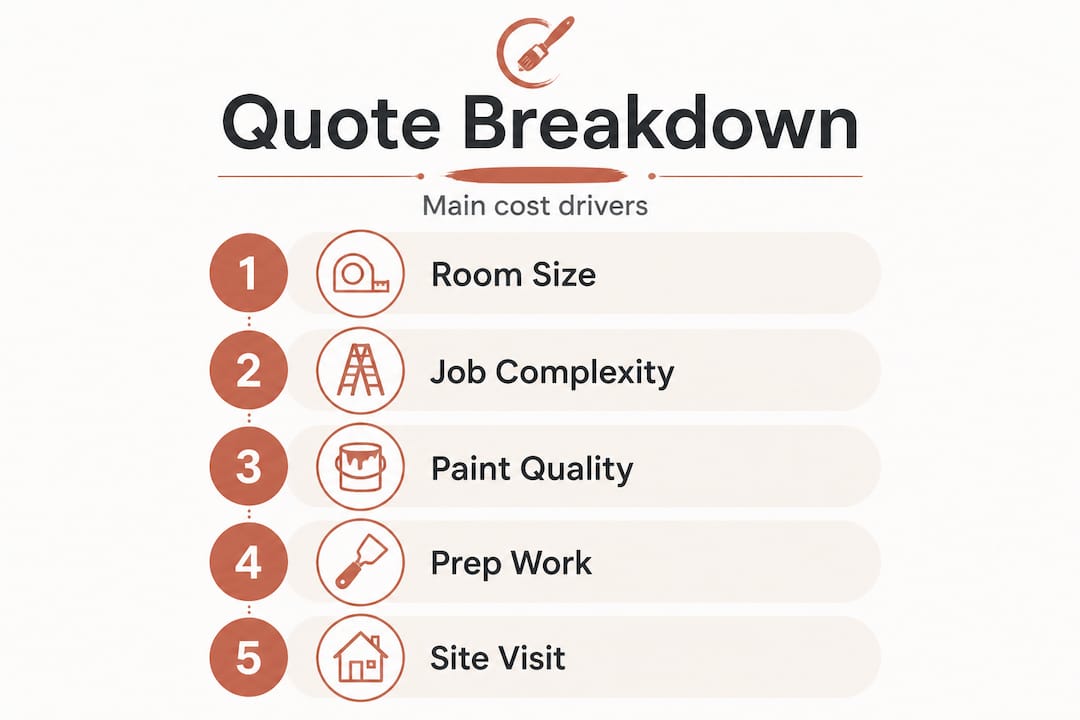
Painting quotes are not plucked from thin air. Contractors calculate prices based on several measurable factors, and understanding these gives you a much clearer picture of whether an offer is reasonable or inflated.
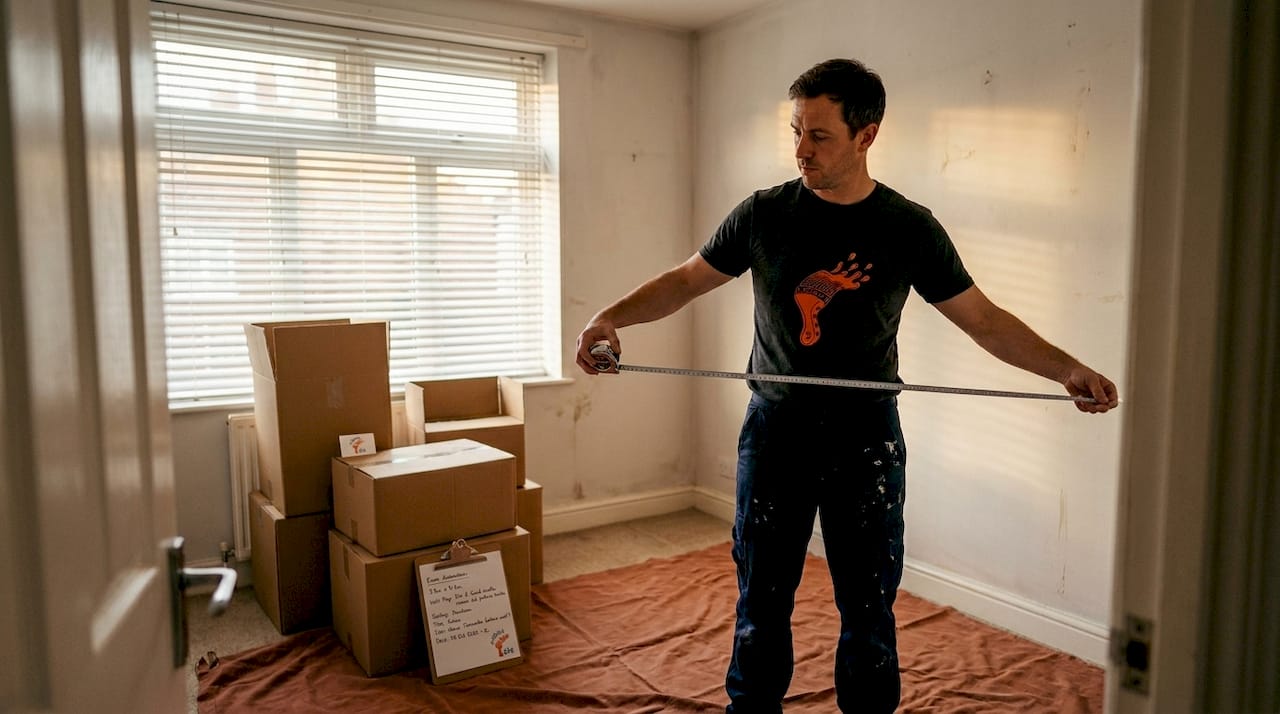
Room size is the most obvious driver. A larger room requires more paint, more time, and more labour. But complexity matters just as much. A room with high ceilings, detailed cornicing, multiple windows, or feature alcoves takes longer to paint carefully than a simple square box room of the same floor area. Prep work is another major variable — a freshly plastered wall needs far less preparation than one covered in peeling old paint or hairline cracks.
Here is a benchmark table for residential painting costs across the South West UK in 2026:
Job type | Estimated cost range |
Small room (box room/bathroom) | £200 to £450 |
Medium room (bedroom/dining room) | £250 to £600 |
Large room (open plan/living room) | £350 to £900 |
Bristol single room average | approx. £306 |
Exeter standard room | £300 to £600 |
Full 3-bed house (interior) | £2,500 to £5,000 |
Day rate (per painter) | £150 to £400 |
These figures give you a working framework, but they are starting points rather than fixed prices. A room requiring significant prep or specialist finishes will sit at the higher end.
Timing also plays a role that many homeowners overlook. Booking off-peak during November through February often brings more competitive quotes, as demand for painters drops considerably in the winter months. Contractors are more likely to negotiate or take on smaller jobs to fill their schedules.
Key factors that push a quote higher include:
Ceilings: adding a ceiling to a room quote typically adds £80 to £200
Stairwells: awkward access and height almost always increase labour costs
Previously dark colours: covering a deep navy or forest green with a lighter shade requires extra coats and more paint
Oil-based finishes on woodwork: more labour-intensive than water-based alternatives
Pro Tip: Always ask your painter to carry out a site visit before providing a quote. A price given over the phone or based purely on room dimensions will rarely reflect the actual job accurately, and you may find the final bill looks very different from what was originally discussed.
Understanding painting best practices also helps you evaluate whether a contractor is cutting corners in the prep stage, which is where many cheaper quotes save money at the expense of lasting results.
Trade paints vs premium paints: Impact on your quote
The paint your contractor uses directly affects your quote, and it is worth understanding why. Most professional decorators work with trade paints as their default choice. These are paints sold specifically for commercial use, offering reliable coverage, durability, and consistency at a cost-effective price point.
Dulux Trade, for example, typically costs around £25 to £40 per 5 litres. Premium lifestyle brands like Farrow & Ball sit at approximately £50 to £65 per 2.5 litres — which means the cost per litre is dramatically higher. On a full house repaint, that difference can add hundreds of pounds to your final bill.
Here is a comparison of the main options:
Paint brand | Cost (approx.) | Coverage | Best suited for |
Dulux Trade | £25 to £40 per 5L | Excellent | Most residential rooms |
Crown Trade | £20 to £35 per 5L | Very good | General interior use |
Farrow & Ball | £50 to £65 per 2.5L | Moderate | Feature walls, period properties |
Little Greene | £45 to £60 per 2.5L | Good | Historic or design-led homes |
Trade paints cover more area per litre, dry more predictably, and respond better to the working conditions that professional painters operate in. Premium paints are not necessarily better performers — they offer distinctive pigments and finishes that suit specific design choices rather than everyday walls.
There are situations where premium paint is worth the investment. A feature wall in a dining room, the hallway of a Victorian terraced house in Bristol, or a period property in rural Somerset may benefit from the depth of colour that lifestyle brands provide. But for the majority of residential painting jobs, trade paint delivers a finish that is just as durable and far more cost-effective.
Avoid quotes that specify only “emulsion” without naming a brand
Ask whether the quote includes two coats as standard
Check whether the price covers primer on freshly plastered or heavily stained surfaces
Consider budget decorating approaches before committing to premium finishes throughout
If you are uncertain about choosing the right finish for different surfaces, it is always worth asking a professional before the quote is finalised. Getting that wrong early on can mean extra work and expense down the line.
Pro Tip: If a quote seems very low, ask specifically what paint brand is being used. Some contractors reduce costs by using low-quality retail paint rather than professional-grade trade products, which affects coverage, durability, and the overall appearance of the finished job.
You can explore further advice and guidance through the A Brush With Gus painting blog for practical insights specific to South West UK homes.
How to compare painting quotes and choose wisely
Receiving three quotes is the bare minimum. It gives you a meaningful spread to compare scope, materials, and price simultaneously rather than making a judgment based on one or two data points. Here is a practical approach to getting the most useful comparison:
Request each quote after an in-person site visit. Contractors who quote without seeing the job are guessing, and those guesses often change once work begins.
Ensure every quote is itemised. If a contractor provides a single lump-sum figure with no breakdown, ask for more detail. If they refuse, that tells you something important.
Compare scope, not just price. One quote may be higher because it includes prep work, primer, and two coats. Another may look cheaper because it skips steps entirely.
Check insurance and reviews. Verify their credentials and look for consistent positive feedback from previous clients, particularly for work on similar properties.
Ask about the materials. Which paint brand? How many coats? Is primer included? Does the price cover masking and protection of flooring and furniture?
Common red flags to watch for when understanding painting contractors:
A price that is dramatically lower than every other quote you received
Reluctance to put anything in writing
No mention of preparation work in the quote
Inability to provide references or photographs of past work
Asking for a large cash deposit upfront with no payment schedule
Ask about seasonal availability too. Many painters in the South West offer more flexible pricing between November and February when their workload is lighter. This is an easy way to secure quality work at a more competitive rate without sacrificing the standard of finish.
Pro Tip: When comparing quotes, create a simple checklist for each one covering: prep work included, materials named, number of coats confirmed, insurance verified, and reviews checked. Scoring each quote against the same criteria makes the right choice far more obvious.
The truth most homeowners miss about painting quotes
Here is something we have observed consistently over years of working in the South West: most homeowners who end up disappointed with a paint job made their decision based almost entirely on price. Not preparation, not materials, not the painter’s track record — just the number at the bottom of the quote.
The temptation is understandable. When one quote is £350 and another is £620 for what appears to be the same job, choosing the cheaper option feels logical. But the difference almost always lives in the details that were not written down. The cheaper quote skipped two coats of primer. The painter planned to cover rather than repair cracked plaster. There was no mention of quality-grade paint.
What a thorough quote actually reflects is a contractor who has assessed your property carefully, priced the job honestly, and planned the work properly. That level of professionalism protects the long-term value of your home. A quality paint job, done with the right preparation and materials, can last seven to ten years. A rushed, underpriced job may need redoing within eighteen months.
The homeowners who invest time in the quote comparison process — reading the details, asking questions, visiting previous jobs — consistently get better outcomes. Not just in terms of the final appearance, but in terms of the relationship with their contractor, the smoothness of the project, and the durability of the result. Shortcuts at the quote stage almost always become problems at the invoicing stage.
Expert painting services to simplify your next quote
Navigating quotes, materials, and contractor comparisons takes time, and it is easy to feel uncertain about where to start. That is where having a trusted local team makes a real difference.

At A Brush With Gus, brothers Gus and Rhys provide clear, itemised quotes for every residential painting project across the South West UK. Whether you need a single room refreshed or a full exterior transformation, you receive a detailed breakdown covering prep, materials, labour, and timelines with no surprises along the way. Services include domestic interior painting, exterior work, UPVC spraying, external cleaning, and professional airless spraying techniques. If you are ready to get a quote that actually tells you what you are paying for, get in touch with the team today.
Frequently asked questions
What should a painting quote for a single room include?
A quality painting quote should specify prep work, materials, brand and type of paint, labour, and any exclusions such as fixtures or specialist finishes so there are no surprises on completion.
Is it always cheaper to paint in winter months?
Off-peak seasons like November to February often bring lower quotes as demand slows, though wet weather can complicate scheduling for exterior painting projects.
Do trade paints perform as well as premium brands?
Trade paints deliver excellent coverage and durability in most homes, making them the preferred professional choice, though premium brands suit specific design or historic requirements.
Can I ask painters to itemise everything in the quote?
Yes, and you absolutely should. Reputable painters will provide a fully itemised quote listing all tasks, materials, and costs so both parties have a clear and agreed understanding of the work.
How many quotes should I get before hiring a painter?
It is best to obtain at least three quotes after site visits so you can meaningfully compare price, scope, materials, and professionalism before making your decision.
Recommended
Comments