
Recognising the indications of paint job fatigue early
- WM Creative Designs Limited
- 2 minutes ago
- 8 min read
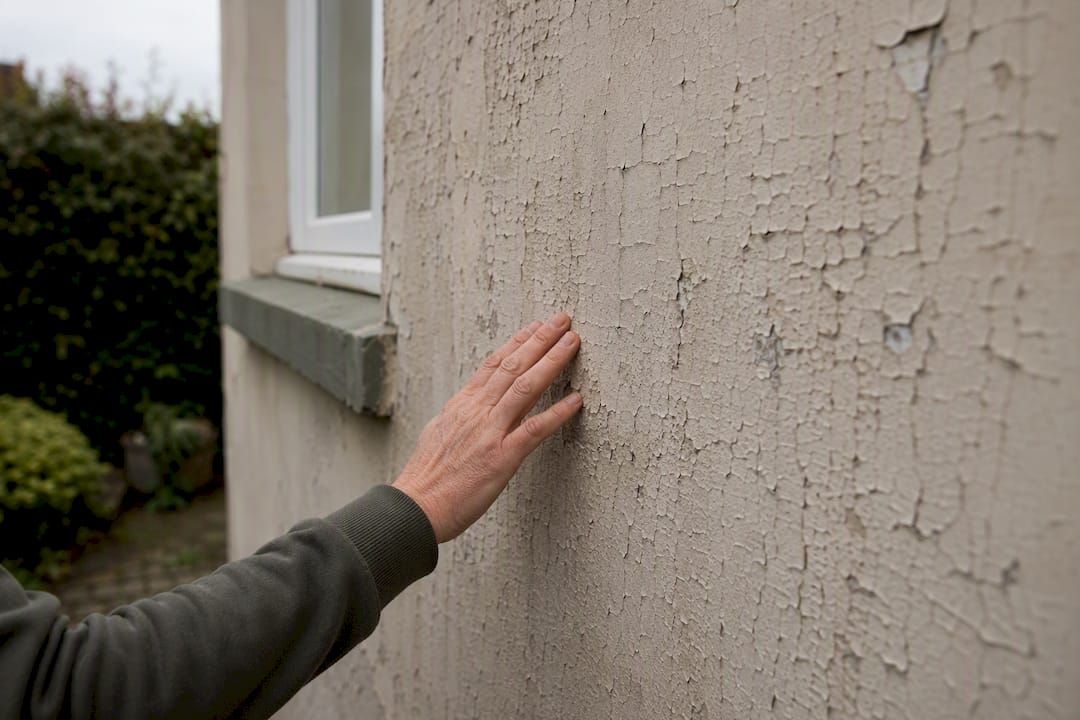
Peeling, blistering, chalking and loss of adhesion are the clearest indications of paint job fatigue, and each one points to a different underlying cause. If the fault covers more than one wall or shows bare substrate, treat it as a repair job, not a touch-up: photograph it, run a basic adhesion test, and check for damp before you pick up a brush. Over 65% of paint failures trace back to poor surface preparation, which is exactly why A Brush With Gus starts every job with a proper look, not a quote scribbled on the doorstep.
Call a professional if you see:
Paint lifting down to bare wood or render
Blistering across more than one elevation
Rust bleeding through the topcoat
The same patch failing again within a year or two
Do this first: take clear photos in daylight, press a fingernail into any bubbled paint to see what’s underneath, and note whether the area feels damp.
Key Takeaways
Visible failure signs like peeling, blistering, chalking and repeat failure at the same spot mean a condition-based assessment, not a fresh coat of paint, is the right next step.
Point | Details |
Read the sign correctly | Blistering points to moisture, alligatoring to a mismatched paint system, chalking to UV wear. |
Check before you repaint | Adhesion testing and moisture measurement reveal whether a repaint will actually hold. |
Fix the cause, not the symptom | Trapped internal vapour or unaddressed rot will make a fresh repaint fail again within a year or two. |
Prioritise by exposure | South and west-facing walls degrade fastest and should be inspected first. |
Get a proper diagnosis | A Brush With Gus surveys condition on site and delivers a photographic report with remediation options before any quote. |
Table of Contents
What each visual sign of paint fatigue actually means
Not every crack or bubble means the same thing, and reading the sign correctly saves you from paying for the wrong fix. Here’s what each one is telling you.
Peeling and flaking usually mean the bond between the paint and the surface has failed outright. If it lifts in sheets rather than fine strips, moisture is almost always involved, either soaking in from outside or pushing out from within the wall.
Blistering looks like small bubbles under the film, often appearing within hours of a hot day. It’s a moisture and heat problem: trapped vapour expands under the paint skin and has nowhere to go. Bathroom extractor fans venting into a loft space, or a tumble dryer without proper external ducting, can push enough water vapour through internal walls to blister paint on the outside of the house months later.
Alligatoring, the cracked, reptile-skin pattern you sometimes see on old gloss work, happens when a rigid top coat sits over a softer, more flexible undercoat that keeps expanding and contracting with temperature. It’s a sign the paint system itself was mismatched, not just old.
Chalking is that dusty white residue that rubs off on your hand when you brush the wall. It’s the paint’s binder breaking down under UV exposure, and it’s almost always worse on south and west-facing elevations, which take the brunt of the sun and the heaviest rain. Chalking on its own often just means it’s time to repaint; chalking combined with fading and hairline cracking suggests the coating is at the end of its working life across the board.
Cracking without alligatoring, especially around window frames or joints, often points to substrate movement rather than a paint fault. Fading and patchy colour are cosmetic on their own, but uneven fading between sheltered and exposed sections of the same wall is a useful clue about where moisture or sun exposure is doing the most damage.
Peeling to bare timber: check for rot before repainting
Blistering in patches near bathrooms or kitchens: check internal ventilation
Chalking with no cracking: usually a straightforward repaint
Rust bleeding through: metalwork needs treating before any coating goes back on
Pro Tip: Photograph every problem area from the same distance and angle every time you inspect it. A dated photo record makes it far easier for a contractor, or you, to see whether a fault is spreading over the longevity of the coating.
South and west walls fail faster almost every time, so if you’re prioritising a limited budget, start there. For a fuller breakdown of what drives premature peeling specifically, our piece on what’s really happening with outdoor paint peeling goes into the mechanics in more depth.
How does a professional paint condition survey work?
A proper condition survey is a different exercise to a painter turning up and quoting on what they can see from the pavement. It starts with visual mapping of the whole building, walking every elevation and logging where and how the coating has failed, then backing that up with photographs tied to each location.
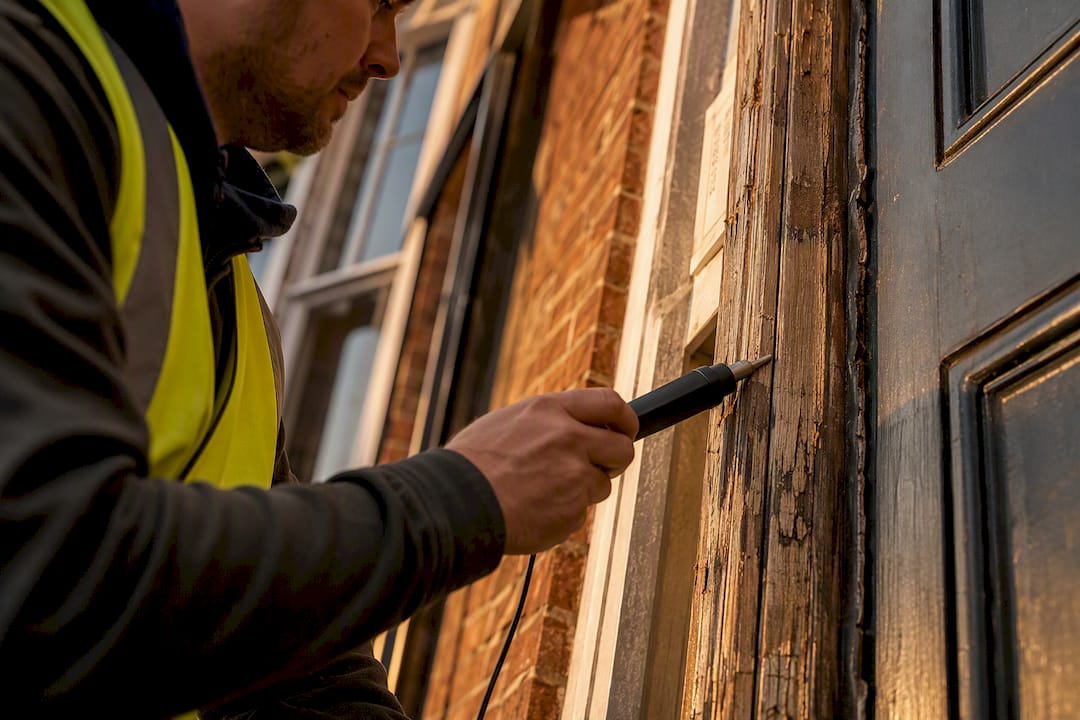
From there, inspectors run adhesion checks, usually a cross-hatch tape test or a pull-off test, to see whether the existing paint is actually still bonded to the surface underneath. Moisture measurement comes next, using a probe or non-invasive meter to check whether damp is present in the substrate, not just on the surface. Coating thickness checks can reveal whether previous painters applied enough material, or simply brushed on a thin, cosmetic layer that was never going to last. Where the cause still isn’t clear, a small destructive test, cutting back a section to bare substrate, settles the question.
Condition, not age, is what actually drives the recommendation. A five-year-old paint job on badly prepared render can be in worse shape than a twelve-year-old job that was specified and applied properly.
What the report should give you:
Mapped, dated photographs of every failure point
Findings based on physical condition, not just how long ago it was painted
Clear remediation recommendations, from spot repair to full respecification
A budget forecast so you can plan the work in phases if needed
This kind of diagnosis matters because repainting over a moisture problem without fixing the source just buys you another two years before the same blisters reappear.
When to patch, hire a painter, or commission a full survey
Work through this in order before you commit to anything:
How much surface area is affected? A single blistered patch under a leaking gutter is a local repair. Failure across two or more elevations usually means a systemic issue worth a proper survey.
How deep does the failure go? Paint flaking off in sheets down to bare timber or render is more serious than surface chalking.
Is there evidence of moisture? Damp patches, musty smells indoors, or blistering near bathrooms and kitchens point to a cause you need to fix before repainting, not just paint over.
Has the same spot failed before? Repeat failure at the same location is the clearest sign the last job never addressed the real cause.
Is there rust or rot present? Either one changes this from a decorating job into a repair job first.
When you’re getting quotes, ask contractors directly:
Do you carry out adhesion testing before quoting a full repaint?
Will you identify the root cause, or just repaint over the existing problem?
What preparation is included, and what warranty comes with it?
Do you provide a written specification, including primer and topcoat type?
Compare bids on scope and specification, not just the final number. A cheaper quote that skips proper preparation, as our guide on professional painting techniques explains, tends to fail faster and costs more over the following five years.
What happens if you leave a failing paint job too long?
Delay turns a paint problem into a building problem. Water finds its way behind an exposed edge, timber starts to soften and rot, and exposed metalwork corrodes rather than just discolouring. Indoors, persistent damp behind failing paint can encourage mould growth, which carries its own health considerations for occupants.
Days to weeks: small patch repairs and localised repainting once the substrate is confirmed sound
Several weeks: full elevation repaints, particularly where prep, priming and drying time between coats all need to be respected
Longer: any job requiring substrate repair, timber replacement or a specification upgrade before repainting can begin
Costs scale roughly the same way: a small patch is the cheapest fix by far, a full exterior repaint sits well above that, and anything involving carpentry, render repair or corrosion treatment climbs higher again. Painting in poor conditions doesn’t help either. Applying coatings when surfaces are too hot or too damp causes early blistering, so rushing the job to save money can simply create the next repair. Treat anything involving bare substrate, rot or rust as urgent; leave chalking and minor fading for the next planned maintenance window.
Quick checks you can do before calling a professional
Walk the property and photograph every area of concern in good light.
Press gently on any blistered or bubbled paint to see what’s beneath it.
Check for damp, staining or peeling near gutters, vents and rooflines.
Look in the loft or attic for signs of a leak tracking down an internal wall.
Sniff indoor rooms near affected exterior walls for a musty, damp smell.
Stay off ladders and don’t pick at paint near old properties without checking for lead first. Rot, exposed wiring or heavy corrosion mean stop and call someone qualified.
Pro Tip: Note the date, weather, and exact location of each photo. That small habit turns a phone full of snaps into a proper record a contractor can actually use.
Our approach to assessing coating fatigue
On site, we map every failure point, check adhesion and moisture by hand, and photograph the lot before recommending anything. Condition drives the advice, not guesswork.
Need a survey or a repaint? Here’s what happens when you get in touch
A Brush With Gus is the practical alternative to guessing your way through a failing paint job. Rather than a rough quote from the pavement, we send someone out who actually checks adhesion, measures moisture, and photographs the problem areas before recommending anything, whether that’s a local repair, a full exterior repaint, UPVC spraying for tired frames, or an exterior clean to buy time before the bigger job.

Get in touch and we’ll arrange a site visit at a time that suits you. On the day, our inspector walks the affected areas, runs the same adhesion and moisture checks covered above, and photographs everything. You’ll get a written report with our findings and a follow-up quote setting out your options, from a targeted repair through to a full respecification, so you can decide with the full picture in front of you rather than a single number. If your exterior is showing widespread failure rather than a single patch, our exterior home services page is the best place to start.
Frequently asked questions
What are the earliest indications of paint job fatigue I should watch for? Chalking and fine surface cracking usually appear first, well before peeling or blistering. Catching these early often means a simple repaint rather than substrate repair.
Can I repaint over blistered paint without fixing the cause? No. If blistering is caused by trapped moisture, repainting over it without addressing the source, whether that’s internal ventilation or an external leak, will cause the same failure again within a year or two.
How do I know if it’s a paint problem or a moisture problem? Damp smells, staining that spreads over time, or repeated failure in the same spot all point to moisture. A moisture reading taken by a professional confirms it.
Is chalking on its own something to worry about? Not urgently. Chalking alone usually just signals the coating has reached the end of its service life and needs a routine repaint, particularly on south and west-facing walls.
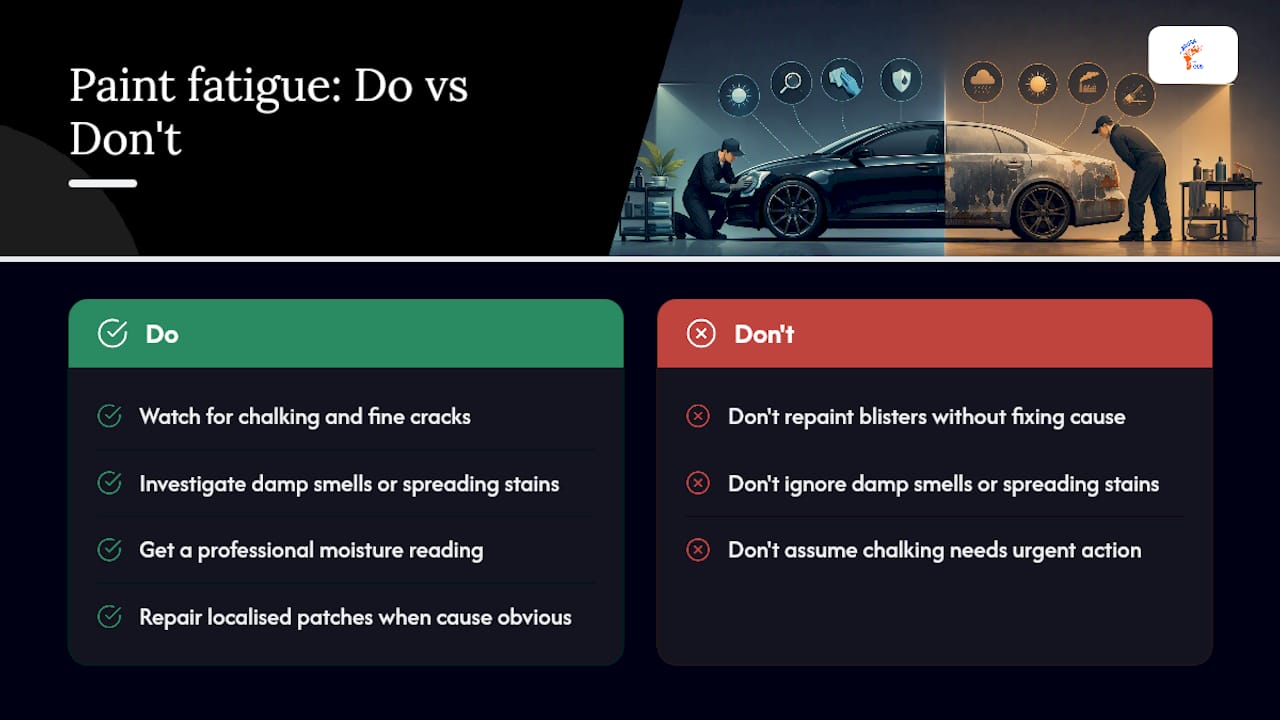
Do I need a full survey for a small patch of peeling paint? Usually not. A single localised patch, especially with an obvious cause like a leaking gutter, is normally a straightforward repair rather than something needing a full condition survey.
Sources
Recommended
Comments