
Avoid Enforcement: UK Painting Rules and Pro Tips for Listed Buildings
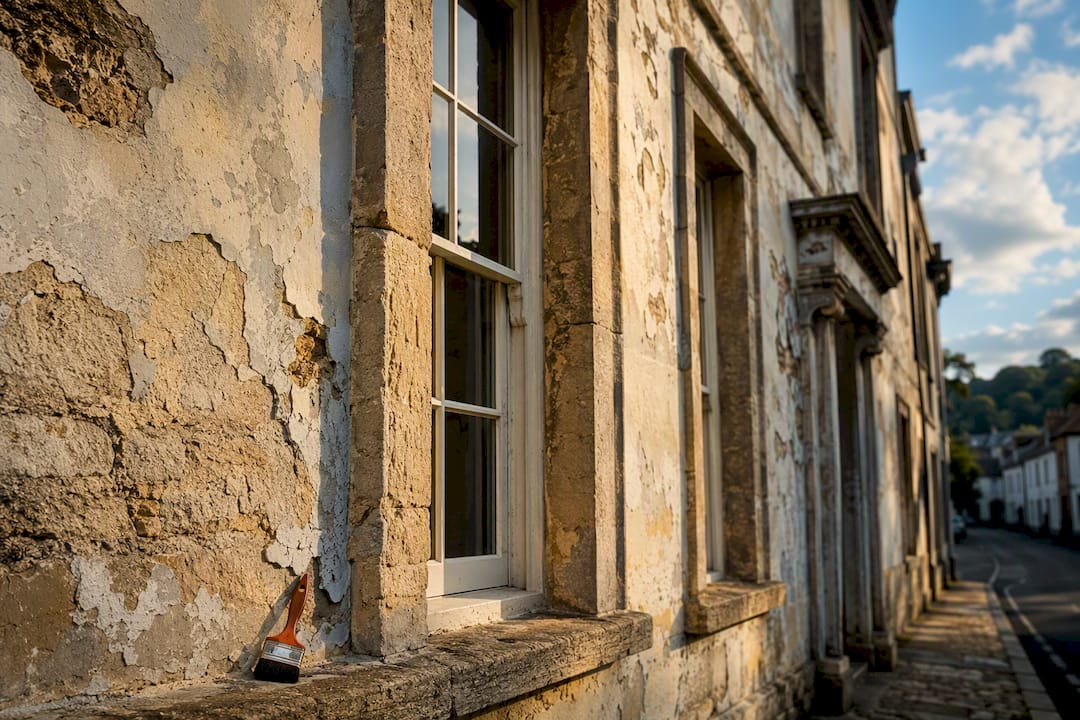
You usually need listed building consent to change the colour of a listed building or to paint masonry that has never been painted before. Simple, like-for-like repainting of surfaces that are already the same colour and finish normally does not require consent. Planning permission is a separate matter, and it can apply too, especially in conservation areas covered by an Article 4 direction. Before you pick up a brush, check with your local authority’s conservation officer and read the relevant Historic England guidance.
TL;DR:
Changing the exterior color or painting previously unpainted masonry on a listed building usually requires listed building consent, especially if it alters the building’s character.
Repainting surfaces that are already painted the same color with comparable products is generally considered maintenance and does not require consent.
In conservation areas with Article 4 directions, external painting may need permission even on unlisted buildings, and claims about the 10-year immunity do not apply.
The proper materials for historic buildings include limewash and mineral silicate paints that allow moisture vapor, preventing damage and deterioration.
Applying for consent involves pre-application advice, focused heritage statements, supporting documentation, and can take about eight weeks with no application fee in most cases.
Table of Contents
Listed building painting rules: when does consent apply?
The legal test hinges on whether the work affects the “character” of the building, a phrase drawn from the Planning (Listed Buildings and Conservation Areas) Act 1990. It’s a deliberately broad test, and your local planning authority decides how it applies to your specific building, which is why identical projects on two similar houses can get different answers.
Repainting in an identical colour, on a surface that has always been painted, typically counts as maintenance rather than alteration. Change the colour, though, or paint a surface that has never carried paint, and you’re almost certainly into consent territory. That distinction between “the same” and “something new” runs through the whole gov.uk guidance on historic building upkeep, and it’s the first thing a conservation officer will ask about.
Work that typically requires listed building consent includes:
Changing the exterior colour scheme, even by a shade or two, on rendered or painted elevations.
Painting previously unpainted stone, brick, or render for the first time.
Painting original joinery, decorative plasterwork, or carved details that have historically been left bare.
Applying a different type of coating (say, a modern masonry paint over what was traditionally limewashed stonework).
Any painting work bundled with other alterations, such as repointing or render repair, that together change the building’s appearance.
Work that usually does not require consent includes straightforward, matching repainting of window frames, doors, and rendered walls that are already painted the same colour, using a comparable product. That’s genuine maintenance, and councils generally want you to keep on top of it rather than let paintwork fail. The line gets blurry with older properties where the “original” colour is debated. If nobody can say for certain what colour a sash window was in 1890, get written confirmation from the conservation officer before you start, rather than guessing and hoping nobody minds.
Planning permission, conservation areas and Article 4 directions
Listed building consent and planning permission are not the same thing, and confusing them is one of the most common mistakes homeowners make. Listed building consent covers works that affect a listed building’s special interest and is applied for through your local planning authority. Planning permission covers development more broadly, and for most straightforward repainting of a house that already has permitted development rights, it simply doesn’t come into play.
Conservation areas complicate that picture. If your property sits inside one, your council may have removed permitted development rights for external alterations through an Article 4 direction. Where that applies, painting work that would ordinarily need no permission at all suddenly does, even on an unlisted building. The Fife Council guidance on painting buildings in conservation areas sets this out clearly: painting in the same colour generally will not need consent, but a scheme that changes the building’s character, or uses materials out of keeping with the area, will.
To check where you stand, before you order paint:
Look up your council’s conservation area map and check whether an Article 4 direction covers painting or external alterations specifically.
Contact the conservation officer directly. Most local authorities offer free pre-application guidance, and it’s the fastest way to get a straight answer.
Check the gov.uk planning permission pages for the general framework, then confirm local specifics with the council.
Don’t assume a neighbouring, unlisted property gives you a template. Article 4 status and listing grade both vary street by street, sometimes even within the same terrace.
What paint should you use on a listed building?
Getting consent is only half the problem. Getting the materials right is the part that determines whether your building stays healthy for the next fifty years, or starts rotting from the inside within five.
Traditional buildings, particularly those built before around 1919, were designed to breathe. Solid stone or brick walls absorb moisture and release it again as the weather changes. Modern masonry paints, many of them acrylic or plastic-based, form a near-impermeable film. Guidance from the IHBC on alterations to listed buildings is blunt about this: seal the surface and you trap moisture inside the wall instead, and that moisture has to go somewhere. Usually it ends up pushing paint off in sheets, or driving damp inward towards timber and plaster.
For masonry, the preferred options are:
Limewash, the traditional finish for render and soft stone, which allows full vapour movement and ages gracefully rather than peeling.
Mineral silicate paints, a modern breathable alternative where limewash isn’t practical, though check compatibility with your substrate first.
Lime-based renders and washes generally, rather than cement-based or acrylic products, on any pre-1919 solid wall.
For timber joinery and metalwork, the priorities shift slightly:
Use appropriate primers matched to the substrate (an oil-based primer on bare timber, a rust-inhibiting primer on ironwork) rather than a universal “does everything” product.
Avoid overly rigid modern paints on timber that moves seasonally, as they crack and trap moisture behind the film rather than flexing with the wood.
Match the sheen level to what’s appropriate for the period. A high-gloss modern finish on Georgian sash windows often looks wrong and can also behave differently under UV and weathering than a traditional finish.
Removing failed modern paint from soft stone needs care too. Grit blasting and high-pressure washing are both capable of stripping away the weathered surface of soft stone or brick, leaving the fabric permanently more vulnerable to weathering. Specialist conservation methods, including chemical poultices or hand scraping, are the accepted approach for stripping impermeable coatings without damaging what’s underneath, a point the same IHBC guidance makes explicitly. If you’re dealing with failed paint and don’t know where to start, our guide on removing old paint safely covers the safer methods in more detail, and our piece on damp and paint failure is worth reading before you touch a scraper.
Pro Tip: If you’re not sure whether existing paint is breathable, do a simple water test on a small patch. Water that beads and sits on the surface suggests an impermeable modern coating; water that soaks in slowly suggests something closer to traditional limewash.
Should you paint previously unpainted stone or brick?
Painting masonry that has never been painted is one of the most consequential decisions a listed building owner can make, and it’s rarely reversible in any practical sense. Once you paint bare stone or brick, you commit the building to a maintenance cycle of repainting or stripping that its original builders never intended, and undoing that later is expensive, disruptive, and sometimes impossible without damaging the stone further.
Councils weigh this heavily. Guidance from authorities such as Bassetlaw Council generally advises against painting original unpainted stone, and against reinstating painted finishes on buildings where paint was never historically used. Local distinctiveness matters too. A row of unpainted granite cottages in Cornwall, or golden Cotswold limestone terraces, derive much of their character from that untreated stone. Painting one out of a row can visually disrupt an entire streetscape, which is exactly the kind of harm conservation officers are trained to flag.
Where a colour change or new paint scheme genuinely has merit, sample panels make the difference between a quick refusal and a considered approval. Applying a small trial patch of the proposed colour and material, and leaving it visible for the council to assess, gives everyone a reversible, evidence-based way to judge the change before committing the whole elevation. That approach is specifically recommended in the Fife Council guidance, and it’s one of the more reliable ways to move an application forward.
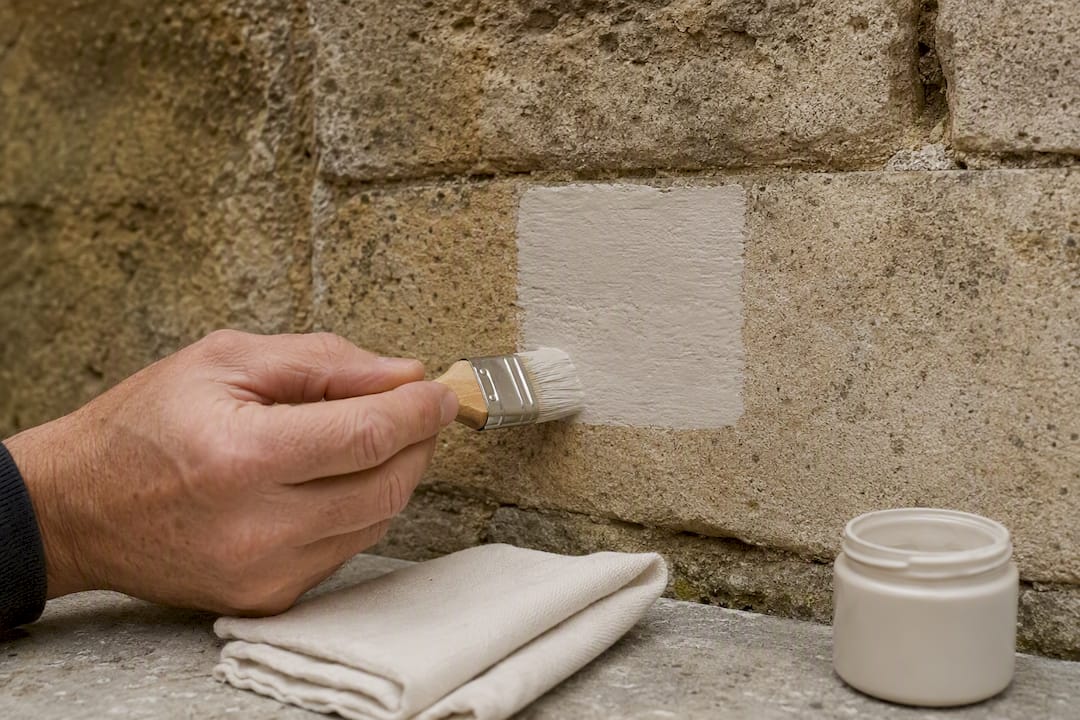
If you do want to change colour or paint bare masonry, a strong application usually includes a clear justification for why the change is needed, a short heritage statement addressing the specific elements affected, and evidence supporting the proposed approach.
How to apply for listed building consent
Applying doesn’t need to be daunting, but skipping steps almost always costs you time later. Here’s the practical sequence.
Get pre-application advice first. Contact your local authority’s conservation officer before you commit to a colour or product. Most councils offer this free, and it’s the single fastest way to avoid a refused application.
Assess the special interest of the affected elements. Historic England’s HEAG304 advice note sets out how authorities weigh special interest, and understanding that framework helps you write a stronger application.
Prepare a focused heritage statement. It doesn’t need to be a full conservation audit. HEAG304’s own advice suggests a statement addressing just the affected elements, explaining their significance and the impact of your proposal, is usually sufficient for external paint changes.
Gather supporting documents. Photographs of the current condition, elevation drawings, a specification of materials and paint products, physical paint samples, and a method statement for any surface preparation.
Confirm contractor competence. Councils increasingly ask for evidence that the contractor understands traditional materials, so include qualifications or previous conservation-relevant work where you can.
Submit through your local authority, using the same portal as a standard planning application in most areas.
Expect a determination period of around eight weeks for straightforward applications, though complex cases involving multiple elements can take longer.
On cost, there is good news: listed building consent applications generally carry no fee, unlike standard planning applications in England, which can run to around £206 for householder applications. If your project also needs planning permission, because of an Article 4 direction, for example, budget for that fee separately.
Maintenance versus alteration: what you can usually do without asking
Routine maintenance keeps a listed building alive. It’s also, refreshingly, the one category of painting work that mostly doesn’t need permission.
Repainting existing painted joinery, doors, and window frames in the same colour and a comparable finish is generally treated as maintenance, not alteration. The same goes for touching up render that’s already painted, provided you’re matching what’s there rather than changing it. Conservation officers actively want to see this kind of upkeep happening. Historic Environment Scotland’s guidance on traditional building maintenance frames regular, like-for-like care as a form of preservation in its own right, and officers tend to view it that way too. Deferred maintenance, by contrast, often forces bigger and more contentious interventions later.
A sensible cycle looks like this:
Repaint exterior timber joinery regularly, with the interval depending on exposure to weather and sun.
Check gutters, downpipes, and roof coverings at least annually, ideally before and after winter.
Address flaking or blistered paint promptly rather than leaving it, since exposed timber and ironwork deteriorate fast once paint fails.
Keep a simple record of what you’ve done and when, including product names and dates. If you’re ever unsure whether a job counts as maintenance or alteration, a quick written query to the conservation officer is worth the wait for a reply. It’s far cheaper than an enforcement notice. Landlords managing several listed or period properties may find our guide to landlord painting responsibilities useful for the record-keeping side of this, and the Prop-Pocket landlord inspection guide covers wider inspection scheduling that dovetails with a maintenance-led approach.
What happens if you paint a listed building without consent?
There’s a persistent myth that unauthorised work on a listed building becomes immune after ten years, borrowed from the separate planning rule that applies to some unauthorised development. It doesn’t apply here. Local authority enforcement guidance, including from Lichfield District Council, confirms there’s no equivalent time limit protecting unauthorised alterations to listed buildings. Enforcement action can be taken years after the work was carried out, even once a property has changed hands.
Councils have several tools available if they identify unauthorised painting:
An enforcement notice requiring the paint to be removed or the original finish reinstated, at the owner’s expense.
In serious cases, prosecution under the 1990 Act, which can carry unlimited fines.
A requirement for a retrospective listed building consent application, which the council can refuse just as it could a prospective one.
If you’ve already carried out work without checking first, don’t wait for a letter to land. Contact the conservation officer, be upfront about what’s happened, and get advice on a retrospective application before you do anything else. Engaging a conservation-aware contractor at this stage, someone who can produce a proper method statement and paint specification, tends to make these conversations go far more smoothly than trying to argue your way out of it.
Your pre-paint checklist for a listed property
Before any brush touches a listed building, work through this sequence:
Check the listing description on the Historic England list entry for your property, and confirm conservation area and Article 4 status with your council.
Request pre-application advice from the conservation officer, describing exactly what you plan to change and why.
Survey the existing fabric, noting paint type, condition, and any signs of trapped moisture or previous repairs.
Produce a sample panel for any colour or material change, and leave it visible for at least a few weeks before finalising your choice.
Choose breathable materials appropriate to the substrate: limewash or mineral silicate for masonry, correctly primed traditional paints for timber and metal.
Write a short heritage statement if you’re changing colour or painting bare masonry, focused on the affected elements.
Hire a conservation-aware contractor who can supply a method statement, agree scaffold access sensitively, and document the work as it progresses.
Pro Tip: Keep your paint samples and product data sheets even after the job is finished. If you ever apply for further consent, or sell the property, that record proves what was used and when, which saves everyone time.
A contractor’s view on painting listed buildings
Most problems on listed properties start the same way: someone reaches for a modern masonry paint because it’s cheap, quick, and available at the local trade counter, without checking whether the wall underneath can actually breathe through it. A few years later, that paint is blistering off in sheets, and what should have been a straightforward repaint has become a full strip-back-and-start-again job, often with damp that’s crept further into the wall than anyone expected.
The fix isn’t complicated, but it does take patience most homeowners underestimate. A proper survey of the existing fabric, an honest look at what’s causing any moisture problems, and a paint specification that matches the substrate rather than fighting it. That’s the difference between a job that lasts and one that fails within a couple of winters.
What separates a conservation-sensitive contractor from a general painter isn’t fancy equipment. It’s the willingness to slow down: take paint samples before starting, produce a method statement the council can actually read, and flag to the homeowner when a proposed colour or product is likely to cause problems with an application, or with the building itself, before any paint goes on.
— Angus
Painting and decorating for listed and historic properties
If you own a listed or period property and you’re weighing up whether to tackle a repaint yourself or bring in someone with experience in limewash and standard masonry paint, consider hiring a professional painting and decorating service. Such professionals work with owners of older and listed properties on exterior painting, careful preparation, and colour-matching that respects a building’s existing character, rather than defaulting to whatever’s quickest off the shelf.

Our services relevant to historic properties include exterior painting with breathable, appropriate materials, exterior cleaning to prepare surfaces without resorting to damaging methods, and specialist spraying techniques for timber and metal joinery that need an even, controlled finish rather than a heavy brushed coat. For period windows and doors specifically, our UPVC and joinery spraying service gives a smoother result with less risk of drips or missed detail than traditional brushwork on fiddly profiles.
Hiring a contractor who understands conservation requirements reduces the chance of an enforcement headache down the line, because the right materials and a documented approach are exactly what a conservation officer wants to see if consent is ever queried. Consider arranging a survey and requesting a quote for your property, whether it’s a full repaint or a smaller joinery job.
Sources
For anything beyond the basics covered here, go to the primary sources rather than relying on secondhand summaries:
Whatever you find in these documents, follow it up with a direct conversation with your own conservation officer. Guidance is general; your building, and your local authority’s view of it, is specific.
This article is general information, not a substitute for advice from a qualified lawyer. Consult a qualified legal professional about your own circumstances before acting on anything here.
FAQ
Does the 10 year rule apply to listed buildings?
No. The ‘10-year rule’ that grants immunity to some unauthorised development does not apply to unauthorised alterations on listed buildings, and enforcement action can be taken at any time, regardless of how long ago the work happened.
Can you redecorate a Grade II listed building?
Yes, redecorating with like-for-like colours and finishes on already-painted surfaces is generally treated as maintenance and usually doesn’t need consent. Changing the colour or painting a previously unpainted surface, even on a Grade II building, normally does require listed building consent.
What are you not allowed to do to a listed building?
You’re not allowed to carry out alterations that affect the building’s character without first obtaining listed building consent, which covers most colour changes, painting bare masonry, and using inappropriate impermeable modern paints on historic fabric. The specific restrictions depend on what’s named in your building’s listing description, so always check that first.
Can you paint beams in a Grade II listed building?
Painting exposed structural beams that have never been painted is treated the same way as painting any other unpainted historic fabric, and it will almost certainly need listed building consent. If the beams are already painted and you’re matching the existing colour and finish, that’s typically maintenance and doesn’t need permission.
Recommended
Comments