
Long-lasting exterior paint options for UK homes
TL;DR:
High-quality exterior paints based on 100% acrylic latex resist fading, peeling, and moisture damage across all seasons. Proper surface preparation, application conditions, and color choice are crucial factors influencing long-lasting finishes, often more so than the paint brand itself. Selecting the right product for your climate and surface, combined with thorough priming and correct application techniques, ensures the best durability and appearance over time.
The best long-lasting exterior paint options are built on 100% acrylic latex formulations that resist fading, peeling, and moisture damage across all seasons. Brands like Benjamin Moore Aura Exterior and Sherwin-Williams Duration Exterior consistently lead outdoor exposure tests for UV resistance and colour retention. Yet the paint itself is only part of the equation. Surface preparation, application conditions, and colour choice each determine whether a finish lasts five years or fifteen.
What are the qualities of durable exterior paint?
Durable exterior paint shares a consistent set of physical properties that separate a ten-year finish from one that starts peeling within two seasons. Understanding these qualities helps you evaluate any product on the shelf, regardless of brand or price point.
The core qualities to look for are:
Flexibility. Exterior surfaces expand and contract with temperature changes. A paint film that cannot flex will crack and peel. Acrylic latex paints expand and contract with the substrate far better than oil-based alternatives, which become brittle and yellow under prolonged sun exposure.
UV resistance. Ultraviolet light breaks down pigment and binder over time, causing chalking and fading. High-quality outdoor paint contains UV-stabilising additives that slow this process significantly.
Water resistance and breathability. A good exterior coating repels liquid water but allows moisture vapour to escape from the substrate. Trapping moisture beneath the film causes blistering and rot.
Mildew and dirt resistance. Paints formulated with mildewcide additives stay cleaner for longer, particularly in the damp conditions common across the South West of England.
Binder content. A higher proportion of 100% acrylic binder means better adhesion, durability, and colour lock. Cheaper paints dilute the binder with fillers, which reduces performance.
Pro Tip: Check the product data sheet before buying. A paint with 40% or more volume solids is a reliable indicator of a high-binder, high-durability formulation.
1. Benjamin Moore Aura Exterior
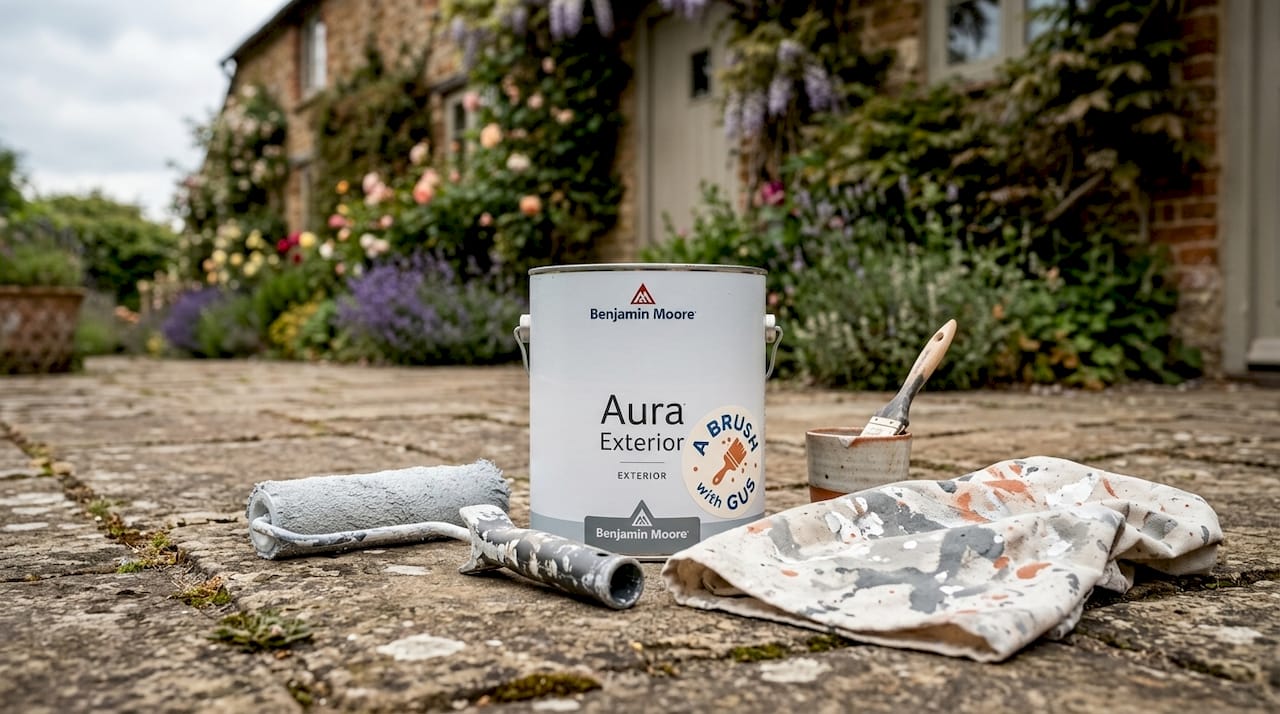
Benjamin Moore Aura Exterior is the benchmark for premium colour retention in residential painting. Its proprietary Color Lock® technology locks pigment into the film, preventing the UV-driven fading that dulls most painted surfaces within three to five years. The trade-off is price. Aura sits at the top of the cost range, making it best suited to feature walls, front elevations, or properties where kerb appeal is a priority investment.
2. Sherwin-Williams Duration Exterior
Sherwin-Williams Duration Exterior is the go-to choice for harsh or coastal climates. Its thick, self-priming formula builds a dense film that resists wind-driven rain, salt air, and temperature extremes. Duration is particularly well regarded for timber cladding and rendered surfaces where moisture penetration is a persistent risk. It applies in two coats and carries strong resistance to peeling and mildew.
3. Kompozit PRO
Kompozit PRO offers the strongest value proposition in the market, combining a paint and primer in one product with a 15-year manufacturer’s warranty. For UK homeowners working to a budget without sacrificing longevity, this is a practical choice. The formulation is water-based acrylic, covers well in two coats, and performs reliably on both masonry and timber substrates.
4. Behr Marquee Exterior
Behr Marquee is built around one-coat coverage and self-priming convenience, which reduces both labour time and material cost on straightforward repaint projects. Its weather-resistant paint formula handles moderate UV exposure well and maintains colour vibrancy longer than standard trade paints. Behr Marquee is best suited to properties in sheltered locations rather than those facing full coastal or south-facing exposure.
5. Benjamin Moore Regal Select Exterior
Regal Select is specifically engineered to adhere to difficult surfaces, including previously chalky or glossy finishes. Painting over chalky surfaces without addressing adhesion is one of the most common causes of rapid paint failure, and Regal Select’s formulation tackles this directly. It is a strong choice for older properties being repainted for the first time in many years, where the existing surface condition is unpredictable.
6. Sherwin-Williams Loxon XP
Loxon XP is a specialist masonry coating designed for concrete, brick, and stucco. It bridges hairline cracks, resists efflorescence, and provides a waterproof barrier that standard exterior paints cannot match on porous substrates. For UK homes with exposed brickwork or rendered elevations, Loxon XP addresses the specific failure modes that affect masonry: water ingress, salt migration, and surface erosion.
How to prepare your exterior surfaces for maximum paint longevity
Surface preparation is the single biggest determinant of how long exterior paint lasts. Research confirms that inadequate surface prep causes more premature paint failures than poor product choice. Follow these steps before applying any coating:
Clean the surface thoroughly. Pressure wash masonry, timber, and render to remove dirt, algae, mould, and loose material. Allow the surface to dry completely before proceeding.
Scrape and sand. Remove all flaking, peeling, or chalky paint. A paint film applied over a failing substrate will fail at the same rate as the layer beneath it.
Address bare metal correctly. For metal surfaces such as window frames, gutters, and railings, mechanical cleaning to the SSPC-SP11 standard removes rust and mill scale to bare metal, creating the surface profile needed for primer adhesion and long-term coating performance.
Prime where required. Bare timber, porous masonry, stained surfaces, and any area where old paint has been removed need a suitable primer before topcoating. Skipping primer on these surfaces shortens the life of the finish coat significantly.
Check conditions before you paint. Avoid painting below 10°C or above 30°C, in high humidity, direct midday sun, strong wind, or with rain forecast within 24 hours. Each of these conditions disrupts film formation and reduces adhesion.
Apply two thin coats. Two thin coats outperform one thick coat every time. A thick single coat traps solvent, sags, and dries unevenly. Two thinner applications build a more uniform, durable film.
Pro Tip: Surface dryness is not the same as surface readiness. Check the dew point before painting. If the surface temperature is within 3°C of the dew point, moisture will condense on the substrate and compromise adhesion even on a dry-looking day.
How climate and colour choice affect exterior paint durability
The UK climate varies considerably from the exposed Atlantic coastline of Cornwall to the drier, warmer conditions of the South East. Paint that performs well in one location may fail prematurely in another. 100% acrylic latex handles UV exposure and temperature swings better than any other residential paint chemistry, making it the default choice across all UK regions.
Colour selection has a direct impact on how long a finish retains its appearance:
Light colours such as white, cream, and pale grey reflect sunlight, absorb less heat, and fade more slowly than darker shades. They are the most forgiving choice for south-facing elevations.
Dark colours absorb UV radiation, which accelerates pigment breakdown and causes chalking and peeling to appear sooner. If you want a dark finish, choose a paint with a high-quality UV-stabilised pigment system and budget for more frequent repainting.
Coastal and high-rainfall locations demand paints with strong water resistance and mildewcide content. Sherwin-Williams Duration and Loxon XP are both well suited to these conditions.
Sheltered, low-exposure locations allow more flexibility in product choice, though surface preparation standards remain the same regardless of exposure level.
For a deeper look at how colour and product selection interact with your property’s specific orientation and location, the exterior decorating tips guide from Abrushwithgus covers this in practical detail.
Specialty coatings and techniques to extend exterior paint life
Standard acrylic paints cover most residential applications, but certain situations call for more advanced solutions. Elastomeric coatings and ceramic-based paints stretch and contract with substrate movement, making them the right choice for surfaces with existing hairline cracks or significant thermal movement.
Elastomeric coatings form a thick, rubber-like film that bridges cracks up to 1.5mm wide and provides a waterproof membrane over masonry. They are particularly effective on rendered elevations that have developed a network of fine cracks over time.
Ceramic-based coatings such as Rhino Shield add an extra layer of UV and heat resistance beyond what standard acrylics provide. These products are more expensive but carry long manufacturer warranties and are worth considering for properties with extreme south-facing exposure.
Industrial-grade protective coatings are appropriate for metal structures, garages, and outbuildings where standard residential paints would fail quickly under mechanical wear or chemical exposure.
Professional application techniques make a measurable difference to coating performance. Airless spraying, for example, delivers a more uniform film thickness than brush or roller application, reducing the risk of thin spots that fail first under UV and weather exposure.
Key takeaways
The most durable exterior paint finishes combine 100% acrylic formulations, thorough surface preparation, and correct application conditions to achieve their rated service life.
Point | Details |
Choose 100% acrylic latex | Acrylic formulations outperform oil-based paints for flexibility, UV resistance, and moisture management. |
Preparation outweighs product | Cleaning, scraping, priming, and checking conditions determines longevity more than brand choice alone. |
Match product to exposure | Coastal and high-rainfall locations need specialist coatings like Sherwin-Williams Duration or Loxon XP. |
Lighter colours last longer | White, cream, and pale tones reflect UV, fade slower, and require less frequent repainting. |
Two thin coats beat one thick | Layered application builds a more uniform, durable film and reduces the risk of cracking and sagging. |
What I have learned from years of exterior painting
The single conversation I have most often with homeowners is about why their last paint job failed so quickly. Almost every time, the answer is not the paint. It is what happened before the paint went on. Surfaces that were not properly cleaned, primed, or allowed to dry fully. Paint applied on a cold morning when the temperature had not yet reached the minimum threshold. One thick coat instead of two thin ones. These are the decisions that determine whether a finish lasts three years or twelve.
I am also sceptical of the idea that spending more on paint automatically buys you more years. Benjamin Moore Aura is an outstanding product, but applied over a poorly prepared surface it will fail just as quickly as a budget trade paint. Kompozit PRO, applied correctly over a clean, primed substrate in good conditions, will outlast a premium product applied carelessly. The paint is the last 20% of the job. The other 80% is everything that comes before it.
My honest recommendation for anyone tackling an exterior repaint is to spend more time on preparation than you think you need to, and less time agonising over which premium brand to choose. Get the surface right. Follow the manufacturer’s temperature and humidity guidelines. Apply two coats. Those three things will do more for your result than any product upgrade.
For complex surfaces, metal substrates, or properties in exposed coastal locations, the professional painting techniques guide is worth reading before you start.
— Angus
Get a durable exterior finish from Abrushwithgus
If you want the confidence of knowing the preparation, product selection, and application are all done to a professional standard, Abrushwithgus is here to help. As a family-run painting and decorating business serving the South West, Gus and Rhys bring hands-on experience to every exterior home painting project, from surface cleaning and priming through to the final coat.
The team uses specialist spraying techniques to deliver even, durable finishes on rendered walls, timber cladding, and masonry. Every job starts with a thorough assessment of the existing surface condition, so the right products and preparation methods are matched to your property. Get in touch with Abrushwithgus for a no-obligation quote and expert advice on the best coating solution for your home.
FAQ
What is the most durable type of exterior paint?
100% acrylic latex is the most durable exterior paint type for residential properties. It offers superior flexibility, UV resistance, and moisture management compared to oil-based or alkyd alternatives.
How long should exterior paint last on a house?
A quality exterior paint job lasts between eight and fifteen years when the surface is properly prepared and the paint is applied in suitable conditions. Poor preparation or adverse weather during application can reduce this to three to five years.
Does colour affect how long exterior paint lasts?
Lighter colours such as white, cream, and pale grey fade more slowly than dark shades because they reflect rather than absorb UV radiation. Dark colours accelerate pigment breakdown and may require repainting sooner.
Is surface preparation really more important than paint quality?
Research confirms that surface preparation is the primary factor in exterior paint longevity. Even the best paint will fail prematurely if applied over contaminated, chalky, or improperly primed surfaces.
When is the best time of year to paint exterior walls in the UK?
Late spring and early autumn offer the most reliable conditions for exterior painting in the UK. Temperatures between 10°C and 25°C, low humidity, and dry forecasts for 24 to 48 hours after application give paint the best chance to cure correctly.
Recommended
Comments