
Test a 1m² Patch First: Painting Exterior Brick in the UK
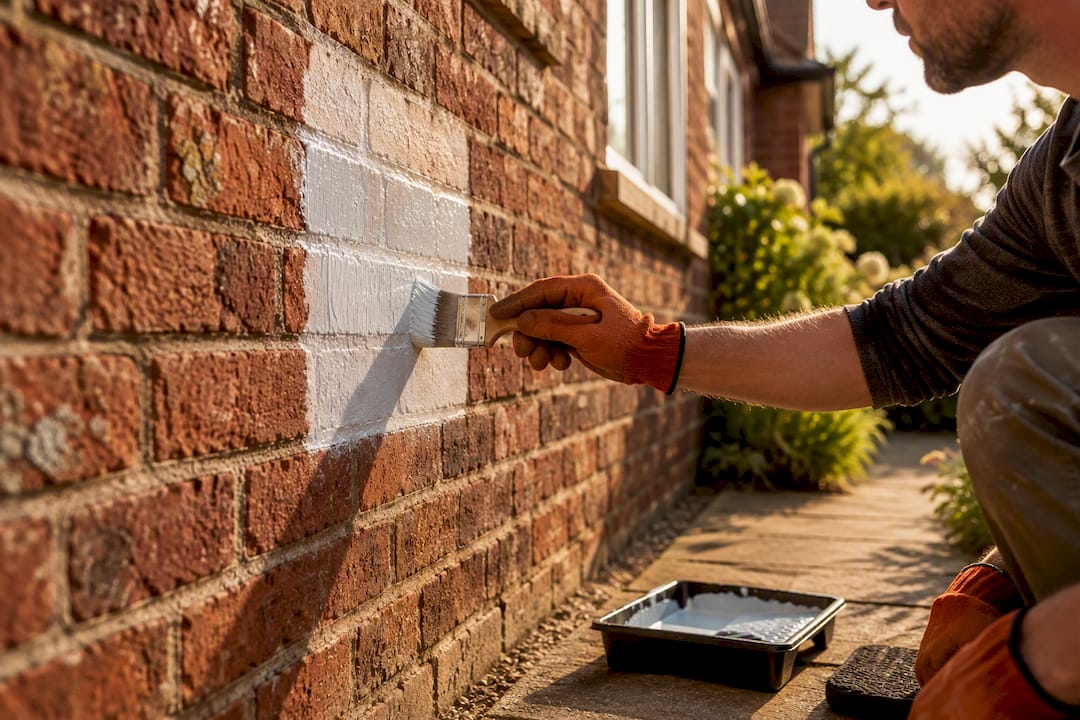
Yes, you can paint exterior brick in the UK, but only after checking two things: your wall is dry and sound, and you’re prepared to commit to a breathable masonry system for the long term. Painted brick is not easily reversed, and repainting becomes a maintenance job for as long as you own the house. An experienced Cornwall-based decorator has talked many homeowners through exactly this decision, and the advice below follows the same logic used on-site.
TL;DR:
Painting over brick is ideal only when walls are dry, sound, and free of moisture issues like efflorescence or rising damp; repair these first.
A test patch left for at least one week under local weather conditions is essential to confirm paint adhesion and durability before full application.
Use breathable primers and suitable paint systems, such as silicate or mineral paints, especially on older or sensitive brick to avoid trapping moisture.
Maintenance involves annual cleaning and small touch-ups, with silicate systems generally lasting longer than acrylic paints, often up to 20 years on sound masonry.
Avoid painting brick showing active damp, spalling, or crumbling mortar, and never paint on historic or listed brick without approval, particularly in adverse weather.
Table of Contents
Pros and cons of painting exterior brick in the UK
A fresh coat transforms a tired 1970s builder’s brick or patches up decades of mismatched repairs, and it’s often the cheapest way to lift kerb appeal on an otherwise dated house. That’s the upside. The downside is bigger than most people expect before they start.
Paint soaks into porous brick, and getting it back out again is expensive and rarely complete. One guide on the brick paint decision puts it plainly: removal usually means chemical stripping, and even then the original texture and colour variation often don’t come back. Brick also breathes, moving moisture vapour outward as walls dry after rain. The wrong paint film blocks that process and traps damp inside the wall instead of letting it escape.
Before deciding, weigh up:
Kerb appeal gain against a repaint cycle you’ll own for decades
Covering damaged or mismatched brick against losing the original texture permanently
Cost now against higher cost later if you ever want to reverse the decision
Good candidate: already painted brick, uniform modern builder’s brick, cosmetic damage
Poor candidate: unpainted historic or listed brick, anything showing damp
Quick decision checklist and red flags before you commit
Walk the wall before you walk into a paint shop. A five-minute inspection saves a five-figure mistake.
Look for spalling — flaking, crumbling brick faces usually mean frost damage or trapped moisture already at work.
Check for efflorescence — white, powdery salt deposits mean water is moving through the wall. Painting over it traps the problem rather than solving it, according to advice on painting over brick.
Inspect mortar joints — open, crumbling or missing mortar needs repointing first, not painting over.
Feel for rising damp — cold, damp patches near ground level, especially after dry weather, point to a drainage or damp-proofing issue.
Check planning status — listed buildings and some conservation areas restrict painting brick at all; a quick call to your local planning department avoids a costly reversal order.
Run a test patch — a small trial area tells you more than any tin’s label.
If you tick any of the first four boxes, stop and get repairs done before touching a paint roller.
Pro Tip: If in doubt, get a mason or experienced decorator to walk the wall with you before buying paint. A five-minute opinion from someone who’s seen a hundred similar walls is worth more than an afternoon of guessing.
Tools, cleaners and paint families you’ll need
Get the kit right before you start, or you’ll be making a second trip to the merchant halfway through the job.
Tools and safety gear:
Stiff masonry brush and a low-pressure washer (high pressure can force water into mortar joints)
Quality masonry brushes and rollers with a decent pile for texture
An airless sprayer if you’re covering a large elevation, plus back-rolling equipment
A sturdy ladder or, for anything above single-storey height, hired scaffold
Cleaning agents: a fungicidal wash lifts algae and moss, and a dedicated efflorescence cleaner deals with salt deposits properly rather than just scrubbing them off temporarily.
Paint families:
Breathable acrylic masonry paint — widely available, decent value, shorter lifespan
Silicate (mineral) paint — highly breathable, bonds chemically with masonry, suits older or sensitive brick
Limewash — traditional, extremely breathable, needs more frequent reapplication but suits period properties
Alkali-resistant masonry primer — essential on bare brick for adhesion
For anything involving scaffold, height, or a large detached elevation, hiring a professional exterior painting service usually works out cheaper than the access equipment alone.
Step-by-step preparation and repairs before painting
Preparation decides whether your paint job lasts fifteen years or fails in two. Toolstation’s own trade guidance makes the point directly: inadequate prep and painting onto damp masonry cause most failures, not poor-quality paint.
Wash the wall with a low-pressure hose and a fungicidal solution to kill algae, moss and lichen at the root, not just on the surface.
Let it dry fully. In the UK this typically means several dry, mild days, longer in autumn or winter when humidity stays high and drying slows. Don’t rush this stage.
Treat efflorescence properly. Brush off loose salts, identify and fix the moisture source causing them, then re-check the wall a week later. Painting over active efflorescence just seals moisture in behind the film.
Repoint damaged mortar (tuckpointing) and replace any spalled bricks. Painting over a crumbling joint just hides a structural problem, it doesn’t fix one.
Run a test patch. Paint roughly one square metre in an inconspicuous spot and leave it for 7 to 14 days, checking adhesion, colour and how it copes with a bit of UK weather, a method recommended in a guide to exterior paint brands.
Plan access properly. Anything above ground floor height needs a proper ladder setup at minimum, and full scaffold for two-storey elevations is often the difference between a safe, even finish and a rushed one.
Pro Tip: Don’t skip the drying window because the forecast looks fine. Brick can hold moisture well below the surface for days after rain even when the face looks dry to the touch.
If you spot recurring damp patches during this stage, sort the underlying cause before going any further. A guide to diagnosing efflorescence and moisture covers what to check first.
Primers, paint choices and application for UK weather
Bare brick needs an alkali-resistant masonry primer before anything else goes on. Fresh mortar and brick are highly alkaline, and ordinary paint can react badly, blistering or discolouring within months. Toolstation’s trade guidance is clear that primer selection directly affects adhesion and longevity on unpainted masonry. Skip it and you’re gambling with the whole job.
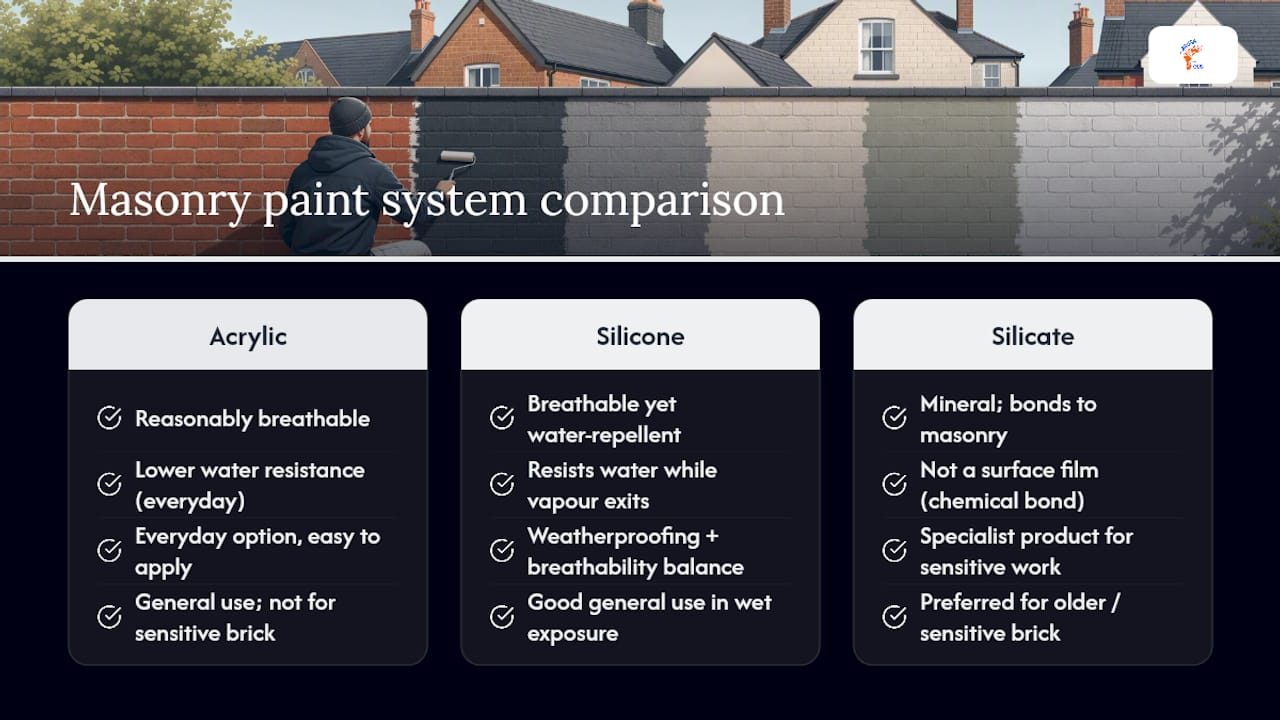
Once primed, the choice is really between three systems. Acrylic masonry paint is the everyday option: reasonably breathable, easy to apply, and the cheapest to buy. Silicone masonry paints go further, resisting water while still letting vapour escape, and UK manufacturers like Emperor Paint build their whole pitch around this balance of weatherproofing and breathability. Silicate or mineral paints sit at the more specialist end: they chemically bond with the masonry rather than sitting on top of it as a film, making them the preferred choice for older or more sensitive brickwork where trapping moisture is the real risk.
For application, brush and roller work fine on smaller areas and give you the most control around window reveals and detailing. An airless sprayer earns its keep on larger elevations, cutting hours off the job, but it needs back-rolling immediately after spraying to work the paint properly into the brick texture and avoid a thin, patchy film sitting on the surface. Two coats is standard for most systems; check the tin for coverage rates per litre, since textured or heavily weathered brick soaks up noticeably more than a smooth rendered wall.
Weather matters as much as technique. Aim for daytime temperatures above 8°C, no rain forecast for at least 24 hours after each coat, and avoid painting in direct, baking summer sun that can dry the surface faster than the coat beneath it cures properly.
Finishing, maintenance and realistic lifespans
Set your expectations before you pick up a brush, because every system on the market needs eventual repainting.
Acrylic masonry paint typically holds up for several years before it needs a full repaint, while mineral silicate systems commonly last longer on sound, dry masonry, according to the same brick paint comparison guide cited earlier. That gap alone often justifies the higher upfront cost of a silicate system on a house you plan to keep for decades.
Simple annual maintenance stretches those lifespans further:
Rinse off algae, moss and general grime once a year, particularly on north-facing or shaded elevations
Check window sills, reveals and ground level for early flaking or discolouration
Touch up small chips or scuffs as soon as you spot them rather than waiting for a full repaint
Budget for scaffold or ladder access separately from the paint itself, since it often costs more than the materials on taller houses
A full UK exterior painting cost benchmark is worth checking before you commit, since access and repair scope drive the final price far more than the paint tin does.
Troubleshooting common failure modes
Most brick paint failures trace back to one of two causes: moisture that never had anywhere to go, or prep that got rushed. Chicago-based restoration guidance on painted brick makes the same point that applies just as well in the UK: trapped moisture and poor preparation cause the vast majority of coating failures, not the paint quality itself.
Peeling paint: find the moisture source first, strip loose material back to sound substrate, repair, then recoat with a breathable system.
Recurring efflorescence: this points to a drainage or rising damp issue behind the wall, not a cleaning problem. Fix the source before recoating.
Spalling bricks: minor cases can be patch-repaired, but widespread spalling usually means individual bricks need replacing, a job for a mason rather than a DIY weekend.
When to call it in: if you’re seeing more than one of these issues together, get a professional survey before spending another penny on paint.
Trade perspective: how Angus runs a test panel before committing
Angus never quotes a full exterior job without a test patch first. A one square metre panel, left for 7 to 14 days, tells you far more about adhesion and weathering than any tin label. In the South West’s damp, salt-laden air, that patience pays off, since a system that looks fine on day one can show its weaknesses only after a proper spell of rain and wind. Homeowners hiring any decorator should expect a written quote that separates prep, repairs and painting, because lumping them together hides where the real cost sits.
— Angus
How Abrushwithgus helps with exterior brick painting
If the prep list above feels like more time and equipment than you want to take on yourself, that’s exactly the gap Abrushwithgus fills for homeowners across Cornwall and the South West. Rather than juggling scaffold hire, fungicidal washes and a sprayer you’ll use once, you get a team that handles the whole sequence, cleaning, repair prep, priming and painting, as one job with one point of contact.

A typical visit starts with a site survey: Angus or the team walk the wall, check for the red flags covered above (spalling, efflorescence, open mortar), and recommend a breathable paint system suited to your brick and its exposure. From there, exterior home painting covers the full job, while exterior home cleaning and airless spraying are available separately if you only need part of the process handled. Quotes commonly include a test patch and a written breakdown of prep, repairs and paint, to help avoid surprises once work starts. If your brick has been showing damp or salt problems, book a survey through domestic painting services and get a straight answer on whether painting is the right move before you spend anything.
Sources
Damp diagnosis around the house often overlaps with interior issues too; if algae or mould is showing up indoors as well, this guide to bathroom mould covers the same underlying moisture logic applied to a different room.
FAQ
Is painting outside brick a good idea?
It depends on the brick’s condition and history. Painting works well on already-painted or plain modern brick that needs a refresh, but it’s a poor idea on unpainted historic or listed brick, or any wall showing active damp or efflorescence, since paint there traps moisture rather than solving the underlying problem.
What is the best exterior brick paint in the UK?
There’s no single best option: acrylic masonry paint suits everyday budgets and typically lasts 7 to 15 years, while mineral silicate systems cost more upfront but often reach 10 to 20-plus years on sound, dry masonry, according to comparative lifespan data. UK brands like Emperor also offer silicone systems that balance weatherproofing with breathability.
How much does it cost to paint a brick exterior?
Cost depends heavily on access, repair scope and house size rather than the paint alone, so scaffold or ladder hire can add as much as the materials themselves. A detailed UK exterior painting cost benchmark breaks down what typically drives the final quote. Abrushwithgus provides site-specific quotes through its domestic painting service, since prices vary by property.
When should you not paint brick in the UK?
Avoid painting when you see active efflorescence, open or crumbling mortar joints, rising damp, or spalled bricks, since all four need repair first according to trade guidance on painting over brick. Also hold off during cold, wet spells; UK conditions need a run of mild, dry days for proper curing, and painting unpainted listed or historic brick usually needs planning consent before you start.
Recommended
Comments