
Stop Patio Black Spots Returning: Soft Wash Checks for UK Homes
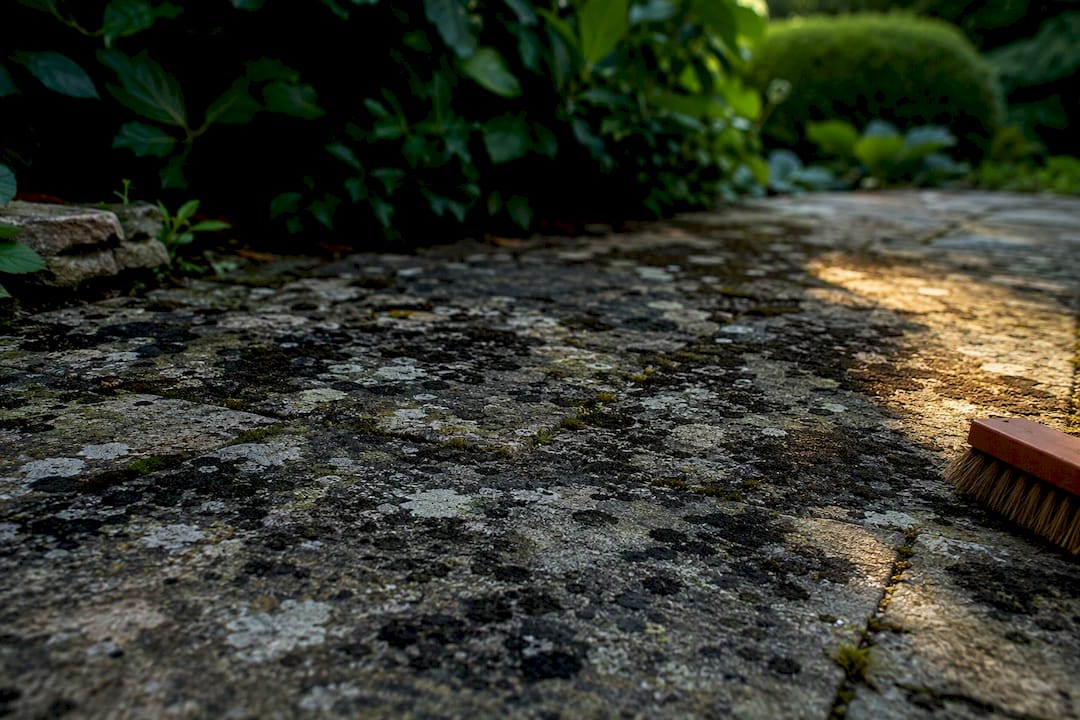
The fastest way to shift stubborn black spots is a specialist biocidal soft wash, applied to kill the lichen at its roots rather than just scrub the surface. Small, fresh patches respond well to a DIY blackspot remover left to dwell properly. Larger, established infestations on delicate or heritage stone are better left to a professional, partly because it takes the right dilution and dwell time to work, and partly because runoff needs managing around plants and drains.
TL;DR:
Use a specialist biocidal soft wash with appropriate dwell time to effectively kill lichen at its roots on delicate or heritage stone, avoiding damage to the surface.
Pressure washing alone can worsen lichen growth by opening the pores, and soft washing with proper rinsing is more effective and safer for porous stones.
Always apply the biocide at the correct dilution, give it hours to dwell, and rinse gently with low pressure to ensure thorough removal of dead growth.
DIY products like ready-to-use biocide treatments are best suited for targeted, smaller patches, while concentrated sodium hypochlorite requires careful handling and proper dilution.
Professional cleaning is recommended for large, established infestations, heritage stone, or difficult access areas, ensuring a lasting result with proper methods and protective measures.
Table of Contents
What actually removes black spots from a patio?
Most black spots on UK patios are lichen, a living organism that anchors into porous stone rather than sitting on top of it. That’s why scrubbing or blasting the surface rarely finishes the job. You need something that gets into the stone and kills the organism at the root.
Here’s roughly what each method achieves:
Routine scrubbing with washing-up liquid lifts surface grime and algae, and keeps mild growth from taking hold.
Household vinegar or bleach can lighten a patch temporarily, but rarely kills the roots and can mark certain stones or nearby plants.
Specialist biocide treatment clings to the surface and dwells for hours, which is what actually kills lichen rather than just bleaching it.
Professional soft wash delivers a controlled, repeatable version of the same chemical process, with the added judgement of someone who’s seen what different stone types tolerate.
Pressure washing alone often fails here, and it can make things worse. High pressure opens up the pores in stone, which gives regrowth an easier foothold next time. It still has a place, but only as a gentle pre-clean or a soft rinse after chemicals have done their work, never as the main event. Porous stone like sandstone or limestone needs a lighter touch throughout; porcelain is tougher and more forgiving, though it still benefits from the same biocide-first approach.
How do you soft wash a patio safely?
This is roughly the sequence trade professionals follow, and it’s worth knowing whether you’re doing it yourself or checking that a contractor is doing it properly.
Clear and protect the area. Sweep off loose debris, move pots and furniture, and cover any nearby planting. Soak flowerbeds bordering the patio thoroughly with water before you start, since a well-soaked bed absorbs far less chemical than a dry one.
Spot-test first. Try the product on a small, hidden section to check the stone or paving reacts as expected. This matters most on natural stone, where reactions vary by mineral content.
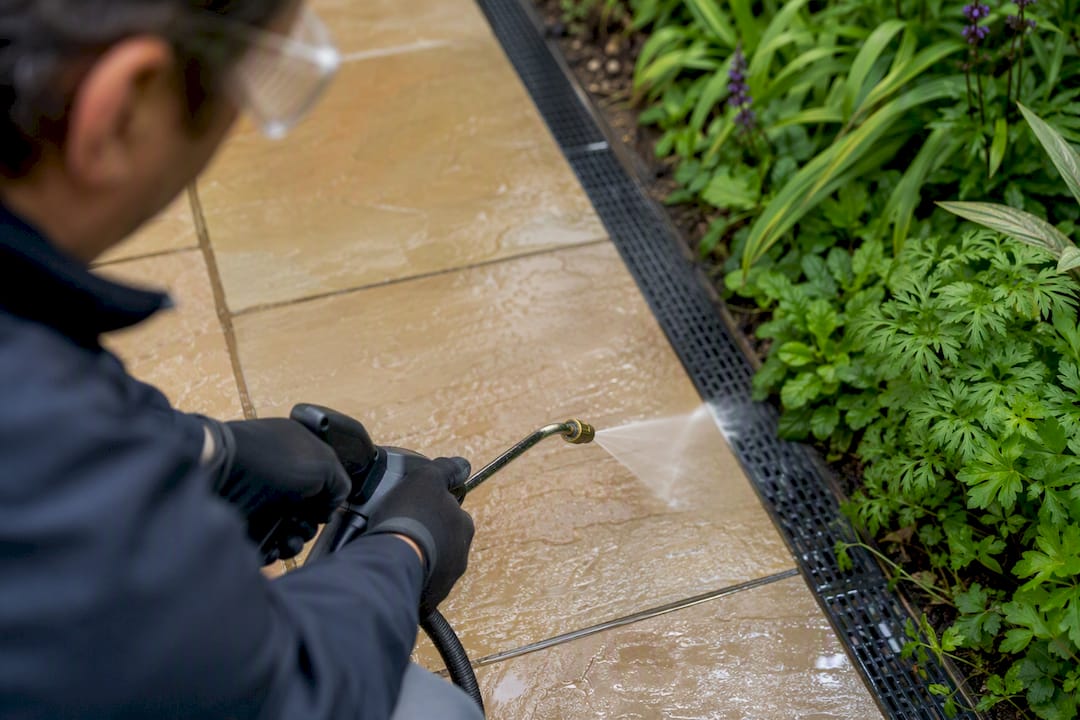
Apply at the right strength. Trade sodium hypochlorite products are used at specific dilution ratios depending on the surface and severity, applied with a pump sprayer or a watering can with a rose head for even coverage.
Let it dwell. This is the step people rush, and it’s the one that actually matters. Give the product several hours to work into the lichen before rinsing.
Rinse gently and inspect. A low-pressure rinse removes the dead growth and residue. Check the result once it’s dried; a second application on deeply rooted patches is common and expected, not a sign of failure.
Pro Tip: Don’t judge the result on the same day. Dead lichen often looks patchy or grey immediately after treatment and only lifts fully once it’s dried out over a day or two.
Throughout, keep runoff away from drains and avoid letting overspray drift onto living plants. Anyone applying biocide products should wear gloves and eye protection at minimum.
Which DIY blackspot products work best in the UK?
UK garden centres and DIY stores stock a few distinct categories, and knowing which is which saves you buying the wrong thing twice.
Ready-to-use blackspot and algae removers are formulated to cling to vertical and sloped surfaces and dwell for hours, which is exactly what lichen needs to be killed rather than just bleached.
Concentrated sodium hypochlorite is the trade-strength option for a proper soft wash, diluted before use and best suited to those comfortable measuring and handling stronger chemicals.
Benzalkonium chloride maintenance products are milder, lower-concentration formulas designed for annual prevention rather than treating an established infestation.
Check the label for the word “biocide” alongside “algae” or “lichen”, and note the dwell time and coverage per litre. A typical ready-to-use pack covers around 25 square metres per five litres, though this varies by brand, so buy slightly more than your measured area to allow for a second pass.
Avoid acid-based cleaners on limestone, sandstone, or any calcium-rich stone, since acid reacts with the minerals and can etch or discolour the surface permanently. Keep pressure washers away from soft sandstone altogether, and treat porcelain with a gentler hand too. It’s tougher than natural stone but grout lines and sealants around it are not.
When should you hire a professional patio cleaner?
Some jobs are worth doing yourself. Others aren’t, and knowing the difference saves you money and a damaged patio.
Call in a professional when you’re dealing with:
Large areas or lichen that’s clearly established over several seasons.
Delicate, reclaimed, or heritage stone where a mistake is expensive to fix.
Awkward access, steps, or areas near a boundary where overspray could reach a neighbour’s garden.
A situation where you want a workmanship guarantee rather than a DIY attempt with no fallback.
Before booking, ask whether they use a soft-wash biocide method rather than pure pressure washing, how they protect planting and drains, and whether they carry public liability insurance. A fair quote reflects the area in square metres, the surface type, how severe the growth is, and how much protective prep the site needs. That’s why two quotes for what looks like the same job can land quite differently.
How do you stop black spots coming back?
Prevention costs far less than repeat treatment, and it doesn’t take much time.
Sweep organic debris off the patio each season, since leaves and moss create the damp, shaded conditions lichen loves.
Trim back plants and shrubs casting shade over north-facing or perpetually damp corners.
Apply a light maintenance biocide once a year to areas that stay damp, rather than waiting for spots to reappear.
Reseal porous stone periodically, but check the sealer suits your specific stone first, since the wrong product can trap moisture underneath.
Spring and autumn are the natural windows for this in the UK climate: spring to clear winter growth, autumn to treat before the wetter months set in. Regular seasonal cleaning is consistently the cheapest way to avoid the kind of severe infestation that needs two professional visits to shift.
Pro Tip: Mark a date in your calendar for fixture maintenance rather than waiting until spots appear. By the time black patches are visible, the lichen has usually been rooting in for months.
A Brush With Gus: what experience actually teaches you about black spots
The pattern with lichen on exterior surfaces is remarkably consistent: it’s typically worse on the north-facing side, worse under overhanging shrubs, and tends to return faster after an aggressive pressure wash than after a proper soft-wash treatment.
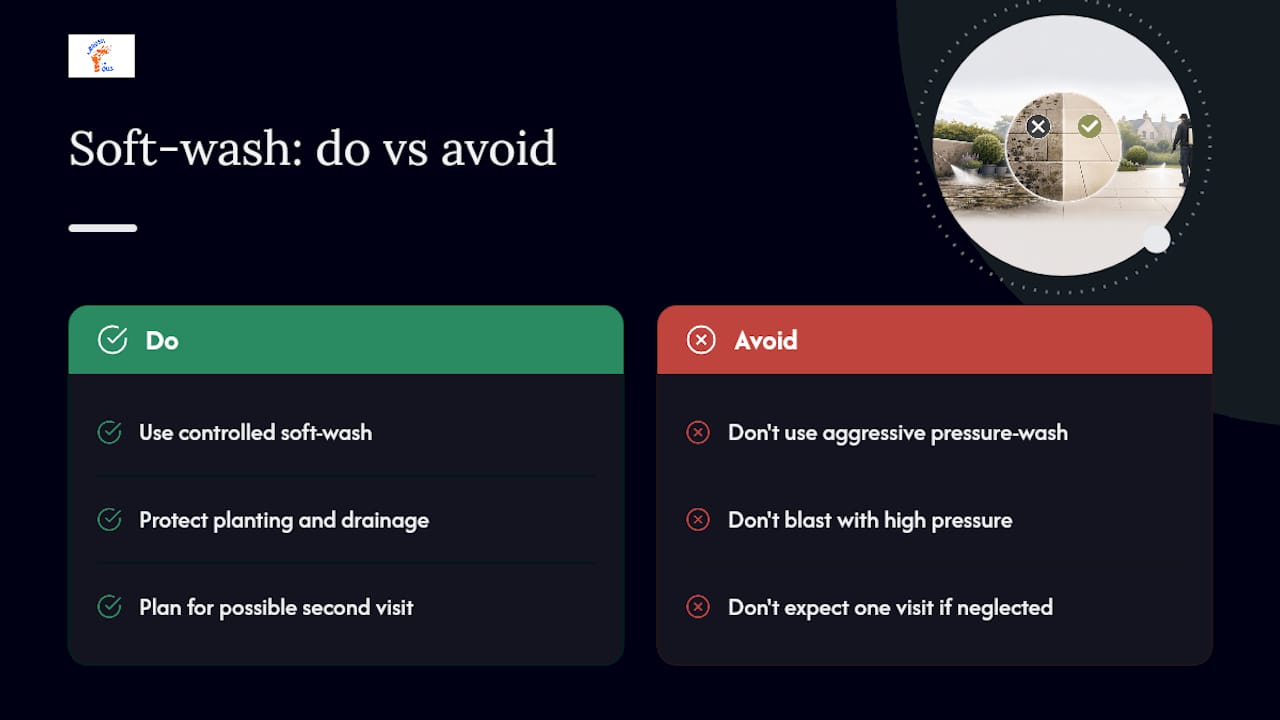
That’s not a controversial view among tradespeople, but it’s one homeowners rarely hear until they’ve paid for a jet wash that made the problem return within a season. Professionals approach exterior cleaning, including patios, with the principle of protecting planting and drainage first, using a controlled soft-wash method, and rinsing gently rather than blasting. The priority for professional exterior cleaners is a result that holds, not just a patio that looks clean on the day the van leaves.
The honest reality is that some patios need two visits. If yours has been neglected for a few years, expect that conversation with whoever you hire.
— Angus
How A Brush With Gus can help with your patio
If reading through the soft-wash steps has convinced you this is one for a professional, exterior cleaning services are commonly provided in Cornwall and the South West. Patio black spots removal sits alongside the wider exterior cleaning services already offered, from render and UPVC to guttering and windows, so a patio can often be tackled as part of a single visit rather than a separate call-out.

Getting a quote typically involves describing the affected area, how long the problem has developed, and any nearby planting or drains that need protecting. Ask whether the method proposed involves a soft wash with a biocide dwell time rather than just pressure washing, as this detail can affect how lasting the results are. Get in touch through the cleaning services page to arrange a site visit or a quotation for your patio.
Sources
For readers who want to check the detail on products and methods, the Outdoor Butler guide to persistent black spots covers the lichen biology in more depth, while Gardenstone and Everest Paints detail product handling and trade dilution practice. Gardeners’ World covers routine maintenance, and stone types are explained further by Divine Landscaping.
FAQ
What is the best black spot patio cleaner in the UK?
There’s no single “best” product for every surface, but ready-to-use biocidal blackspot and algae removers that dwell on the surface for several hours consistently outperform bleach or vinegar because they kill the lichen roots rather than just bleaching the visible growth.
How do I get black spots off my patio slabs?
Apply a specialist biocide treatment, let it dwell for several hours as directed, then rinse gently with low pressure; deeply rooted patches often need a second application once the first has lifted the bulk of the growth.
Is patio black spot remover just bleach?
Some products are sodium hypochlorite based, which is a bleach derivative, but trade formulations are diluted and applied with specific dwell times to kill lichen roots, unlike household bleach used at random strength with no dwell time.
How much should I pay for patio cleaning?
Cost depends on the area in square metres, the type of stone, how severe the lichen is, and how much protective prep is needed for nearby planting and drains; a detailed cost breakdown explains what drives the variation between quotes.
Recommended
Comments