
The role of colour consultation in interior design
- WM Creative Designs Limited
- Jul 15
- 8 min read
TL;DR:
Colour consultation involves a professional evaluating a space’s lighting and materials to recommend cohesive, personalized colours. It prevents costly mistakes, improves room flow, and enhances wellbeing by considering light changes, undertones, and emotional impact. A typical process lasts 1-2 hours, offering tailored recommendations that align with the space’s specific conditions.
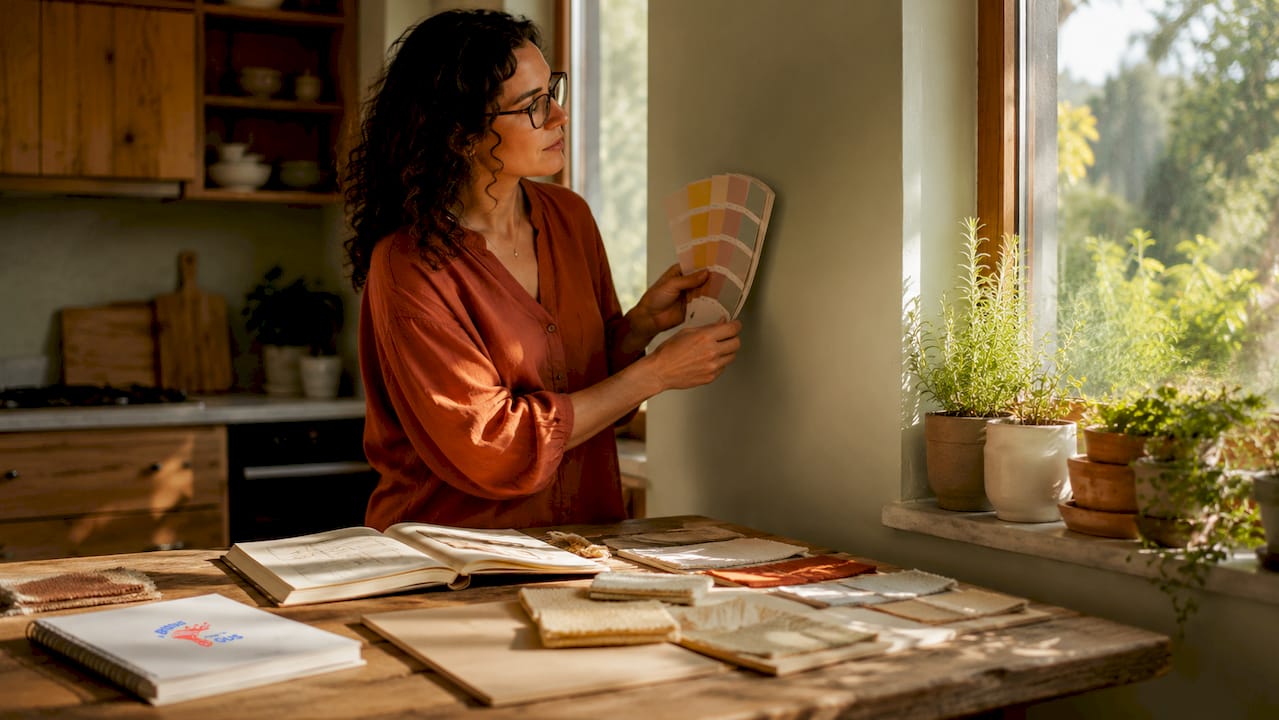
Colour consultation is a professional process where a trained expert analyses your space, lighting conditions, and personal style to recommend colours that create a cohesive and intentional result. It goes far beyond picking a shade from a paint chart. The role of colour consultation sits at the intersection of colour theory, psychology, and physical environment assessment, making it one of the most practical investments a homeowner or designer can make. Abrushwithgus works alongside this process every day, and the difference between a guided colour choice and a guessed one is visible the moment paint hits the wall.
What does the role of colour consultation actually involve?
Colour consultation, sometimes called colour consultancy in professional circles, is the structured practice of evaluating a space before a single tin of paint is opened. A consultant does not simply point at a fan deck and suggest a favourite shade. The process is methodical, grounded in how light, architecture, and materials interact to change the way any colour reads in a room.

The assessment typically begins with an on-site walk-through. The consultant examines the room’s orientation, noting whether it faces north, south, east, or west, because lighting orientation drastically alters how a colour reads on a surface. A warm white that feels inviting in a south-facing sitting room can appear sickly and flat in a north-facing bedroom. That single variable eliminates dozens of paint options before the conversation about personal preference even begins.
Consultants also evaluate the fixed elements in a space: flooring, cabinetry, worktops, and architectural features. These elements have undertones, often warm, cool, or neutral, that clash or harmonise with wall colours in ways that are invisible on a paint chip but obvious once applied at scale. Colour as a structural element interacts with architecture, light, and materials to shape atmosphere and identity, not merely to decorate.
Key steps in a professional on-site assessment include:
Measuring natural light at different times of day, noting how morning and afternoon sun shifts colour temperature
Identifying the undertones in existing fixed materials such as timber floors, stone worktops, and tile grout
Reviewing room orientation and ceiling height to understand how colour will behave spatially
Using physical colour fan decks and paint brand codes to cross-reference options against real conditions
Noting artificial lighting type, whether warm LED, cool fluorescent, or halogen, as each changes colour perception significantly
Pro Tip: Never test paint colours directly on a wall. Instead, paint large sample boards of at least 30cm x 30cm and move them around the room at different times of day. Mixing new paint over old colour gives a false reading and leads to poor decisions.
How does colour affect mood and wellbeing in a space?
Colour is not neutral. Every shade carries a psychological weight that influences how people feel in a room, often without them realising it. This is where the importance of colour consultation extends beyond aesthetics into genuine wellbeing.
Consultants are trained to navigate both the objective science of colour psychology and the deeply personal emotional responses each client brings to the process. A client who insists they want a bold red kitchen may not have considered how that colour raises energy levels and appetite, which is ideal for a sociable family but exhausting in a home office. A consultant holds both pieces of knowledge at once and guides the client toward a choice that serves their actual lifestyle.
“Most clients are not lacking inspiration but rather clarity. Professional consultation removes guesswork by narrowing down choices to a cohesive plan tailored to the home, addressing emotional preferences alongside practical needs.”
Consultants provide clarity by reducing thousands of possible choices into a focused, cohesive palette using objective theory. That reduction is not limiting. It is liberating, because it replaces paralysis with confidence.
Cohesion across multiple rooms is another dimension of this work. Consultants evaluate sight-line harmony between rooms, assessing how colours transition from hallway to sitting room to kitchen. A home where every room was chosen in isolation often feels disjointed, even when each individual colour is attractive. The consultant’s role is to ensure the whole property tells one visual story. Understanding the psychological impact of paint colour is something Abrushwithgus considers central to delivering a finish that genuinely satisfies clients long after the job is done.
Why do colour choices go wrong, and how does consultation help?
Colour mistakes are far more common than most people expect, and they are almost always preventable. The most frequent errors fall into three categories: misjudged undertones, poor lighting assessment, and a failure to consider how colours connect across rooms.
The financial consequences of getting it wrong are real. Repainting a room costs not just materials but labour, time, and disruption. A professional colour consultation acts as a financial safeguard by preventing these errors before they happen. The financial savings outweigh consultation costs in the majority of cases where a homeowner would otherwise repaint within a year.
The most common colour selection errors, and how consultation addresses each one:
Misjudging undertones. A grey that looks clean and cool in the shop appears purple or green on the wall because of the flooring’s warm undertone. A consultant identifies this conflict before paint is purchased.
Ignoring light changes. A colour chosen under artificial showroom lighting looks entirely different in natural daylight. On-site assessment accounts for how the room’s light shifts across the day.
Paralysis by choice. Paint brands offer hundreds of near-identical shades. Without a framework, most people either choose randomly or delay indefinitely. Consultation provides a structured shortlist.
Failing to plan across rooms. Choosing each room’s colour independently creates a disjointed home. Consultants plan cohesive colour flow across all spaces from the outset.
Underestimating material reactions. Undertones react with flooring, cabinetry, and lighting in ways that are only visible at full scale. Expert consultation pre-empts these costly surprises.
Many homeowners also underestimate the value of investing in professional painting as part of a wider design plan. Colour consultation and skilled application work together. One without the other leaves results to chance.
What should you expect from a colour consultation?
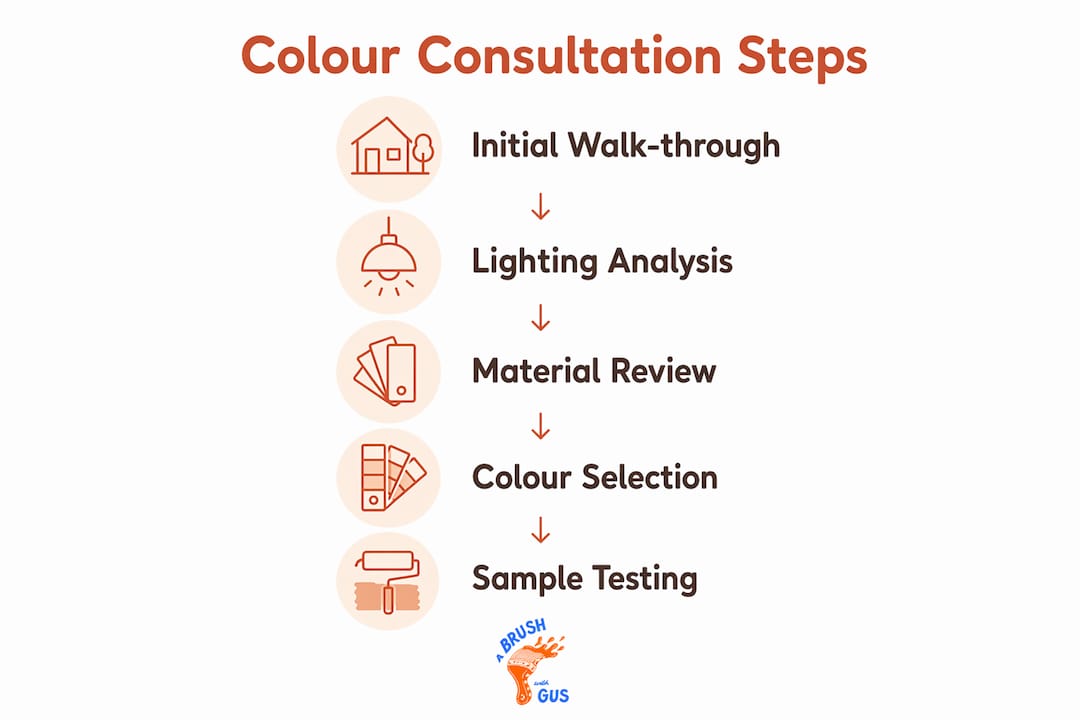
A typical in-home colour consultation lasts 1–2 hours and covers a structured walk-through of the property, lighting and undertone analysis, and a set of tailored colour recommendations. Costs vary, but professional consultations generally range from £120 to £400 depending on the scope and the consultant’s experience level.
Stage | What happens | Duration |
Initial walk-through | Consultant reviews all rooms, fixed materials, and light sources | 20–30 minutes |
Lighting and undertone analysis | Assessment of orientation, natural and artificial light, and material undertones | 20–30 minutes |
Colour selection | Fan decks and sample boards reviewed against real conditions | 30–40 minutes |
Final recommendations | Client receives 5–15 tailored colour options with paint codes | 10–15 minutes |
Most consultants provide between 5 and 15 paint colour recommendations, each chosen to work with the specific conditions of the space. These are not generic suggestions. They are calibrated to the room’s orientation, the client’s lifestyle, and the fixed materials already in place.
Preparation makes a significant difference to the outcome. Before the consultant arrives, gather paint codes from any existing colours you want to keep, note which rooms feel wrong and why, and collect any fabric swatches or material samples from planned purchases. The more context you provide, the more targeted the recommendations will be.
Pro Tip: Book your consultation for a time when the room receives its most challenging light. If a north-facing room is the problem area, have the consultant visit mid-morning when the light is at its coolest and most revealing. This gives the most accurate reading of how colours will perform.
Learning how to choose paint colours with professional guidance removes the guesswork that causes most homeowners to repaint within two years of a DIY colour decision.
Key takeaways
Colour consultation is the most reliable way to avoid costly repainting errors, achieve room-to-room cohesion, and select colours that genuinely work with your space’s light and materials.
Point | Details |
On-site assessment is non-negotiable | Lighting, orientation, and material undertones can only be accurately read in person. |
Sample boards beat wall patches | Large movable boards give accurate colour readings; painting directly on walls distorts results. |
Cohesion requires planning across rooms | Consultants evaluate sight-line flow to prevent disjointed interiors across multiple spaces. |
Consultation saves money long-term | Preventing one repaint typically covers the full cost of a professional consultation. |
Psychology shapes every recommendation | Colour affects mood and behaviour; consultants balance emotional preference with functional need. |
Colour consultation in 2026: what I’ve learnt from years on the tools
The conversation around colour consultation has shifted noticeably over the past few years. When I started in this trade, colour advice was largely about personal taste and trend cycles. Now, the best consultants operate more like environmental analysts, reading a space the way a surveyor reads a structure.
The rise of AI colour tools has not changed this. Over 70% of a colour consultant’s time is spent on physical on-site assessments that no algorithm can replicate. A screen cannot feel the quality of light in a Victorian bay window at 4PM in november, or notice that a client’s oak floor has a green undertone that will fight with every warm grey on the market. That knowledge only comes from being present.
What I find most undervalued is the multi-room planning element. Clients often focus on one problem room and treat the rest of the house as solved. In reality, the hallway is the spine of the home’s colour story. Get that wrong and every room it connects to suffers. A good consultant starts there and works outward.
My practical advice for anyone selecting a consultant: ask to see examples of multi-room projects, not just single-room transformations. Ask how they handle north-facing rooms specifically. And do not choose based on a mood board alone. The work happens on-site, in your light, with your materials. That is where the real skill shows.
— Angus
How Abrushwithgus brings colour consultation to life
Choosing the right colours is only half the work. The finish depends entirely on the quality of application, and that is where Abrushwithgus comes in.
Abrushwithgus provides domestic painting services across the South West, covering interior rooms, feature walls, and full property redecorations. For exterior projects, the team also offers exterior home painting and specialist spraying for a flawless, durable finish. Whether you have already worked with a colour consultant or are still deciding on your palette, Abrushwithgus delivers the precise application that makes those colour choices count. Get in touch for a no-obligation quote and find out how the team can bring your chosen colours to life.
FAQ
What is colour consultation?
Colour consultation is a professional service where a trained expert assesses your space, lighting, and materials to recommend a tailored colour palette. The process typically includes an on-site visit, undertone analysis, and a set of specific paint recommendations.
How long does a colour consultation take?
A standard in-home colour consultation lasts 1–2 hours and results in 5–15 tailored colour recommendations. The duration depends on the number of rooms assessed and the complexity of the space.
Can I do colour consultation without a professional?
You can test colours independently using large sample boards moved around the room at different times of day, but a professional consultant identifies undertone conflicts and lighting issues that most homeowners miss. The cost of a consultation is typically lower than the cost of repainting a room.
Why does room orientation matter in colour selection?
Room orientation determines how much natural light a space receives and at what colour temperature. A north-facing room receives cool, indirect light that makes warm whites appear grey, while a south-facing room amplifies warmth. A consultant accounts for this before recommending any colour.
How does colour consultation save money?
Professional consultation prevents the most common and costly mistake in decorating: choosing a colour that looks wrong once applied at full scale. Avoiding one repaint typically covers the full cost of the consultation, making it a sound financial decision for any significant decorating project.
Recommended
Comments