
The role of portfolio in painting services
- WM Creative Designs Limited
- May 20
- 8 min read
TL;DR:
A painting portfolio provides visual proof of a contractor’s skill, including surface preparation, product choice, and finished quality. It helps homeowners assess long-term value, consistency, and discipline, significantly influencing hiring decisions. Evaluating detailed, process-oriented portfolios ensures credibility and successful, lasting results on your property.
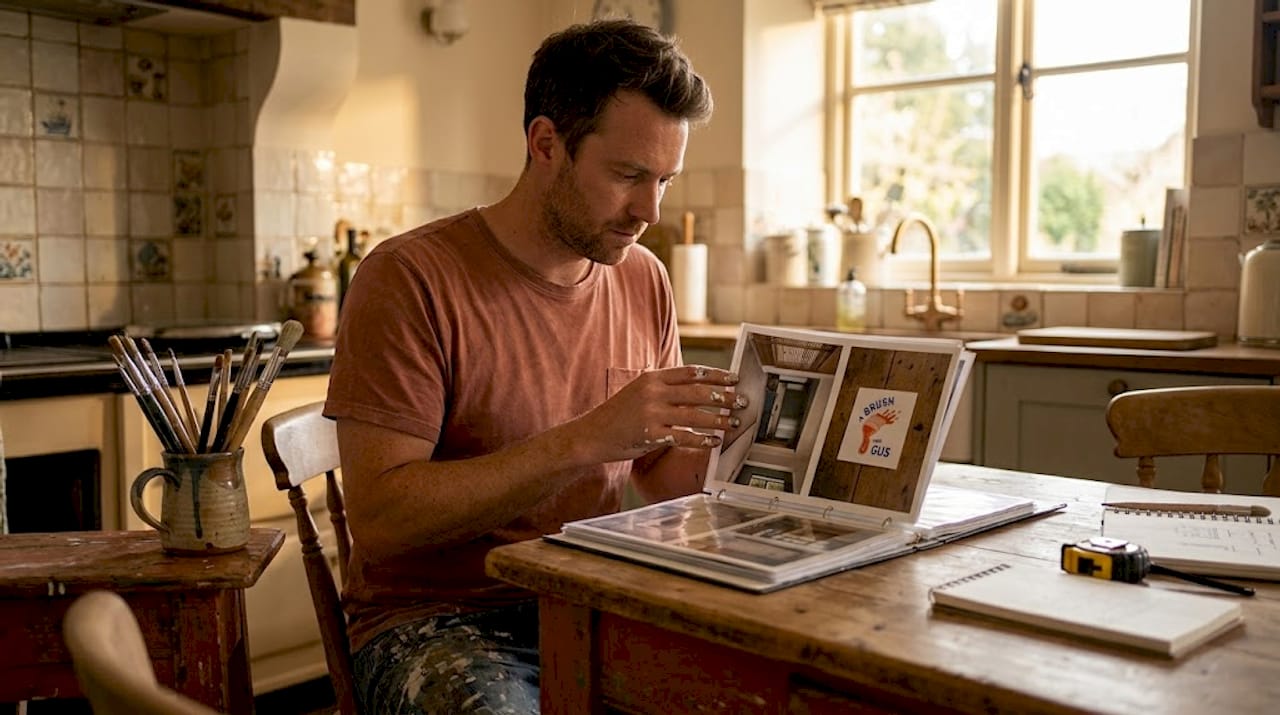
Choosing a painting contractor based on a friendly quote and a confident handshake is a gamble most homeowners cannot afford. The role of portfolio in painting services is far more significant than most people realise. A portfolio is not decoration on a contractor’s website. It is evidence. It tells you whether the person standing in your hallway has actually delivered the standard of finish they are promising, or whether they are simply good at talking a good game. This guide explains what to look for, why it matters, and how it changes the decisions you make.
Table of Contents
Key takeaways
Point | Details |
Portfolios provide visual proof | Documented photos of real projects confirm craftsmanship far better than verbal promises alone. |
Preparation matters as much as finish | A strong portfolio shows surface prep steps, not just polished end results. |
Portfolios shift focus from price to value | Visual evidence of quality helps you assess long-term reliability rather than just upfront cost. |
Align portfolio to your property type | Check that previous projects match your home’s surfaces, size, and style before committing. |
Process documentation signals discipline | Photos of taped fixtures, drop cloths, and repairs show respect for your property and a structured approach. |
The role of portfolio in painting services
A painting portfolio is a curated collection of documented work from previous projects. That sounds straightforward, but the distinction between a genuine portfolio and a handful of flattering snapshots is enormous. A real portfolio includes before and after photographs, details about surfaces treated, paint products used, and often a description of the scope and scale of work involved.
Homeowners and property managers face a persistent problem when hiring painting contractors. You cannot see the quality of work before it is done, and verbal assurances are easy to make. A portfolio solves that by converting claims into evidence. Portfolios act as a visual resume confirming a contractor’s credibility, style, and consistency across projects.
The importance of painting portfolio content goes beyond aesthetics. Consider what it reveals about a contractor’s working habits:
Whether they take time to document and take pride in their craft
Whether their results are consistent across different property types and surface conditions
Whether the quality of finish holds across varied lighting conditions, not just in one flattering photograph
Whether they understand the difference between a quick cosmetic coat and a proper, lasting job
Portfolios shift focus from price to quality and surface preparation, which is exactly where your attention should be when hiring for a job that will affect your home for years. A lower quote from a contractor with no portfolio evidence is rarely the bargain it appears to be.
What a strong portfolio actually contains
Not all portfolios are equal, and knowing what to look for changes everything. The most credible painting service showcases go well beyond a gallery of attractive finished rooms.
Before and after photography
Consistent photography matters more than most people expect. Before shots taken from the same angle and in similar lighting as the after shots are a sign that the contractor is being transparent rather than selective. Anyone can photograph a completed room from a flattering corner. Showing the starting condition honestly, cracked plaster, stained ceilings, peeling exterior render, and then the finished result, demonstrates genuine transformation rather than careful staging.
Evidence of surface preparation
This is the element most homeowners overlook entirely, and it is one of the most revealing. High-quality portfolios document surface prep phases to prove thoroughness, and this tells you something critical about how the contractor works when no one is watching. Sanding, filling, priming, masking, and protecting surrounding surfaces are not glamorous steps, but skipping or rushing them is what causes paint to peel, crack, or look uneven within months.

Process documentation including taped fixtures and drop cloths signals respect for your property and adherence to a disciplined workflow. If you see a portfolio full of glossy finished images but no evidence of preparation, that is worth questioning directly.
Paint brands, finishes, and product details
Portfolio element | Why it matters |
Paint brand and grade specified | Confirms contractor uses quality products, not trade-discount filler |
Finish type noted (matt, eggshell, satin) | Shows they understand how finish affects durability in different rooms |
Surface preparation products listed | Indicates investment in proper priming and bonding |
Number of coats documented | Verifies they follow manufacturer guidelines rather than cutting corners |
Client testimonials linked to specific projects
General five-star reviews are reassuring but vague. The most useful testimonials appear alongside the specific project they reference. When a homeowner describes their experience alongside photos of their actual kitchen or exterior wall, you can cross-reference the result with the feedback. That combination carries far more weight than a standalone quote about a contractor being “brilliant and reliable.”
Pro Tip: Ask any contractor to show you testimonials paired with project photographs rather than accepting a general review page. If they cannot link the two, push for references from jobs similar to your own property type.
How portfolios change your hiring decision
The impact a portfolio has on the decision-making process is measurable. Painting contractors using documented project photos achieve close rates of 35 to 45 per cent compared to 15 to 20 per cent for those without visual proof. Those figures are not surprising when you consider human psychology. Seeing is believing, and a homeowner who has walked through a contractor’s visual history of work feels a fundamentally different level of confidence than one who has only heard a verbal pitch.
“Portfolios transform pricing discussions into value conversations centred on craftsmanship and finish quality.” The moment you can see what a contractor has actually delivered, the conversation shifts from “how much?” to “how good?”
Customer perception of portfolios also changes referral behaviour. Referral leads supported by strong portfolios exceed a 50 per cent close rate, compared to a 20 per cent baseline on cold enquiries. That reflects a broader truth: when someone shares a contractor’s portfolio with a friend or neighbour, they are effectively vouching for the evidence, not just the experience.
For property managers overseeing multiple properties, a portfolio serves an additional function. It tells you whether a contractor can deliver consistently at scale and across different property types, not just produce one impressive result for a single client. The role of portfolio in artworks and renovation work generally is to establish pattern and reliability, and the same principle applies to painting services directly.
You can read more about how painting adds long-term value in the context of broader renovation decisions, which makes portfolio-backed choices even more consequential.
How to evaluate a portfolio effectively
Knowing a portfolio matters is one thing. Knowing how to read one is another. Here is a practical approach for homeowners and property managers reviewing a contractor’s work before committing.
Look for preparation evidence first. Scroll past the finished images initially and search for any documentation of the process. Sanding shots, primed surfaces, taped architraves, and protected flooring are signs of a contractor who works methodically rather than rushing to the visible stage.
Match the portfolio to your property. If you need exterior work on rendered walls, check whether the portfolio contains exterior rendered projects specifically. A contractor with an impressive track record on interior Victorian terraces may not have the same expertise with modern UPVC surfaces or stone cladding.
Ask about every product shown. Which primer did they use on that bathroom ceiling? Which topcoat finish is on that garden gate? Portfolios as marketing assets should support premium pricing, and a contractor confident enough to specify every product is showing you they have nothing to hide.
Use digital portfolio tools where available. Digital tools and AI visualisation enhance portfolio effectiveness and help you picture how a finish might look on your own property before work begins. Some contractors now offer virtual previews alongside their documented work.
Request references tied to specific portfolio entries. Do not just ask for references in general. Ask to speak with the client whose kitchen is in photograph three, or whose exterior was repainted last autumn. That specificity separates genuine testimonials from polished marketing.
Pro Tip: A contractor who cannot answer detailed questions about a project in their own portfolio is likely using images that are not representative of their actual standard. A confident professional will be able to walk you through every job they show you.
Trusted painting contractors build their credibility precisely through this kind of transparency. When a contractor’s portfolio holds up to scrutiny, you are not just buying a paint job. You are buying documented, repeatable quality.

My honest view on portfolios
I have seen the difference that preparation documentation makes, not just in the finished result, but in the whole client relationship. In my experience, the most common source of disappointment after a painting project is not the colour or the product. It is preparation that was skipped or rushed when no one was watching.
What I have learned is that a contractor who photographs their prep work is telling you something fundamental about how they operate. They are accountable before a brush touches a wall. That mindset produces better results consistently.
I have worked alongside contractors with beautiful finished galleries and almost no prep documentation. The pattern is almost always the same. Their results look great at first, and the problems appear six months later when paint begins to lift from surfaces that were never properly prepared. A portfolio that skips this stage is not showing you the full picture.
My honest advice: do not let a low price or a charming consultation override the absence of a strong portfolio. A professional portfolio is a contractor’s strongest credibility tool in a competitive market, and when one is absent, you have to ask yourself why. Advocate for it during your consultation. Ask to see the boring middle of past projects, not just the glamorous end result. That is where the real story lives.
— Angus
See quality in action with Abrushwithgus
At Abrushwithgus, we believe the work speaks for itself, which is exactly why we document it. Brothers Gus and Rhys have built their reputation across the South West on one straightforward principle: show clients what you can actually do before they commit.

Whether you are refreshing the interior of your home or tackling an exterior that has weathered one too many British winters, our domestic painting services and exterior home painting work is backed by thorough documentation of every stage. From surface preparation photographs to client testimonials matched to specific projects, our portfolio is built to give you the confidence to make an informed decision. Get in touch with us today to see real examples and discuss your project.
FAQ
What does a painting portfolio actually prove?
A painting portfolio provides visual evidence of a contractor’s past work, including surface preparation, paint products used, and finished quality. It moves evaluation beyond verbal claims to documented, verifiable proof.
How many photos should a good portfolio contain?
Quality matters more than quantity. Large portfolios are not necessarily high quality; process documentation is the real differentiator, so look for depth of detail rather than sheer volume of images.
Can I use a portfolio to negotiate or compare contractors?
Yes. A portfolio gives you a concrete basis for comparison beyond price. Use it to assess preparation standards, product quality, and project types so you are comparing like for like across quotes.
Why do portfolios matter for exterior painting specifically?
Exterior surfaces face weather, moisture, and UV exposure, so preparation and product choice are especially critical. A portfolio documenting exterior projects tells you whether a contractor understands those demands from real experience.
Should I ask for testimonials alongside portfolio images?
Absolutely. Testimonials linked to specific portfolio projects carry far more weight than general reviews. They allow you to cross-reference a client’s experience with the actual photographic result of their job.
Recommended
Comments