
What is airless spraying? A practical guide
TL;DR:
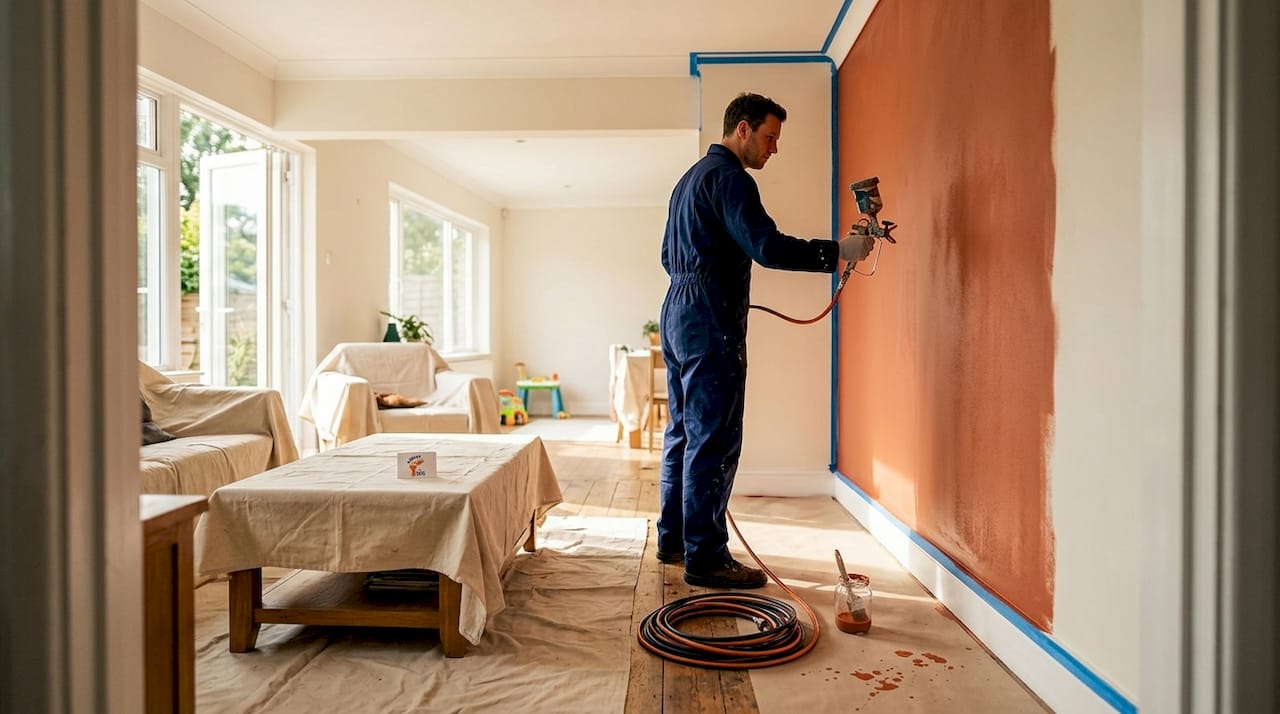
Airless spraying uses high-pressure pumps to atomize paint without compressed air, making it suitable for both professionals and homeowners. It offers faster application, a more uniform finish, and handles thick coatings directly from the container with minimal thinning. Proper technique, setup, and safety measures are essential for optimal results and efficient execution.
Airless spraying is one of those techniques that sounds more technical than it actually is. At its core, what is airless spraying comes down to a simple idea: using high pressure to push paint through a small tip, breaking it into a fine mist without the need for compressed air. Many people assume it is strictly a trade tool, something only contractors and decorators pull out on large commercial sites. That is not the case. Whether you are refreshing the exterior of your home, tackling a fence, or working through a full interior repaint, understanding how airless spraying works opens up a faster, more consistent way to get the job done.
Table of Contents
Key takeaways
Point | Details |
No compressed air needed | Airless sprayers use high-pressure pumps (1,500–3,000 psi) to atomise paint at the tip. |
Handles thick coatings | Latex paint and primers can be sprayed unthinned, saving preparation time. |
Technique determines finish quality | Holding the gun 25–30 cm from the surface and overlapping passes by 30–50% prevents streaks. |
Maintenance prevents most problems | Clogged filters, worn tips, and incorrect pressure cause the majority of sprayer issues. |
Safety equipment is non-negotiable | Respiratory protection is required, particularly when working with hazardous coatings indoors. |
How airless spraying works
The defining feature of airless spraying is what is not involved. There is no air compressor mixing with the paint. Instead, a high-pressure pump forces liquid coating through a small, hardened spray tip. That tip has a precisely sized opening and a fan-width angle. As the paint passes through under pressure of 1,500 to 3,000 psi, it atomises into tiny droplets, which is the fine mist you see landing on the surface.
Three main components drive the system. The pump generates the pressure. The hose carries the coating from the container to the gun. The spray tip controls both the volume of paint delivered and the width of the fan pattern. Change the tip, and you change the application entirely. A narrow tip suits trim and detail work. A wider tip suits large wall sections or external cladding.
The materials suited to airless spraying are broad. Here is what the equipment handles particularly well:
Latex and water-based emulsions, including thick masonry coatings
Oil-based undercoats and gloss paints
Primers, sealers, and bonding agents
Epoxy and specialist industrial coatings
Wood stains and decking treatments
One point worth understanding early: airless sprayers pump coatings directly from their containers and atomise at the tip. This means less thinning is required, which preserves the integrity of the coating. That is a meaningful advantage over older spray methods that force you to dilute paint to get it through a system.
Advantages of airless spraying
Speed is the most obvious advantage. A professional covering a large exterior wall with a brush and roller might spend a full day. With an airless sprayer, that same area takes a fraction of the time. Airless sprayers handle thick coatings without thinning, which is why they are the preferred choice for professionals working to tight schedules.
The finish is also noticeably more consistent. Brushes leave stroke marks. Rollers leave texture. An airless sprayer, when used correctly, deposits paint in a uniform layer across the entire surface. This matters especially on smooth surfaces like UPVC window frames, front doors, and rendered walls, where any variation in finish is immediately visible.
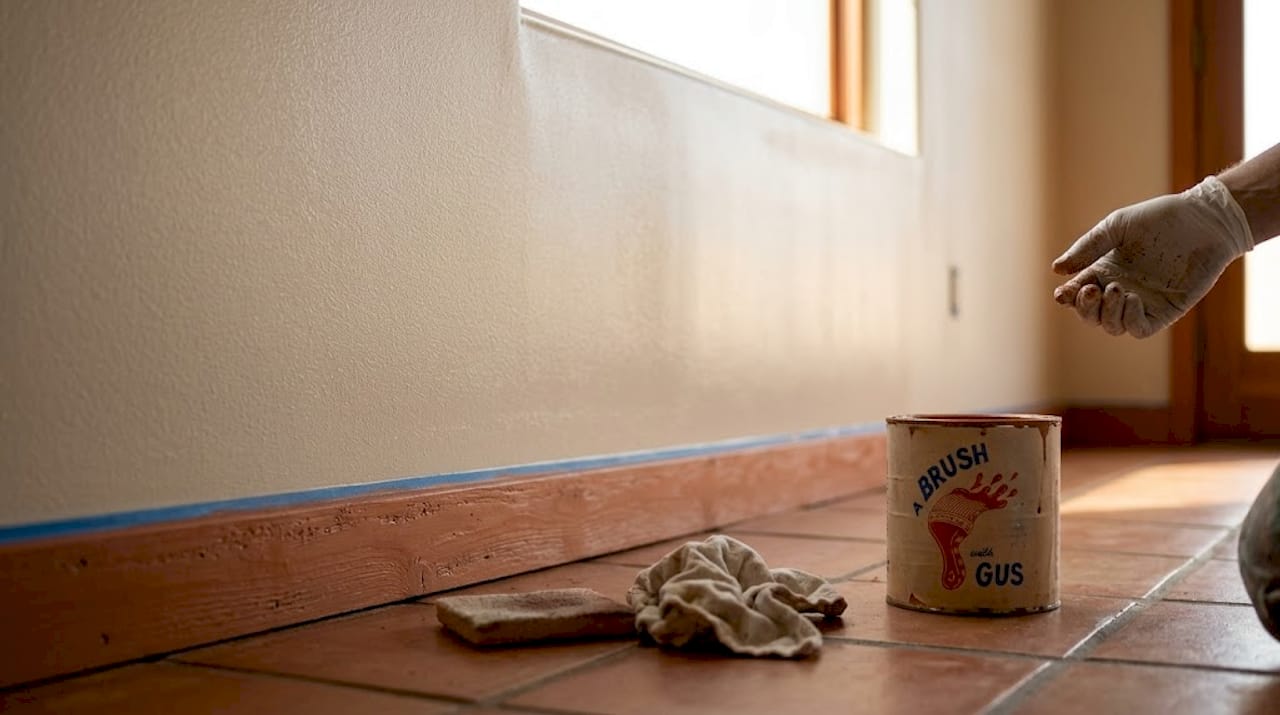
From a physical standpoint, spraying demands far less effort than rolling large areas. Over a long working day, that difference adds up considerably. For professionals working on sizable properties, it reduces fatigue and maintains quality throughout the job.
That said, there are real downsides to be aware of:
Overspray is the most common problem. Paint particles that miss the surface carry into the surrounding area, meaning masking and containment are not optional.
Setup and cleanup take more time than picking up a brush. For very small touch-up jobs, a brush is often the more practical choice.
Technique takes practice. Poor movement speed, wrong distance, or incorrect pressure produces runs, dry spray, or uneven coverage.
Pro Tip: Never spray at higher pressure than necessary. Higher pressure than needed increases overspray and equipment wear. Start low and increase gradually until you achieve clean, stable atomisation.
A step-by-step guide to airless spraying
Getting the process right is where most people either succeed or struggle. Follow these steps and you will avoid the most common mistakes from the start.
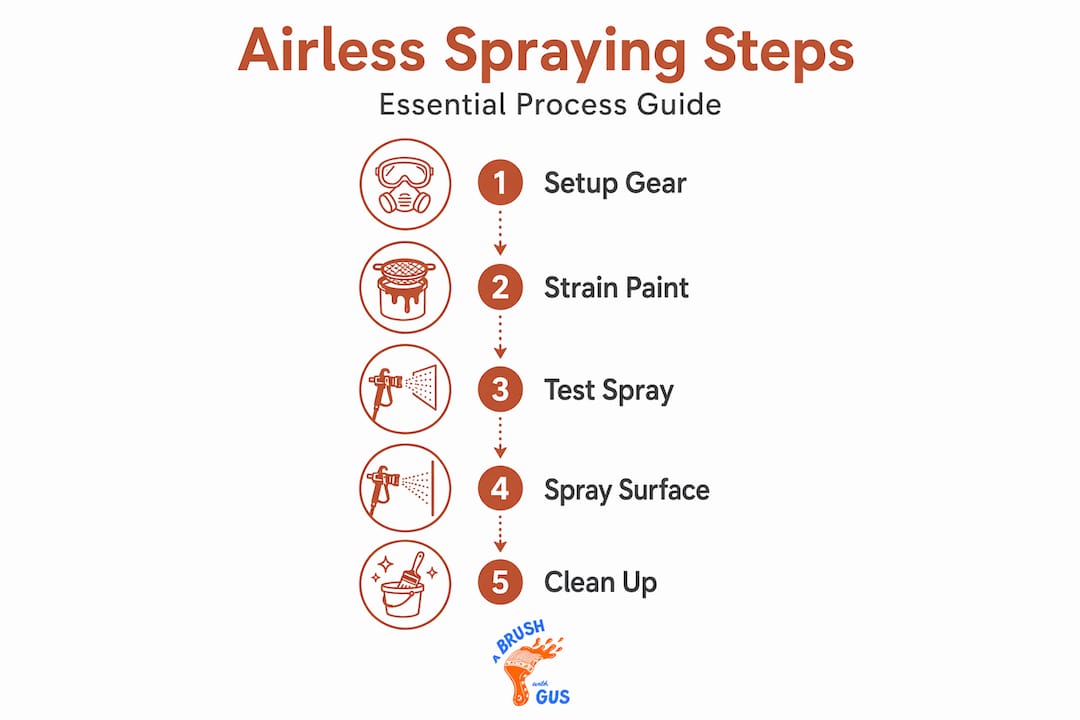
Strain and mix your paint. Before pouring anything into the sprayer, strain the coating through a fine mesh filter. Lumps and skin cause clogged filters and spray issues that interrupt your work mid-job.
Select the right tip. The tip size controls flow rate and fan width. For emulsions on walls, a .015 to .019 tip with a 12-inch fan works well. For primers or thicker coatings, move to a larger orifice.
Set your pressure correctly. Begin at the lowest setting and increase gradually until the spray pattern is smooth and even. Running at maximum pressure wastes paint and shortens the life of your pump.
Mask all surrounding areas. Cover windows, frames, floors, plants, and any adjacent surfaces. Overspray travels further than you expect, especially outdoors in any kind of breeze.
Hold the gun at the right distance. Keep the gun 25 to 30 cm from the surface and move it in a steady, parallel arc. Never arc your wrist while keeping your body still. Move your whole arm.
Overlap each pass by 30 to 50 percent. Aiming the spray pattern edge at the previous pass builds a consistent film without streaks or thin patches. This single habit eliminates most finish problems.
Keep moving. Stopping with the gun pointing at the surface creates a heavy, wet spot that will run. Trigger on before reaching the surface edge and trigger off after passing it.
Wear the correct PPE. Ventilation alone does not control exposure to fine particles and vapours. A half-face respirator with the correct filters is the minimum requirement, particularly indoors or in enclosed spaces.
Clean the sprayer immediately after use. Flush the system with the appropriate solvent or clean water for water-based products. A full clean takes 15 minutes. A neglected sprayer can take an hour to bring back to working order.
Pro Tip: After cleaning, inspect the filter and hose connections. Systematic maintenance prevents the majority of sprayer faults that cause delays mid-project. Replacing a worn tip costs a few pounds. Replacing a damaged pump does not.
For those looking to refine their residential technique, this guide to paint spraying for home finishes covers setup and finish quality in more depth.
Applications across surfaces and projects
Airless spraying is adaptable across a wide range of residential and commercial projects. Understanding which applications suit it best helps you get the most from the equipment.
Walls and ceilings are the most common use. Large, unbroken surfaces are where airless spraying makes the biggest difference. A single coat on a new-build interior can be completed in a morning. Fences, garden structures, and decking respond extremely well to sprayed wood treatments, with the coating reaching into the grain and texture that rollers miss entirely. External cladding, siding, and rendered masonry are also well suited, particularly where brush application would be slow and inconsistent.
The table below gives a straightforward comparison of how airless spraying performs across typical project types:
Surface type | Coating used | Suitability for airless spraying |
Interior walls and ceilings | Emulsion, primer | Excellent. Fast and even finish |
Exterior render and masonry | Masonry paint, sealer | Excellent. Penetrates texture effectively |
Timber fences and decking | Wood stain, preservative | Very good. Covers grain and detail well |
UPVC windows and doors | Specialist adhesion primer and topcoat | Very good with correct tip and pressure |
Fine trim and detailed work | Gloss, satinwood | Moderate. Requires careful masking and a narrower tip |
Commercial concrete floors | Epoxy coatings | Good with high-pressure commercial sprayer |
For tighter or more hazardous locations, overspray containment becomes critical. Research confirms that hood positioning and blowing angle play a decisive role in controlling airborne particles. In practice, this means using spray hoods, adjusting the airflow in the space, and thinking about the direction you are spraying relative to any openings or occupied areas.
Larger projects benefit from extended hoses and higher-capacity pumps. A 15-metre hose allows you to work across an entire building elevation without moving the machine. For commercial work, this kind of setup substantially reduces time on site. If you are considering the role of airless spraying in a domestic context, the same principles apply at a smaller scale.
My honest take on airless spraying
I have been spraying properties across the South West for years now, and the thing I see most often with people who are new to it is the same mistake repeated in different ways. They crank the pressure up too high, stand too far back, and move too slowly. The result looks patchy. They blame the equipment when it is actually the technique.
What I have learned is that the setup phase matters as much as the spraying itself. Straining paint, choosing the right tip, and dialling in pressure before you put the gun anywhere near a wall will determine 80 percent of your result. Most people skip this and then spend twice the time fixing problems.
The other thing I see overlooked constantly is protective measures. I do not just mean wearing a mask, although that is non-negotiable. I mean thinking about the whole space: what is downwind, what is adjacent, what needs protecting. Overspray travels. I have seen it reach vehicles parked 10 metres away on a breezy day. Taking 20 minutes to mask properly saves hours of remedial work.
The technique genuinely rewards practice. Once it clicks, you will not want to go back to a roller for large-scale work. The speed, the finish quality, and the sheer coverage rate make it a different category of tool.
— Angus
Professional spraying services from A Brush With Gus
If you would rather leave the setup, technique, and cleanup to someone who has done it hundreds of times, Abrushwithgus offers professional airless spraying for homes across the South West. From full exterior repaints and masonry coatings to specialist finishes on fences and outbuildings, Gus and Rhys bring the equipment and the expertise to get it done cleanly and efficiently.

Abrushwithgus also specialises in UPVC window and door spraying, giving tired frames a factory-quality finish without replacement costs. For full domestic painting and decorating, the domestic services page sets out everything on offer, from consultation through to final coat. Get in touch for a no-obligation quote and find out what a professional finish actually looks like.
FAQ
What is airless spraying in simple terms?
Airless spraying is a method of applying paint using high-pressure pumping rather than compressed air. The pump forces the coating through a small tip at pressures between 1,500 and 3,000 psi, which breaks it into a fine mist.
Can airless sprayers handle thick paint without thinning?
Yes. One of the main advantages of airless spraying is that it handles thick, unthinned coatings like latex paint and primers directly from the tin, which preserves the coating’s performance properties.
How far should you hold an airless sprayer from the surface?
Hold the gun 25 to 30 cm from the surface and keep it moving in a steady, parallel motion. Stopping or arcing the wrist creates uneven coverage and can cause runs.
What causes most airless sprayer problems?
The majority of issues come from clogged filters, worn spray tips, air leaks in the hose connections, or pressure settings that are too high or too low. Regular maintenance and correct pressure calibration prevent most of these faults.
Do you need respiratory protection for airless spraying?
Yes. Ventilation alone does not adequately control exposure to fine particles and solvent vapours. A half-face respirator with appropriate cartridge filters is the minimum requirement, especially when working indoors or in enclosed spaces.
Recommended
Comments