
Types of house paint: Find the best finish for your home
TL;DR:
Choosing the right paint depends on surface type, location, exposure, and breathability needs.
Exterior paints should be breathable, flexible, and suited to harsh weather conditions for durability.
Professional recommendation and proper application significantly extend paint lifespan and protect your home.
Choosing paint for your home sounds simple until you’re standing in front of a wall of tins, faced with dozens of finishes, formulas, and price points. The South West UK throws another layer of complexity into the mix: coastal salt air, persistent rain, and older stone or render properties all demand more from your paint than a standard tin from the shelf can reliably deliver. Get the choice wrong and you’ll be repainting within three years. Get it right and your home looks better, resists the elements, and holds its value far longer. This guide cuts through the noise so you can make a genuinely informed decision.
Table of Contents
Exterior house paints: Weatherproofing and specialist solutions
Match paint to surface and situation: Real-world recommendations
Saving money vs durability: Standard paints and modern coatings
Why the right paint matters more than you think: An expert take
Let the professionals help you choose and apply the best paint
Key Takeaways
Point | Details |
Paint to surface match | Using the right paint for each material boosts both durability and finish quality. |
Climate affects choice | South West UK’s wet and coastal climate means breathability and water resistance are vital for exterior paints. |
Modern coatings last longer | Premium coatings cost more upfront but save money and effort with lifespans up to 20 years. |
Interior health matters | Opt for low-VOC and washable paints indoors for a safer, easier-to-maintain home. |
Sample and test first | Always test paint colours on your walls and check their performance before committing. |
How to choose the right house paint: Key criteria
Before you settle on any colour or finish, you need a framework. Paint performance is not just about the brand on the label. It depends on the surface you’re painting, where that surface sits, and the conditions it faces throughout the year.
Here are the core criteria every South West homeowner should evaluate:
Surface type: Masonry, timber, metal, and render all need formulas matched to their properties. The wrong paint on the wrong surface will crack, peel, or trap moisture.
Location and exposure: North-facing or coastal-facing walls face far harsher conditions than sheltered ones.
Breathability: Older solid-wall homes need paint that allows moisture to escape. Seal them with a non-breathable coating and damp becomes a serious problem.
Water resistance: Essential for exteriors, but also worth considering in high-humidity rooms like bathrooms and kitchens.
VOC content: Volatile organic compounds (VOCs) are the chemicals that give fresh paint its strong smell. Low-VOC paint options improve indoor air quality and are a smart choice for occupied homes.
Seasonal timing: Winter painting is risky outdoors unless you use specialist spray systems designed for lower temperatures.
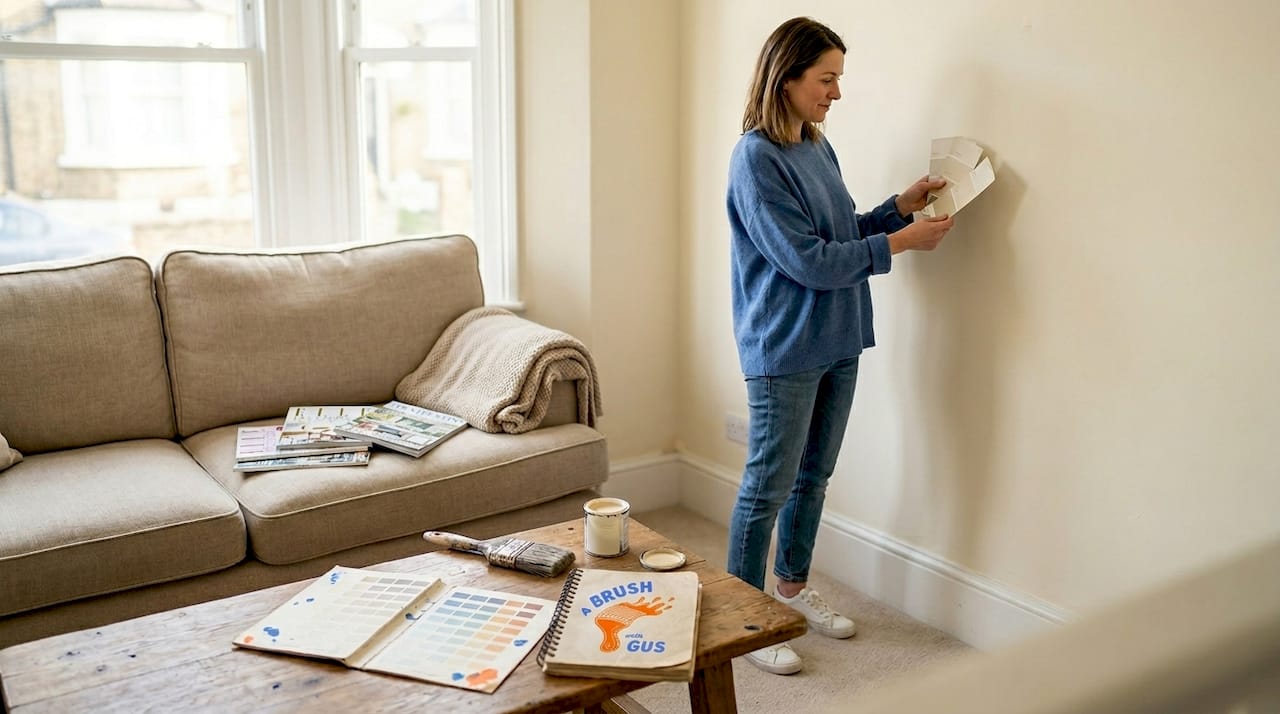
Colour selection deserves a mention too. Undertones shift dramatically under natural light, so always test samples on the actual wall before committing. A shade that looks warm and creamy in the shop can turn distinctly pink or grey on a north-facing bedroom wall in Cornwall.
Pro Tip: Apply sample patches at least 30cm square and observe them at different times of day. Morning and evening light will reveal undertones that artificial shop lighting completely hides.
For broader guidance on making these decisions well in your area, South West painting practices offers a solid starting point.
Interior house paints: Types and best uses
With those criteria in mind, let’s start indoors. The good news is that interior paints are generally more forgiving than exterior ones, but the wrong finish in the wrong room still causes problems.
The main interior paint types used in UK homes fall into two broad categories: emulsions for walls and ceilings, and oil or water-based paints for woodwork and trim.
Emulsion finishes at a glance:
Matt emulsion: Non-reflective, hides surface imperfections well. Perfect for living rooms and bedrooms, but harder to wipe clean.
Silk or satin emulsion: Has a soft sheen that reflects light and wipes clean more easily. Great for hallways and children’s rooms.
Eggshell: Sits between matt and satin. Traditionally oil-based but now widely available in water-based formulas. Works brilliantly on walls and woodwork alike.
Woodwork options:
Gloss: Hard wearing with a high shine. Classic on skirting boards and door frames, but brush marks can show if applied without care.
Satinwood: Softer sheen than gloss, less likely to highlight imperfections, and easier to touch up.
Finish | Best room | Washability | Light reflection |
Matt emulsion | Bedrooms, living rooms | Low | None |
Silk/satin emulsion | Hallways, kitchens | High | Medium |
Eggshell | Woodwork, bathrooms | Medium | Low-medium |
Gloss | Skirting, doors | Very high | High |
Satinwood | Trim, built-in furniture | High | Medium |
For further reading on specific applications, interior paint types explained goes deeper into what works best room by room. If you’re looking for colour inspiration alongside your paint selection, interior painting ideas for South West homes is worth exploring.
Pro Tip: For a kitchen or bathroom, always choose a paint specifically labelled as moisture-resistant. Standard emulsions will blister and flake within months in steamy conditions, regardless of the brand. Top brands for interiors include Farrow & Ball, Little Greene, and Dulux Trade, all of which offer purpose-built options for high-humidity spaces.
Exterior house paints: Weatherproofing and specialist solutions
With interiors covered, let’s move outside and look at paints built to take on the South West’s weather. The region sees above-average rainfall, strong coastal winds, and persistent dampness that tests even good-quality exterior paint over time.
The main exterior paint types used on UK homes include:
Standard acrylic masonry paint: Reliable and affordable. Suitable for sheltered properties in reasonable condition.
Silicone-enhanced masonry paint: Repels water at the surface while still allowing the wall to breathe. A significant step up in performance for exposed walls.
Premium specialist coatings (e.g. Emperor, Wethertex): Long-life products with self-cleaning and hydrophobic properties. Expensive upfront but designed to last.
Oil-based paint: Still used on timber and metal trim where hardness and adhesion matter.
Woodstain: For timber that you want to show the grain through rather than fully cover.
Specialist coatings: Anti-mould formulas for shaded damp walls; heat-reflective paints for south-facing surfaces.
What sets a good exterior paint apart from a poor one comes down to three properties. First, breathability, which allows moisture already inside the wall to escape rather than becoming trapped and causing damp. Second, flexibility, which allows the paint film to expand and contract with temperature changes without cracking. Third, surface preparation: even the best exterior coating will fail prematurely if applied over algae, loose material, or without a suitable primer.
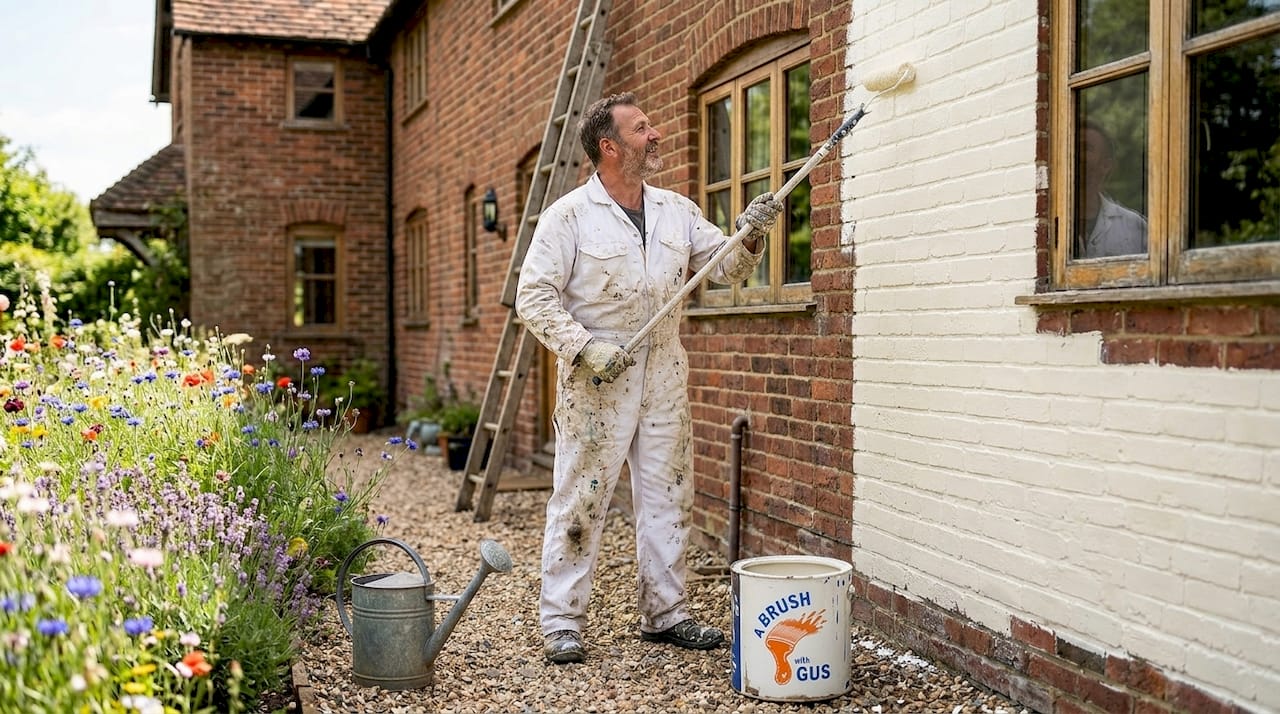
The best exterior paints are formulated to be hydrophobic, meaning water beads on the surface and rolls off rather than soaking in. Applied correctly to a well-prepared surface in mild, dry conditions, these paints make a tangible difference to how long your exterior looks fresh. To understand how seasonal conditions affect your timing, weather and exterior painting explains it clearly. For the bigger picture on what exterior painting actually does for your home, benefits of exterior painting is a useful read.
Match paint to surface and situation: Real-world recommendations
Now that you know the types, let’s get practical and match the right paint to your home’s surfaces and specific challenges.
Masonry walls (brick or stone): Use a breathable acrylic or silicone masonry paint. For coastal homes in places like Penzance or Weston-super-Mare, the salt and rain exposure means silicone-enhanced or premium coatings are a sound investment rather than an extravagance.
Render and pebbledash: Textured surfaces benefit from spray application, which ensures full and even coverage in every recess. Roller application on pebbledash almost always leaves thin spots.
Timber window frames and fascias: Use a high-quality flexible exterior gloss or specialist wood paint. Swell-prone timber needs a paint that moves with it, not against it.
Metal gutters and railings: Clean back to bare metal, prime with a rust-inhibiting primer, then apply a metal-specific topcoat. Do not skip the primer stage.
Older solid-wall homes: These are not cavity wall builds. Moisture moves through the walls constantly. Trap it with a non-breathable paint and you are creating the conditions for damp and mould.
“Older properties with solid walls need breathable paints above all else. A cheap but non-breathable exterior coating can cause more damage than no paint at all if moisture has nowhere to escape.”
Pro Tip: If you are unsure whether your existing exterior paint is breathable, splash a little water on the surface. If it beads up, the coating is likely still hydrophobic and performing well. If it soaks straight in, the surface needs attention before any new paint goes on.
For further professional guidance on technique and preparation, professional painting tips covers preparation methods worth knowing before starting any project.
Saving money vs durability: Standard paints and modern coatings
Finally, let’s confront the big decision: is it worth paying more upfront for modern coatings, or do standard paints do the job?
The honest answer depends on how long you plan to stay in the property and how much you value not repainting every few years. Standard paints fail faster, typically within three to five years on exposed South West exteriors. Modern specialist coatings are designed to last fifteen to twenty years, which changes the cost calculation significantly.
Option | Upfront cost | Expected lifespan | Maintenance frequency |
Standard masonry paint | Low | 3 to 5 years | High |
Quality acrylic masonry paint | Medium | 7 to 10 years | Medium |
Silicone or specialist coating | High | 15 to 20 years | Low |
“The cheapest tin is rarely the cheapest option once you factor in repainting, preparation, and the damage that poor coverage allows to develop underneath.”
Professionals almost universally reach for trade brands like Dulux Trade over retail equivalents, because trade products offer better pigment load and coverage per litre. You end up using less paint and achieving a more consistent result. For a broader look at products and approaches favoured by professionals, the A Brush With Gus blog covers painting and decorating topics relevant to South West homeowners.
Why the right paint matters more than you think: An expert take
In our experience working across the South West, the most common mistake homeowners make is treating paint as a purely cosmetic decision. They spend weeks choosing a colour and five minutes choosing the product. That is the wrong order of priority.
The paint type and quality determine how long that colour looks good, how well your walls are protected, and whether you end up with a damp problem that costs thousands to resolve. We have seen beautifully chosen colours applied in entirely the wrong product, peeling off exposed render within eighteen months.
Local knowledge genuinely matters here. A painter who understands the difference between a sheltered property in Exeter and an exposed seafront home in Bude will make very different product choices, even for the same surface type. That is not something a paint tin label tells you.
If you want to understand what makes a reliable painter in this region, it comes down to exactly this kind of contextual knowledge. Smart paint selection combined with proper application is what separates a result that lasts from one that merely looks good in photographs.
Let the professionals help you choose and apply the best paint
Choosing the right paint is one challenge. Applying it to a professional standard is another. We work with homeowners across the South West every week, and the first thing we do is assess the specific surface, exposure, and condition of every property before recommending a product.

Whether you need exterior home painting on a coastal render property or a full refresh of your interior rooms through our domestic painting services, we match the right product to the right situation every time. For textured or hard-to-coat surfaces, our professional paint spraying service delivers a finish that rollers simply cannot match. Get in touch with Gus and Rhys today for an honest, tailored quote.
Frequently asked questions
What is the most durable exterior house paint for South West UK homes?
Silicone-enhanced masonry paints or specialist premium coatings like Emperor and Wethertex offer the longest durability in wet and coastal conditions, often lasting fifteen to twenty years.
Is there a difference between trade and retail paints?
Trade paints typically offer better coverage and longevity than their retail counterparts, and professionals favour them because they go further per litre and produce a more consistent finish.
What paint should I use for older or solid-wall homes?
Choose breathable options such as mineral or high-quality acrylic masonry paints, because solid walls need breathability to release moisture and prevent damp from building up inside the wall.
Can I paint outside during the winter in the South West UK?
Painting exterior surfaces in winter is risky and generally not recommended, though specialist spray systems designed for low temperatures can make it viable in the right hands.
Are low-VOC paints really worth it?
Yes. Low-VOC paints reduce harmful emissions during and after application, making them a genuinely healthier choice for bedrooms, living rooms, and any space where good air quality matters.
Recommended
Comments