
Types of interior paints explained for homeowners
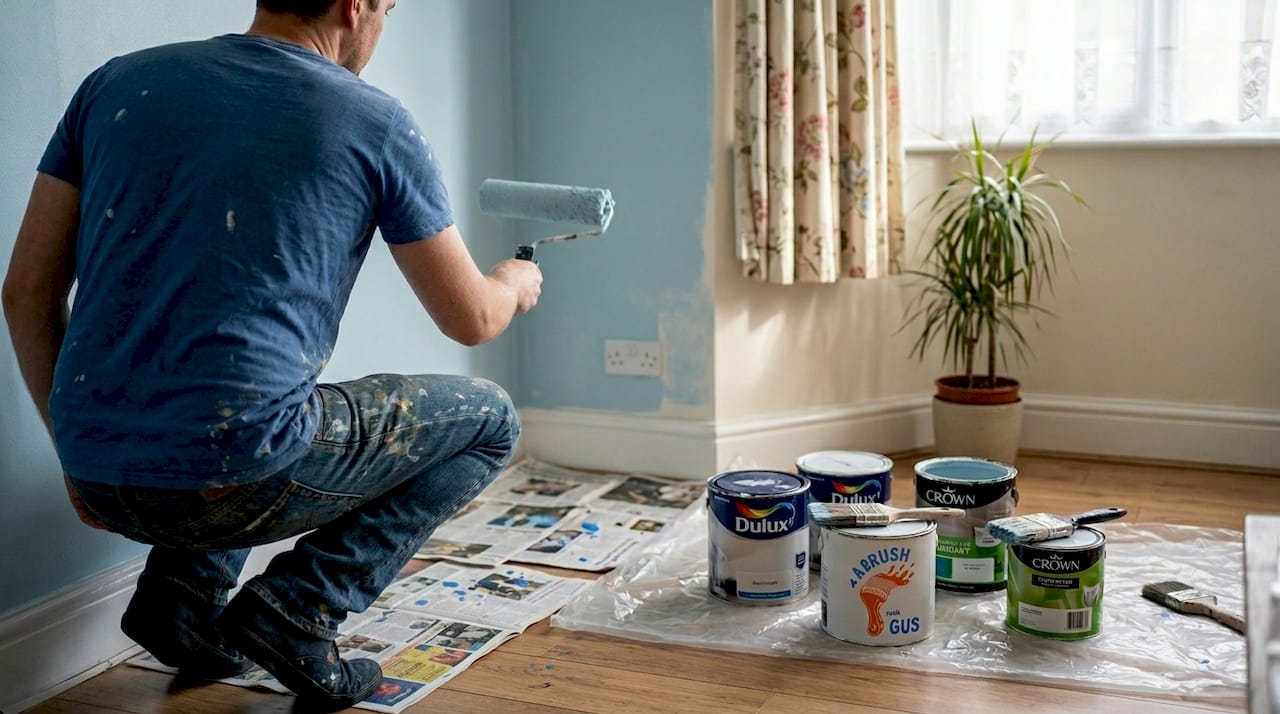
Choosing the right interior paint feels overwhelming when faced with endless options at the paint shop. Many homeowners assume all paints work the same way, only to discover peeling finishes or colours that don’t match expectations after completing their project. Understanding paint types transforms this confusion into confidence, helping you select products that deliver lasting beauty and durability. This guide breaks down common interior paints, their finishes, and practical applications so you can make informed decisions that protect your investment and create spaces you’ll love for years.
Table of Contents
Key Takeaways
Point | Details |
Water based emulsions dominate | Water based emulsions are dominant for interior walls and ceilings, drying quickly, emitting minimal odour and cleaning with soap and water. |
Finish drives appearance and upkeep | Finish and formulation determine the look of a space and its long term maintenance. |
Oil gloss for woodwork | Oil based gloss provides durability and easy cleaning for woodwork such as skirting boards and doors. |
Batch colour consistency across tins | Always buy from the same batch when buying multiple tins to avoid colour variation. |
Common types of interior paints and their uses
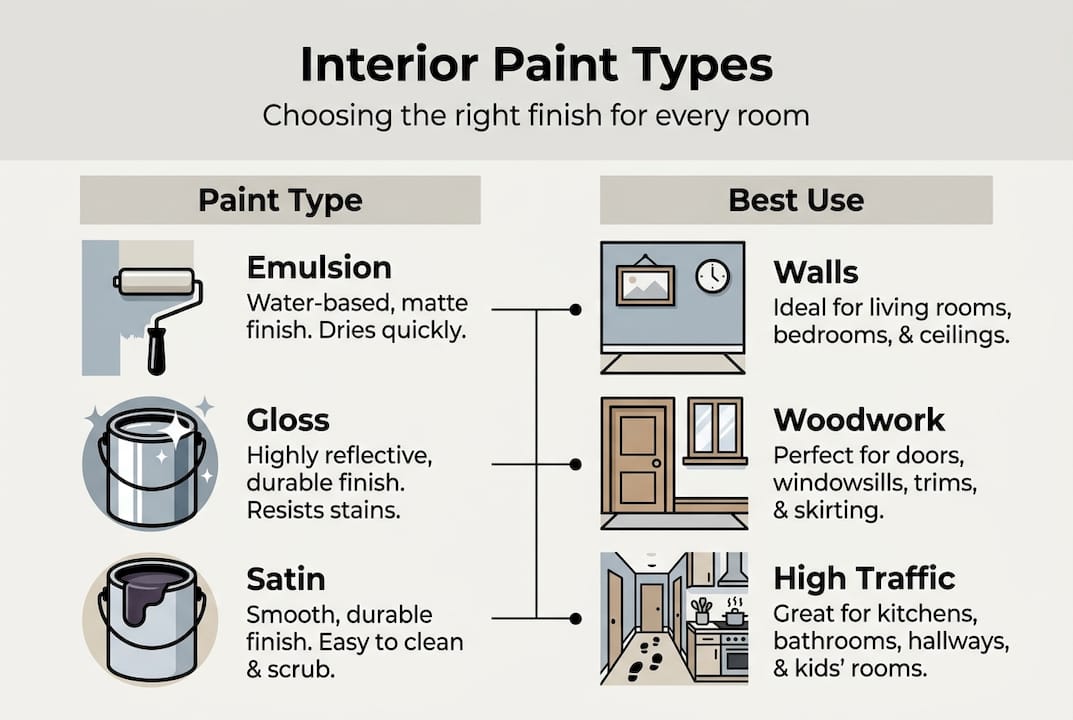
Water-based emulsion paints dominate interior wall and ceiling applications throughout UK homes. These formulations dry quickly, emit minimal odour, and clean up with soap and water, making them ideal for occupied spaces. Emulsions come in various finishes from flat matte to soft sheen, each offering different aesthetic and practical benefits. Most homeowners find emulsions forgiving to apply, with modern formulations providing excellent coverage in two coats.
Oil-based gloss paints deliver unmatched durability for woodwork, skirting boards, door frames, and window sills. The hard, reflective finish withstands frequent cleaning and resists scuffs better than water-based alternatives. Gloss requires longer drying times and proper ventilation during application, but the robust protective layer justifies these inconveniences for high-traffic areas. Professional painters often recommend gloss for families with children or pets who need surfaces that tolerate daily wear.
Satin and eggshell finishes bridge the gap between matte walls and glossy woodwork. Satin provides subtle sheen with good washability, making it popular for hallways, children’s rooms, and kitchens where walls need regular wiping. Eggshell offers even less sheen whilst maintaining better cleanability than flat matte, creating sophisticated looks in dining rooms and bedrooms. Both finishes hide minor wall imperfections better than gloss whilst offering superior maintenance compared to matte.
Different paint types suit various surfaces and durability requirements. Selecting appropriate formulations for each surface ensures your decorating project delivers both immediate visual impact and long-term performance. Understanding these fundamental categories helps you navigate paint shop displays with clarity rather than confusion.
Pro Tip: Always purchase paint from the same batch when buying multiple tins. Colour variations between production runs can create noticeable differences on your walls, even within identical product lines. Check batch numbers printed on tin labels before leaving the shop.
Comparing paint finishes and durability
Matte finishes create flat, non-reflective surfaces that absorb light rather than bouncing it back. This characteristic makes matte excellent for hiding wall imperfections, uneven plastering, and minor surface flaws that glossier finishes would highlight. However, matte paints resist cleaning poorly, with scrubbing often removing paint along with dirt. Reserve matte for low-traffic areas like adult bedrooms and formal dining rooms where walls rarely need wiping.
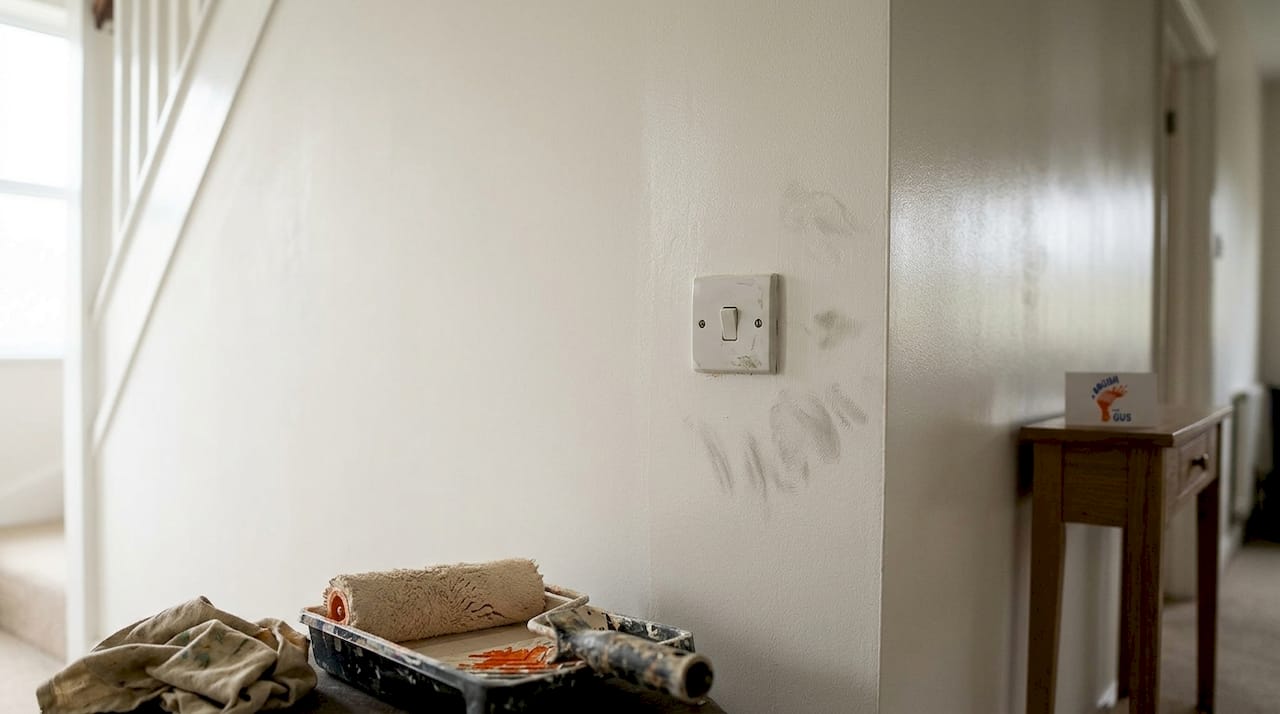
Satin finishes reflect moderate light, creating gentle sheen that adds depth to wall colours without the mirror-like quality of gloss. The slight reflectivity means satin shows surface imperfections more than matte but tolerates regular cleaning far better. Wipe satin walls with damp cloths to remove fingerprints, scuffs, and everyday dirt without damaging the finish. This balance makes satin the most versatile choice for busy family homes.
Eggshell sits between matte and satin, offering barely perceptible sheen that suggests sophistication whilst maintaining practical cleanability. Interior designers favour eggshell for creating elegant spaces that don’t sacrifice functionality. The finish works beautifully in living rooms, bedrooms, and dining areas where you want refined aesthetics with reasonable maintenance capabilities.
Finish type | Light reflection | Cleanability | Best applications | Imperfection hiding |
Matte | None | Poor | Low-traffic bedrooms, ceilings | Excellent |
Eggshell | Very low | Moderate | Living rooms, dining rooms | Good |
Satin | Moderate | Good | Hallways, children’s rooms, kitchens | Fair |
Semi-gloss | High | Excellent | Bathrooms, woodwork, trim | Poor |
Gloss | Very high | Excellent | Doors, cabinets, high-moisture areas | Very poor |
Semi-gloss and gloss finishes deliver maximum durability and reflectiveness, making them ideal for woodwork, trim, and surfaces requiring frequent cleaning. The hard, shiny surface resists moisture penetration and wipes clean effortlessly, explaining why cleaning painted surfaces becomes simpler with glossier finishes. However, high-gloss finishes magnify every surface flaw, requiring meticulous preparation and expert application for professional results.
Choosing finish depends on balancing aesthetic preferences against practical demands. High-traffic hallways benefit from satin’s cleanability whilst formal spaces might prioritise matte’s sophisticated appearance. Consider how often walls will need cleaning, the room’s lighting conditions, and your wall surface quality when selecting finishes.
Choosing paints based on room type and function
Kitchens demand paints that withstand cooking splashes, grease deposits, and frequent cleaning. Satin or semi-gloss finishes work best here, offering wipeable surfaces that maintain appearance despite daily exposure to food preparation mess. Look for formulations specifically marketed as kitchen paints, which often include stain-resistant additives and enhanced durability. Avoid matte finishes in kitchens unless you’re prepared for permanent marks from cooking incidents.
Bathrooms require moisture-resistant paints that prevent mould growth in steamy conditions. Specialised bathroom paints contain fungicidal additives that inhibit mould and mildew development on walls and ceilings. Semi-gloss or satin finishes suit bathrooms because their smoother surfaces resist moisture penetration better than matte alternatives. Proper ventilation remains essential regardless of paint choice, but appropriate formulations provide crucial additional protection.
Living rooms and bedrooms offer more flexibility since these spaces experience less moisture and cleaning demands. Many homeowners choose eggshell or matte finishes here for their sophisticated, light-absorbing qualities that create calm, comfortable atmospheres. Consider room lighting when selecting finishes, as north-facing rooms might benefit from slightly reflective eggshell to brighten darker spaces whilst south-facing rooms can accommodate flat matte without appearing gloomy.
Selecting paint based on room conditions improves durability and appearance. Follow this systematic approach:
Assess moisture levels and identify high-humidity areas requiring specialised formulations
Evaluate cleaning frequency needs based on room usage and occupant behaviour patterns
Consider natural and artificial lighting to determine appropriate finish reflectivity
Match finish durability to expected wear, choosing tougher options for high-traffic zones
Review wall surface condition to select finishes that either hide or can tolerate imperfections
Hallways and staircases experience constant traffic, making them prime candidates for durable satin finishes. These transitional spaces accumulate scuffs from bags, coats, and passing bodies, requiring paints that clean easily without showing every mark. Lighter colours in satin finish help smaller hallways feel more spacious whilst maintaining practical cleanability.
Pro Tip: Paint ceiling and woodwork before walls to avoid splatters on finished surfaces. This sequence lets you work faster on ceilings and trim without obsessive precision, then achieve clean wall finishes without worrying about drips onto completed work.
Environmental and health considerations in interior paints
Volatile organic compounds in traditional paints release gases during application and drying, potentially affecting indoor air quality for weeks or months. These emissions can trigger headaches, respiratory irritation, and other health symptoms, particularly concerning for children, elderly residents, and people with asthma or chemical sensitivities. Low-VOC paints improve indoor air quality whilst delivering comparable performance to conventional formulations.
Modern low-VOC and zero-VOC paints have evolved dramatically, now matching traditional paints for coverage, durability, and colour range. Early eco-friendly paints sometimes required extra coats or showed inferior longevity, but current formulations eliminate these compromises. Many professional painters now default to low-VOC options because they create healthier working conditions without sacrificing results.
Paint category | Typical VOC level | Drying time | Odour intensity | Indoor air impact |
Traditional oil-based | High (300-400 g/L) | 6-8 hours | Strong, persistent | Significant, lasting weeks |
Conventional water-based | Moderate (50-150 g/L) | 2-4 hours | Noticeable, fades quickly | Moderate, clears in days |
Low-VOC water-based | Low (under 50 g/L) | 2-4 hours | Minimal | Minor, clears rapidly |
Zero-VOC water-based | Minimal (under 5 g/L) | 2-4 hours | Nearly none | Negligible |
Environmentally responsible paint choices benefit both occupants and the broader ecosystem. Water-based formulations require less energy to manufacture than oil-based alternatives and generate fewer harmful by-products during production. Choosing eco-friendly domestic painting products supports sustainable manufacturing whilst creating healthier home environments.
South West UK homeowners increasingly prioritise environmental considerations when renovating. Regional awareness of coastal ecosystems and natural beauty drives demand for products that minimise environmental impact. Many local suppliers now stock extensive ranges of eco-friendly paints, making sustainable choices convenient and cost-competitive with traditional options.
Key benefits of low-VOC paints include:
Reduced indoor air pollution protecting family health, especially important for nurseries and children’s bedrooms
Minimal odour allowing rooms to be occupied sooner after painting without discomfort
Lower environmental impact throughout manufacturing, application, and disposal lifecycle
Comparable durability and coverage eliminating performance trade-offs for environmental responsibility
Safer working conditions for professional painters and DIY decorators during application
Check product labels for VOC content declarations and environmental certifications. Reputable manufacturers clearly display this information, helping you make informed choices. Remember that even zero-VOC paints may contain trace compounds, but levels remain negligible compared to traditional formulations.
Professional painting services for your home
Understanding paint types empowers better decisions, but achieving flawless results requires proper surface preparation, application technique, and timing that professional painters master through years of experience. Domestic painting services transform theoretical knowledge into beautiful, lasting finishes that enhance your home’s value and your daily enjoyment of living spaces.

Professional decorators assess your specific requirements, recommend appropriate products for each surface, and execute preparation steps that determine final quality. They understand how different paints behave during application, adjusting techniques for optimal coverage and appearance. Spraying services deliver particularly impressive results on woodwork and cabinets, creating factory-smooth finishes impossible to achieve with brushes or rollers.
Working with experienced painters saves time whilst ensuring your paint investment delivers maximum return. They complete projects efficiently without disrupting household routines, protect furnishings and flooring properly, and guarantee results that justify the cost through superior longevity and appearance. Contact professional painting specialists in Cornwall to discuss your project and discover how expert application maximises the benefits of choosing the right paint types for your home.
Frequently asked questions
Which types of interior paint are best for a kitchen?
Satin or semi-gloss finishes work best for kitchen walls because they withstand frequent cleaning and resist staining from cooking splashes. Choose formulations specifically designed for kitchens when possible, as these include enhanced durability and stain-resistance. Avoid matte finishes in kitchens since they absorb marks permanently and clean poorly.
How do I know which paint finish to choose for living rooms?
Matte or eggshell finishes suit most living rooms, offering sophisticated appearance with adequate durability for moderate-traffic spaces. Consider your room’s natural light, as darker north-facing rooms benefit from eggshell’s subtle reflectivity whilst bright south-facing spaces can accommodate flat matte. Evaluate your wall condition too, choosing matte if surfaces show imperfections that glossier finishes would highlight.
Are eco-friendly interior paints worth the investment?
Yes, low-VOC and zero-VOC paints deliver comparable coverage and durability to conventional formulations whilst significantly improving indoor air quality. Modern eco-friendly paints eliminate the performance compromises that affected earlier versions, making them excellent choices for health-conscious homeowners. The minimal price premium justifies the health and environmental benefits, particularly for children’s rooms and spaces with limited ventilation.
Can I use the same paint throughout my entire home?
Whilst possible, using identical paint everywhere ignores important functional differences between rooms. Bathrooms need moisture-resistant formulations, kitchens require washable finishes, and bedrooms can accommodate less durable options. Matching paint types to room-specific demands ensures optimal performance and longevity, ultimately protecting your decorating investment better than one-size-fits-all approaches.
How long should I wait before cleaning newly painted walls?
Allow water-based paints to cure for at least two weeks before cleaning, even though they feel dry within hours. Full curing takes time as solvents evaporate completely and the paint film hardens to maximum durability. Premature cleaning can damage uncured paint, leaving permanent marks or removing finish. Oil-based paints require even longer curing periods, sometimes up to a month before tolerating vigorous cleaning.
Recommended
Comments