
Unexpected uses for paint in homes: creative ideas
- WM Creative Designs Limited
- Aug 8
- 8 min read
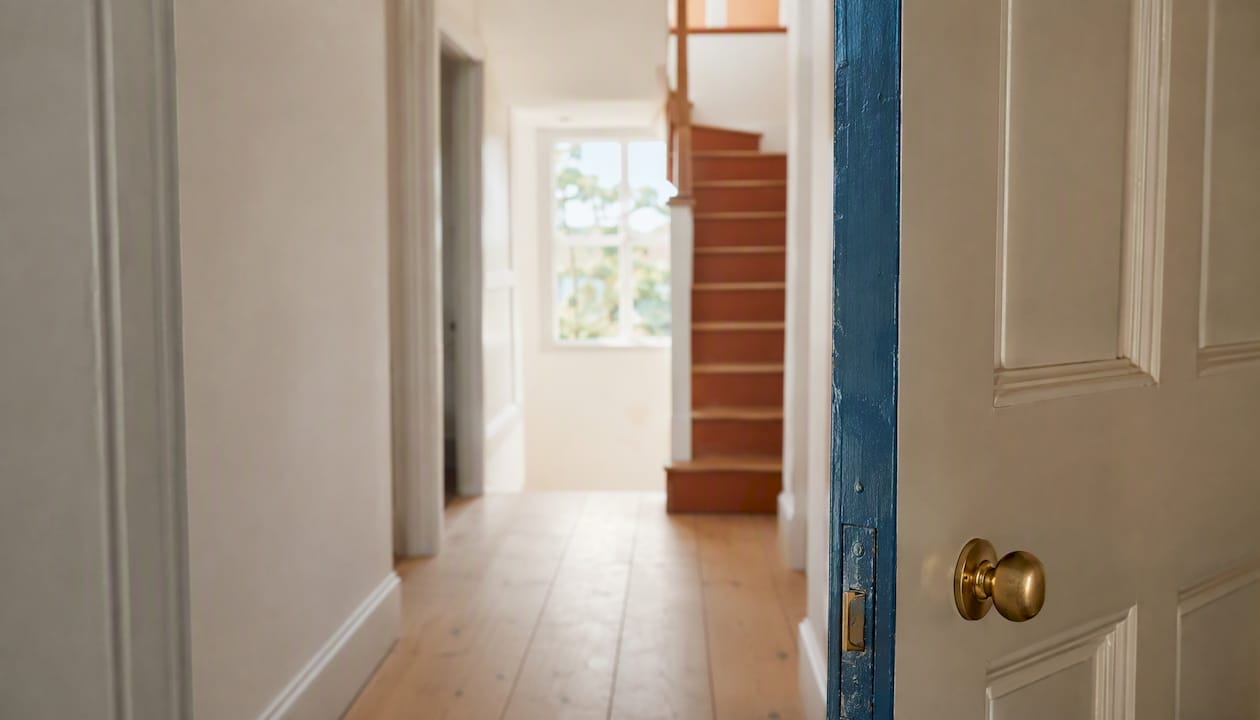
Peekaboo door edges, sgraffito cabinet panels, liquid-metal handle highlights, painted stair risers. These are the unexpected uses for paint in homes that deliver the most visual punch for the least commitment. The principle is simple: contrast, motion, and scale. A bold colour glimpsed as a door swings open creates more surprise than an entire accent wall. You do not need to repaint a room to transform how it feels.
Three names worth knowing before you start: Annie Sloan Chalk Paint for low-prep furniture techniques, Farrow & Ball for finish quality and trend reference, and Abrushwithgus for professional help in Cornwall and the South West when a project outgrows DIY.
Quick checklist before any small project:
Open windows and use a fan; ventilation matters even with water-based paints
Match paint type to substrate (more on this in the prep section below)
Test a sample patch and live with it for 48 hours before committing
Table of Contents
Which decorative techniques work best for creative paint projects?
How do you choose the right paint and prepare surfaces in the UK?
What can you do with leftover paint instead of throwing it away?
When should you hire a professional painter instead of doing it yourself?
Professional painting and decorating in Cornwall and the South West
What are the most unexpected things to paint in your home?
Ten surfaces worth trying, each with a quick note on paint type and what to expect:
Door edges (peekaboo). A flash of colour visible only when the door opens. Use a durable satin finish — high gloss shows wear and can stick. Thin coats are non-negotiable here.
Inside drawers and cupboards. A small pot of leftover paint goes a long way. Eggshell or satin wipes clean easily and adds a moment of delight every time you open a drawer.
Bathtub exteriors. The outside of a freestanding tub takes paint well; the inside does not, without specialist porcelain-specific products. Use an oil-based or specialist enamel on the exterior and sand lightly first.
Furniture legs and drawer fronts — Annie Sloan Chalk Paint requires minimal prep and accepts distressing or wax finishing beautifully. A contrasting leg colour on a plain table is a quick, reversible update.
Small ceilings and closet interiors. A deep, saturated colour on a small ceiling feels dramatic rather than oppressive. Standard ceiling paint works; a satin finish reflects more light in a dark closet.
Pro Tip: For peekaboo surfaces, designers recommend going bolder than you think you dare. Because the surface is small and seen in motion, a muted colour reads as nothing at all.
Which decorative techniques work best for creative paint projects?
Technique | Best surface | Skill level | Key material |
Sgraffito | Furniture, cabinets | Intermediate | Chalk Paint, wax seal |
Liquid-metal finish | Handles, ceilings, trims | Intermediate | Metallic paint, spray or brush |
Chalk paint and wax | Furniture, frames | Beginner | Annie Sloan Chalk Paint |
Faux moulding | Walls, panels | Beginner | Emulsion, low-tack tape |
Stencilling | Floors, walls, risers | Beginner | Stencil paint, foam roller |
Sgraffito layers a base coat and a contrasting top coat, then scratches through the top coat while it is still slightly wet to reveal the colour beneath. Timing is everything: work in small sections so the top coat stays workable. Annie Sloan Chalk Paint is the standard choice because it dries slowly enough to give you a usable window. A pop-art cabinet project by Nemiskacat shows exactly how layering bright base colours under a Graphite top coat produces graphic, expressive results.
Liquid-metal finishes add reflective dimension and bounce light around a room in a way matte paints simply cannot. Handles, ceiling roses, and small furniture panels all benefit. Surface prep is critical: degrease, sand lightly, and prime bare metal before applying. Spray application gives the most even result; brush application works on textured surfaces where a slight variation in sheen reads as depth.
Faux moulding uses tape and two tones of emulsion to create the illusion of panelling or dado rails without any joinery. Stencilling follows the same low-cost logic, adding pattern to floor tiles, stair risers, or a feature wall for the price of a stencil sheet and a small pot of paint.
Pro Tip: Test any decorative finish on a primed offcut or a hidden section of the actual surface before committing. Lighting changes how metallic and chalk finishes read, and what looks right in the tin can look flat or garish in situ.
Three quick projects you can finish in an afternoon
Project A: Peekaboo door edge
Time: 1–2 hours | Cost: Low (a small tester pot)
You need: Fine-grit sandpaper (180 grit), a small brush, satin paint in your chosen colour, painter’s tape.
Check door clearance — swing the door fully open and measure the gap at the top and sides.
Sand the edge lightly and wipe clean.
Apply two thin coats of satin paint, letting each dry fully.
Remove tape before the final coat is completely dry to avoid peeling.
Project B: Sgraffito bedside cabinet
Time: 3–4 hours (plus drying) | Cost: Medium (two chalk paint colours, wax)
You need: Annie Sloan Chalk Paint in two contrasting colours, a stiff-bristled tool or skewer for scratching, soft wax, a brush.
Apply the base coat and let it dry completely.
Apply the top coat in sections no larger than an A4 sheet.
While the top coat is still slightly wet, scratch your pattern through to the base colour.
Seal with soft wax once fully dry.
Working in small sections is the single most important step. The Nemiskacat cabinet project demonstrates how this discipline produces clean, graphic lines rather than muddy smears.
Project C: Liquid-metal handle highlights
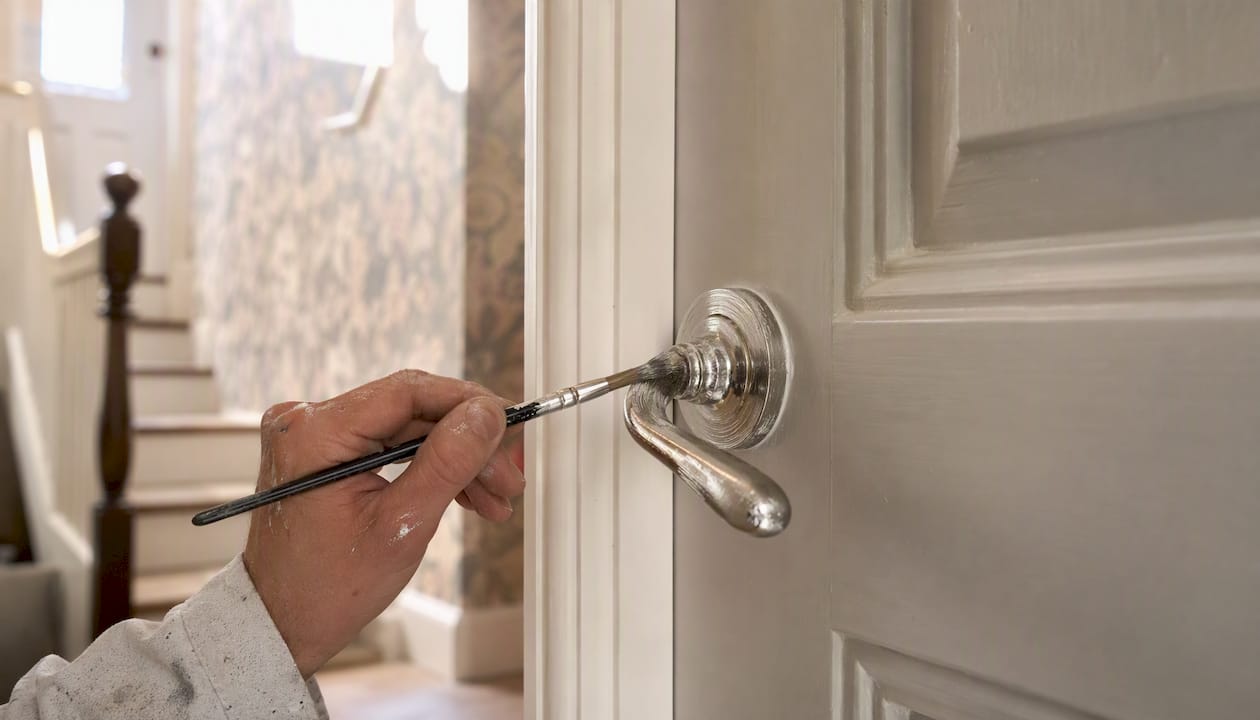
Time: 1–2 hours | Cost: Low to medium
You need: Fine sandpaper, metal primer, metallic paint (spray or brush-on), clear protective topcoat.
Remove handles if possible; mask in place if not.
Sand lightly, degrease, and apply a thin coat of metal primer.
Apply metallic paint in two thin coats; spray gives the most even finish.
Seal with a clear lacquer for durability.
Project | Time | Approx. cost | Key tool |
Peekaboo door edge | 1–2 hours | a low cost | Small brush, 180-grit paper |
Sgraffito cabinet | 3–4 hours + drying | a moderate cost range | Chalk Paint, skewer, wax |
Liquid-metal handles | 1–2 hours | a moderate cost range | Metal primer, metallic spray |
How do you choose the right paint and prepare surfaces in the UK?
Match paint type to substrate first; everything else follows from that decision.
Porcelain/enamel (bathtub exterior): Oil-based enamel or specialist bath paint. The exterior of a freestanding tub is fair game; the interior needs a professional refinishing product designed for waterproof surfaces.
UPVC (doors, window frames): — Specialist UPVC paint or a professional spray finish. Standard emulsion will peel within a season.
Farrow & Ball is worth mentioning here for finish quality: their full-gloss and estate eggshell formulations are noticeably more durable on woodwork than budget equivalents, which matters on handled surfaces like door frames.
Paint type | Best substrate | Recommended finish |
Water-based eggshell | Wood, MDF | Satin or eggshell |
Radiator paint | Metal radiators | Satin |
Oil-based enamel | Bathtub exterior, metal | Gloss or satin |
Specialist UPVC paint | UPVC doors/windows | Satin |
Standard emulsion | Walls, ceilings | Matt or silk |
UK safety basics: Work with windows open and a fan running, even with water-based paints. When spraying, wear an FFP2 mask minimum. Dispose of paint tins and solvents at your local household hazardous waste facility — not in general waste or down the drain.
Pro Tip: Apply thin coats on door edges and frames. Paint build-up is the most common reason doors stick after repainting.
What can you do with leftover paint instead of throwing it away?
Leftover paint is genuinely useful. A half-empty tin is enough for most of the projects in this article.
Quick reuse ideas:
Paint the inside of a drawer or cupboard for a surprise pop of colour
Refresh a bookshelf back panel
Paint terracotta plant pots (seal with an outdoor varnish if they live outside)
Touch up skirting boards and door frames
Paint a small closet ceiling in a deep, saturated shade
For storage: press a layer of cling film directly onto the paint surface before sealing the lid, store the tin upright in a cool, dry place, and decant small amounts into labelled jars for touch-ups. Paint stored this way can last two to three years.
For disposal: genuinely unusable paint goes to your local council’s household hazardous waste facility. Many councils also run community reuse schemes, and platforms like Freecycle and local Facebook groups are worth checking before you drive to the tip.
When should you hire a professional painter instead of doing it yourself?
DIY is the right call for small, low-risk surfaces: door edges, drawer interiors, furniture, stair risers, bookshelf backs. The projects above are all within reach of a careful beginner.
Call a professional when:
The surface is UPVC (doors, window frames) — specialist spray equipment and adhesion primers are needed for a finish that lasts
You are refinishing a bathtub interior — this requires professional-grade epoxy products and proper ventilation
The job involves working at height or covering large exterior areas
You want an airless spray finish on walls or ceilings, where even application is hard to achieve by hand
Long-term durability matters and you want a guarantee behind the work
Abrushwithgus covers all of these scenarios across Cornwall and the South West: domestic painting, UPVC spraying, and airless spraying services for larger or more complex jobs. Get in touch for a free quote.
Key takeaways
Small, strategic paint moves on unexpected surfaces deliver the highest impact for the least cost and commitment, provided you match paint type to substrate and prepare properly.
Point | Details |
Start small and visible in motion | Door edges, stair risers, and drawer interiors create surprise without repainting whole rooms. |
Match paint to substrate | Use radiator paint on radiators, specialist UPVC products on plastic frames, and eggshell on wood. |
Prep determines the result | Sand, degrease, and prime before painting; thin coats prevent sticking and peeling. |
Reuse leftover paint | Small tins cover drawer interiors, plant pots, and bookshelf backs; store correctly and they last years. |
Abrushwithgus for specialist jobs | UPVC spraying, bathtub refinishing, and large spray projects in Cornwall and the South West. |
The projects most people get wrong
The peekaboo door edge and the sgraffito cabinet are two of the most satisfying small paint projects you can do in an afternoon. They are also the two where I see the most avoidable mistakes: too much paint on a door edge (it sticks within a week), and scratching sgraffito too late (the top coat chips rather than peels cleanly). Both problems have the same fix: work in smaller sections and use thinner coats than you think you need.
The other thing people underestimate is substrate compatibility. A coat of standard emulsion on a UPVC window frame looks fine for about six months, then peels in sheets. The surface preparation and paint chemistry for UPVC, metal, and porcelain are genuinely different from wood and plaster, and skipping that step costs more to fix than it saved. For those jobs, a professional finish from Abrushwithgus is the more economical choice in the long run.
Professional painting and decorating in Cornwall and the South West
If a project has grown beyond a tester pot and a free afternoon, Abrushwithgus offers domestic painting and decorating, specialist UPVC spraying, and airless spraying services across Cornwall and the South West. As a family-run business, Gus and Rhys keep things straightforward: quality finishes, honest pricing, and free quotations with no obligation.

Get in touch via the website to discuss your project and request a free quote.
Useful sources and further reading
How to create a Sgraffito effect | Annie Sloan
Liquid metal paint techniques: Creative ideas & applications | Luxface
15 ways to use leftover paint | My Creative Days
Leftover paint hacks for every room | Home as We Make It
9 surprising spots you can paint that will totally transform your home | Real Simple
Recommended
Comments