
Ways to update your home with paint in 2026
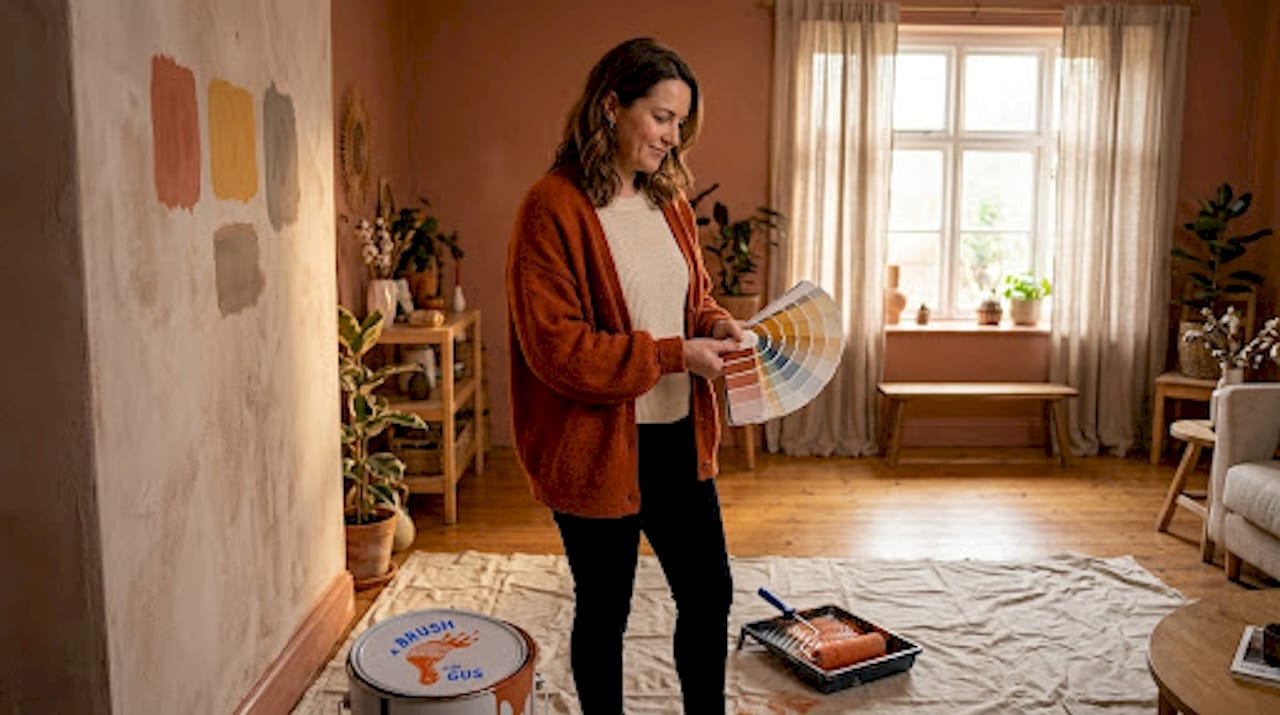
TL;DR:
Paint is an undervalued tool that can dramatically update your home by enhancing mood, space, and personality. Colour-drenching, accent walls, and painting trims or furniture are effective strategies for creating bold, cohesive, and stylish interiors in 2026. Proper surface preparation, choosing the right finishes, and understanding landlord permissions are essential for lasting, budget-friendly results.
Paint is one of the most underestimated tools in your home refresh arsenal. Whether you own your property or rent it, the ways to update your home with paint are far broader than slapping a new colour on the living room walls. A single tin can shift a room’s mood, make a cramped hallway feel taller, or turn a dated piece of furniture into a talking point. With 2026’s paint colour trends moving firmly towards warmth, personality, and bold-but-considered choices, there has never been a better moment to pick up a brush.
Table of Contents
Key takeaways
Point | Details |
Colour-drenching leads 2026 trends | Painting walls, ceiling, and trim in one shade creates a calming, cohesive look that transforms any room. |
Sampling before committing matters | Test paint on at least an 8-by-8-inch swatch on your actual wall to see how it reacts to your room’s light. |
Finishes affect durability | Eggshell suits most interior walls; semi-gloss is better for trim and moisture-prone areas like kitchens. |
Surface prep determines the result | Cleaning, filling, sanding, and priming before painting prevents peeling and produces a lasting finish. |
Renters have more options than they think | Neutral colours and a formal written request significantly improve the chances of getting landlord approval to paint. |
1. Choose a colour scheme that actually suits your space
The foundation of any successful home repaint is choosing the right colours. Interior designers recommend warm whites, soft taupes, and earthy creams as 2026’s standout palette. The shift away from cool grey tones reflects a wider desire for spaces that feel emotionally restorative rather than clinical.
That said, warm neutrals are not the only game in town. Accent colours in deep terracotta, olive green, and dusty blue are appearing on statement walls, cabinetry, and architectural details across homes in the South West and beyond. The trick is choosing colours that relate to each other so the home feels considered, not patchy.
When selecting your palette, keep these points in mind:
Start with your fixed elements. Flooring, tiles, and large furniture should anchor your colour choices, not fight against them.
Consider the light. North-facing rooms read colours cooler; south-facing rooms are more forgiving with bolder shades.
Do not guess from a paint card. Sample on your actual wall on at least an 8-by-8-inch swatch to see how the colour behaves in your specific light.
Think about flow. If open-plan living means you can see one room from another, the tones need to transition logically.
For deeper guidance on pairing colours across rooms, the Abrushwithgus article on choosing paint colours is worth a read before you buy a single tin.
Pro Tip: Paint the same swatch on two adjacent walls and observe it at different times of day. Morning light and evening lamplight can make the same colour look like two completely different shades.
2. Try colour-drenching for a bold, cohesive look
Colour-drenching is the standout home painting idea of 2026. It involves painting every surface in a room, including walls, ceiling, skirting boards, and even door frames, in the same shade. The effect is enveloping and surprisingly calming. Colour-drenching has seen a 149% increase in Zillow listing mentions as of May 2026, proving this is not a niche designer trick. It has gone mainstream.
The reason it works so well is that it unifies the architecture of a room, smoothing over awkward angles and making proportions feel more deliberate. A low ceiling painted the same shade as the walls suddenly feels intentional rather than cramped. A narrow hallway with all surfaces in a warm linen tone reads as cosy rather than tight.
Colour-drenching works particularly well with:
Soft, saturated mid-tones rather than very pale or very dark shades
Rooms with interesting architectural details like coving, dado rails, or panelling
Smaller spaces where you want to create atmosphere rather than fight the dimensions
Bedrooms and snugs where a cocoon effect is genuinely desirable
The one rule: use the same colour but consider varying the finish slightly. Satin on the walls and eggshell on the ceiling works beautifully.
3. Use accent walls and geometric patterns strategically
Not every room needs the full drench. Sometimes one wall is enough to transform your space with paint. An accent wall works best when it highlights a wall that already has a natural focal point: behind a bed headboard, framing a fireplace, or the wall facing you as you walk through the door.
Geometric patterning with painter’s tape is an easy paint technique that rewards patience. Stripes, chevrons, or simple diamond patterns can be achieved with good quality tape, a spirit level, and two contrasting shades. The result looks far more planned than the effort involved.
Stencilling offers a more decorative alternative. Modern stencil designs range from subtle all-over leaf patterns to bold Moroccan-inspired repeats. You can achieve a wallpaper-like effect at a fraction of the cost, which makes it one of the best budget-friendly painting tips going.
4. Paint your trim, doors, and ceilings for an instant update
This is the most underused of all the ways to update your home with paint, and it consistently produces the biggest impact for the least effort. Most people repaint walls and leave everything else. Painting your skirting boards, door frames, window reveals, and internal doors in a fresh, contrasting shade lifts the entire room without touching the walls at all.
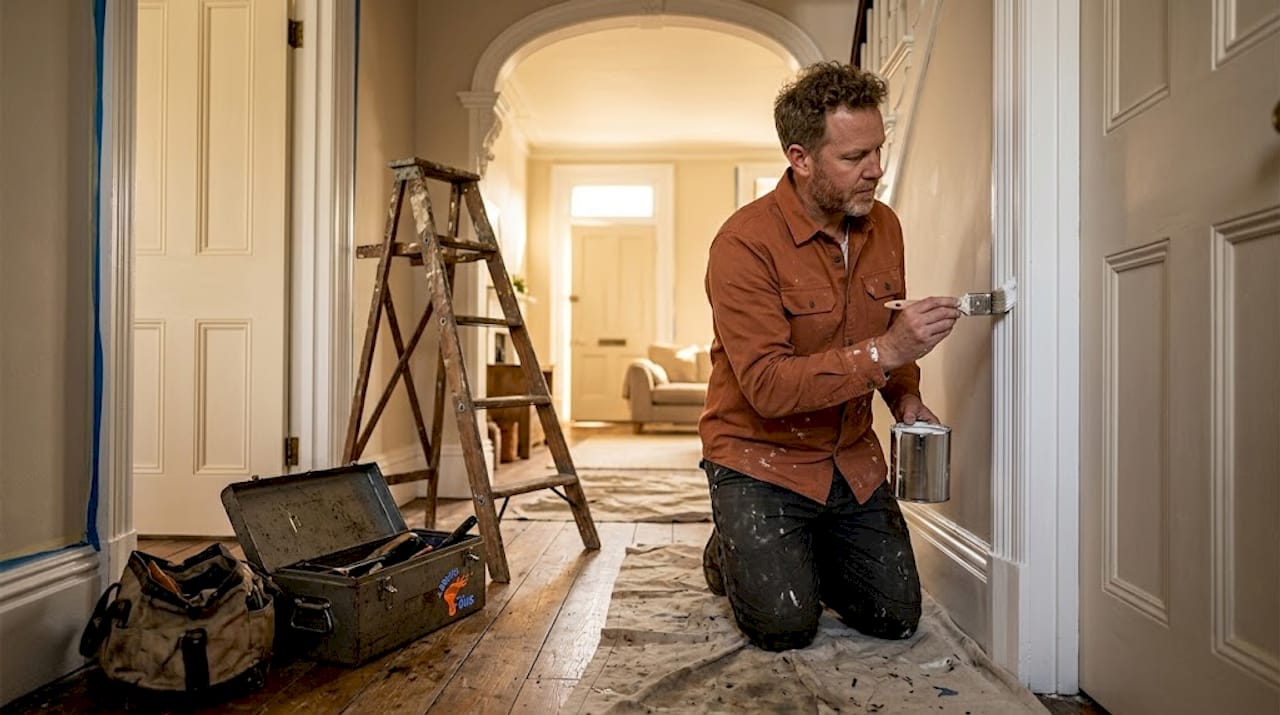
Gloss white trim against a coloured wall is a classic combination for good reason. But in 2026, off-white trim in shades like aged ivory or warm stone is replacing stark brilliant white in many design-led interiors. It reads as more sophisticated and less clinical.
Painted ceilings are similarly transformative. A ceiling painted one or two shades deeper than the walls draws the eye upward and creates a sense of enclosure that makes a room feel more considered. Pale ceilings maximise light reflection; darker ceilings add drama. Neither is wrong. It depends entirely on what you want the room to feel like.
Pro Tip: When painting trim and doors, use a satin or semi-gloss finish rather than eggshell. These surfaces take more handling and need the extra durability that a higher sheen provides.
5. Refresh furniture and fittings with paint
One of the most cost-effective home painting ideas is turning your attention away from the walls entirely. Old furniture, resprayed or hand-painted in a shade that ties into your updated room colour, can look genuinely stunning. A tired pine chest of drawers painted in deep navy with new brass handles is not a compromise on buying new furniture. For many people, it is better.
When painting furniture, preparation is everything:
Clean thoroughly. Grease and dust prevent paint from bonding.
Sand lightly. A scuff sand helps adhesion without stripping the piece.
Use a primer. Especially important on bare wood, MDF, or any piece with a previous high-gloss finish.
Choose the right product. Chalk paint needs sealing with wax or varnish. Specialist furniture paint from brands like Frenchic or Little Greene tends to be more durable without extra finishing steps.
Colour blocking is another technique worth exploring. Painting the legs of a table or bookcase in a contrasting shade to the body creates a playful, modern look with very little effort. It is particularly effective on simple IKEA-style pieces that might otherwise look generic.
For renters, repainting furniture you own is completely within your rights and can make a world of difference to how a space feels without touching a single wall.
6. Know your finishes before you buy
Choosing the wrong paint finish is one of the most common DIY home painting mistakes, and it is entirely avoidable. The finish affects both appearance and practicality in equal measure. Eggshell is recommended for most interior walls because it is wipeable without burnishing, meaning the surface does not go shiny when you clean a scuff off it.
Here is a quick reference to help you match finish to function:
Finish | Sheen level | Best used for |
Matt | None | Ceilings, low-traffic walls |
Eggshell | Very low | Bedroom and living room walls |
Satin | Mid | Hallways, children’s rooms |
Semi-gloss | High | Trim, skirting, doors |
Gloss | Very high | Woodwork, external doors |
For a thorough breakdown, the Abrushwithgus guide to paint finishes for homes covers every finish in practical detail.
7. Prepare your surfaces properly before painting
Surface preparation is the single most valuable thing you can do to make your paintwork last. Skipping prep leads to peeling, uneven finishes, and disappointing results regardless of how good the paint itself is.
Follow these steps every time:
Clean the surface. Use a sugar soap solution to remove grease, dust, and grime. Allow to dry completely.
Fill any holes or cracks. Use a flexible filler for plaster cracks and sand smooth once dry.
Sand any shiny surfaces. A light sand breaks the sheen and gives the new paint something to grip.
Apply primer where needed. New plaster, bare wood, and previously dark colours all benefit from a coat of primer before the top coats.
Tape carefully. Press tape firmly with a putty knife along its edge to prevent paint bleeding underneath.
When applying paint, roll in 3-to-4-foot vertical sections using a ‘W’ pattern to spread paint evenly before filling in. This technique maintains a wet edge and prevents lap marks from forming as you work across the wall.
Pro Tip: Investing in mid-range to good quality paint pays for itself. Quality paint reduces the number of coats needed and produces a more durable finish that resists scuffs and fading for longer.
8. Homeowners versus renters: prioritise your updates wisely
The best paint update for your home depends significantly on whether you own or rent. Homeowners have the freedom to be bolder and to repaint as often as style or wear dictates. Renters work within constraints, but those constraints are often more flexible than people assume.
Landlords typically repaint rental interiors every three to five years. If your walls are already near that cycle, you may find a landlord is open to you refreshing them, particularly if you agree to use neutral shades they would likely choose anyway.
Update type | Homeowner | Renter |
Repainting walls | Full freedom | Requires landlord approval |
Painting furniture | Full freedom | Full freedom (your furniture) |
Painting trim and doors | Full freedom | Requires landlord approval |
Colour-drenching | Full freedom | Rarely approved without negotiation |
Painting ceilings | Full freedom | Usually requires approval |
If you do want permission to paint as a renter, submit a formal request with colour swatches attached and offer in writing to restore the original colours when you leave. Neutral, easy-to-cover shades are far more likely to get a yes than a deep jewel tone.
My honest take on paint updates in 2026
I have been painting and decorating homes across the South West for a long time, and the one thing that consistently surprises clients is how much a single colour decision can change the way they feel in a room. Colour-drenching, in particular, delivers an effect that most people do not expect until they see it finished. It feels bold from the outside and genuinely calming from the inside.
What I have also learned is that the projects that go wrong almost always come down to skipping preparation, not to colour choices. People spend hours agonising over shades and then pick up a brush without cleaning the wall first. The result is paint that looks good for six months and then starts lifting. Getting the prep right is not glamorous, but it is the difference between a repaint that lasts two years and one that lasts ten.
For renters specifically, I would encourage you to think beyond the walls. Furniture, fittings, and accessories painted in a cohesive palette can make a rented flat feel genuinely personalised without risking your deposit. And when you do go to your landlord about the walls, come prepared. Swatches, a sensible colour, and a written agreement to restore it. That combination works more often than not.
Paint is one of the few genuinely affordable tools that lets you make a home feel like yours. Do not underestimate it.
— Angus
Ready to transform your home with professional results?
DIY painting can take you a long way, but there are projects where a professional finish makes all the difference. Whether it is a full interior repaint, colour-drenching across multiple rooms, or giving your exterior the refresh it deserves, Abrushwithgus brings the experience and the equipment to get it done properly.
As a family-run business based in the South West, Gus and Rhys offer interior domestic painting for everything from single rooms to full-house redecorations. For exterior work and specialist projects, the team also provides airless spraying and UPVC spraying for windows, doors, and frames. If you are ready to refresh your home with a finish that lasts, get in touch with Abrushwithgus for a no-obligation quote.
FAQ
What is colour-drenching and does it really work?
Colour-drenching means painting every surface in a room, including walls, ceiling, and trim, in a single shade. It creates a cohesive, enveloping effect and has seen a 149% increase in listing mentions in 2026, confirming it works beautifully when done with the right tone.
What paint finish should I use on interior walls?
Eggshell is the most practical choice for living rooms and bedrooms, as it is washable without going shiny. Eggshell suits most interior walls while semi-gloss is better reserved for skirting boards, doors, and areas exposed to moisture.
Can renters paint their flat without asking?
In most tenancy agreements, painting without permission constitutes a breach of contract. Renters who submit a formal request with colour swatches and a written commitment to restore the original finish significantly increase their chances of approval.
What are the best colours for home interiors in 2026?
Warm whites, soft taupes, and earthy creams are the leading choices for 2026, offering a lived-in warmth that cooler grey tones lack. Accent shades in terracotta, olive, and dusty blue work well alongside these neutrals.
How do I get clean paint lines without bleed?
Press painter’s tape firmly along its edge using a putty knife before you begin painting. This prevents paint bleeding under the tape and produces sharp, professional-looking lines when you peel it back.
Recommended
Comments