
What is exterior restoration? A homeowner's guide
TL;DR:
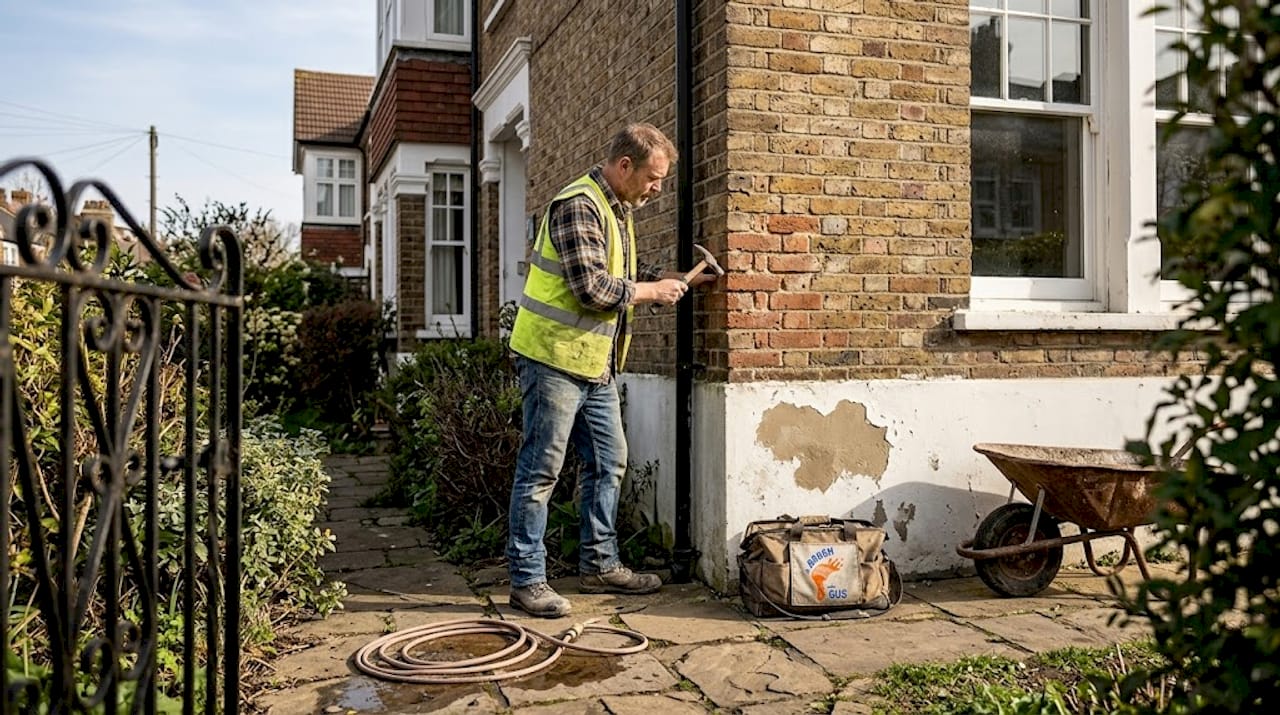
Exterior restoration involves repairs, protection, and refurbishment beyond simple painting.
Approaches differ based on property type, requiring specialist materials and permissions for historic buildings.
Proper restoration extends lifespan, enhances property value, and prevents costly structural damage.
Many homeowners assume exterior restoration means a quick repaint or patching a few cracks. In reality, it is a far more involved process with serious implications for your home’s structure, long-term value, and protection against the South West’s notoriously wet and changeable climate. Properties across Devon, Cornwall, Somerset, and beyond face constant weathering, and many are Victorian or listed buildings with specific material needs. This guide unpacks the full scope of exterior restoration, from the types of work involved and how approaches differ by property type, through to real cost comparisons and the smartest maintenance strategies for lasting results.
Table of Contents
Key Takeaways
Point | Details |
Restoration is not just paint | It involves a range of repairs and treatments that protect both appearance and structural integrity. |
Consult specialists for older homes | Historic and listed buildings require traditional materials and may need permissions for work. |
Restoration is cost-effective | It often extends property life and saves money compared to full replacement. |
Survey before starting | A proper assessment prevents hidden damage and helps choose the right method. |
Maintenance boosts value | Well-kept exteriors boost kerb appeal and property value over time. |
What does exterior restoration involve?
Exterior restoration is not simply a coat of paint. As Historic England notes, it covers a range of repairs and upgrades for a property’s envelope and elements, including everything from walls and windows to renders, cladding, doors, and roofing details. The goal is to repair, protect, and refurbish the outside surfaces of a building in a way that suits its age, materials, and condition.
So what does that actually look like in practice? Here are the most common services that fall under the exterior restoration umbrella:
Surface repairs: Fixing cracks, spalling, or damaged render before applying any protective finish
Pointing and repointing: Refreshing the mortar between bricks or stonework to stop water ingress
Painting and coating: Applying specialist exterior paints, masonry coatings, or protective finishes suited to the substrate
Specialist exterior cleaning: Removing biological growth such as moss, algae, and lichen, as well as atmospheric staining
Render repairs and replacement: Addressing blown, cracked, or missing sections of render
Cladding and UPVC treatment: Respraying or refinishing boards, panels, and window frames to restore appearance and seal surfaces
The benefits go beyond appearance. Proper restoration stops damp penetrating your walls, prevents rot in timber elements, and dramatically extends the life of your home’s exterior. You can read more about what general exterior services typically cover if you want a clearer picture of what a project might include.
One thing many homeowners overlook is how much decorating to boost kerb appeal and functional restoration actually overlap. A well-restored exterior is not just attractive. It is weathertight, structurally sound, and requires less frequent maintenance over time.
Pro Tip: Before any work begins, commission a proper survey of your exterior. Understanding what materials your property uses and identifying any underlying issues, such as damp or failed pointing, will ensure money is spent on the right fixes rather than cosmetic cover-ups.
Restoration approaches for different property types
Not all homes are treated the same, and for good reason. The right approach to exterior restoration depends heavily on the age, construction type, and legal status of your property.
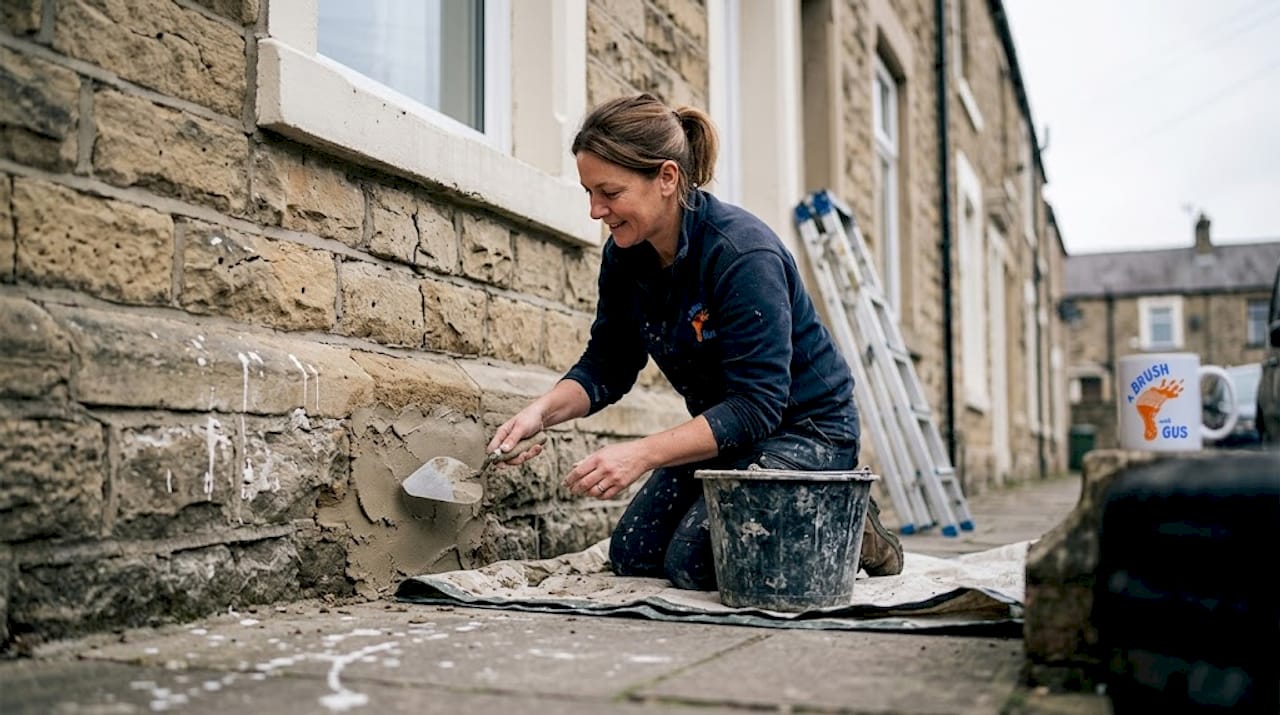
Historic and listed buildings sit in a category of their own. For these properties, breathable materials such as lime mortar and lime-based paints are essential. Using hard cement or modern waterproof coatings can trap moisture inside the walls, leading to accelerated decay from within. You will also need planning permission for most exterior works, so always check with your local authority before starting.
Victorian and Edwardian properties are highly vulnerable to specific issues, including freeze-thaw cycles, acid rain damage, and water ingress through original brick or stone. Repointing with hard cement is a very common mistake that forces moisture into the masonry rather than allowing it to escape naturally through the joints.
Modern homes offer far greater flexibility. Cladding can be resprayed using professional restoration methods with advanced coatings, and UPVC windows and doors can be refinished to look brand new without replacement.
Property type | Materials to use | Permissions needed | Cleaning method |
Listed or historic | Lime mortar, breathable paints | Yes, likely required | Gentle, low-pressure only |
Victorian/Edwardian | Soft lime pointing, traditional paint | Sometimes | Careful, avoid abrasive |
Modern | Flexible masonry coatings, resprays | Rarely | Standard pressure wash |
For period homes in particular, protection for exterior structures is about preserving the original fabric of the building rather than modernising it. Get specialist advice before committing to any product or method, especially if your home predates 1900.
Pro Tip: If you are unsure whether your home is listed or within a conservation area, check the Historic England register online. This can save you from costly enforcement action later.
How exterior restoration protects and adds value
Choosing the right methods for your property type opens the door to significant benefits, both structural and financial.
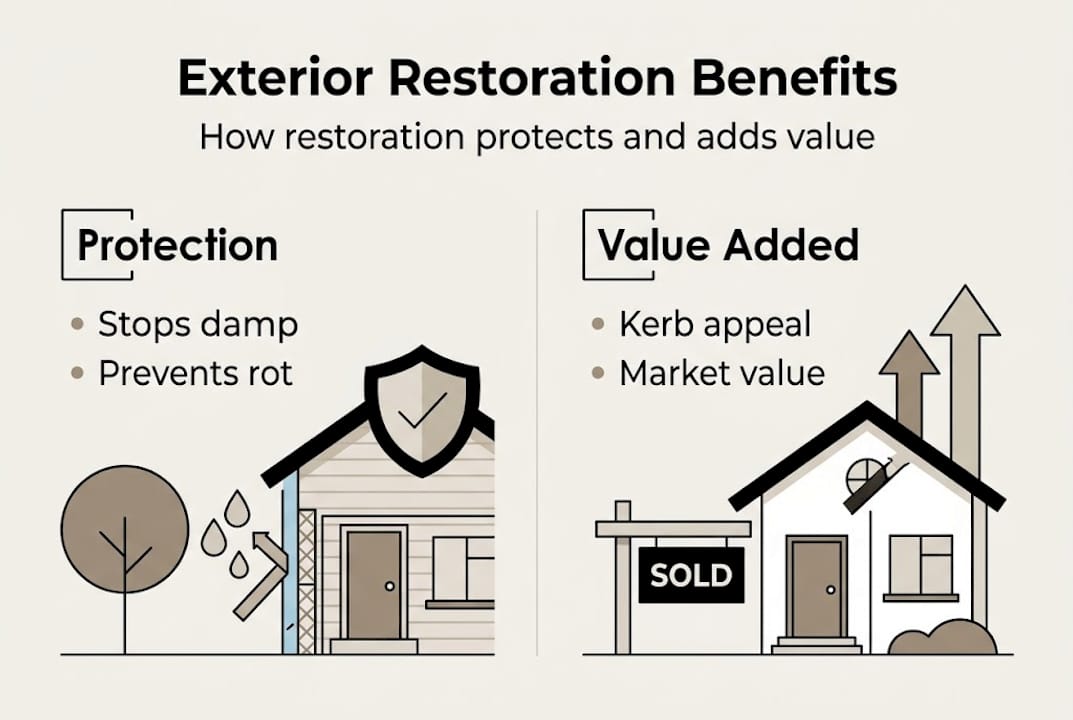
From a structural standpoint, a well-maintained exterior acts as your home’s first line of defence. When surfaces are weathertight, damp cannot penetrate the walls and rot cannot take hold in timber frames, sills, or lintels. The knock-on costs of ignoring this are serious: once damp gets in, it can affect internal plasterwork, insulation, and even floor joists.
Cosmetically, a freshly restored exterior transforms the look and feel of a property. First impressions count, and the visible condition of your home affects how it is perceived by visitors, neighbours, and prospective buyers alike.
Financially, the case is equally strong. As Historic England confirms, expert restoration with the right methods can extend a building’s lifespan by over 25 years, offering significant long-term savings compared to neglect or premature replacement.
Here is how the value stacks up:
Prevents compounding damage: Small cracks repaired early cost a fraction of dealing with widespread damp or structural failure later
Improves energy efficiency: Sealed walls and well-fitted windows reduce heat loss, lowering energy bills
Enhances kerb appeal: Buyers pay more for homes that look cared for
Extends the lifespan of materials: Paint, render, and cladding all last longer when properly maintained
Reduces maintenance frequency: Quality restoration means fewer repeat visits and lower long-term costs
“The most cost-effective approach to any historic building is to keep it in good repair from the outset, using the minimum intervention necessary.” Historic England
Pro Tip: Keep a record of all materials and methods used during restoration work. For listed properties especially, this documentation is invaluable when applying for future permissions or carrying out repeat maintenance.
Cost-effectiveness: Restoration vs replacement
Understanding the benefits brings us to the crucial question of value. How does the cost of restoration compare to full replacement?
The answer is almost always in favour of restoration. Real-world case studies show that restoration can cost up to 80% less than full replacement for elements such as cladding, brickwork, and rendered surfaces. Projects like Bushy House, Chilworth Court, and the Conservative Club all demonstrate dramatic results achieved at a fraction of replacement costs.
Element | Restoration cost (approx.) | Replacement cost (approx.) | Disruption level |
Rendered facade | £800 to £2,500 | £4,000 to £12,000 | Low vs high |
UPVC windows and doors | £300 to £900 (respray) | £3,000 to £8,000 | Minimal vs significant |
Cladding panels | £500 to £1,800 (respray) | £5,000 to £15,000 | Low vs high |
Brick repointing | £600 to £2,000 | N/A (structural issue) | Low |
Respraying cladding or UPVC doors and windows, for example, delivers results that are visually indistinguishable from new at a tiny fraction of the cost. You can learn more about this through our guide to essential UPVC respraying, which explains the process in detail.
There are situations where replacement is the right call. If an element is structurally unsound, if it no longer complies with building regulations, or if the underlying substrate is too damaged to hold a coating, then replacement makes sense. But these cases are rarer than many contractors might suggest.
Choose restoration when: surfaces are cosmetically worn, coatings have failed, or moderate cracking is present
Choose replacement when: structural failure is confirmed, damp has caused internal damage, or compliance requires it
Pro Tip: Get at least three quotes and ask each contractor to explain the root cause of the damage. If a contractor jumps straight to replacement without diagnosing the cause, treat that as a warning sign.
Hard truths and smart shortcuts in exterior restoration
With the numbers in, here is what we at A Brush With Gus have seen time and again across South West properties.
The most common mistake homeowners make is rushing to repaint or power-wash without first understanding what is actually going on beneath the surface. You might think a fresh coat will solve the problem. But if the underlying render is blown or the pointing has failed, you are sealing damage in rather than dealing with it. Over-frequent cleaning or heavy-handed interventions can erode friable surfaces and cause more harm than the original weathering.
This is especially true for historic properties. We have seen lime renders damaged beyond repair by pressure washers that would be perfectly appropriate on a modern brick semi. The surface looked fine afterwards but the structure beneath had been compromised.
The smart shortcut? Survey first, always. Spend the time and money upfront to understand what your property actually needs. For period homes, use breathable, traditional materials and apply the minimum intervention necessary to stabilise the issue. For modern homes, targeted restoration tips and advanced coatings can dramatically extend surface life with minimal fuss.
Professional oversight matters far more than most homeowners realise. It is not just about the end result looking good. It is about avoiding interventions that create bigger problems five years down the line.
Find trusted exterior restoration services in the South West
Knowing what exterior restoration involves is only useful if you work with someone who can apply that knowledge correctly to your property.

At A Brush With Gus, we are a family-run team of brothers Gus and Rhys, based in the South West, with hands-on experience across period homes, modern properties, and everything in between. We understand the specific demands of the region’s climate and housing stock. Whether you need exterior restoration services, a full suite of domestic property solutions, or a specialist UPVC spraying treatment to refresh tired windows and doors, we bring quality workmanship and honest advice to every job. Get in touch for a no-obligation quote and let us help you protect and enhance your home properly.
Frequently asked questions
Is exterior restoration suitable for all types of homes?
Yes, but the methods and materials must be tailored to property type, particularly for listed or historic buildings where inappropriate materials can cause serious damage.
How often should exterior restoration or cleaning be carried out?
A thorough survey every 5 to 10 years is a sensible approach, but be aware that over-cleaning can harm older or more fragile surfaces and should be avoided.
Does exterior restoration add value to my property?
Yes. By safeguarding against structural damage and improving kerb appeal, restoration delivers measurable value and reduces the likelihood of costly repairs down the line.
What permissions do I need for restoring a listed building’s exterior?
You will need listed building consent and must use authentic, sympathetic materials such as lime mortar and breathable paints to comply with heritage regulations.
When should I choose replacement over restoration?
Replacement is warranted when an element is structurally unsound or non-compliant with current building regulations. For most cosmetic or moderate weather damage, restoration is the better and more economical option.
Recommended
Comments