
What is residential spraying? A UK homeowner's guide
TL;DR:
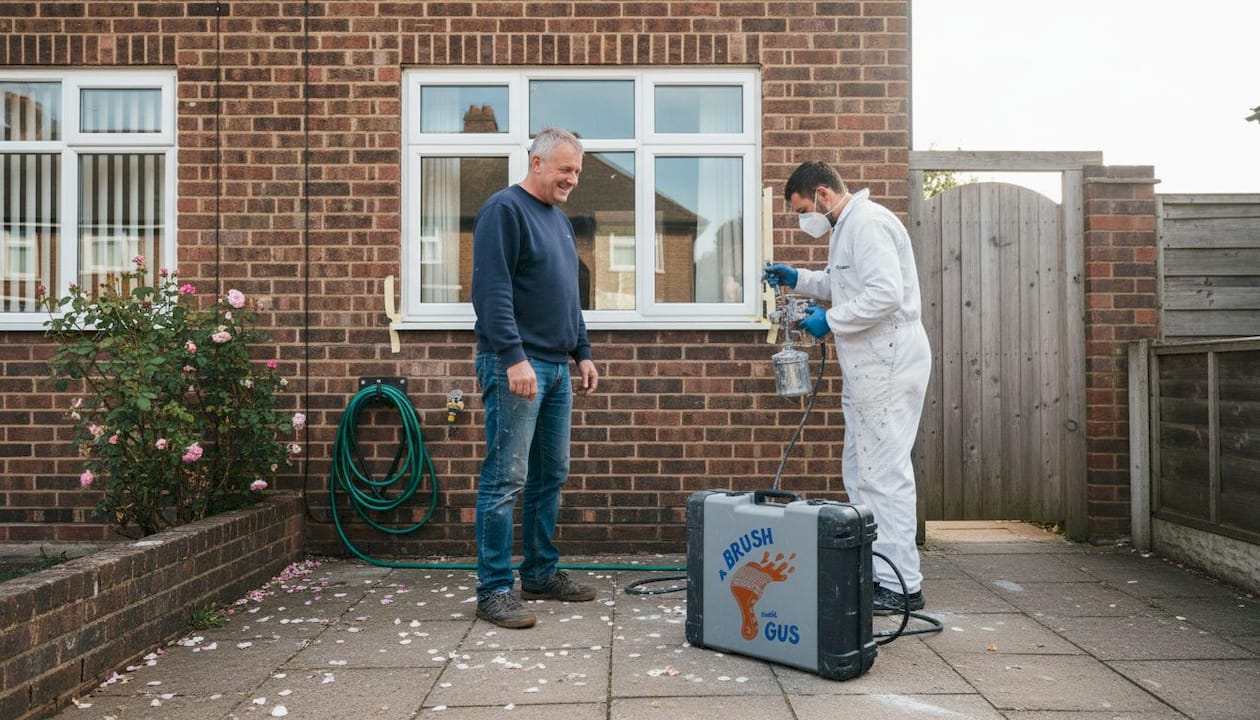
Residential spraying in home improvement typically means applying paint to surfaces, not pest control treatments.
Proper surface preparation and masking are crucial, often taking as long as the spraying process itself.
Airless spraying is faster and suited for large areas, while conventional spray offers fine control for detailed items.
If you’ve recently searched for residential spraying services and found yourself wondering whether you need a painter or a pest controller, you’re not alone. The term gets used in two very different industries, and that confusion can lead homeowners in the South West to waste time, money, and energy pursuing the wrong solution entirely. This guide cuts through the ambiguity. We’ll define what residential spraying actually means in a home improvement context, explain how it works in practice, compare the main technologies available, and help you decide whether it’s the right choice for your property.
Table of Contents
Key Takeaways
Point | Details |
Clarify definition | Residential spraying refers to either paint coatings or pest treatments, so always confirm context with your contractor. |
Speed and coverage | Airless spray can cover up to 200 square metres per hour, outperforming brushes and rollers for large jobs. |
Prep is critical | Thorough masking and surface preparation are essential for smooth, professional spray results. |
Choose the right method | Different spraying types suit different surfaces—airless for walls and large spaces, conventional for detailed items. |
Defining residential spraying: What does it mean?
The phrase “residential spraying” sits at a frustrating crossroads. In home improvement, residential painting surfaces are often refreshed using spray technology, and that process is what most decorating contractors mean when they use the term. Yet the same word, “spraying,” carries a completely different meaning in pest management and arboriculture, where it refers to applying chemical treatments to properties or trees.
In the UK home-improvement world, spray painting professionally means applying coatings or paint to surfaces using pressurised equipment rather than a brush or roller. It covers everything from walls and ceilings inside your home to UPVC windows, fascias, garage doors, and exterior render.
Meanwhile, pest-control spraying context involves applying insecticides or chemical treatments to a property’s interior or exterior, something managed by licensed pest controllers rather than decorators. There’s also domestic pest spraying used to treat infestations inside homes, which operates under an entirely different regulatory and safety framework.
Here’s where each meaning typically applies:
Paint or coating spraying: Walls, ceilings, UPVC, radiators, garage doors, render, fences, sheds, garden structures
Pest-control spraying: Ant treatments, wasp nest removal, rodent deterrents, and tree pest management
Arboricultural spraying: Oak processionary moth treatments, aphid control on garden trees
The practical takeaway? Always confirm with your contractor what they mean. When a decorator says “we’ll spray your exterior,” they almost certainly mean applying paint. When a pest controller says it, they mean chemicals. These are not interchangeable services.
“Before work begins, every homeowner should ask their contractor to specify the product being applied, the method, and any safety requirements. Clarifying terminology at the outset protects both parties.”
Always check which type of spraying you’re booking, especially if searching online. A simple question upfront saves significant problems later. The full residential painting process for spray projects follows a clear sequence once the right service is confirmed.
How does residential spray painting work?
With those definitions clear, let’s focus on how spraying is actually performed in home improvement projects. The process might look effortless when done well, but there’s considerable craft involved before a drop of paint ever leaves the nozzle.
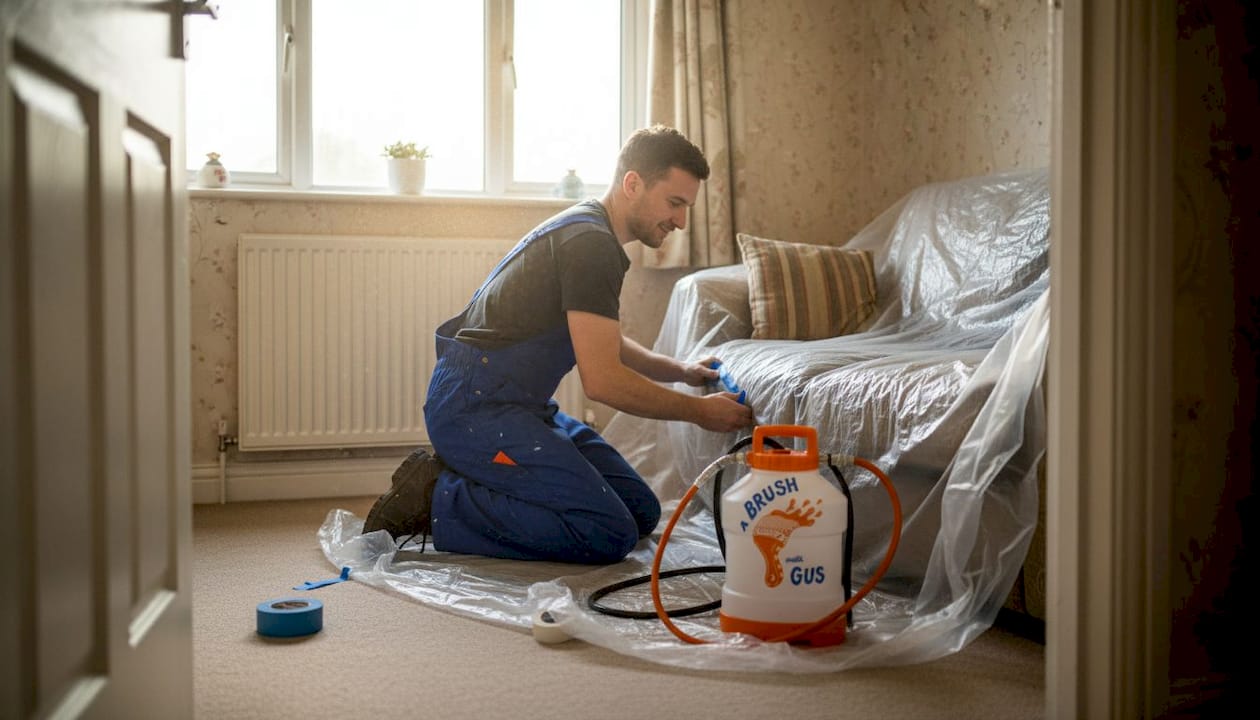
Common surfaces sprayed in UK homes include interior walls, ceilings, radiators, kitchen cupboard fronts, UPVC frames, fascias, soffits, garage doors, and exterior render or masonry. Each surface needs specific preparation and the correct coating.
The process typically follows these steps:
Surface cleaning: Remove dirt, grease, mould, or flaking paint. No coating adheres well to a compromised surface.
Masking and protection: Cover floors, fixtures, glass, and anything that shouldn’t receive paint. This is the most time-consuming part of any spray job.
Priming: Apply a suitable primer where bare surfaces are exposed or where adhesion is a concern.
Equipment selection: Choose between an airless sprayer or a conventional spray gun depending on the surface and desired finish.
Applying coatings: Spray in steady, overlapping passes at the correct distance and angle.
Inspection and touch-up: Check for misses, runs, or uneven coverage and correct before the finish coat dries.
According to surface preparation guidelines, masking and protection are a core methodology in achieving quality residential spray results. Skipping this stage is the single most common cause of poor outcomes.
Pro Tip: If a contractor arrives with minimal masking materials or skips the prep stage entirely, that’s a red flag. Thorough preparation for spray painting at home should take as long as, or longer than, the spraying itself.
Solvent-based paints are generally not recommended for interior spraying in occupied homes due to fume risk. Water-based alternatives are safer and now deliver excellent durability. Strong professional preparation techniques always account for ventilation and product selection from the outset.
Types of spraying methods: Airless vs conventional
After understanding the basics of how spraying is done, it’s vital to know the options available for your project. Two methods dominate residential work in the UK, and they serve quite different purposes.
Airless spraying uses a high-pressure pump to force paint through a small tip, atomising it without compressed air. It’s fast, powerful, and brilliant for large, flat surfaces like walls, ceilings, and exterior render. Airless sprayers cover up to 200 m²/hour, making them dramatically quicker than brush or roller for big jobs. That speed is why professional decorators use them for full-room resprays and exterior projects.
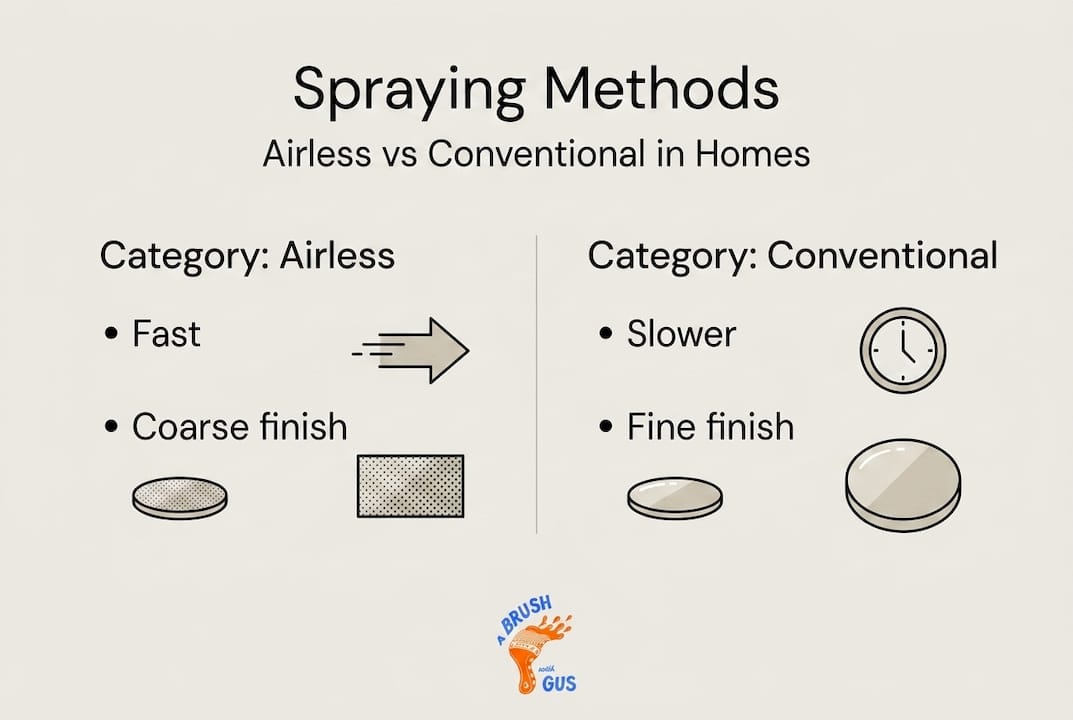
Conventional or air spray uses compressed air to break paint into fine droplets. It delivers a finer, more controlled finish and excels at detailed items like radiators, furniture, window frames, and intricate joinery. It’s slower but more precise.
Here’s a side-by-side comparison:
Feature | Airless spraying | Conventional (air) spray |
Speed | Very fast (up to 200 m²/hr) | Slower, more deliberate |
Best surfaces | Walls, ceilings, render | Radiators, frames, furniture |
Finish quality | Smooth, even | Very fine, detailed |
Overspray risk | Moderate | Higher |
Typical use | Large interior/exterior areas | Joinery, detail work |
Homeowner practicality | Best with professional | Best with professional |
For most South West homeowners looking at a full exterior respray or interior refresh, airless spraying delivers the best combination of speed and finish. For upvc spraying on windows and doors, or for radiators and detailed items, conventional spray equipment is often the better choice.
The right spraying technique for your home depends on the scope and surfaces involved. A good contractor will use both methods across a single project where appropriate. You can explore the full range of domestic spraying services to understand what’s possible for your property.
When, where and why: Is residential spraying right for your home?
Having covered the technology, let’s consider whether and where residential spraying is the smartest choice for your property. Spraying isn’t always the answer, but when it fits, the results are hard to beat.
Spraying genuinely excels in these scenarios:
Large, flat interior surfaces such as walls and ceilings in open-plan rooms
UPVC window frames, fascias, and soffits that need refreshing without replacement
Exterior render or masonry covering a large surface area
Rental property turnovers where speed and a clean, consistent finish are priorities
Garden structures, fences, and sheds where even coverage is needed quickly
The core benefits of spray application include speed, a smooth factory-like finish, consistent coverage with no roller stipple, and reduced labour time on large projects. Spray-painting refreshes both interior and exterior surfaces efficiently, with a quality that’s very difficult to replicate by hand on large, flat areas.
That said, spraying isn’t always the right choice. It may not suit:
Small repairs or patch jobs where set-up time outweighs the benefit
Surfaces where a brush texture is deliberately desired for character
Occupied rooms where masking everything adequately is impractical
Projects where the homeowner prefers a slower, more traditional approach
Pro Tip: Always request a written quote that specifies the surfaces to be sprayed, the prep method, the products to be used, and whether the contractor carries liability insurance. Vague quotes lead to disputes.
Before booking, ask your contractor: What method are you using? How long will masking take? What primer do you recommend for my surface? Will you handle any surface cleaning and preparation beforehand? These questions separate professionals from those who just own a spray gun.
A professional perspective: Residential spraying myths and realities
With all the essentials covered, it’s worth sharing what we see time and again when working with homeowners across the South West.
The biggest myth is that spraying is always the faster, easier option. In reality, preparation accounts for roughly 75% of a spray job. If that preparation is rushed, the finish suffers badly, and correcting it costs more than doing it right the first time would have. Spraying is faster than brushing once the prep is done, not before it.
The terminology confusion between pest control and paint spraying is also more common than you’d think. We’ve spoken to homeowners who requested “residential spraying” and received quotes from pest companies. It caused real delays and frustration. Being specific about what you need from the outset saves everyone time.
The cheapest quote is rarely the wisest choice. A flawless sprayed finish requires the right equipment, products, and experience working together. A contractor undercutting significantly on price is usually cutting corners on prep, coverage, or product quality.
Our honest advice: ask any prospective contractor how long they’ll spend on masking and preparation relative to the spraying itself. If they can’t give you a clear answer, look elsewhere. The best professionals take pride in their prep because they know it’s where the real work happens.
Discover trusted residential spraying services
If you’re ready to refresh your home or want the best finish, here’s where to find proven expertise. At A Brush With Gus, we bring years of hands-on spraying experience to South West UK homeowners, handling everything from full interior resprays to detailed exterior work.

Our professional spraying services cover walls, ceilings, and specialist surfaces, all handled with meticulous preparation and premium coatings. We also offer dedicated upvc spraying for windows, doors, and fascias, giving tired frames a fresh, long-lasting finish without costly replacement. For full property transformations, our exterior home spraying service delivers results that genuinely turn heads. Get in touch today for a free, no-obligation quote and let Gus and Rhys show you what a proper spraying job looks like.
Frequently asked questions
Is residential spraying just painting with a spray machine?
In home improvement, it’s usually applying coatings to surfaces, but the term can also refer to pest control in some contexts. Always confirm with your provider what the service involves: spray coating application and domestic pest spraying are very different things.
How long does residential spray painting take compared to brushes or rollers?
Airless spraying covers 200 m²/hour, making it substantially faster than traditional brush or roller methods for large areas, though preparation time must also be factored in.
What surfaces can be spray painted in a typical home?
Spraying works brilliantly on walls, ceilings, UPVC windows, doors, fascias, radiators, and exterior render or masonry. Spray painting refreshes interior and exterior surfaces including UPVC with excellent results.
Why is preparation so important before spraying?
Without thorough masking, cleaning, and priming, sprayed paint will adhere poorly, run, or land where it shouldn’t. Surface preparation and masking are the foundation of any quality spray finish.
Recommended
Comments