
Why paint quality matters: Achieve lasting beauty at home
TL;DR:
Many homeowners underestimate how paint quality impacts durability, coverage, and appearance over time. Trade paints typically offer better coverage, durability, and washability suited for high-traffic or practical spaces, while premium paints excel in colour depth and aesthetic impact for feature areas. Selecting the appropriate paint requires assessing room use, surface type, and long-term maintenance needs to avoid costly reapplications and achieve lasting results.
Most homeowners assume that once paint dries on a wall, all products perform roughly the same. That assumption costs people money, time, and effort every single year. The truth is that paint quality affects everything from how many coats you need to how your rooms feel in natural light, and how easily you can wipe down scuffs after a busy week. Trade paints such as Dulux can cover up to 17m² per litre, compared to 12 to 14m² per litre for some premium aesthetic brands, which means the paint you choose has real, measurable consequences for your decorating project.
Table of Contents
Key Takeaways
Point | Details |
Paint quality drives results | Choosing high-quality paint means longer-lasting, better-looking finishes for your home. |
Not all paints are equal | Coverage, durability, and finish can differ widely between brands and paint types. |
Trade-off between cost and aesthetics | Premium paints offer luxury looks while trade paints excel in value and practicality. |
Match paint to your space | Select paint based on the unique demands and use of each room for the best results. |
What does paint quality actually mean?
It sounds like an obvious question, but “quality” in paint means something more precise than just the brand name on the tin. Understanding those specifics helps you spend wisely and avoid repainting sooner than you should.
At its core, paint quality is defined by four key attributes:
Coverage rate: How much surface area one litre of paint covers. Higher coverage means fewer coats and less product used overall.
Durability: How well the dried paint resists scuffs, stains, moisture, and everyday wear. This is particularly important in high-traffic areas.
Washability: Whether you can clean the surface with a damp cloth without damaging the finish. Vital in kitchens, hallways, and children’s rooms.
Finish consistency: Whether the paint dries evenly, without streaks or patchiness, and maintains its sheen level over time.
The decorating industry has a useful way of thinking about this: there are paints built for aesthetic impact and paints built for practical performance. As professionals who work across homes in the South West every week, we see both types deliver results when matched to the right space. The mistake is using one where the other would serve far better.
“Trade paints offer superior coverage, durability in high-traffic environments, and easier application than many premium aesthetic paints, making them the practical choice for working decorators.” A key insight from expert paint brand comparisons highlights exactly why professionals reach for trade ranges on most domestic jobs.
Price alone tells you very little. A premium tin can cost twice as much per litre and still require more coats because its pigment load or resin quality is optimised for richness of colour rather than surface coverage. When considering the types of interior paints available, you will quickly see that each product is engineered for a specific purpose, and knowing that purpose is what separates a sound choice from an expensive mistake.
Pro Tip: Before buying any tin, check the technical data sheet rather than just the label. Look for the stated coverage rate in m² per litre and the recommended number of coats. These figures tell you the real cost per square metre, not just the cost per tin.
Paint quality in action: Coverage, durability, and real home results
With those features in mind, let’s see how paint quality plays out in real homes and day-to-day life.
Metric | Trade paint (e.g. Dulux) | Premium aesthetic paint (e.g. Farrow & Ball) |
Coverage per litre | Up to 17m² | 12 to 14m² |
Typical coats needed | 1 to 2 | 2 to 3 |
Washability rating | High | Moderate to high |
Ease of application | Excellent | Moderate |
Colour depth | Good | Exceptional |
Cost per m² (approx.) | Lower | Higher |
This table makes the trade-off clear. Neither type is universally superior. The question is always: what does this room actually need?
Busy hallways take a battering. Scuffed walls from bags, bikes, and coats mean you need a paint that can be wiped clean without the finish dulling or peeling. A high-washability trade paint wins here every time. Kitchens face grease, steam, and frequent cleaning, so durability and moisture resistance matter most. Children’s rooms are a similar story, with crayon marks, sticky fingers, and general chaos demanding a surface that won’t deteriorate after six months of real use.
Here is a simple process for assessing what your specific space actually needs before you buy:
Count the occupants and their habits. A home with young children or pets needs high washability and scuff resistance as a baseline.
Assess the light in the room. Rooms with low natural light benefit from paints with higher sheen levels, which reflect light. Flat finishes absorb it.
Identify the wear pattern. A formal dining room used twice a week faces far less stress than a main hallway used dozens of times daily.
Consider the surface condition. Walls with imperfections actually benefit from flat finishes that minimise texture, whereas smooth, well-prepared walls can carry a mid-sheen or eggshell beautifully.
Factor in your maintenance tolerance. If you prefer not to repaint for five to seven years, invest in higher durability from the start.
The financial logic is compelling. Choosing a paint with better coverage and durability can reduce your repainting frequency by years. If a typical interior redecorate costs between £800 and £2,000 for a standard South West home, extending the cycle from three years to five or six years represents a significant saving over a decade. The right paint is genuinely one of the most cost-effective decisions you can make in home maintenance.
Understanding the qualities of a good painter also feeds into this, because even the finest paint will underperform if it is not applied properly. And choosing the best paint finishes for your specific room type is as important as selecting the paint grade itself.
Comparing premium vs. trade paints: Which suits your home?
Having seen what good paint quality offers, it’s time to directly compare the two major camps: premium and trade paints.
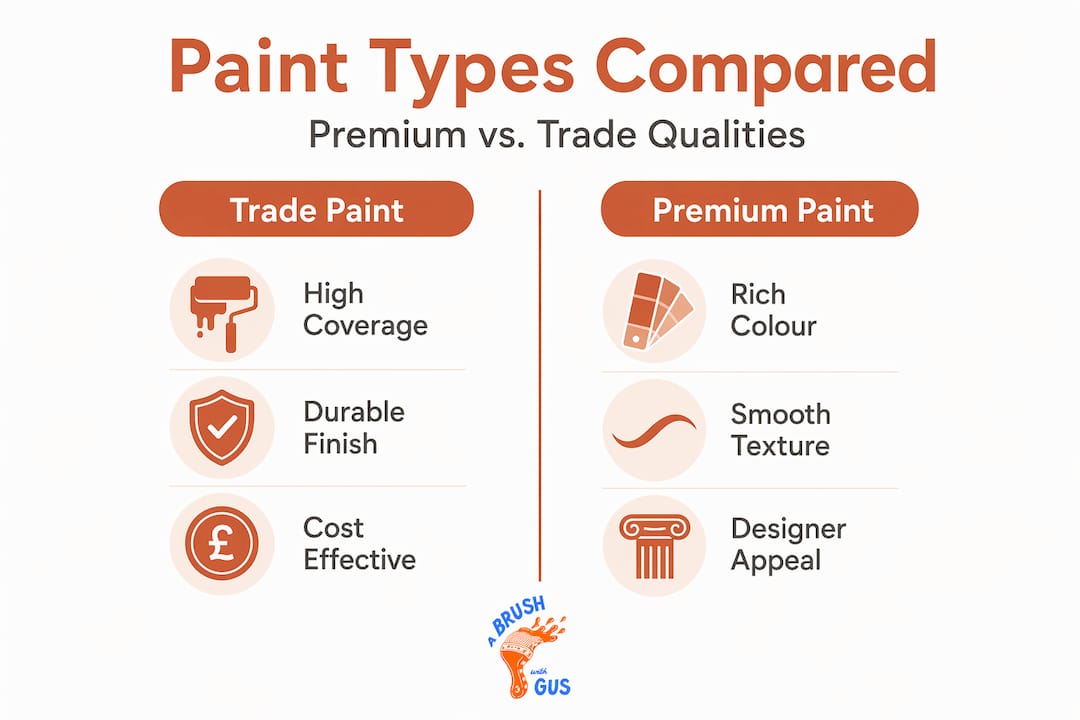
Feature | Trade paint | Premium paint |
Colour depth and richness | Good | Outstanding |
Coverage per litre | High (up to 17m²) | Moderate (12 to 14m²) |
Durability in high-traffic areas | Excellent | Good |
Washability | High | Moderate to high |
Finish range | Wide | Curated and distinctive |
Cost per m² | Lower | Higher |
Ease of DIY application | Excellent | Moderate |
The expert decorator view is nuanced: premium paints genuinely excel in colour depth and atmosphere, particularly for feature walls, period properties, and spaces designed for visual impact. But for everyday rooms that must look good and survive daily life, trade paints win on practicality and cost-effectiveness almost every time.
Considerations for trade paints:
Best for high-traffic areas including hallways, stairs, and children’s rooms
Ideal when budget efficiency and longevity are the priority
Easier to apply for both professionals and DIY decorators
Wide colour matching available through most major suppliers
Considerations for premium paints:
Exceptional for feature walls, reception rooms, and period properties where atmosphere is paramount
Worth the investment when colour richness and distinctive finish make a genuine difference to the space
Better suited to rooms with skilled application, as some finishes are less forgiving
Can elevate a carefully designed interior beyond what trade ranges achieve aesthetically
Pro Tip: Before committing to a premium tin based on the colour card alone, ask your decorator to show you a finished wall sample or visit a showroom with real painted panels. Colours look dramatically different on cards versus walls, and finishes vary considerably depending on the light in your specific room.
Our advice, shaped by years of professional painting techniques, is to mix intelligently. Use trade paints for the workhorse areas of your home and reserve premium products for the spaces where that extra depth of colour genuinely lifts the room.
Choosing the right paint for your space
With those comparisons clear, let’s walk through the steps of selecting the best paint quality for your specific needs.
Identify the surface type first. Interior walls, exterior render, timber, masonry, and UPVC all require different formulations. Using the wrong product, regardless of its quality tier, will result in poor adhesion and early failure.
Match the finish to the function. Matt and flat finishes suit ceilings and low-traffic feature walls. Eggshell and satin work beautifully in living rooms and bedrooms. Gloss and semi-gloss are ideal for woodwork, kitchens, and bathrooms where moisture and cleaning are regular.
For high-traffic rooms, prioritise washability. Look for paints labelled as scrubbable or with a class 1 washability rating. These withstand repeated cleaning without surface degradation.
For kitchens and bathrooms, look for moisture resistance. Standard emulsions will deteriorate quickly in steamy conditions. Specialist kitchen and bathroom formulations contain anti-mould agents and moisture barriers.
For children’s rooms, choose low-VOC, washable products. VOC stands for volatile organic compounds, which are the chemicals that cause paint fumes. Low-VOC formulas are safer for children and dry faster.
For exterior surfaces, never compromise on quality. South West weather, with its Atlantic rain and coastal wind, is genuinely harsh on exterior paintwork. A higher-quality exterior paint with good elasticity will flex with temperature changes rather than cracking.
Always factor in primer. Skipping primer is one of the most common and costly mistakes homeowners make. A proper primer seals the surface, improves adhesion, and reduces the number of topcoats needed.
The guidance on choosing paint colours is also worth reading before you commit, because colour choice interacts closely with finish and quality in ways that are easy to underestimate. A beautiful colour in a low-quality flat finish will look tired within a year in a busy room. That same colour in a durable eggshell from a quality trade range will still look fresh three or four years later.
Common pitfalls to avoid:
Buying based on colour alone and ignoring coverage, durability, or finish suitability
Skipping primer on new plaster or freshly sanded surfaces
Using interior emulsion on exterior surfaces or vice versa
Underestimating wear in busy homes and choosing a finish too delicate for the space
Buying too little paint and needing to source more later, which can cause batch colour variations
Ignoring the technical data sheet and relying solely on the tin description
For multi-surface or exterior projects, the coverage differences between paint types become even more financially significant. Consulting a professional decorator before you buy can save you from purchasing the wrong product for large-scale work.
Why paint quality matters more than you think
Here is something we have learned after years of decorating homes across the South West: most homeowners who contact us after a disappointing DIY repaint are not dealing with a colour problem or an application problem. They are dealing with a paint quality problem they did not know they had when they bought the tin.
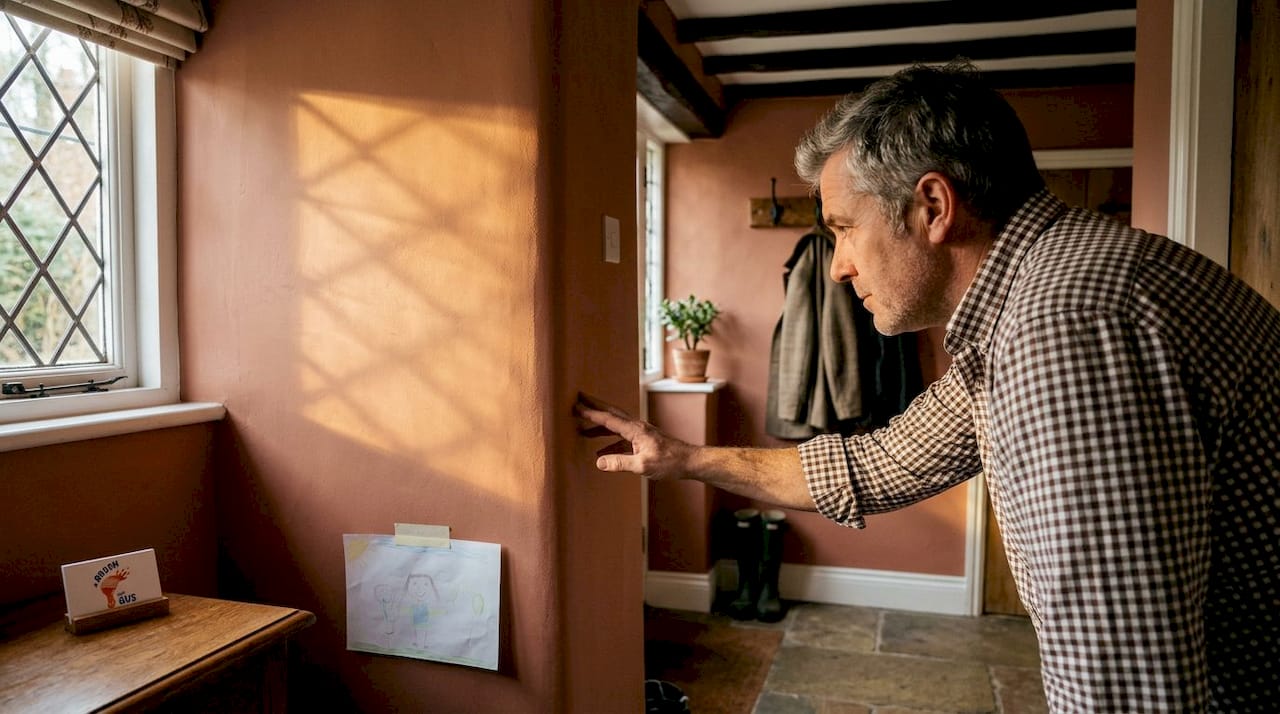
Low-quality paint looks similar on day one. The difference emerges at month four, month eight, and month twelve. Scuffs that cannot be wiped clean. Patches that need constant touching up. A finish that starts to look tired before you have had a chance to enjoy the transformation. That cycle of repeated touch-ups is where the real cost lies, and it is almost invisible when you are standing in the decorating aisle comparing prices.
The decorator experience consistently shows that trade paints outperform cheaper alternatives on the metrics that matter most to daily life. But there is also a nuance worth acknowledging: spending the absolute maximum does not guarantee the best result either. There is a sweet spot, usually within mid to upper-range trade products, where you get outstanding durability, excellent coverage, and a finish that holds up beautifully without paying a luxury premium.
What most people miss is how paint quality changes the feeling of a room, not just the look. Good paint applied correctly creates a surface that responds to light differently. Colours appear richer at dusk. The room feels more considered. That is not marketing language; it is the genuine result of pigment load, resin quality, and a finish that has been properly applied to a prepared surface.
Our challenge to you: next time you decorate, set a reminder to evaluate the result at the twelve-month mark. Not just how it looks, but how it wears, how it cleans, and whether you are happy to leave it another two or three years. That honest evaluation, based on real-world performance rather than first impressions, is where paint quality reveals its true value to your home.
Expert help for the perfect finish
Choosing the right paint is one half of the equation. Applying it to the standard that makes it last is the other.

At A Brush With Gus, Gus and Rhys work with homeowners across the South West to get both halves right. We advise on the best products for every surface and space, from busy family hallways to exposed exterior home walls that face Atlantic weather year after year. Our residential painting services cover everything from interior emulsion work to specialist UPVC spraying and airless spraying techniques that deliver a finish no roller can replicate. If you are planning a repaint and want to be confident you are choosing the right products and getting the right result, get in touch for a no-obligation quote. We are happy to walk through options with you before a single tin is opened.
Frequently asked questions
Does high-quality paint really last longer?
Yes. High-quality paints offer better wear resistance, higher coverage per litre, and superior washability, which means fewer touch-ups and a longer gap between full repaints.
What’s the difference between trade and premium paints?
Trade paints are engineered for coverage, durability, and ease of application, while premium paints excel in colour depth and distinctive luxury finishes, often at the expense of practical performance in busy spaces.
How do I choose the best paint for high-traffic areas?
Look for paints with a high washability rating, strong coverage per litre, and a mid-sheen finish such as eggshell or satin. Trade paints are generally the best-suited option for these demanding spaces.
Does more expensive paint always mean better quality?
Not at all. Price reflects brand positioning and colour prestige as much as performance, so always compare coverage rates and durability specifications before deciding what to buy.
Recommended
Comments